


The reporting that sparked this guide: TPS (Temporary Protected Status) Extension News (Legal News)
What This News Means for Immigrants in Orlando and Across Florida
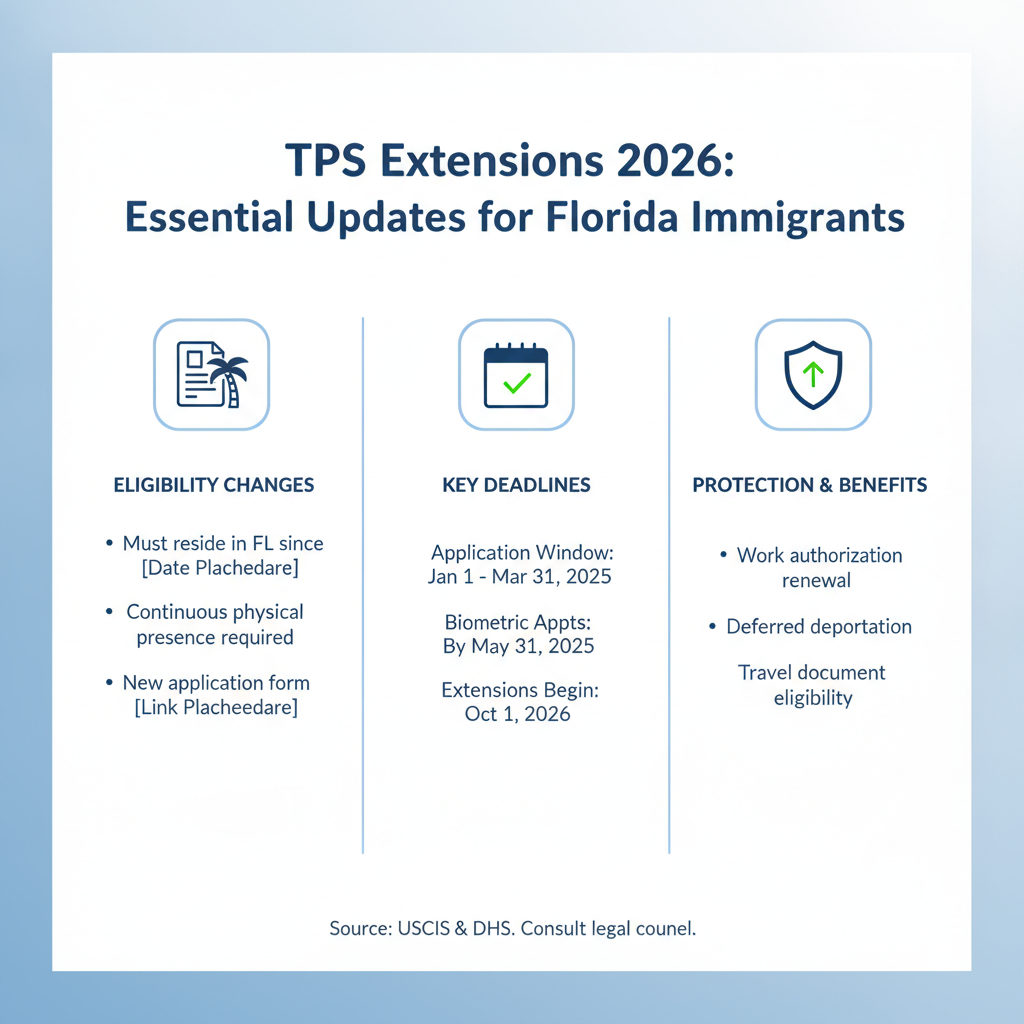
Recent announcements and ongoing discussions surrounding the extensions and potential re-designations of Temporary Protected Status (TPS) for several countries are creating a significant buzz within the immigrant communities nationwide, especially here in Florida. For thousands of individuals and families, these updates directly impact their ability to live, work, and build a future in the United States without the constant fear of deportation. At Imigrar, we understand the profound importance of these developments and are dedicated to providing clear, actionable information to help you navigate these critical times. Our mission is to Keep Families Together, and timely TPS updates are central to that commitment.
Why this news is showing up now
The United States government periodically reviews the conditions in countries designated for TPS. These reviews are mandated by law to assess whether the temporary, extraordinary conditions (such as armed conflict, environmental disaster, or other exceptional circumstances) that led to the initial designation still persist. Given that many TPS designations are granted for 18-month periods, the Department of Homeland Security (DHS) is constantly evaluating these situations. As we are in mid-2026, many existing TPS designations, such as those for countries like El Salvador, Honduras, Nicaragua, Haiti, Venezuela, Ukraine, Afghanistan, Myanmar, Cameroon, Sudan, and South Sudan, are either nearing their expiration dates or have recently undergone their statutorily required review. This leads to new announcements regarding extensions, re-designations, or sometimes, terminations. The legal news landscape is abuzz with these updates because they dictate the future of hundreds of thousands of individuals currently holding TPS.
The decision-making process involves careful consideration of reports from various government agencies, international organizations, and on-the-ground assessments. When conditions are deemed unsafe for return, an extension or re-designation is typically granted, often accompanied by a new re-registration period. These decisions are critical and often come with specific, tight deadlines for re-registration, making constant vigilance essential for affected individuals and their legal representatives.
How it can affect Florida residents
Florida is home to a vibrant and diverse immigrant population, including a significant number of individuals from countries currently designated for TPS. For residents across Orlando, Central Florida, and the entire state, these TPS extensions are not just legal notices; they are lifelines. An extension means continued protection from deportation, the ability to maintain employment authorization (EAD), and the opportunity to plan for their families' futures without immediate fear. It allows individuals to contribute to our economy, pay taxes, and integrate more deeply into their communities, including those in Orange County and along the I-4 corridor.
Conversely, a failure to re-register on time, or a misunderstanding of eligibility requirements following an extension, could lead to dire consequences, including loss of status and potential deportation proceedings. Many TPS holders have established deep roots in Florida, owning homes, running businesses, and raising U.S. citizen children. The stability provided by TPS is invaluable, and any change or extension directly impacts their daily lives, their access to essential services, and their sense of security. The Orlando USCIS Field Office and local legal aid organizations often see an increase in inquiries following such announcements, highlighting the local impact of these federal decisions.
Need Help? Our Orlando immigration team is ready to assist. Call +1 786-791-3106 for a free consultation, or message us online. Se Habla Español.
What TPS Is (and Why It Matters)
Temporary Protected Status (TPS) is a humanitarian immigration benefit that offers a temporary safe haven to eligible foreign nationals already in the United States. It's a crucial provision designed to protect individuals from returning to their home countries where conditions are deemed unsafe due to ongoing armed conflict, environmental disaster, or other extraordinary and temporary conditions. Understanding TPS is paramount for those it affects and for the communities that embrace them.
A plain-English definition
Imagine your home country becomes incredibly dangerous – perhaps due to a devastating earthquake, a civil war, or another crisis. If you are already in the U.S. when this happens, TPS allows you to stay here legally for a temporary period, protecting you from deportation. It's not a path to a Green Card or U.S. citizenship directly, but it provides temporary legal status, which typically includes the right to work (through an Employment Authorization Document, or EAD) and, in some cases, the ability to travel abroad and return (with Advance Parole). This status is temporary because it's based on conditions in your home country that are expected to be temporary. When those conditions improve, TPS for that country can be terminated.
Key terms you need to know
- Designation: This is the initial act by the Secretary of Homeland Security to grant TPS to a specific country due to qualifying conditions.
- Re-designation: This occurs when the Secretary of Homeland Security determines that a country continues to meet the criteria for TPS, but the conditions have changed significantly enough to warrant a new designation, often extending eligibility to individuals who arrived in the U.S. after the initial designation date.
- Extension: This is when the Secretary of Homeland Security determines that the qualifying conditions for TPS continue to exist in a designated country, and the existing designation is prolonged, usually for another 18-month period.
- Eligibility Criteria: The specific requirements an individual must meet to be granted TPS, including nationality of a designated country, continuous physical presence (CPP) in the U.S. since a specific date, continuous residence (CR) in the U.S. since a specific date, and passing background checks.
- Employment Authorization Document (EAD): Often referred to as a "work permit," this document (Form I-766) allows TPS holders to legally work in the United States.
- Travel Authorization (Advance Parole): A document (Form I-512) issued by USCIS that allows certain non-citizens, including TPS holders, to travel outside the U.S. and return without jeopardizing their immigration status. It's applied for using Form I-131.
- Continuous Physical Presence (CPP): A requirement that an applicant has been physically present in the U.S. for a specified period without significant breaks.
- Continuous Residence (CR): A requirement that an applicant has resided in the U.S. for a specified period without significant breaks.
- Re-registration Period: The specific, often narrow, window of time during which current TPS beneficiaries must file their applications to extend their status following an extension announcement. Missing this deadline can lead to loss of TPS.
Current Immigration Law: The Foundation
Temporary Protected Status is a federal immigration benefit established under Section 244 of the Immigration and Nationality Act (INA), specifically 8 U.S.C. § 1254a. It is a critical component of U.S. immigration policy, allowing the executive branch to respond to humanitarian crises abroad. The authority to designate, extend, or terminate TPS lies with the Secretary of Homeland Security, who makes these decisions after consulting with other government agencies, including the Department of State.
The law outlines specific criteria for a country to be designated for TPS. These include ongoing armed conflict, environmental disaster (such as an earthquake or hurricane) that prevents the country from adequately handling the return of its nationals, or other extraordinary and temporary conditions. Once a country is designated, individuals from that country who meet certain eligibility requirements can apply for TPS.
Federal requirements
To be eligible for TPS, an applicant must generally meet several federal requirements:
- Nationality: Be a national of a country designated for TPS, or a person without nationality who last habitually resided in that designated country.
- Continuous Physical Presence (CPP): Have been continuously physically present in the United States since the effective date of the most recent designation for their country.
- Continuous Residence (CR): Have been continuously residing in the United States since the date specified for their country's designation. Brief, casual, and innocent departures from the U.S. do not break CR or CPP.
- Timely Application: File their application within the initial registration period or any subsequent re-registration period announced by USCIS.
- Admissibility: Meet general admissibility requirements for immigration, including passing background checks. Certain criminal offenses (felonies or two or more misdemeanors) or other grounds of inadmissibility can disqualify an applicant.
- No Disqualifying Factors: Not be found inadmissible under specific grounds relating to criminal activity, national security, or persecution of others.
The primary form for applying for or re-registering for TPS is Form I-821, Application for Temporary Protected Status. If you wish to work in the U.S., you must also file Form I-765, Application for Employment Authorization. For those needing to travel internationally, Form I-131, Application for Travel Document (for Advance Parole), is required.
For the most up-to-date information on designated countries, eligibility, and filing deadlines, always refer to the USCIS official website.
Florida-specific considerations
While TPS is a federal program, its impact and the process of navigating it have specific nuances for Florida residents. Florida's large immigrant population, particularly from countries like Haiti, Venezuela, Honduras, El Salvador, and Nicaragua, means that TPS extensions directly affect a significant portion of the state's workforce and communities. For Central Florida residents, including those in Orlando and surrounding Orange County, access to informed legal counsel is critical due to the sheer volume of cases and the potential for misinformation.
State-level policies, while not directly influencing TPS eligibility, can impact the daily lives of TPS holders. For example, driver's license requirements or access to certain state-funded services may vary. However, federal law supersedes state law regarding immigration status. A valid EAD issued to a TPS holder is recognized nationwide for employment purposes. The Orlando USCIS Field Office serves as a key resource for many in the region, processing applications and conducting biometrics appointments. It is vital for Florida residents to not only understand federal TPS requirements but also to be aware of local resources and legal support available to them.
How to Re-Register for TPS: A Complete Step-by-Step Guide
The re-registration process for TPS is critical to maintaining your protected status. Missing deadlines or making errors can lead to a loss of benefits. This guide provides a clear, actionable roadmap for current TPS beneficiaries in Orlando and across Florida.
1) Determine Your Eligibility and Re-registration Window
The first and most crucial step is to confirm that your country’s TPS designation has been extended and to identify the specific re-registration window. USCIS announces these details in a Federal Register Notice. You must be a current TPS beneficiary for the designated country to re-register. If there has been a re-designation, new eligibility dates for continuous residence and continuous physical presence will apply, potentially allowing new applicants.
- Action: Check the USCIS official website for the latest Federal Register Notices regarding your country. Pay close attention to the re-registration start and end dates.
- Important: Re-registration windows are typically 60 days long. Missing this window can be extremely difficult to overcome.
2) Gather All Required Documents
Even for re-registration, having your supporting documents in order is essential. While you may not need to submit as many documents as your initial application, USCIS can request them.
- Proof of Identity and Nationality:
- Copy of your passport from the designated country (if available).
- Copy of your birth certificate with photo identification.
- Any national identity document from your country of origin with a photo and/or fingerprint.
- Copy of your previous Form I-797, Approval Notice for TPS.
- Proof of Continuous Residence (CR) and Continuous Physical Presence (CPP): Documents showing you have maintained your residence in the U.S. since the date specified for your country's designation. (Though often not required for re-registration unless there's an issue or request, it's good to have them ready).
- Employment records (pay stubs, W-2s, employment letters).
- Rent receipts, utility bills, mortgage statements.
- School records (for children).
- Medical records.
- Bank statements.
- Dated photographs.
- Previous TPS Documents:
- Copy of your most recent Employment Authorization Document (EAD).
- Copy of your previous Form I-797, Approval Notice for TPS.
- Photographs: Two identical, unmounted, passport-style color photographs taken within 30 days of filing.
3) Complete and File Form I-821 (Application for Temporary Protected Status)
This is the primary form for re-registration. Ensure you are using the correct edition of the form, available on the USCIS website. Fill it out completely and accurately. If a question does not apply to you, write "N/A" (not applicable).
- Form: Form I-821, Application for Temporary Protected Status.
- Fees: There is typically no fee for filing Form I-821 for re-registration, but this can change. Always verify current fees on the USCIS Forms page.
- Supporting Documents: Include copies of your previous TPS approval notice and current EAD.
- Warning: Any incomplete information or errors can lead to delays or even a denial.
4) File Form I-765 (Application for Employment Authorization) (Optional but Recommended)
If you wish to continue working legally in the U.S. and your current EAD is expiring, you must file Form I-765. It's highly recommended to file this concurrently with Form I-821.
- Form: Form I-765, Application for Employment Authorization.
- Fees: There is a fee for Form I-765, unless you are eligible for a fee waiver (Form I-912, Request for Fee Waiver). Check the current fee schedule.
- Supporting Documents: Include copies of your previous TPS approval notice, your current EAD, and the two passport-style photos.
- Important: USCIS often issues automatic EAD extensions for a period (e.g., 540 days or 180 days) while your re-registration and new EAD application are pending. Check the Federal Register Notice for details on these automatic extensions.
5) Consider Filing Form I-131 (Application for Travel Document) (If You Need to Travel)
If you anticipate needing to travel outside the United States while your TPS is pending or active, you must apply for Advance Parole using Form I-131. Traveling without Advance Parole can lead to serious immigration consequences, including denial of your TPS application or inadmissibility upon return.
- Form: Form I-131, Application for Travel Document.
- Fees: There is a fee for Form I-131, unless you are eligible for a fee waiver.
- Supporting Documents: Include copies of your TPS approval notice, EAD, and two passport-style photos. Explain the urgent reason for travel if applicable.
- Warning: Consult with an attorney before traveling, especially if you have any past immigration violations or criminal history.
6) Submit Your Application Packet to USCIS
Once all forms are completed and documents are gathered, assemble your application packet. The Federal Register Notice for your country will specify the correct mailing address for submission.
- Organization: Arrange documents in the order requested by USCIS, typically with the fee payment on top, followed by the forms, and then supporting documentation.
- Mailing: Send your application via certified mail with a return receipt requested. This provides proof of mailing and delivery, which is crucial for meeting deadlines.
- Copies: Make and keep a complete copy of everything you submit for your records. This includes all forms, supporting documents, and the check or money order used for fees.
7) Attend Biometrics Appointment and Monitor Your Case Status
After filing, you will typically receive a receipt notice (Form I-797C). USCIS will then schedule a biometrics appointment (fingerprints, photograph, and signature) at an Application Support Center (ASC). This appointment is mandatory.
- Biometrics: Attend your biometrics appointment as scheduled. If you miss it, reschedule immediately.
- Case Status: Use the receipt number from your Form I-797C to check your case status online on the USCIS official website. You can also sign up for email or text updates.
- Processing Times: Be aware that processing times can vary significantly. You can check estimated processing times on the USCIS Processing Times page.
Overwhelmed by the TPS re-registration process? Let Imigrar simplify it for you. Our Orlando-based legal team is here to ensure your application is accurate and timely. Call +1 786-791-3106 for your free consultation today. Se Habla Español.
Practical Steps You Can Take Today
Navigating the complexities of immigration law, especially with ongoing updates like TPS extensions, requires proactive steps. Here's what you can do right now to prepare and protect your status.
Actionable Checklist:
- Consult with an Immigration Attorney: This is arguably the most important step. An experienced attorney, like those at Imigrar, can assess your specific situation, confirm your eligibility, and ensure your application is complete and correctly filed. This is particularly crucial if you have any criminal history, prior immigration violations, or have traveled outside the U.S.
- Gather Existing Documents: Start compiling all relevant documents, including your passport, birth certificate, previous TPS approval notices (Form I-797), EADs, and any proof of residence or identity. Even if you don't need to submit them for re-registration, having them organized will save time and stress.
- Monitor USCIS Announcements: Regularly check the USCIS official website for Federal Register Notices related to TPS for your country. Sign up for USCIS email updates.
- Update Your Contact Information with USCIS: If you have moved, ensure USCIS has your current mailing address by filing Form AR-11, Alien's Change of Address Card, online or by mail. Missing critical notices from USCIS can jeopardize your case.
- Keep Copies of Everything: For every document you submit to USCIS, keep a clean, legible copy for your records. This includes forms, supporting evidence, and payment receipts.
- Understand Fees and Fee Waivers: Be aware of the current filing fees for Form I-765 and Form I-131. If you cannot afford the fees, explore eligibility for a fee waiver using Form I-912. Discuss this with your attorney.
- Review Your Immigration History: Be prepared to discuss your entire immigration history with your attorney, including any past arrests, detentions, or prior immigration applications. Full disclosure is essential for accurate legal advice.
Document Preparation Guidance:
- Originals vs. Copies: Generally, USCIS requires copies of supporting documents unless they specifically request an original. Never send original documents unless explicitly asked to do so.
- Translations: Any document not in English must be accompanied by a complete English translation certified by a translator. The certification must state that the translation is accurate and that the translator is competent to translate.
- Organization: Organize your application packet logically. Use cover sheets, tabs, and paper clips (not staples) where appropriate. A well-organized application helps USCIS process your case more efficiently.
Timeline Expectations:
- Re-registration Window: Typically, a 60-day window from the date of the Federal Register Notice. Act quickly once an extension is announced.
- Receipt Notice: You should receive a receipt notice (Form I-797C) within a few weeks of mailing your application.
- Biometrics Appointment: An appointment notice for biometrics usually arrives within 4-8 weeks after filing.
- EAD Processing: Processing times for EADs can vary significantly, from a few months to over a year. Check the USCIS Processing Times page for current estimates. Remember to check for automatic EAD extensions if your current EAD expires before your new one arrives.
- TPS Approval: Final approval for TPS re-registration can also take several months.

How Imigrar Helps Immigrants in Orlando
At Imigrar, we understand that the immigration journey is deeply personal and often fraught with uncertainty. For immigrants in Orlando, Central Florida, and across the nation, our firm stands as a beacon of hope and professional guidance. Our commitment is simple: to Keep Families Together, and we achieve this through dedicated, knowledgeable, and compassionate legal representation.
Our team of experienced immigration attorneys specializes in a wide range of immigration matters, including complex TPS cases, family-based petitions, deportation defense, and naturalization. We stay abreast of the latest changes in immigration law and policy, ensuring that our advice is always current and accurate. When it comes to TPS extensions and re-registrations, our expertise means:
- Precise Eligibility Assessment: We meticulously review your personal circumstances to confirm your eligibility for TPS, taking into account any potential disqualifiers or complexities in your immigration history.
- Flawless Application Preparation: We guide you through the collection of all necessary documents and carefully prepare your Form I-821, Form I-765, and Form I-131, minimizing the risk of errors or omissions that could delay or jeopardize your case.
- Timely Filing: We ensure your application is filed well within the specified re-registration window, protecting you from missing critical deadlines.
- Representation and Advocacy: Should any issues arise, such as Requests for Evidence (RFEs) or interviews, we will represent you and advocate on your behalf with USCIS.
- Comprehensive Advice


