


The landscape of U.S. immigration law is constantly evolving, bringing both challenges and opportunities for individuals and families seeking safety and stability. For many, Temporary Protected Status (TPS) has been a lifeline, offering a temporary haven from perilous conditions in their home countries. As we move through 2026, recent announcements regarding TPS extensions for various designated countries have sparked renewed hope and, understandably, many questions.
At Imigrar, an immigration law firm based in Orlando, Florida, we understand the profound impact these legal updates have on the lives of our clients, not just in Central Florida but across the nation. Our mission, "Keep Families Together," drives us to provide clear, actionable, and compassionate legal guidance through every twist and turn of the immigration journey.
This comprehensive guide aims to break down the latest TPS extension news, explain what TPS means, detail the application process, and offer practical advice to ensure you and your family are prepared. Whether you are a current TPS holder or someone exploring this vital protection for the first time, understanding these developments is crucial.
Need Help? Our Orlando immigration team is ready to assist. Call +1 786-791-3106 for a free consultation, or message us online. Se Habla Español.
The reporting that sparked this guide
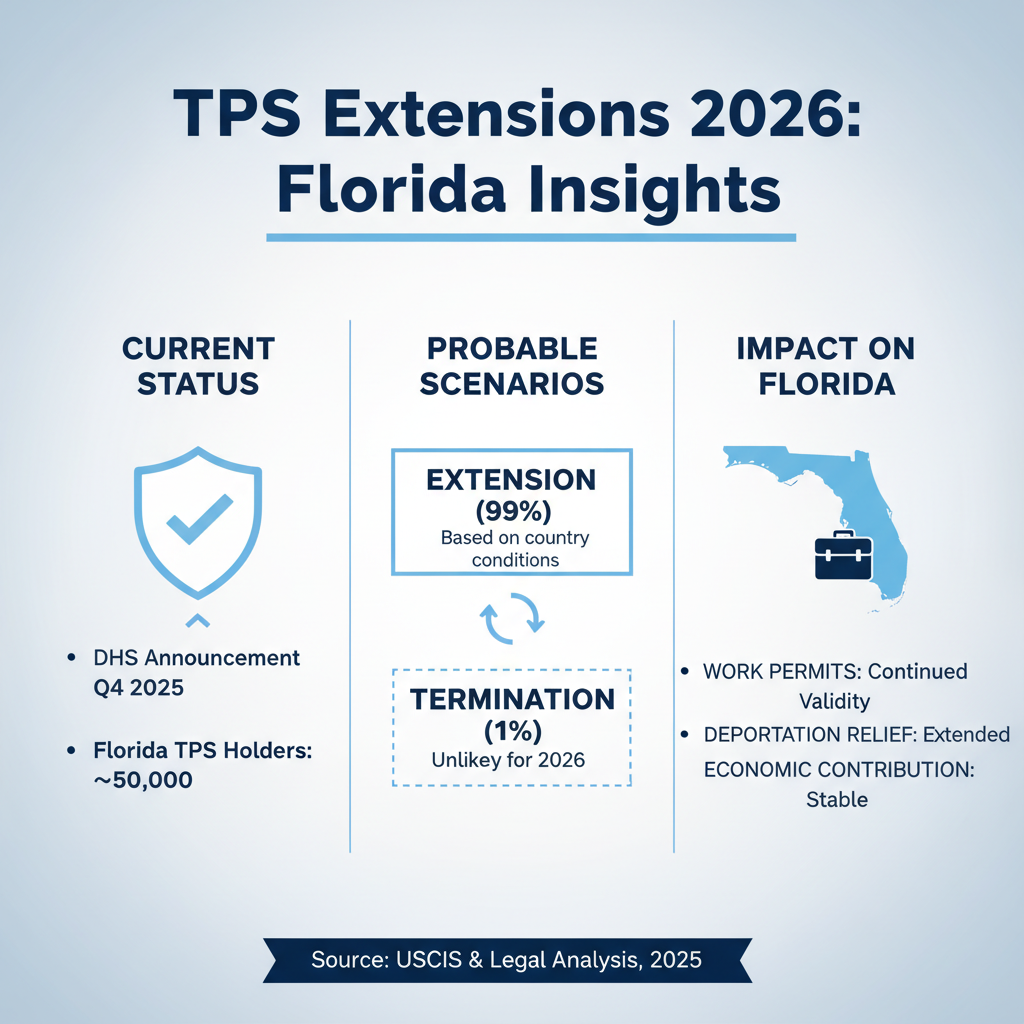
Recent TPS (Temporary Protected Status) Extension News (Legal News) has highlighted the U.S. government's decisions regarding the future of several TPS designations. These announcements, often made by the Department of Homeland Security (DHS), dictate whether current protections are prolonged, re-designated, or even terminated. For individuals from countries experiencing ongoing armed conflict, environmental disaster, or other extraordinary and temporary conditions, these updates are not just headlines; they are direct determinants of their ability to live and work legally in the United States.
What This News Means for Immigrants in Orlando and Across Florida
Florida is home to a vibrant and diverse immigrant community, with Orlando serving as a hub for many families seeking new beginnings. The constant flow of immigration news, particularly concerning programs like TPS, resonates deeply within these communities.
Why this news is showing up now
Immigration decisions are complex, often influenced by geopolitical events, humanitarian crises, and domestic policy considerations. TPS designations and extensions are typically reviewed by the Secretary of Homeland Security at least 60 days before a country's current designation is set to expire. This review process involves assessing current conditions in the designated country to determine if they still meet the statutory requirements for TPS under the Immigration and Nationality Act (INA) Section 244. Given the dynamic global environment, coupled with the regular expiration cycles of previous designations, announcements regarding extensions or re-designations are a continuous feature of the immigration news cycle. As of 2026, several countries are undergoing or have recently completed this review process, leading to the current wave of updates.
How it can affect Florida residents
For the thousands of TPS beneficiaries residing in Florida, these extensions are a critical affirmation of their temporary legal status, allowing them to continue living and working in the U.S. without fear of deportation. Florida’s economy, especially in sectors like hospitality, agriculture, and construction, relies heavily on immigrant labor. Many TPS holders are integral members of their communities, contributing significantly to local economies and cultural life. An extension of TPS means:
- Continued Employment Authorization: Beneficiaries can continue to work legally and provide for their families. This is vital for economic stability in Central Florida, a region often reliant on a robust workforce.
- Protection from Deportation: TPS holders remain protected from removal from the United States, offering peace of mind and allowing families to plan for their immediate future.
- Travel Authorization: With appropriate travel authorization (Form I-131, Application for Travel Document), TPS holders can often travel internationally and return to the U.S.
- Community Stability: For cities like Orlando, Kissimmee, and other areas along the I-4 corridor with significant immigrant populations, extensions help prevent widespread disruption to families and local businesses.
Conversely, if TPS for a country were to be terminated, it would create immense uncertainty and hardship for individuals and families who have built lives here, potentially pushing them into unauthorized status and facing the threat of deportation. This is why staying informed and understanding the specific implications for your country of origin is paramount.
What TPS Is (and Why It Matters)
Temporary Protected Status (TPS) is a humanitarian immigration benefit that allows eligible individuals from certain countries experiencing severe conditions to live and work legally in the United States for a temporary period. It’s a vital program designed to protect foreign nationals when it’s deemed unsafe for them to return to their home countries.
A plain-English definition
Imagine your home country is going through a terrible crisis – perhaps a civil war, a devastating earthquake, or an epidemic. It’s too dangerous for you to go back. The U.S. government, through the Department of Homeland Security (DHS), can decide to designate your country for Temporary Protected Status (TPS). If you are already in the U.S. when this designation is made, and meet certain criteria, you can apply for TPS. This status allows you to stay in the U.S. legally, get a work permit (Employment Authorization Document or EAD), and be protected from deportation for a set period, usually 6, 12, or 18 months. When that period is nearing its end, DHS reviews the situation in your home country. If conditions haven't improved enough, they will likely extend TPS, allowing beneficiaries to re-register and continue their protection.
Key terms you need to know
- Designation: The initial decision by the Secretary of Homeland Security to grant TPS to a country due to specific conditions.
- Re-designation: When an existing TPS designation is extended to include individuals who arrived in the U.S. after the initial designation date but before a new, specified date. This often occurs when conditions in the country worsen or persist.
- Extension: The most common action, where DHS prolongs the existing TPS designation for a specific period (e.g., 18 months) because the conditions that led to the initial designation still exist.
- Employment Authorization Document (EAD): Also known as a work permit, this document (Form I-766) allows TPS beneficiaries to work legally in the U.S.
- Advance Parole (Form I-131): A travel document that allows TPS beneficiaries to travel outside the U.S. and return legally. Traveling without Advance Parole can lead to serious immigration consequences.
- Adjustment of Status: The process of applying for lawful permanent resident status (a Green Card) without having to leave the U.S. While TPS itself does not directly lead to a Green Card, it can provide a pathway for some individuals if they later become eligible for another immigration category (e.g., through family sponsorship or asylum) and meet specific requirements, such as having been lawfully admitted or paroled.
- Continuous Physical Presence (CPP) & Continuous Residence (CR): Requirements for TPS eligibility, meaning the applicant must have been continuously present in the U.S. since a specific date and continuously residing in the U.S. since another specific date.
Understanding these terms is fundamental to navigating the TPS process and interpreting news about extensions or re-designations. It’s important to note that TPS is a temporary benefit and does not automatically lead to lawful permanent residency or U.S. citizenship. However, it provides crucial protection and stability for those who need it most.
Current Immigration Law: The Foundation
Temporary Protected Status (TPS) is established under Section 244 of the Immigration and Nationality Act (INA), codified at 8 U.S.C. § 1254a. This statute grants the Secretary of Homeland Security the authority to designate a foreign country for TPS if certain conditions are met.
The law specifies three primary grounds for designation:
- Ongoing armed conflict: Requiring nationals to return would pose a serious threat to their personal safety.
- Environmental disaster: Such as an earthquake, hurricane, or flood, resulting in a substantial, but temporary, disruption of living conditions, and the foreign state is unable to handle the return of its nationals adequately.
- Other extraordinary and temporary conditions: That prevent nationals from safely returning to their home country.
Once a country is designated, eligible individuals who are nationals of that country and meet specific criteria can apply. These criteria generally include continuous physical presence in the U.S. since the effective date of the most recent designation and continuous residence in the U.S. since a specified date. Applicants must also pass security and background checks.
Federal requirements
To be eligible for TPS, an applicant must:
- Be a national of a country designated for TPS.
- File during the initial registration period or a re-registration period (or meet requirements for late initial filing).
- Have been continuously physically present in the U.S. since the effective date of the most recent designation for their country.
- Have been continuously residing in the U.S. since the date specified for their country’s designation.
- Not be inadmissible under certain grounds, such as certain criminal offenses or national security threats.
- Not have been convicted of any felony or two or more misdemeanors committed in the U.S.
Important: Even if you meet these general criteria, it’s crucial to review the specific Federal Register notice for your country’s TPS designation or extension, as dates and specific requirements can vary. You can find these notices on the USCIS TPS webpage.
Florida-specific considerations
While TPS is a federal program, its implementation and the support available to beneficiaries can have state-level nuances. For Florida residents, particularly those in the Orlando area, the local USCIS Field Office plays a role in processing certain applications, conducting interviews (though rare for TPS), and biometrics appointments. The Orlando USCIS Field Office is located at 6680 Corporate Centre Blvd, Orlando, FL 32822.
Florida also has a robust network of non-profit organizations and community services that assist immigrants. These organizations often provide legal aid, language assistance, and social services that can be invaluable for TPS holders. For Central Florida residents, leveraging these local resources in conjunction with professional legal counsel from firms like Imigrar can make a significant difference in navigating the process effectively.
When filing, all applications are sent to a USCIS Lockbox facility, not directly to the Orlando Field Office. However, your biometrics appointment will likely be scheduled at an Application Support Center (ASC) in Florida, with the closest one for many Orlando residents also in Orlando or nearby cities. The final adjudication of your Form I-821 and Form I-765 will be handled by a national USCIS service center.
USCIS Forms relevant to TPS:
- Form I-821, Application for Temporary Protected Status: This is the primary form for applying for or re-registering for TPS.
- Form I-765, Application for Employment Authorization: Required if you wish to obtain or renew your Employment Authorization Document (EAD).
- Form I-131, Application for Travel Document: If you need to travel outside the U.S. and return while holding TPS.
Always download the latest versions of these forms directly from the USCIS Forms page to ensure you are using the correct edition.
Overwhelmed by forms and deadlines? Our experienced immigration attorneys in Orlando can simplify the TPS application process for you. Contact us today for a free consultation at +1 786-791-3106. Se Habla Español.
How to Apply for TPS Extension: A Complete Step-by-Step Guide
Applying for a TPS extension, or re-registering, is a critical process that requires meticulous attention to detail and adherence to strict deadlines. Missing a deadline or submitting an incomplete application can jeopardize your status. Here’s a detailed guide:
1) Determine Your Eligibility and the Re-registration Window
The first and most crucial step is to confirm that your country has been designated for an extension, and that you meet the specific eligibility criteria for that extension period. USCIS issues a Federal Register notice for each country's TPS designation, re-designation, or extension. This notice contains vital information:
- Designated Country: Ensure your country of nationality is listed.
- Re-registration Period: This is a specific window (e.g., 60-day or 180-day window) during which you must submit your application. Missing this deadline is one of the most common mistakes.
- Eligibility Dates: Confirm you meet the continuous physical presence (CPP) and continuous residence (CR) dates specific to your country’s designation.
- Automatic EAD Extension: Check if USCIS has automatically extended the validity of your existing EAD. This is common for TPS extensions to prevent gaps in work authorization.
Where to find this information: Always consult the official USCIS official website and the Federal Register notices.
2) Gather All Required Documents
Thorough documentation is key. Begin collecting these documents well in advance:
- Proof of Identity and Nationality:
- Copy of your passport from your designated country (biographic page).
- Copy of your birth certificate with photo identification.
- Any national identity document from your country with a photo and/or fingerprint.
- Proof of Entry into the U.S. (if applicable for initial registration):
- Copy of I-94, Arrival/Departure Record.
- Copies of any entry stamps in your passport.
- Proof of Continuous Residence (CR) in the U.S. since the specified date:
- Employment records (pay stubs, W-2s, letters from employers).
- Rental receipts, utility bills (electricity, water, gas) in your name.
- School records (transcripts, report cards) for yourself or your children.
- Hospital or medical records.
- Affidavits from friends, neighbors, or employers attesting to your residence.
- Bank statements.
- Dated church records, membership documents.
- Any other dated documents showing you lived in the U.S.
- Previous TPS documents: If re-registering, copies of your previous Form I-821 approval notice and EAD.
- Two passport-style photographs.
Reminder: Provide copies, not original documents, unless specifically requested by USCIS. Ensure all foreign-language documents are accompanied by a certified English translation.
3) Complete Form I-821, Application for Temporary Protected Status
This is the primary form for TPS. Fill it out completely and accurately. Pay close attention to all sections, especially those asking about your immigration history, criminal background, and any past interactions with law enforcement. Any discrepancies or omissions can lead to delays or denial.
- Download the latest version from USCIS Forms for TPS.
- Answer every question. If a question does not apply, write "N/A" (Not Applicable).
- Sign the form. An unsigned form will be rejected.
4) Complete Form I-765, Application for Employment Authorization (Optional but Recommended)
If you want to continue working legally in the U.S. and receive a new Employment Authorization Document (EAD), you must file Form I-765. Even if your current EAD is automatically extended by USCIS, filing Form I-765 during re-registration ensures you receive a new EAD with an updated expiration date.
- Download the latest version from USCIS Form I-765 page.
- Ensure the information on Form I-765 matches your Form I-821.
- For the eligibility category, enter (c)(19) for TPS.
- Sign the form.
5) Prepare Supporting Evidence and Fees
Assemble your application package carefully:
- Application Forms: Signed Form I-821 and Form I-765.
- Supporting Documents: All documents gathered in Step 2.
- Photographs: Two identical passport-style photos.
- Filing Fees:
- Form I-821: No fee for re-registration.
- Form I-765: Required fee (check current fee on USCIS website).
- Biometrics Fee: Required fee (check current fee on USCIS website). This fee is mandatory for applicants age 14 and older.
- Fee Waivers: You may be eligible for a fee waiver (Form I-912, Request for Fee Waiver) if you can demonstrate an inability to pay. Filing a fee waiver correctly is crucial to avoid rejection.
Warning: Always check the most current fees on the USCIS Filing Fees page. Fees can change.
6) File Your Application
Mail your complete application package to the correct USCIS Lockbox facility. The mailing address depends on your country of nationality and where you reside. Refer to the specific Federal Register notice or the USCIS Direct Filing Addresses for Form I-821 page.
- Send via Certified Mail with Return Receipt: This provides proof of mailing and delivery, which is invaluable if there are any disputes about your filing date.
- Keep Copies: Make a complete copy of your entire application package, including all forms, supporting documents, and the check/money order for fees, before mailing. This is your personal record.
7) Attend Biometrics Appointment and Await Decision
After USCIS accepts your application, you will receive:
- Receipt Notices: Confirming USCIS has received your Form I-821 and Form I-765.
- Biometrics Appointment Notice (Form I-797C): You will be scheduled to visit an Application Support Center (ASC) for fingerprinting and a photo. This appointment is mandatory. For many in Orlando, this will be at a local ASC in Central Florida.
After your biometrics appointment, the waiting period can vary. You can check your case status online using the receipt number provided by USCIS on their Case Status Online tool. You will eventually receive a decision notice for your Form I-821 and, if approved, your new EAD.
Important: During this waiting period, if your previous EAD has been automatically extended, carry your expired EAD, the new Federal Register notice, and your Form I-797C receipt notice as proof of work authorization.
Practical Steps You Can Take Today
Staying proactive is key to successfully navigating TPS extensions. Here are actionable steps you can take today:
- Verify Your Country's Status: Immediately check the official USCIS website for the latest Federal Register notices pertaining to your country's TPS designation. Confirm if there's an extension, re-designation, or termination.
- Mark Your Calendar with Deadlines: Identify the re-registration window start and end dates. Set multiple reminders. Warning: Missing the deadline is a common reason for denial.
- Start Gathering Documents NOW: Don't wait until the last minute. Begin collecting all necessary identity, residence, and previous TPS documents. If documents are in a foreign language, start the translation process.
- Review Your Previous Application: If you're re-registering, pull out a copy of your last TPS application. This will serve as a guide and help ensure consistency in your new application.
- Check USCIS Processing Times: While re-registration processing times can vary, keeping an eye on USCIS Processing Times can help manage expectations for your new EAD.
- Update Your Contact Information with USCIS: If you've moved since your last application, ensure USCIS has your current address. You can update it online through your USCIS Online Account or by submitting Form AR-11, Alien’s Change of Address Card. This ensures you receive all notices.
- Consult an Experienced Immigration Attorney: Even for re-registration, an attorney can review your application for accuracy, advise on any potential issues (e.g., criminal history, travel), and ensure all necessary documents are included. This is especially vital if your circumstances have changed since your last application.
- Save for Filing Fees: While Form I-821 re-registration is typically free, the Form I-765 and biometrics fees are usually required. Plan for these expenses or explore eligibility for a fee waiver.
Document Preparation Guidance
- Organize Everything: Use folders or binders to keep your documents organized. Create a checklist and mark items as you gather them.
- Copies are Key: Always send copies, never originals, unless USCIS specifically requests them. Keep the originals safe.
- Certified Translations: Any document not in English must be accompanied by a complete and accurate English translation, certified by the translator as competent to translate and that the translation is accurate.
- Self-Prepared Affidavits: If you are relying on affidavits for proof of residence, ensure they are notarized and include the full contact information of the affiant.
Timeline Expectations
While USCIS strives for efficiency, processing times for TPS applications can vary. Here’s what to generally expect:
- Re-registration Window: Usually 60 to 180 days. You must file within this period.
- Receipt Notices: Typically received within 2-4 weeks after filing.
- Biometrics Appointment: Usually scheduled 4-8 weeks after receipt notices.
- EAD Processing: This can be the longest wait. While automatic extensions help, receiving a new EAD can take several months, sometimes up to a year or more, depending on USCIS backlogs. Check USCIS Processing Times for current estimates.
- Decision on I-821: Often comes concurrently with or shortly after the EAD.
Important: Due to potential delays, it’s always best to file as early as possible within the re-registration window.

How Imigrar Helps Immigrants in Orlando
Navigating the complexities of TPS extensions and other immigration matters can be daunting. At Imigrar, we stand as a beacon of support and expertise for immigrants and their families in Orlando, Central Florida, and nationwide. Our commitment to "Keep Families Together" is at the core of everything we do.
Our experience and expertise
Our team of dedicated immigration attorneys possesses extensive experience in all facets of immigration law, including Temporary Protected Status. We stay abreast of the latest policy changes, court decisions, and DHS announcements to provide the most current and accurate advice. Our expertise includes:
- TPS Applications and Re-registrations: Guiding clients through the entire process, from eligibility assessment to document preparation and submission, ensuring meticulous accuracy.
- Addressing Complex Cases: Assisting individuals with prior immigration issues, criminal history concerns, or other complexities that might impact their TPS eligibility.
- Concurrent Filings: Advising on and preparing applications for other immigration benefits that may be pursued alongside TPS, such as Adjustment of Status if an alternative pathway becomes available.
- Responsive Communication: We understand the anxiety associated with immigration processes. Our team provides clear, consistent communication, keeping you informed at every stage of your case.
We pride ourselves on our personalized approach. When you choose Imigrar, you’re not just getting legal representation; you’re gaining a partner who


