


The landscape of U.S. immigration law is constantly evolving, bringing both challenges and opportunities for individuals and families seeking stability and a future in the United States. Today, May 10, 2026, we at Imigrar are focusing on a critical development that impacts many within our community: the latest news concerning Temporary Protected Status (TPS) extensions for various designated countries. Understanding these updates is not just about staying informed; it’s about securing your legal status, your ability to work, and ultimately, your family’s peace of mind.
Need Help Navigating TPS Extensions? Don't face complex immigration procedures alone. Our Orlando immigration team is ready to assist you with TPS re-registration and all related matters. Call +1 786-791-3106 for a free consultation, or message us online. Se Habla Español.
The reporting that sparked this guide
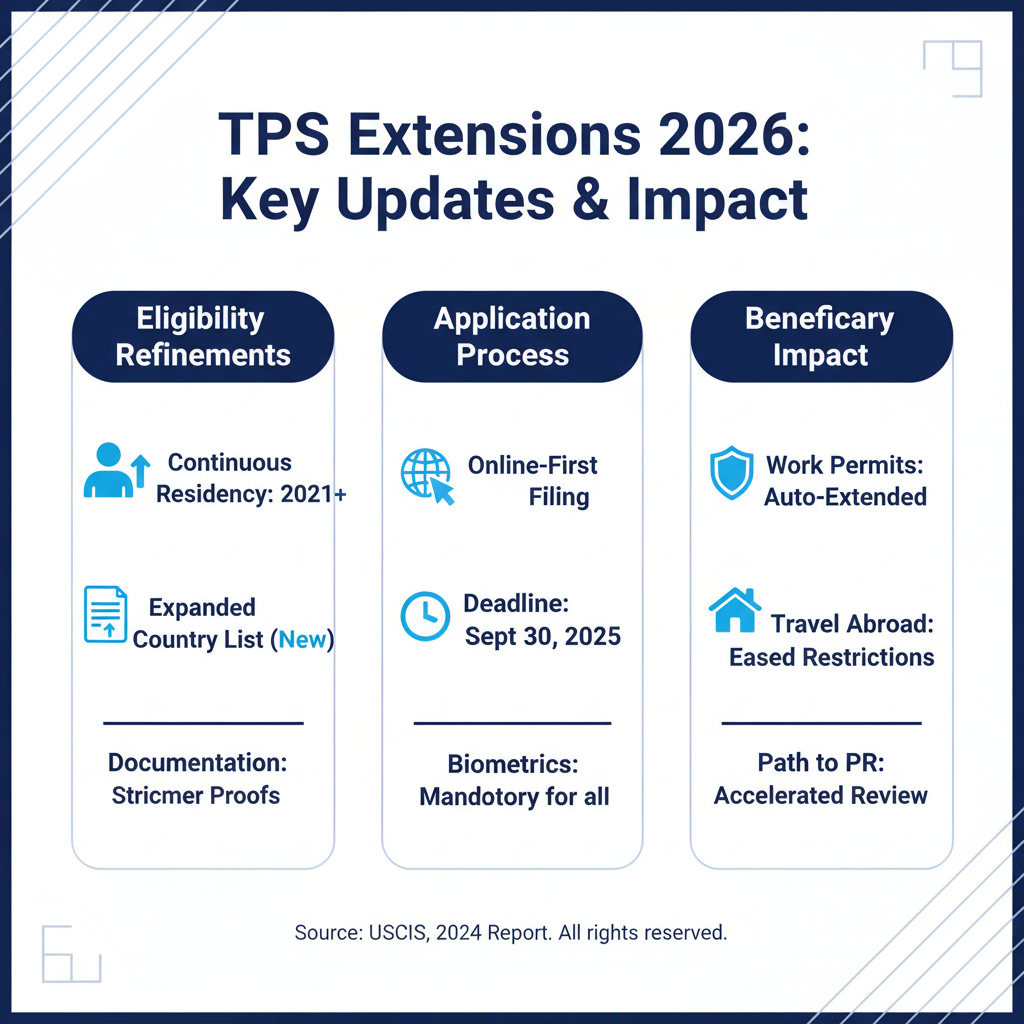
Recent dispatches from legal news outlets have highlighted a series of announcements from the U.S. Department of Homeland Security (DHS) regarding the extension of Temporary Protected Status for several countries. These extensions are not merely administrative formalities; they represent a lifeline for hundreds of thousands of individuals who have built lives, homes, and families in the United States, often fleeing dangerous conditions in their home countries. The continuous review and subsequent extensions of TPS designations underscore the ongoing humanitarian challenges globally and the U.S. government's response to them.
TPS (Temporary Protected Status) Extension News (Legal News)
What This News Means for Immigrants in Orlando and Across Florida
For the vibrant immigrant communities throughout Florida, and particularly here in Orlando, news of TPS extensions carries significant weight. Florida is home to a diverse population, including many individuals from countries currently designated for TPS. These extensions provide a crucial period of stability, allowing beneficiaries to continue living and working legally in the U.S. without fear of deportation.
Why this news is showing up now
TPS designations are not permanent. They are granted by the Secretary of Homeland Security for periods of 6, 12, or 18 months, based on specific conditions in a foreign country, such as ongoing armed conflict, environmental disaster, or other extraordinary and temporary conditions. As these periods approach their expiration, DHS is statutorily obligated to review the conditions in the designated countries. If the conditions persist, the Secretary may decide to extend the designation. This process is cyclical, and thus, news of extensions frequently emerges as expiration dates loom for various countries. The current wave of announcements reflects these ongoing reviews and decisions, often influenced by the evolving political landscape, current events in the designated countries, and advocacy efforts by humanitarian and legal organizations.
How it can affect Florida residents
Florida, with its large immigrant population, is directly impacted by these decisions. For TPS beneficiaries residing in cities like Orlando, Kissimmee, Tampa, and Miami, an extension means:
- Continued Protection: You remain protected from deportation from the U.S.
- Work Authorization: Your Employment Authorization Document (EAD), also known as a work permit, can be renewed, allowing you to continue working legally. This is vital for supporting families and contributing to the local economy, especially along the I-4 corridor.
- Travel Authorization: With an approved travel document (Advance Parole), you may be able to travel outside the U.S. and return, though this always carries risks and requires careful planning.
- Stability: The extension provides a period of continued legal status, offering a measure of certainty in uncertain times. This is particularly important for families with U.S. citizen children who rely on their TPS parents.
Conversely, if an extension were *not* granted for a country, beneficiaries would face the difficult prospect of losing their legal status and work authorization, potentially leading to deportation proceedings. This makes every extension announcement a critical moment for thousands of Florida families.
What TPS Is (and Why It Matters)
Temporary Protected Status (TPS) is a humanitarian immigration benefit that allows eligible foreign nationals from certain countries to live and work in the United States temporarily. It is a critical form of relief, distinct from asylum or refugee status, though it shares the goal of protecting individuals from returning to dangerous conditions.
A plain-English definition
Imagine your home country is experiencing a major crisis – a devastating earthquake, a civil war, or an epidemic that has completely destabilized daily life. It would be unsafe, perhaps even life-threatening, for you to return. TPS is essentially a temporary legal permission granted by the U.S. government that says, "Because conditions in your home country are so bad right now, you can stay in the U.S. legally for a set period, and you can work here." It's not a path to a Green Card directly, but it provides a safe harbor until conditions in your country improve, or until you might qualify for another immigration benefit.
The U.S. Secretary of Homeland Security has the authority to designate a country for TPS based on one or more of three statutory grounds:
- Ongoing armed conflict (e.g., civil war).
- An environmental disaster (e.g., earthquake, hurricane) or an epidemic.
- Other extraordinary and temporary conditions.
Once a country is designated, individuals from that country who were already in the U.S. by a certain date can apply for TPS. If granted, they receive protection from deportation and are eligible for an Employment Authorization Document (EAD).
Key terms you need to know
Navigating TPS requires understanding specific terminology. Here are some key terms:
- Designation: The initial act by the Secretary of Homeland Security to grant TPS to a specific country due to qualifying conditions. This sets the eligibility period and the initial registration deadline.
- Redesignation: When the Secretary determines that conditions in a TPS-designated country have worsened or changed significantly, they may "redesignate" the country. This allows individuals who arrived in the U.S. *after* the initial designation date, but before the new redesignation date, to apply for TPS, broadening the pool of eligible beneficiaries.
- Extension: When the Secretary determines that the conditions supporting a country's TPS designation continue to exist, they will "extend" the designation for an additional period (typically 6, 12, or 18 months). This requires current TPS holders to re-register.
- Re-registration: The process by which current TPS beneficiaries apply to extend their TPS status and renew their EAD during an extension period. This is the primary action required after an extension announcement.
- Employment Authorization Document (EAD): Also known as a work permit, this card (Form I-766) allows TPS beneficiaries to legally work in the U.S.
- Advance Parole: A travel document (Form I-512 or part of Form I-131) that allows a TPS beneficiary to travel outside the U.S. and return without jeopardizing their TPS status. This must be obtained *before* traveling.
- INA Section 244: The specific section of the Immigration and Nationality Act (INA) that outlines the legal framework for Temporary Protected Status.
Confused by Immigration Jargon? Our team at Imigrar speaks your language – literally and figuratively. We simplify complex legal terms and guide you every step of the way. Call us at +1 786-791-3106 for clear, compassionate advice. Se Habla Español.
Current Immigration Law: The Foundation
Temporary Protected Status is a creature of federal law, specifically Section 244 of the Immigration and Nationality Act (INA), codified at 8 U.S.C. § 1254a. This statute grants the Secretary of Homeland Security the authority to designate countries for TPS based on the conditions mentioned above. It’s a humanitarian provision designed to offer temporary relief, not a permanent solution, although many beneficiaries have resided in the U.S. for extended periods due to repeated extensions.
Federal requirements
To be eligible for TPS, an individual must meet several federal requirements:
- Nationality: Be a national of a country designated for TPS, or a person without nationality who last habitually resided in that country.
- Continuous Physical Presence (CPP): Have been continuously physically present in the U.S. since the effective date of the most recent designation or redesignation for their country.
- Continuous Residence (CR): Have been continuously residing in the U.S. since the date specified for their country's designation or redesignation.
- Admissibility: Meet admissibility requirements, though certain grounds of inadmissibility can be waived.
- Criminal Record: Not have been convicted of any felony or two or more misdemeanors committed in the U.S.
- Security Concerns: Not be found inadmissible under certain security-related grounds.
- Application: Properly file Form I-821, Application for Temporary Protected Status, within the registration or re-registration period.
It's crucial to understand that even if a country's TPS designation is extended, individual eligibility must be re-established during each re-registration period. USCIS will review your current situation, including any new arrests or convictions, and your continuous physical presence and residence.
For the most up-to-date information on TPS designations and requirements, always refer to the USCIS official website.
Florida-specific considerations
While TPS is a federal program, its impact is felt locally. For Florida residents, especially those in Orlando and the broader Central Florida area, the extension of TPS means:
- Driver's Licenses: Your Florida driver's license or state identification card may need to be renewed using your new EAD and TPS approval notice. Florida's Department of Highway Safety and Motor Vehicles (FLHSMV) offices in Orange County and surrounding areas are accustomed to processing renewals for individuals with various immigration statuses, including TPS.
- Employment: Continued work authorization allows you to maintain your job, support your family, and contribute to Florida's economy. Many employers in Orlando are familiar with EADs, but it's always good to have your documentation in order.
- Community Resources: Local community organizations and legal aid groups in Florida often provide assistance and information regarding TPS, especially during re-registration periods. Imigrar is proud to be a key resource in this network.
There are no specific Florida state laws that govern TPS eligibility or processing, as it is solely a federal program. However, maintaining your legal status through TPS helps ensure you can access state benefits and services for which you are otherwise eligible, such as continuing education or certain licenses.
How to Re-register for TPS: A Complete Step-by-Step Guide
When an extension is announced for your country's TPS designation, the most critical step is to re-register within the specified window. Missing this window can lead to the loss of your TPS status. Here’s a detailed guide:
1) Monitor Official Announcements and Deadlines
The very first step is to stay informed. USCIS publishes Federal Register notices (FRN) detailing the extension, the new validity period, the re-registration window (often 60 days), and specific instructions. Regularly check the USCIS official website for updates related to your country. Pay close attention to the start and end dates of the re-registration period. Missing this deadline is a common and serious mistake.
- Required Documents for this step: None, but keep a calendar or set reminders for the re-registration window.
2) Gather Your Existing TPS Documentation
Before you begin filling out forms, compile all your previous TPS-related documents. This includes:
- Previous TPS approval notices (Form I-797).
- Previous Employment Authorization Documents (EADs) (Form I-766).
- Any travel documents (Advance Parole, Form I-512 or Form I-131 approval notices) you may have received while on TPS.
- Proof of identity and nationality (e.g., passport).
- Proof of continuous physical presence and continuous residence in the U.S. since your last registration or the initial designation date.
Reminder: Keep original documents safe and submit only copies to USCIS unless explicitly requested otherwise.
3) Complete Form I-821, Application for Temporary Protected Status
This is the primary form for re-registration. Download the latest version from the USCIS Forms page. Fill it out completely and accurately. Pay close attention to sections asking about your entry into the U.S., continuous residence, and any criminal history. Even minor errors can cause delays or denials.
- Required Documents for this step:
- Completed Form I-821.
- Copy of your most recent TPS approval notice.
- Copy of your current EAD (front and back).
- Two passport-style photos.
- Copy of your passport or other proof of nationality.
- If applicable, proof of identity and nationality (e.g., birth certificate with photo ID, national identity card with photo).
4) Complete Form I-765, Application for Employment Authorization (Optional, but Recommended)
If you wish to continue working legally, you must apply for a new EAD. File Form I-765 concurrently with your Form I-821. On Form I-765, for question 27 ("Eligibility Category"), you will typically enter (c)(19) for TPS beneficiaries. This form also requires two passport-style photos.
- Required Documents for this step:
- Completed Form I-765.
- Two identical passport-style photos (if not submitting with Form I-821).
- Copy of your last EAD (front and back).
- Copy of your birth certificate or other foreign national identity document.
- Copy of your last Form I-94, Arrival/Departure Record (if available).
5) Consider Form I-131, Application for Travel Document (If You Plan to Travel)
If you anticipate needing to travel outside the U.S. while your TPS is active, you must apply for Advance Parole by filing Form I-131. You cannot simply leave and expect to return. Leaving without Advance Parole can be considered abandonment of your TPS status and may prevent your re-entry. File this form concurrently with your other applications.
- Required Documents for this step:
- Completed Form I-131.
- Two passport-style photos.
- Copy of your TPS approval notice.
- Copies of any previous Advance Parole documents.
- Explanation for your need to travel.
6) Calculate and Pay the Correct Fees
Fees are a critical component of your application.
- Form I-821: USCIS sometimes waives the fee for Form I-821 during re-registration, but an applicant is always required to pay the biometrics services fee unless they are under 14 or over 80 years of age. Always check the specific Federal Register Notice for your country’s extension for current fee requirements.
- Form I-765: There is a fee for filing Form I-765 to renew your EAD.
- Form I-131: There is a separate fee for Form I-131.
You can pay by money order, personal check, cashier's check, or by credit card using Form G-1450, Authorization for Credit Card Transactions. Make checks payable to "U.S. Department of Homeland Security." Do NOT send cash. Fee waivers (Form I-912) may be available for some fees based on income or receipt of means-tested benefits. Always verify current fees on the USCIS Forms and Fees page.
- Required Documents for this step:
- Check or money order for the exact amount.
- Or, completed Form G-1450.
- Or, completed Form I-912 (if requesting a fee waiver).
7) Mail Your Application Package and Attend Biometrics
Carefully assemble your application package. Include all forms, supporting documents, photos, and fee payments. Mail it to the correct USCIS lockbox facility as specified in the Federal Register Notice for your country. The address will depend on your mailing method (USPS vs. courier service). After filing, you will receive a receipt notice (Form I-797C) and later, an appointment notice for biometrics (fingerprints and photos) at an Application Support Center (ASC), likely the one in Orlando or another Central Florida location. Attend this appointment promptly.
- Required Documents for this step:
- Completed application package.
- Proof of identity for biometrics appointment (e.g., driver's license, passport).
- Biometrics appointment notice.
Overwhelmed by Forms and Deadlines? Imigrar takes the stress out of TPS re-registration. We ensure your application is accurate, complete, and submitted on time. Contact our Orlando office today for personalized assistance. Call +1 786-791-3106. Se Habla Español.
Practical Steps You Can Take Today
Don't wait for the last minute to act on TPS extension news. Proactive steps can save you stress and ensure your continued legal status.
Actionable checklist with 5+ items
- Verify Your Country's Status: Immediately check the USCIS official website for the latest Federal Register Notice regarding your country's TPS designation and extension period. Confirm the re-registration window.
- Organize Your Documents: Start gathering all previous TPS approval notices, EADs, passports, and any other identity or immigration documents. Make copies of everything.
- Review Your Eligibility: Reflect on your history since your last TPS application. Have you had any arrests or convictions? Have you traveled outside the U.S. without Advance Parole? Any changes in your situation need to be carefully considered.
- Update Your Address: If you have moved, file Form AR-11, Alien's Change of Address Card, with USCIS online or by mail within 10 days of moving. This ensures you receive all notices.
- Consult with an Immigration Attorney: This is perhaps the most crucial step. An experienced attorney can review your specific situation, ensure you meet all requirements, help you complete forms accurately, and advise on any potential issues. This is especially important if you have any criminal history or have traveled internationally.
- Budget for Fees: Start setting aside funds for application fees or gather documentation for a fee waiver request.
Document preparation guidance
- Copies, Not Originals: Unless specifically requested, always submit copies of your supporting documents, not originals. Keep your originals safe.
- Organize Clearly: Use cover letters, tabs, and clear labels for your application package. This helps USCIS officers process your application more efficiently.
- Passport Photos: Ensure your passport photos meet USCIS specifications (2x2 inches, white background, no glasses, recent).
- Proof of Residence/Presence: Utility bills, leases, school records, employment records, bank statements, or medical records can prove your continuous residence and physical presence in Florida.
Timeline expectations
While USCIS processing times can vary, here’s a general timeline:
- Re-registration Window: Typically 60 days from the publication of the Federal Register Notice. This is a strict deadline.
- Receipt Notice: You should receive a receipt notice (Form I-797C) within 2-4 weeks after USCIS receives your application.
- Biometrics Appointment: An appointment notice for biometrics usually arrives within 4-8 weeks of filing. The appointment itself will be scheduled a few weeks after that.
- EAD Processing: The processing time for Form I-765 can vary significantly. Check the USCIS Processing Times tool online. USCIS often issues automatic EAD extensions for up to 540 days for timely re-registrants whose country's TPS has been extended. This automatic extension allows you to continue working while your new EAD is being processed.
- TPS Approval Notice: Approval of your Form I-821 usually comes with or before your new EAD.
Important: Always check the USCIS website for current processing times and specific instructions for your country's TPS extension.
How Imigrar Helps Immigrants in Orlando
At Imigrar, we understand that navigating the complexities of U.S. immigration law can be daunting, especially when dealing with critical deadlines and ever-changing regulations like those for TPS. Our mission, "Keep Families Together," drives every action we take, providing dedicated and compassionate legal support to immigrants in Orlando, across Florida, and nationwide.
Our experience and expertise
Our team of experienced immigration attorneys has a profound understanding of Temporary Protected Status and its intricacies. We stay meticulously updated on all new Federal Register Notices, policy changes, and processing nuances from USCIS and DHS. We have successfully assisted countless individuals from various TPS-designated countries with initial applications, re-registrations, EAD renewals, and related immigration matters.
We provide comprehensive services, including:
- Eligibility Assessment: Thoroughly reviewing your specific circumstances to confirm your eligibility for TPS re-registration or other immigration benefits.
- Application Preparation: Meticulously preparing and reviewing all required forms (Form I-821, Form I-765, Form I-131, etc.) to ensure accuracy and completeness, minimizing the risk of delays or denials.
- Document Compilation: Guiding you through the process of gathering and organizing all necessary supporting documents, ensuring everything is properly presented.
- Fee Waiver Assistance: Advising on eligibility for fee waivers and assisting with the preparation of Form I-912 if applicable.
- Representation: Representing you throughout the entire process, including responding to Requests for Evidence (RFEs) from USCIS.
- Strategic Planning: Exploring potential pathways beyond TPS, such as Adjustment of Status or other visa options, to help you achieve long-term immigration goals.
For Central Florida residents, our Orlando office is conveniently located to serve you directly, offering personalized attention that larger, less localized firms often cannot. We understand the local context, including the Orlando USCIS Field Office procedures, and are ready to be your trusted legal partner.
Free consultation offer
We believe that everyone deserves access to expert legal advice. That’s why Imigrar offers a free, no-obligation consultation for individuals seeking guidance on TPS and other immigration matters. This is your opportunity to speak directly with an attorney, ask your questions, and understand your options without any upfront cost.
During your consultation, we can:
- Explain the latest TPS extension news and how it specifically applies to your country.
- Assess your eligibility for re-registration.
- Outline the complete re-registration process and associated timelines.
- Discuss any potential challenges or concerns you may have.
- Provide clear, actionable advice on your next steps.
Don't let deadlines or confusion stand in the way of your family's future. Take advantage of our expertise and commitment to your success.
Se Habla Español: We are proud to serve our Spanish-speaking community. Our team is fully bilingual, ensuring that you can communicate comfortably and clearly in your preferred language.
Ready for Peace of Mind? Schedule your free consultation with Imigrar today. Let us help you secure your TPS status and plan for your future in the U.S. Call +1 786-791-3106 or visit our website to get started. Se Habla Español.
Frequently Asked Questions
Q: Who is eligible to re-register for TPS following an extension announcement?
A: Generally, you are eligible to re-register if you are a national of the designated country (or a person without nationality who last habitually resided in that country), were granted TPS under the previous designation, and have continuously resided and been continuously physically present in the U.S. since the specified dates. You must also not have certain criminal convictions or be subject to certain bars to eligibility.


