


The immigration landscape is constantly evolving, and staying informed about the latest developments is crucial for immigrants and their families. At Imigrar, your trusted Orlando immigration law firm, we understand the profound impact these changes can have on your life. Today, we delve into significant news regarding Temporary Protected Status (TPS) extensions, a vital lifeline for many individuals from designated countries living in the United States.
Our mission is to "Keep Families Together," and providing accurate, timely, and actionable information is a cornerstone of that commitment. This comprehensive guide will break down the recent TPS updates, explain what TPS is, outline the application process, and offer practical advice for those in Orlando, Central Florida, and nationwide.
The reporting that sparked this guide
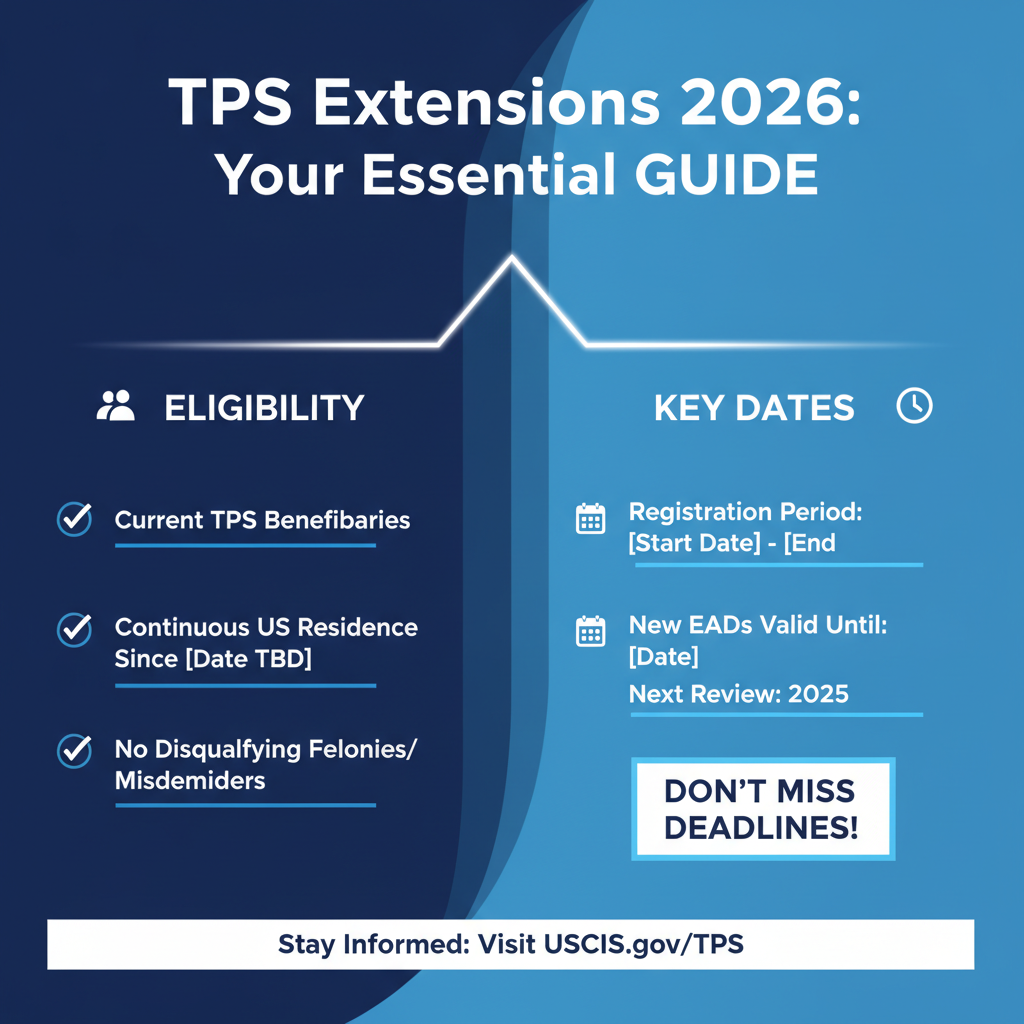
The continuous flow of information from official government channels and legal news outlets is essential for us to provide the most current advice. This guide is informed by the latest updates concerning TPS extensions for designated countries, as reported in various legal news sources.
TPS (Temporary Protected Status) Extension News (Legal News)
What This News Means for Immigrants in Orlando and Across Florida
Recent announcements regarding the extension of Temporary Protected Status for several designated countries are a significant development for thousands of individuals and families. For those residing in Orlando and throughout Florida, these extensions offer a renewed sense of security and stability, but also necessitate prompt action and careful attention to detail.
Why this news is showing up now
TPS designations and extensions are not arbitrary; they are the result of ongoing evaluations by the U.S. Department of Homeland Security (DHS) regarding specific country conditions. When a country is designated for TPS, or an existing designation is extended, it’s typically due to one or more of three statutory bases: ongoing armed conflict, environmental disaster, or extraordinary and temporary conditions. The current news cycles reflect DHS’s latest reviews of these conditions for various countries. As the world faces persistent humanitarian crises, political instability, and natural disasters, the need for TPS as a form of humanitarian relief remains critical.
These decisions often involve extensive inter-agency consultation and public comment periods, culminating in official notices published in the Federal Register. The timing of these announcements is usually tied to the expiration dates of current TPS designations, ensuring a seamless transition for beneficiaries if an extension is granted. For instance, if a country's TPS designation is set to expire on January 5, 2027, DHS will typically announce an extension or termination several months in advance, often in the latter half of 2026, to allow for re-registration periods.
How it can affect Florida residents
Florida, with its diverse population and strong ties to many countries currently designated for TPS, is home to a substantial number of TPS beneficiaries. For these individuals and their families, the news of extensions is not just a headline; it's a direct impact on their ability to live, work, and contribute to their communities without fear of deportation.
- Continued Protection: An extension means that eligible individuals from the designated countries will continue to be protected from removal from the United States. This is paramount for maintaining family unity and personal safety.
- Work Authorization: Along with protection from removal, TPS beneficiaries are eligible for Employment Authorization Documents (EADs), which allow them to work legally in the U.S. Extensions typically come with provisions for automatic EAD extensions or new re-registration periods to apply for new EADs. This is vital for economic stability, especially for families in Orlando relying on these wages.
- Travel Authorization: While not automatic, TPS beneficiaries can apply for travel authorization (Advance Parole) to travel outside the U.S. and return. An extension ensures that this option remains available, subject to USCIS approval.
- Planning and Stability: For families, businesses, and communities in Central Florida, an extension provides a crucial period of stability. It allows individuals to continue their education, maintain their jobs, and plan for their futures without the immediate threat of being forced to return to dangerous conditions.
- Legal Pathways: While TPS itself is a temporary status and does not directly lead to a Green Card, it can serve as a foundation for exploring other potential immigration pathways. An extended TPS period gives beneficiaries more time to assess these options with legal counsel.
Important: While the news of extensions is positive, it also means that beneficiaries must take proactive steps to re-register within the specified window. Failing to do so can lead to a loss of TPS benefits, including protection from removal and work authorization.
Need Help? Our Orlando immigration team is ready to assist. Call +1 786-791-3106 for a free consultation, or message us online. Se Habla Español.
What Temporary Protected Status (TPS) Is (and Why It Matters)
Temporary Protected Status (TPS) is a humanitarian immigration benefit that offers a critical lifeline to individuals from certain countries who are unable to return safely to their home countries due to extraordinary circumstances. Established by the Immigration Act of 1990, TPS is a temporary status that provides protection from deportation and eligibility for work authorization in the United States.
A plain-English definition
Imagine your home country is experiencing a severe crisis – perhaps a devastating earthquake, a civil war, or a widespread epidemic – making it unsafe for you to return. The U.S. government, recognizing these dire circumstances, can designate your country for "Temporary Protected Status." This means that, for a specific period, you can live and work legally in the United States, and you won't be deported. It's not a path to permanent residency or a Green Card on its own, but it offers a crucial temporary reprieve and stability until conditions in your home country improve.
This status is reviewed periodically, and the designation can be extended, re-designated, or terminated depending on the ongoing conditions in the home country. For those in Orlando and across the U.S. who rely on TPS, these decisions are life-altering, providing either continued hope or significant uncertainty.
Key terms you need to know
Navigating immigration law requires understanding specific terminology. Here are some key terms related to TPS:
- Designated Country: A foreign country whose citizens are eligible for TPS due to conditions that prevent their safe return. These conditions are typically ongoing armed conflict, environmental disaster, or extraordinary and temporary conditions. Examples of countries currently designated for TPS include El Salvador, Haiti, Honduras, Nepal, Nicaragua, Somalia, South Sudan, Sudan, Syria, Ukraine, Venezuela, Yemen, and others. The list changes, so it’s important to verify the current designations.
- Initial Designation: The first time a country is granted TPS. Individuals must generally apply during this initial registration period.
- Extension: When DHS determines that the conditions warranting TPS continue to exist, the designation period is prolonged. This is often accompanied by a re-registration period.
- Re-designation: This occurs when DHS finds that new conditions in a country meet the statutory requirements for TPS, or that conditions have worsened, making it unsafe for individuals to return. Re-designation typically opens a new registration period for individuals who may not have been eligible under the previous designation.
- Termination: When DHS determines that the conditions in a designated country no longer meet the statutory requirements, the TPS designation can be ended. This means beneficiaries will lose their TPS status, protection from removal, and work authorization after a specific wind-down period.
- Re-registration Period: A specific window of time (usually 60 days) during which current TPS beneficiaries must apply to extend their status. Missing this deadline without good cause can result in the loss of TPS.
- Employment Authorization Document (EAD): Also known as a work permit, this document allows TPS beneficiaries to work legally in the United States. It is typically applied for using Form I-765.
- Advance Parole: A travel document (Form I-131) that allows certain non-citizens, including TPS beneficiaries, to travel outside the U.S. and return without jeopardizing their immigration status.
- Continuous Physical Presence (CPP): A requirement for TPS eligibility, meaning the applicant has been physically present in the U.S. since a specific date set by the TPS designation for their country.
- Continuous Residence (CR): Another eligibility requirement, meaning the applicant has continuously resided in the U.S. since a specific date set by the TPS designation for their country.
- Prima Facie Eligibility: Refers to meeting the basic requirements for TPS without any disqualifying factors.
- Federal Register Notice: The official publication of the U.S. government where all TPS designations, extensions, re-designations, and terminations are announced, along with specific eligibility dates and re-registration instructions.
Understanding these terms is fundamental to navigating the TPS process successfully. Imigrar is here to help you decipher the legal jargon and ensure you understand your rights and responsibilities.
Current Immigration Law: The Foundation
Temporary Protected Status is rooted in federal immigration law, specifically Section 244 of the Immigration and Nationality Act (INA), found at 8 U.S.C. § 1254a. This statute empowers the Secretary of Homeland Security to grant TPS to eligible foreign nationals from countries experiencing designated crises.
Federal requirements
To be eligible for TPS, an individual must meet several federal requirements:
- Nationality: Be a national of a country designated for TPS, or a person without nationality who last habitually resided in that designated country.
- Continuous Physical Presence (CPP): Have been continuously physically present in the United States since the effective date of the most recent TPS designation for their country. This date is specified in the Federal Register notice for each country.
- Continuous Residence (CR): Have been continuously residing in the United States since the date specified by the Secretary of Homeland Security for their country's TPS designation. This date is also published in the Federal Register. Brief, casual, and innocent absences from the U.S. do not necessarily break continuous residence.
- Timely Application: Apply for TPS during the initial registration period or during any subsequent re-registration period. There are limited exceptions for late initial registration, such as for those who maintained a lawful nonimmigrant status or a pending asylum application during the initial registration period.
- Admissibility: Meet the general admissibility requirements for immigration benefits. Certain criminal offenses (e.g., two misdemeanors or one felony), persecution of others, or national security grounds can render an applicant ineligible. Waivers for certain grounds of inadmissibility may be available.
- Security Checks: Pass all required security and background checks.
The specific dates for CPP and CR, as well as the re-registration periods, are crucial and vary by country. It is imperative to consult the specific Federal Register notice for your country's TPS designation or extension. You can find these notices and general information on the USCIS official website.
Florida-specific considerations
While TPS is a federal program, there are some Florida-specific considerations that beneficiaries should be aware of:
- Driver's Licenses: TPS beneficiaries in Florida are generally eligible to obtain a Florida driver's license or state identification card, provided they can present their valid EAD and other required identification documents. The Florida Department of Highway Safety and Motor Vehicles (FLHSMV) accepts EADs as proof of legal presence.
- Community Resources: Florida has a robust network of community organizations and non-profits that provide support services to immigrant communities, including legal aid clinics, language services, and social support. For residents of Orange County and surrounding areas, resources are often available through local non-profits and cultural centers.
- Local Enforcement: While TPS provides federal protection from deportation, local law enforcement interactions can still be complex. Carrying your EAD and TPS approval notice can be helpful. It is always advisable to understand your rights and, if stopped or questioned, to consult with an attorney.
- Access to Services: TPS holders in Florida can typically access certain state and local services, but eligibility for specific benefits (like public assistance) can vary and often depends on their specific immigration status category and length of residence.
Warning: Florida does not have its own state-level TPS program. Any protection or benefits related to TPS are solely derived from the federal designation. Be wary of any claims to the contrary.
When applying for or re-registering for TPS, you will primarily interact with U.S. Citizenship and Immigration Services (USCIS). The main forms involved are:
- Form I-821, Application for Temporary Protected Status: This is the primary form for requesting or re-registering for TPS.
- Form I-765, Application for Employment Authorization: If you wish to obtain or renew your work permit, you must file this form, typically concurrently with Form I-821.
- Form I-601, Application for Waiver of Grounds of Inadmissibility: If you have certain inadmissibility issues (e.g., minor criminal convictions or immigration violations), you may need to file this form.
- Form I-912, Request for Fee Waiver: If you cannot afford the filing fees, you may be eligible for a fee waiver.
All forms and their instructions can be found on the USCIS Forms page. It is critical to use the most current version of each form and follow the instructions precisely.
Need Help? Our Orlando immigration team is ready to assist. Call +1 786-791-3106 for a free consultation, or message us online. Se Habla Español.
How to Re-register for TPS: A Complete Step-by-Step Guide
If your country’s TPS designation has been extended, the most critical step is to re-register within the specified period. Missing this window can lead to the loss of your protected status and work authorization. This guide is for current TPS holders seeking to re-register. If you are applying for TPS for the first time under a new designation or re-designation, some steps may differ, and it's even more crucial to seek legal counsel.
1) Determine Your Eligibility and Re-registration Period
Before doing anything else, confirm that your country's TPS designation has indeed been extended and identify the precise re-registration period. This information is published in the Federal Register and on the USCIS website. Do not rely on rumors or unofficial sources. The re-registration window is typically 60 days, and timely filing is paramount.
- Check Official Sources: Visit the USCIS official website for the latest Federal Register notices pertaining to your country's TPS status. Look for the specific dates for Continuous Physical Presence (CPP) and Continuous Residence (CR), as well as the re-registration period start and end dates.
- Review Your Own Status: Ensure you have maintained your TPS eligibility since your initial grant. This means you have not committed any disqualifying crimes, have not left the U.S. without Advance Parole, and continue to meet other basic requirements.
2) Gather All Required Documents
Even for re-registration, USCIS requires documentation to confirm your continued eligibility. While some documents might be on file from your initial application, it’s always best to be thorough.
- Proof of Identity and Nationality:
- Copy of your passport from the designated country.
- Copy of your birth certificate with photo identification.
- National identity document from your country with photo and/or fingerprint.
- Any other official document proving nationality and identity.
- Proof of Continuous Residence in the U.S.: Documents showing you have lived in the U.S. since the specified date for your country. Provide as many as possible, covering the entire period.
- Rent receipts, utility bills (electricity, water, gas, internet).
- Employment records (pay stubs, W-2 forms, employment letters).
- School records (transcripts, enrollment letters).
- Medical records (hospital visits, doctor's appointments).
- Bank statements, credit card statements.
- Affidavits from credible witnesses (notary required).
- Receipts for money transfers or purchases.
- Any documents issued by USCIS (e.g., previous EADs, I-797 approval notices).
- Proof of Continuous Physical Presence in the U.S.: Similar documents to CR, but specifically focusing on physical presence.
- Copies of your I-94 arrival/departure record.
- Entry stamps in your passport.
- Any travel documents (e.g., Advance Parole) used for authorized departures and returns.
- Previous TPS Documentation:
- Copy of your most recent Form I-797, Approval Notice for Form I-821.
- Copy of your most recent EAD based on TPS.
- Criminal and Court Records (if applicable):
- Certified copies of all arrest records, court dispositions, and sentencing records, even for minor offenses.
- Proof of completion of probation or parole.
- If a waiver is needed, gather supporting documents for Form I-601.
- Marriage Certificates/Birth Certificates: If applying for family members or if your name has changed.
Reminder: All documents not in English must be accompanied by a complete English translation certified by the translator as accurate and competent. Keep copies of everything you submit!
3) Complete and Prepare Your Forms
Accurate and complete forms are crucial to avoid delays or denials. Use the latest versions of the forms available on the USCIS Forms page.
- Form I-821, Application for Temporary Protected Status:
- Fill out every section completely. If a question does not apply, write "N/A" (Not Applicable).
- Pay special attention to sections asking about your entry into the U.S., criminal history, and any previous immigration applications.
- Ensure your name, date of birth, and other identifying information match exactly across all documents.
- Form I-765, Application for Employment Authorization:
- If you need to renew your EAD, you must file this form.
- For TPS re-registration, the eligibility category is typically (c)(19).
- Attach two passport-style photos taken within 30 days of filing. Write your name and A-Number lightly on the back of each photo.
- Form I-912, Request for Fee Waiver (Optional):
- If you cannot afford the filing fees for Form I-821 and Form I-765, you may apply for a fee waiver.
- Carefully read the instructions and provide sufficient evidence of your financial inability (e.g., proof of receiving means-tested benefits, household income below 150% of the poverty line, or financial hardship).
Important: If you are applying for a fee waiver, do NOT include payment for the application fees. If you are paying, ensure your check or money order is for the correct amount, made payable to "U.S. Department of Homeland Security."
4) Organize Your Application Package
A well-organized application package can help USCIS process your case more efficiently.
- Cover Letter: Include a cover letter listing all the forms and supporting documents you are submitting.
- Order of Documents:
- Check or money order (or Form I-912).
- Form I-821.
- Form I-765 (if applicable), with photos clipped to it.
- Supporting documents for Form I-821 (proof of nationality, residence, etc.).
- Supporting documents for Form I-765 (if any specific ones are required beyond I-821 docs).
- Any other supporting forms (e.g., Form I-601).
- Copies: Make a complete copy of the entire application package for your records before mailing.
- Staple or Binder Clip: Use a single staple or binder clip for each individual form and its direct supporting documents. Do not staple the entire package together.
5) Submit Your Application to USCIS
Mail your completed application package to the correct USCIS filing address. The address depends on your specific mailing service (USPS, FedEx, UPS) and the state you reside in. For those in Orlando and across Florida, you will typically mail to a USCIS Lockbox Facility.
- Check Filing Address: Always verify the correct filing address on the USCIS website for Form I-821. The address changes frequently.
- Mailing Method: Use a mailing service that provides tracking and delivery confirmation (e.g., USPS Certified Mail with Return Receipt, FedEx, UPS). This provides proof of timely filing, which is essential for meeting deadlines.
Warning: Ensure you mail your application well before the re-registration deadline. Postmark dates are critical!
6) Attend Your Biometrics Appointment
After USCIS receives your application, you will typically receive a receipt notice (Form I-797C, Notice of Action). Within a few weeks or months, you will receive an appointment notice for biometrics (fingerprints, photograph, and signature) at an Application Support Center (ASC).
- Do Not Miss It: Biometrics appointments are mandatory. If you cannot attend, you must reschedule immediately by following the instructions on the notice.
- What to Bring: Bring your appointment notice, a valid photo ID (like your EAD or passport), and any other documents specified in the notice.
- Purpose: Biometrics are used for background checks and identity verification.
For Central Florida residents, your biometrics appointment will likely be at the Orlando USCIS Application Support Center or another nearby ASC.
7) Monitor Your Case Status and Respond to RFEs
After your biometrics appointment, the waiting period begins. You can monitor the status of your application online.
- Online Case Status: Use the receipt number from your Form I-797C to check your case status on the USCIS Case Status Online tool.
- Request for Evidence (RFE): USCIS may send an RFE if they need more information or clarification. Respond promptly and thoroughly to all RFEs within the specified deadline. Failure to respond can lead to denial.
- Approval/Denial: If approved, you will receive an approval notice for Form I-821 and, if applicable, your new EAD. If denied, USCIS will provide a reason for the denial.
Important: Keep your contact information updated with USCIS. If you move, file Form AR-11, Alien's Change of Address Card, and update your address online. Failing to receive notices can have serious consequences.
Need Help? Our Orlando immigration team is ready to assist. Call +1 786-791-3106 for a free consultation, or message us online. Se Habla Español.

Practical Steps You Can Take Today
Navigating the TPS re-registration process can feel overwhelming, but taking proactive steps can significantly ease the burden and increase your chances of a successful outcome. Here’s an actionable checklist for individuals in Orlando, along the I-4 corridor, and throughout Florida.
Actionable Checklist:
- Verify Your Country's Status: Immediately confirm if your country’s TPS designation has been extended and what the new re-registration period is. Check the USCIS website or consult with an immigration attorney.
- Locate and Organize Existing Documents: Gather all your previous TPS approval notices, EADs, passports, birth certificates, and any documents proving your continuous residence and physical presence in the U.S. Start a dedicated folder for these important papers.
- Collect New Proof of Residence: Even if you have prior documents, collect recent utility bills, bank statements, pay stubs, and other mail addressed to you at your current Florida address to demonstrate ongoing residence.
- Update Your Address with USCIS: If you have moved since your last TPS application, file Form AR-11, Alien's Change of Address Card, online and ensure your address is updated for any pending applications. This is critical to receive important notices.
- Review Your Criminal History: Be honest and thorough. Obtain certified copies of all court dispositions for any arrests or citations, even minor ones. Discuss any concerns with your attorney.
- Consult with an Immigration Attorney: This is arguably the most crucial step. An experienced attorney can verify your eligibility, help you gather documents, accurately complete forms, identify potential issues, and represent you throughout the process.
- Budget for Fees: If you are not eligible for a fee waiver, ensure you have the necessary funds for the Form I-821 and Form I-765 filing fees.
- Plan for Biometrics: Be prepared to attend a biometrics appointment at a local Application Support Center. For Orlando residents, this would typically be the Orlando ASC.
Document Preparation Guidance
- Create a Master Checklist: Make a list of every document you need and check them off as you gather them.
- Make Copies, Always: Create at least two complete sets of copies of your entire application package – one for your records and one to submit. Never send original documents unless specifically requested by USCIS.
- Certified Translations: If any document is not in English, it must be accompanied by a full, word-for-word English translation. The translator must


