


The landscape of U.S. immigration law is constantly shifting, and few areas demonstrate this more clearly than Temporary Protected Status (TPS). For thousands of individuals and families living in Orlando, across Florida, and nationwide, TPS represents a vital lifeline, offering temporary relief from deportation and the ability to work legally.
Recent news regarding TPS extensions for various designated countries has once again brought this critical program into the spotlight. At Imigrar, we understand that these announcements can bring both hope and uncertainty. Our mission is to provide clear, actionable information to help you navigate these complex updates and protect your future.
The reporting that sparked this guide
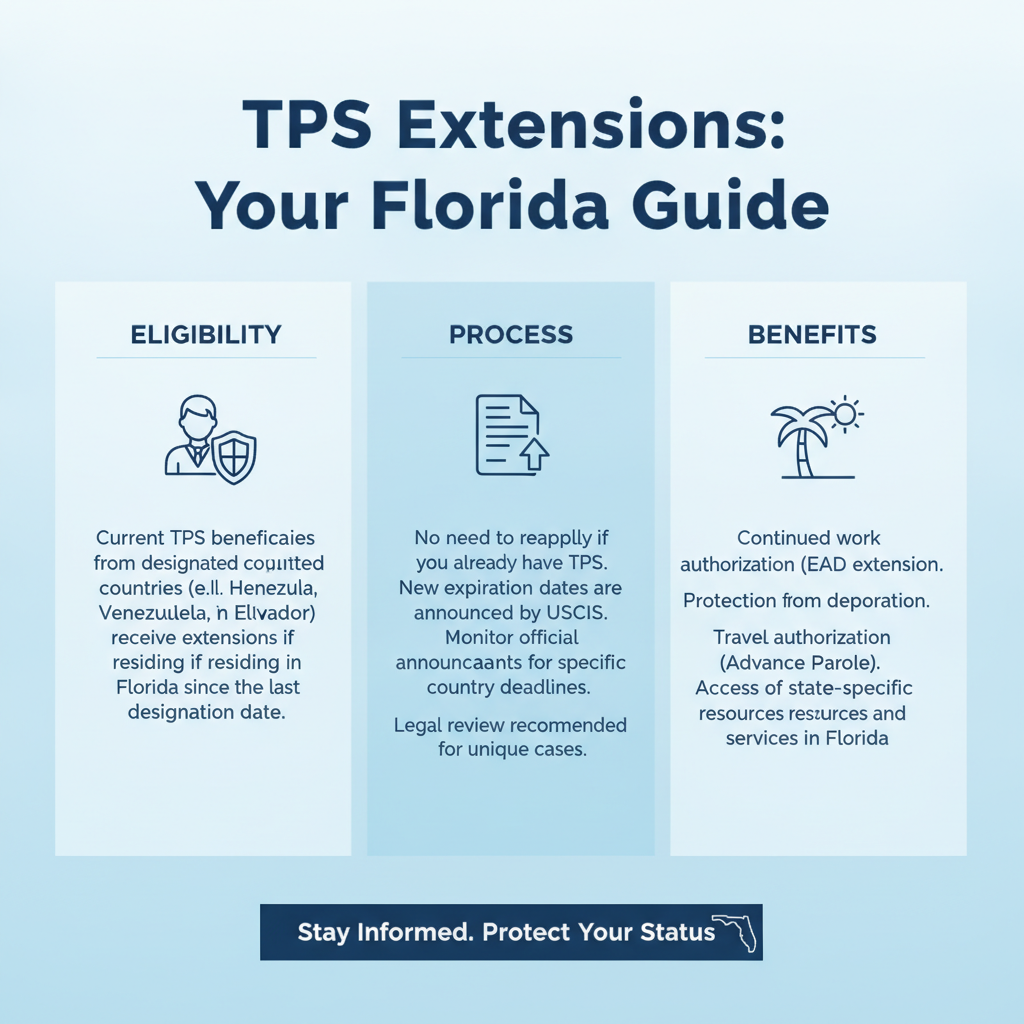
The information and guidance in this article are inspired by the latest developments in immigration law, particularly those concerning Temporary Protected Status extensions, as reported in various legal news outlets. Keeping abreast of these critical updates is paramount for anyone whose status or future may be impacted.
TPS (Temporary Protected Status) Extension News (Legal News)
What This News Means for Immigrants in Orlando and Across Florida
The recent wave of news concerning TPS designations, redesignations, and extensions is more than just headlines; it directly impacts the lives of hundreds of thousands of individuals and families who call the United States home. For those residing in Florida, a state with one of the nation's largest immigrant populations, these updates carry particular weight.
Why this news is showing up now
TPS is a temporary status granted by the Secretary of Homeland Security to eligible nationals of certain countries (or parts thereof) who are already in the United States. This designation occurs when conditions in that country prevent its nationals from returning safely, or when the country is unable to handle the return of its nationals adequately. These conditions can include ongoing armed conflict, environmental disaster, or other extraordinary and temporary conditions.
The "news showing up now" typically refers to several key events:
- Extensions of Existing Designations: The Secretary of Homeland Security reviews conditions in designated countries at least 60 days before the expiration of the current TPS period. If conditions continue to meet the statutory requirements, the designation is extended for another 6, 12, or 18 months. These extensions often come with specific re-registration periods.
- Redesignations: Sometimes, a country's TPS status might be redesignated. This means that, in addition to continuing TPS for those already covered, the eligibility dates for continuous residence and continuous physical presence are updated, allowing a new group of individuals who arrived in the U.S. more recently to apply for TPS.
- New Designations: In response to new crises, the Secretary may designate a country for TPS for the first time.
Given the global geopolitical climate and the frequency of natural disasters, it is common to see regular announcements from the Department of Homeland Security (DHS) regarding TPS. These announcements are crucial because they set new deadlines for re-registration or initial application, and they extend the validity of work permits (Employment Authorization Documents - EADs) for current beneficiaries.
How it can affect Florida residents
Florida, particularly Central Florida with its vibrant and diverse communities in Orlando, Kissimmee, and surrounding areas, is home to a significant population from many TPS-designated countries. For example, large communities from countries like Haiti, Venezuela, Nicaragua, El Salvador, Honduras, and others reside throughout the state. Therefore, any TPS announcement directly impacts a substantial portion of Florida’s immigrant population.
- Continued Stability: For current TPS beneficiaries, an extension means continued protection from deportation and the ability to maintain legal employment in the U.S. This provides a crucial sense of stability for families, allowing them to continue working, paying taxes, and contributing to Florida's economy and communities.
- New Opportunities: A redesignation or new designation can open doors for thousands of individuals who previously did not qualify due to arrival dates. This is particularly relevant for those who have been living in Florida for years, contributing to the local economy, but lacked formal immigration status.
- Economic Impact: TPS beneficiaries are an integral part of Florida's workforce, contributing to various sectors from hospitality to healthcare to agriculture. Continued TPS allows them to remain employed, supporting their families and the local economy.
- Family Unity: TPS helps keep families together. Many beneficiaries have U.S. citizen children or spouses. The ability to remain in the U.S. without fear of deportation is fundamental to family well-being.
- Legal Deadlines: The most immediate effect is the establishment of critical deadlines for re-registration or initial applications. Missing these windows can lead to loss of status, making legal advice and timely action absolutely essential. For Central Florida residents, understanding these deadlines and acting promptly is key to maintaining their protected status.
The Orlando USCIS Field Office and local immigration courts are directly impacted by these announcements, processing applications and managing cases for thousands of Florida residents. Understanding the specific requirements and deadlines for your country’s TPS status is paramount.
Need Help? Our Orlando immigration team is ready to assist. Call +1 786-791-3106 for a free consultation, or message us online. Se Habla Español.
What Temporary Protected Status (TPS) Is (and Why It Matters)
Temporary Protected Status (TPS) is a humanitarian immigration program designed to protect foreign nationals already present in the United States from returning to dangerous conditions in their home countries. It's a lifeline for many, but its temporary nature means beneficiaries must stay informed about extensions and re-registration periods.
A plain-English definition
Imagine your home country suddenly becomes unsafe due to war, a massive earthquake, or another severe crisis. If you are already in the United States when this happens, the U.S. government might decide it's not safe for you to go back. Temporary Protected Status, or TPS, is a special status that allows you to legally remain in the U.S. for a temporary period, typically 6, 12, or 18 months, depending on the designation. While you have TPS, you are protected from deportation and can apply for a work permit (Employment Authorization Document, or EAD) so you can legally work to support yourself and your family.
Important: TPS is not a green card and does not automatically lead to permanent residency or U.S. citizenship. It is a temporary form of relief that must be renewed (re-registered for) periodically as long as the country maintains its designation.
Key terms you need to know
- Designation: This is when the Secretary of Homeland Security officially identifies a country (or a part of a country) as eligible for TPS due to ongoing armed conflict, environmental disaster, or other extraordinary and temporary conditions.
- Redesignation: If conditions in a TPS-designated country worsen or new conditions arise, the Secretary can redesignate the country. This updates the eligibility dates for continuous residence and continuous physical presence, potentially allowing more recent arrivals from that country to apply for TPS.
- Extension: When the conditions that led to a country's TPS designation continue, the Secretary can extend the existing TPS period for eligible beneficiaries, typically for another 6, 12, or 18 months. This is what much of the recent news has been about.
- Withdrawal/Termination: If the Secretary determines that the conditions in a designated country no longer meet the statutory requirements for TPS, the designation can be terminated. This means TPS beneficiaries from that country would lose their protected status unless they have another immigration status or relief.
- Continuous Physical Presence (CPP): One of the eligibility requirements for TPS. It means you must have been physically present in the U.S. since a specific date set by the TPS designation for your country.
- Continuous Residence (CR): Another key eligibility requirement. It means you must have resided in the U.S. since a specific date set by the TPS designation for your country. Brief, casual, and innocent absences from the U.S. may not break continuous residence.
- Employment Authorization Document (EAD): Often referred to as a "work permit," this document allows TPS beneficiaries to legally work in the United States. You apply for it using Form I-765.
- Re-registration Period: A specific window of time (often 60 days) during which current TPS beneficiaries must apply to extend their status. Missing this deadline can lead to loss of TPS.
- Statutory Requirements: The specific conditions outlined in law (Immigration and Nationality Act) that a country must meet for TPS designation, extension, or redesignation.
Understanding these terms is crucial for anyone seeking or holding TPS. The temporary nature of this status means beneficiaries must remain vigilant and proactive in managing their immigration situation.
Current Immigration Law: The Foundation of TPS
Temporary Protected Status is not a discretionary program; it is firmly rooted in U.S. immigration law, specifically the Immigration and Nationality Act (INA). Understanding the legal framework provides clarity on why and how TPS is granted and maintained.
Reference specific laws and statutes
TPS was established by Section 244 of the Immigration and Nationality Act (INA), codified at 8 U.S.C. § 1254a. This section of the law grants the Secretary of Homeland Security (formerly the Attorney General) the authority to designate a foreign country for TPS. The statute outlines the specific criteria for designation, which include:
- Ongoing armed conflict: The country is experiencing ongoing armed conflict, and returning nationals would pose a serious threat to their personal safety.
- Environmental disaster: The country has experienced an environmental disaster (such as an earthquake, hurricane, or flood), or an epidemic, and the foreign government is unable to handle the return of its nationals adequately.
- Extraordinary and temporary conditions: There exist extraordinary and temporary conditions in the foreign country that prevent its nationals from returning safely, unless the Secretary finds that allowing them to remain in the U.S. would be contrary to the national interest.
The INA also specifies the eligibility requirements for individuals seeking TPS from a designated country, including requirements for continuous physical presence and continuous residence in the U.S. since a specified date, and that the individual must not have been convicted of certain crimes.
Federal requirements
To be eligible for TPS, an individual must meet several federal requirements, which are consistent across all designated countries:
- Be a national of a country designated for TPS, or a person without nationality who last habitually resided in that country.
- File for TPS during the initial registration period or during any extension of the designation (re-registration period).
- Have been continuously physically present (CPP) in the U.S. since the effective date of the most recent designation for their country.
- Have been continuously residing (CR) in the U.S. since the date specified for their country's designation.
- Be admissible to the U.S. as an immigrant, subject to certain waivers.
- Not have been convicted of any felony or two or more misdemeanors committed in the U.S.
- Not be found inadmissible under certain criminal, national security, or other grounds.
The primary form used to apply for TPS is Form I-821, Application for Temporary Protected Status. If you wish to work legally in the U.S., you must also file Form I-765, Application for Employment Authorization, along with the appropriate fee or a fee waiver request. These forms, along with detailed instructions, are available on the USCIS official website.
Reminder: It is crucial to file these forms within the specified registration or re-registration windows. Missing a deadline can result in the denial of your application or the loss of your TPS status.
Florida-specific considerations
While TPS is a federal program, its implementation and impact are deeply felt at the state and local levels. Florida’s position as a major hub for immigrants means that a significant portion of TPS beneficiaries reside here. The Orlando USCIS Field Office plays a crucial role in processing applications for residents of Central Florida, and immigration courts across the state handle related matters.
- Local Resources: Florida has numerous community organizations and legal aid groups that offer assistance to immigrants, often providing workshops or legal clinics specifically for TPS applicants.
- Economic Integration: Many TPS holders in Florida are vital to the state's economy, working in industries ranging from tourism and hospitality (prominent in Orlando) to construction and agriculture. Their ability to maintain legal work authorization directly impacts their families and the state's economic health.
- Advocacy: Florida-based immigrant rights organizations often advocate for extensions or new TPS designations, highlighting the plight of communities residing in the state.
For Central Florida residents, staying informed about local resources and legal support is just as important as understanding the federal requirements. The dynamic nature of TPS means that even if you have had TPS for years, each extension requires careful attention to detail and adherence to deadlines.
Don't risk your status! The complexities of TPS law require expert guidance. Contact Imigrar at +1 786-791-3106 for a free consultation. We serve clients in Orlando, Orange County, and nationwide. Se Habla Español.
How to Apply for TPS or Re-register: A Complete Step-by-Step Guide
Whether you are applying for TPS for the first time or re-registering to extend your current status, the process requires meticulous attention to detail. This guide outlines the essential steps to navigate the application successfully.
1) Determine Your Eligibility and the Correct Filing Period
Before doing anything else, confirm that you meet the fundamental requirements for TPS for your country. This means:
- Country Designation: Is your country currently designated for TPS? Check the latest announcements from USCIS or the Department of Homeland Security.
- Continuous Physical Presence (CPP): You must have been physically present in the U.S. since the date specified for your country's designation.
- Continuous Residence (CR): You must have continuously resided in the U.S. since the date specified for your country's designation.
- Admissibility and Criminal Record: You must be admissible to the U.S. and not have been convicted of any felony or two or more misdemeanors.
- Filing Period: For initial applications, you must file during the initial registration period. For extensions, you must re-register during the specific re-registration window announced by USCIS, which is typically 60 days. Filing outside this window can lead to denial.
Required Documents for Eligibility Assessment:
- Proof of nationality (e.g., passport, birth certificate with photo ID).
- Proof of date of entry into the U.S. (e.g., I-94 arrival/departure record, airline tickets, passport stamps).
- Proof of continuous residence in the U.S. since the designated date (e.g., utility bills, lease agreements, school records, employment records, medical records).
2) Gather All Necessary Supporting Documents
This is a critical step. Missing documents or submitting insufficient evidence can cause significant delays or even a denial. Organize your documents carefully.
General Required Documents:
- Proof of Identity and Nationality:
- Copy of your passport (biographic page, visa page, entry stamp).
- Copy of your birth certificate accompanied by a photo identification document.
- Any national identity document from your country of origin with your photograph and/or fingerprint.
- Proof of Entry into the U.S.:
- Copy of Form I-94, Arrival/Departure Record.
- Passport entry stamps.
- Airline tickets or boarding passes.
- Proof of Continuous Residence in the U.S. (since the specified date):
- Rent receipts, utility bills, or lease agreements (showing your name and address).
- Employment records (pay stubs, W-2 forms, letters from employers).
- School records (transcripts, enrollment letters).
- Medical records (hospital bills, doctor's notes).
- Bank statements.
- Affidavits from friends, family, or employers (with their contact information).
- Church records or other organization memberships.
- Two passport-style photos.
- Any previous immigration documents (e.g., previous EADs, notices of approval for other statuses).
- Certified English translations for any documents not in English.
3) Complete Form I-821 and Form I-765 (if desired)
These are the primary forms you will submit to USCIS.
- Form I-821, Application for Temporary Protected Status: Fill out every section completely and accurately. Do not leave any questions blank; if a question doesn't apply, write "N/A" (not applicable).
- Form I-765, Application for Employment Authorization: If you want to work legally in the U.S., you must file this form concurrently with Form I-821. Mark "c)(19)" as your eligibility category.
You can find the latest versions of these forms and their instructions on the USCIS Forms page. Read the instructions carefully before completing the forms.
4) Prepare Your Application Packet
Organize all your forms and supporting documents neatly. USCIS prefers applications to be organized in a specific way to facilitate processing.
- Place the Form I-821 on top, followed by Form I-765 (if applicable).
- Attach the required fees (or fee waiver request) to the top of the packet.
- Behind each form, attach its specific supporting documents. For example, proof of identity behind Form I-821, and photos and copies of previous EADs behind Form I-765.
- Make a complete copy of your entire application packet for your records before mailing it. This is a critical step!
5) Calculate and Pay All Required Filing Fees (or Request a Fee Waiver)
There are several fees associated with TPS applications:
- Form I-821 Filing Fee: This fee depends on your age and whether you are applying for initial registration or re-registration. Check the USCIS filing fees page for the most current amounts.
- Biometrics Services Fee: This fee is required for all applicants aged 14 and older.
- Form I-765 Filing Fee: If you are applying for an Employment Authorization Document (EAD), there is an additional fee for Form I-765.
You may be eligible for a fee waiver if you can demonstrate an inability to pay. To request a fee waiver, you must file Form I-912, Request for Fee Waiver, along with your application. Provide supporting documentation such as proof of income below 150% of the federal poverty guidelines, receipt of means-tested benefits, or financial hardship.
Payment Methods: USCIS accepts checks, money orders, or credit card payments (using Form G-1450, Authorization for Credit Card Transactions).
6) Mail Your Application Packet
Send your completed application to the correct USCIS lockbox facility. The address depends on the designated country and whether you are submitting an initial application or re-registration. Always check the specific USCIS instructions for your country's TPS designation for the correct mailing address.
- Use a mailing service that provides tracking (e.g., USPS Certified Mail, FedEx, UPS) so you have proof of submission and delivery.
- If you are applying for initial TPS, re-registering, and/or applying for an EAD, ensure all forms and fees are sent together in one envelope.
7) Attend Your Biometrics Appointment and Monitor Your Case Status
After USCIS receives your application, they will send you a receipt notice (Form I-797C, Notice of Action). Within a few weeks to months, you will receive an appointment notice for biometrics (fingerprints, photograph, and signature) at an Application Support Center (ASC).
- Attend the Appointment: It is mandatory to attend your biometrics appointment. Bring the appointment notice and a valid photo ID.
- Monitor Status: You can check the status of your case online using the receipt number provided on your Form I-797C at USCIS Case Status Online. You can also sign up for email or text message updates.
- Interviews: While not all TPS applicants are interviewed, USCIS may schedule an interview if they require additional information or clarification.
- Decision: Once your application is processed, USCIS will mail you a decision notice. If approved, you will receive your TPS approval notice and your new EAD (if you applied for one).
Warning: Processing times can vary significantly. Check the USCIS Processing Times website for estimates, but be prepared for potential delays.
Practical Steps You Can Take Today
Navigating TPS extensions and applications can feel overwhelming, but proactive steps can make a significant difference. Here’s an actionable checklist to help you today, especially if you're in Orlando or Central Florida.
Actionable checklist with 5+ items
- Confirm Your Country’s Status and Deadlines: Immediately check the USCIS official website for the latest announcements regarding your specific country's TPS designation, extension, or redesignation. Note the exact re-registration period or initial application window. This is the most crucial piece of information.
- Gather All Existing Immigration Documents: Collect your current EAD, previous TPS approval notices, Form I-94, passport, and any other immigration-related paperwork. Having these ready will save time.
- Locate Proof of Continuous Residence and Physical Presence: Start compiling documents that prove you have been living in the U.S. since the required date. This includes utility bills, bank statements, lease agreements, school records, employment letters, and medical records from your time in Florida.
- Review Your Criminal History: Be honest with yourself and your attorney about any arrests or convictions, no matter how minor. Certain criminal offenses can disqualify you from TPS. Obtaining certified court dispositions for any past incidents is advisable.
- Consult with an Experienced Immigration Attorney: This is arguably the most important step. An attorney can confirm your eligibility, help you gather and organize documents, accurately complete forms, and represent you if any issues arise. For Central Florida residents, seeking local expertise can be invaluable.
- Set Up a Filing System: Create a dedicated folder, digital or physical, for all your TPS-related documents. Keep originals safe and submit only copies (unless USCIS specifically requests originals).
- Plan for Fees: Determine the total filing fees (Form I-821, Form I-765, biometrics) and plan how you will pay them. If you anticipate needing a fee waiver, start gathering documentation to support your Form I-912.
Document preparation guidance
- Organize Chronologically: When submitting proof of continuous residence, arrange documents in chronological order from the earliest date to the most recent. This makes it easier for USCIS officers to review.
- Photocopies Only: Unless specifically requested, always send photocopies of your original documents. Keep your originals safe.
- Translations: Any document not in English must be accompanied by a complete and accurate English translation, certified by the translator. The certification must state that the translator is competent to translate and that the translation is accurate.
- Legibility: Ensure all copies are clear and legible. If a document is difficult to read, try to obtain a clearer copy or provide an explanation.
- Multiple Sources: Don't rely on just one type of document for proof of residence. Provide a variety of documents (e.g., a utility bill, a pay stub, and a school record for the same period).
Timeline expectations
While TPS extensions provide relief, the processing times can vary. Here’s what you can generally expect:
- Re-registration/Initial Application Window: Typically 60 days from the date of the announcement. This is a strict deadline.
- Receipt Notices: You should receive a Form I-797C, Notice of Action, acknowledging receipt of your application within 2-4 weeks of filing.
- Biometrics Appointment: An appointment notice usually arrives within 1-3 months of filing. The actual appointment is typically within 1-2 months after receiving the notice.
- EAD Processing: Form I-765 processing times vary significantly, ranging from 6 months to over a year. USCIS often automatically extends existing EADs for TPS beneficiaries in specific situations to prevent gaps in employment authorization while new ones are processed. Always check the latest USCIS guidance on automatic EAD extensions.
- TPS Approval Notice: The approval for Form I-821 can take anywhere from 6 months to over a year, depending on the volume of applications and USCIS workload.
Warning: These are estimates. USCIS processing times can fluctuate significantly. Regularly check the USCIS Processing Times page for the most current information, specifically for Form I-821 and Form I-765.
How Imigrar Helps Immigrants in Orlando and Beyond
At Imigrar, we understand that TPS extensions, re-registrations, and initial applications can be complex and stressful. Our mission, "Keep Families Together," drives our commitment to providing expert legal guidance and support to immigrants in Orlando, across Florida, and throughout the nation.
Our experience and expertise
Our team of dedicated immigration attorneys possesses extensive experience in all facets of Temporary Protected Status. We stay abreast of the latest announcements from DHS and USCIS, ensuring that our clients receive the most current and accurate advice. Our


