


The reporting that sparked this guide: TPS (Temporary Protected Status) Extension News (Legal News)
What This News Means for Immigrants in Orlando and Across Florida
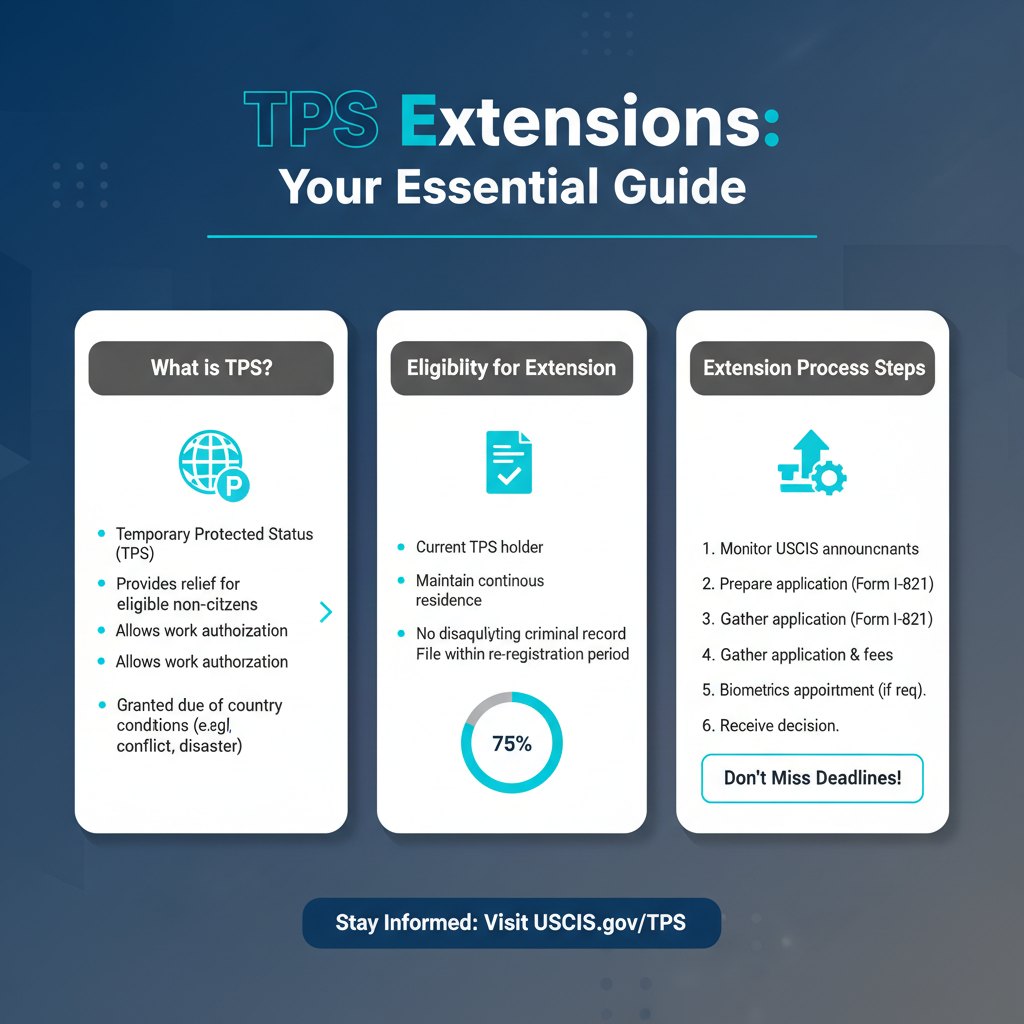
The landscape of U.S. immigration law is constantly shifting, and few areas demonstrate this more clearly than Temporary Protected Status (TPS). For hundreds of thousands of individuals living in the United States, TPS offers a vital lifeline – protection from deportation and the ability to work legally. Recent announcements regarding the extension of TPS designations for several countries have once again brought this critical program into the spotlight. For families in Orlando, throughout Florida, and nationwide, these updates are not just legal news; they are news that impacts lives, livelihoods, and the ability to keep families together.
Why this news is showing up now
TPS is a temporary designation granted by the Secretary of Homeland Security to eligible nationals of certain countries (or parts thereof) who are already in the United States. This designation is made when conditions in their home country prevent their safe return due to armed conflict, environmental disaster, or other extraordinary and temporary conditions. The initial designation period for TPS is typically 6, 12, or 18 months, but it can be, and often is, extended if the unsafe conditions persist. This periodic review process is precisely why we see these news updates regularly.
As of March 14, 2026, the Department of Homeland Security (DHS) has been reviewing the conditions in various TPS-designated countries. These reviews are conducted meticulously, involving input from the Department of State and other government agencies, to assess whether the statutory criteria for TPS continue to be met. When DHS determines that conditions still warrant protection, an extension is announced. This allows current TPS beneficiaries to re-register for an additional period of protection and employment authorization. Countries like Haiti, Venezuela, El Salvador, Honduras, Nicaragua, Sudan, and Afghanistan, among others, have seen their TPS designations extended multiple times due to ongoing instability. These extensions are not automatic; they are the result of careful government assessment and often, significant advocacy from immigrant communities and their allies.
For many, particularly those from countries facing persistent challenges, these extensions are a recurring, yet always anxious, part of their lives in the U.S. Each announcement brings a mix of relief and a reminder of the temporary nature of their status. It’s a moment to act swiftly and correctly to ensure continued protection.
How it can affect Florida residents
Florida, with its diverse population and position as a major gateway for immigrants, is home to a significant number of individuals from TPS-designated countries. The implications of TPS extensions for Florida residents are profound:
- Continued Protection from Deportation: For eligible individuals, an extension means they can continue to live and work in the U.S. without fear of removal. This stability is invaluable for families, allowing them to plan for their children's education, maintain employment, and contribute to their communities.
- Employment Authorization: TPS beneficiaries are eligible for an Employment Authorization Document (EAD), commonly known as a work permit. An extension ensures that individuals can renew their EADs, allowing them to maintain legal employment and support their families. This is particularly crucial in a state like Florida, where many TPS holders are integral to key industries.
- Travel Authorization: With an approved Form I-131 (Application for Travel Document, also known as Advance Parole), TPS holders can travel outside the U.S. and return legally. Extensions mean this option remains available for those who need to visit family or address urgent matters abroad, provided they meet specific criteria.
- Community Stability: For cities like Orlando and counties like Orange County, where immigrant communities thrive, TPS extensions contribute to overall community stability. Families can remain together, children can continue their schooling uninterrupted, and local economies benefit from the continued contributions of TPS holders.
- Planning for the Future: While TPS is not a direct path to a Green Card, it provides a foundation. Extensions offer more time for individuals to explore other potential avenues for permanent residency, such as family-based petitions or employment-based visas, if they become eligible.
If your case is in Orlando or anywhere in Central Florida, understanding these updates and acting promptly is paramount. The Orlando USCIS Field Office processes applications for residents in this region, and being prepared is key to a smooth re-registration process. Along the I-4 corridor and across the state, Imigrar is dedicated to helping individuals navigate these complex updates and secure their future.
Need Help? Our Orlando immigration team is ready to assist. Call +1 786-791-3106 for a free consultation, or message us online. Se Habla Español.
What Temporary Protected Status (TPS) Is (and Why It Matters)
Temporary Protected Status, or TPS, is a humanitarian immigration program established by the United States government. It’s designed to offer a safe haven to individuals from countries experiencing severe crises, allowing them to temporarily live and work in the U.S. without fear of deportation.
A plain-English definition
Imagine your home country becomes too dangerous to return to. This could be because of a raging war, a massive natural disaster like an earthquake or hurricane, or other extraordinary circumstances that make everyday life impossible or life-threatening. The U.S. government, through the Secretary of Homeland Security, can designate that country for TPS. This means that if you are from that designated country and are already in the U.S., you can apply for temporary permission to stay here. This permission protects you from being deported and allows you to get a work permit (an Employment Authorization Document), so you can legally work and support yourself and your family.
Important: TPS is not a permanent solution or a direct path to a Green Card. It is, as the name suggests, temporary. It lasts for a specific period, and then the government reviews the situation in your home country to decide whether to extend, redesignate, or terminate the status. However, for many, it provides crucial stability and a chance to rebuild their lives during times of crisis back home.
Key terms you need to know
Understanding TPS involves familiarity with several key terms:- Designated Country: A country (or a specific region within a country) that the Secretary of Homeland Security has officially determined meets the statutory conditions for TPS. Examples include Haiti, Venezuela, El Salvador, and Nicaragua, among others, that have faced significant challenges.
- Initial Registration: This refers to the first time an individual applies for TPS when their country is initially designated. There is a specific window of time (usually 180 days) during which initial registration applications must be filed.
- Re-registration: When a country's TPS designation is extended, current beneficiaries must apply to renew their status within a specified re-registration period. This is crucial for maintaining protection and work authorization. Missing this window can lead to loss of TPS benefits.
- Employment Authorization Document (EAD): Also known as a work permit, this document (Form I-766) allows TPS beneficiaries to legally work in the United States. An EAD is typically valid for the duration of the TPS designation period.
- Travel Document (Advance Parole): This document (Form I-512L, issued based on Form I-131) grants TPS beneficiaries permission to travel outside the United States and return lawfully without jeopardizing their TPS status. It is not automatic and must be applied for separately.
- Filing Period: A specific window of time during which applications for initial registration or re-registration for TPS must be submitted to USCIS. These deadlines are strict, and missing them can have severe consequences.
- Statutory Basis: The legal grounds or reasons under which a country can be designated for TPS. These are outlined in Section 244 of the Immigration and Nationality Act (INA) and typically involve ongoing armed conflict, environmental disaster, or other extraordinary and temporary conditions.
- Continuous Physical Presence (CPP): A requirement for TPS eligibility, meaning the applicant has been continuously present in the U.S. since a specific date set for their country's designation. Brief, casual, and innocent absences generally do not break CPP.
- Continuous Residence (CR): Another eligibility requirement, meaning the applicant has continuously resided in the U.S. since a specific date set for their country's designation.
Understanding these terms is the first step toward successfully navigating the TPS process, especially when a country’s designation is extended. For residents of Orlando and Central Florida, keeping abreast of these definitions and their implications is key to maintaining legal status and stability.
Current Immigration Law: The Foundation of TPS
Temporary Protected Status is not merely a policy; it is a program firmly rooted in U.S. immigration law. Its existence and application are governed by specific statutes, regulations, and judicial interpretations. Understanding this legal framework is essential for anyone seeking or holding TPS.
The primary legal authority for TPS is found in Section 244 of the Immigration and Nationality Act (INA), codified at 8 U.S.C. § 1254a. This section empowers the Secretary of Homeland Security (or formerly, the Attorney General) to grant TPS to eligible foreign nationals. The law specifies the conditions under which a country may be designated for TPS and the criteria individuals must meet to qualify.
Federal requirements for TPS designation and individual eligibility
The INA outlines three specific statutory bases for a country's designation:
- Ongoing Armed Conflict: The country is experiencing ongoing armed conflict, and returning nationals would face a serious threat to their personal safety due to the conflict.
- Environmental Disaster: The country has experienced an earthquake, flood, drought, epidemic, or other environmental disaster resulting in a substantial, but temporary, disruption of living conditions, and the country is unable to handle the return of its nationals adequately.
- Extraordinary and Temporary Conditions: There exist extraordinary and temporary conditions in the foreign state that prevent nationals from returning safely, and granting TPS is consistent with the national interests of the United States.
Once a country is designated, individuals must meet several federal requirements to be eligible for TPS:
- Be a national of a TPS-designated country (or a person without nationality who last habitually resided in that country).
- Have been continuously physically present (CPP) in the U.S. since the effective date of the most recent designation.
- Have been continuously residing (CR) in the U.S. since the date specified for their country's designation.
- Apply for TPS during the initial registration period or, if already a TPS beneficiary, during the re-registration period.
- Not be inadmissible under certain grounds, such as those related to criminal convictions (specifically, two misdemeanors or one felony), national security, or certain terrorism-related grounds.
- Not be subject to the mandatory bars to asylum, such as having persecuted others.
- Meet other specific eligibility requirements as outlined by USCIS for their particular country's designation.
It is crucial to understand that these requirements are applied rigorously. Any misrepresentation or failure to meet the criteria can lead to denial of TPS. The government regularly publishes Federal Register notices detailing the specific dates and requirements for each designated country.
Florida-specific considerations
While TPS is a federal program, its implementation has practical implications for residents of Florida. For individuals living in Orlando or elsewhere in Central Florida, your application will be processed by U.S. Citizenship and Immigration Services (USCIS). Although there are no specific Florida state laws governing TPS, the state's large immigrant population means that local resources and services are often tailored to assist TPS beneficiaries.
- USCIS Field Offices: If your case requires an interview or a biometrics appointment, you will likely interact with the Orlando USCIS Field Office or other field offices in Florida. Understanding the location and procedures of these offices is important.
- Legal Support: Florida has a robust network of immigration legal services. Firms like Imigrar, based in Orlando, specialize in assisting clients with TPS applications and re-registrations, offering guidance on federal requirements and local procedures.
- Community Resources: Many community organizations in Central Florida provide assistance and information to TPS holders, helping them access legal aid, language services, and other support.
Navigating the federal legal requirements for TPS can be complex. The process involves specific forms and documentation:
- Form I-821, Application for Temporary Protected Status: This is the primary form for requesting TPS.
- Form I-765, Application for Employment Authorization: Filed to obtain or renew an EAD.
- Form I-131, Application for Travel Document: Filed if you wish to apply for Advance Parole to travel outside the U.S. and return.
All official forms and detailed instructions can be found on the USCIS official website. It is always recommended to use the latest versions of these forms, which are regularly updated.
Need Help? Our Orlando immigration team is ready to assist. Call +1 786-791-3106 for a free consultation, or message us online. Se Habla Español.
How to Re-Register for TPS: A Complete Step-by-Step Guide
When TPS for your country is extended, re-registration is not optional – it is essential to maintain your protected status and work authorization. Missing the re-registration deadline can lead to the loss of your TPS benefits, including protection from removal and your eligibility to work. This guide outlines the critical steps for re-registering for TPS.
1) Determine Your Eligibility and Re-registration Window
The first and most crucial step is to confirm that your country's TPS designation has indeed been extended and to identify the specific re-registration period. USCIS publishes a Federal Register notice for each country that receives an extension. This notice will specify:
- The new validity period for TPS.
- The specific re-registration window (e.g., a 60-day or 180-day period) during which you must submit your application.
- Any updated eligibility requirements or considerations.
Actionable Advice: Visit the USCIS TPS webpage regularly or sign up for USCIS email updates. Verify the re-registration deadline for your country immediately upon hearing news of an extension. Do not rely solely on hearsay.
2) Gather Required Documents
Even for re-registration, USCIS requires documentation to confirm your continued eligibility. While typically less extensive than initial registration, it’s vital to have everything in order. You will generally need:
- Proof of Identity and Nationality:
- Copy of your passport (biographic page).
- Copy of your birth certificate with photo identification.
- Any national identity document from your country of origin with your photograph and/or fingerprint.
- Proof of Continuous Residence in the U.S. since the initial designation date:
- Copies of previous TPS approval notices or EADs.
- Rental receipts, utility bills (electricity, water, gas) in your name.
- Employment records (pay stubs, W-2 forms, tax returns).
- School records (transcripts, enrollment letters).
- Medical records.
- Affidavits from individuals who can attest to your residence.
- Two passport-style photographs.
- Copy of your most recent EAD (if applicable).
Reminder: All documents not in English must be accompanied by a complete English translation certified by a translator. Keep copies of everything you submit.
3) Complete and File Forms I-821 and I-765 (and I-131, if needed)
You will need to complete and submit the following forms:
- Form I-821, Application for Temporary Protected Status:
- This is the main application for re-registration. Ensure you select "re-registration" on the form.
- Fill out every section accurately and completely. Do not leave blanks; if a question does not apply, write "N/A."
- Sign the form. An unsigned form will be rejected.
- Form I-765, Application for Employment Authorization:
- If you wish to continue working legally, you must file this form to renew your Employment Authorization Document (EAD).
- Ensure you select the correct eligibility category (usually (c)(19) for TPS).
- Sign the form.
- Form I-131, Application for Travel Document (Optional):
- If you need to travel outside the U.S. and return legally (Advance Parole), you must file this form.
- Provide a detailed explanation for your need to travel.
- Warning: Traveling without an approved Advance Parole document can lead to denial of your TPS and/or inadmissibility upon return.
Important: Always download the latest version of these forms from the USCIS Forms page. Instructions are updated frequently.
4) Pay Filing Fees or Request a Fee Waiver
There are fees associated with filing Form I-821 and Form I-765. Additionally, there is a separate biometric services fee. However, certain fee waivers are available for TPS applications:
- Form I-821 Fee: The fee for Form I-821 is often waived for re-registrants. Check the specific Federal Register notice for your country.
- Form I-765 Fee: There is a fee for Form I-765, which can be waived if you meet certain poverty guidelines.
- Biometric Services Fee: This fee is generally required for all applicants who need biometrics (fingerprints, photograph, signature). This fee can also be waived for those who meet the poverty guidelines.
- Form I-131 Fee: If you file Form I-131, there is a separate fee, which can also be waived.
If you cannot afford the fees, you can apply for a fee waiver by submitting Form I-912, Request for Fee Waiver, along with supporting documentation proving your inability to pay (e.g., proof of receiving means-tested benefits, household income below 150% of the federal poverty guidelines, or financial hardship). Filing a fee waiver correctly is crucial to avoid delays.
5) Attend Biometrics Appointment (If Required)
After filing your application, USCIS will send you a notice to attend a biometrics appointment at an Application Support Center (ASC). This appointment is to collect your fingerprints, photograph, and signature. Even if you have provided biometrics before, you may be required to do so again for re-registration.
- Important: Do not miss your appointment. If you have a legitimate reason to reschedule, follow the instructions on your appointment notice immediately.
- Bring your appointment notice and a valid photo ID to the ASC.
6) Track Your Application and Respond to RFEs
After submitting your application, you will receive a receipt notice from USCIS. You can use the receipt number to track the status of your case online via the USCIS Case Status Online tool.
- Request for Evidence (RFE): USCIS may send you an RFE if they need more information or documents to process your application.
- Action: Respond to RFEs promptly and completely within the given deadline. Failure to do so can lead to a denial. If you receive an RFE, it is highly recommended to consult with an immigration attorney.
7) Receive Decision and New EAD
Once USCIS processes your application, you will receive a written decision. If your re-registration is approved, you will receive a new Employment Authorization Document (EAD), which will be valid for the new TPS designation period. If your application is denied, the notice will explain the reasons for the denial and inform you of any options you may have, such as filing a motion to reopen or reconsider, or appealing the decision.
For Central Florida residents, staying organized and informed throughout this process is key. The team at Imigrar can provide comprehensive support for each step, ensuring your application is complete and accurate.

Practical Steps You Can Take Today for TPS Re-registration
The news of a TPS extension is a call to action. Proactive preparation can significantly reduce stress and the risk of delays or denials. Here’s an actionable checklist and guidance for residents in Orlando and across Florida:
- Confirm Your Country’s Status and Re-registration Window: Immediately check the USCIS TPS webpage for the official Federal Register notice pertaining to your country. Note the exact start and end dates of the re-registration period. Warning: Missing this deadline is one of the most common reasons for loss of TPS.
- Locate All Previous TPS-Related Documents: Gather your previous TPS approval notices (Form I-797), EADs, and any correspondence from USCIS regarding your initial TPS application. These are vital for re-registration.
- Update Your Address with USCIS: If you have moved since your last TPS application, file


