


The journey to U.S. citizenship is a monumental step for many immigrants, offering the promise of full participation in American society and the ability to keep families together. For those diligently working towards this goal, staying informed about changes to the naturalization process is crucial. As we approach 2026, significant updates to the Naturalization Test are on the horizon, changes that could reshape how future citizens demonstrate their knowledge of U.S. history, government, and civics.
At Imigrar, an immigration law firm based in Orlando, Florida, we are committed to providing the most current and accurate information to our clients nationwide. Our mission is to empower you with the knowledge and support needed to navigate complex immigration landscapes successfully. This comprehensive guide will break down the upcoming Naturalization Test Changes Coming in 2026, explain what they mean for you, and outline a clear path forward.
The reporting that sparked this guide
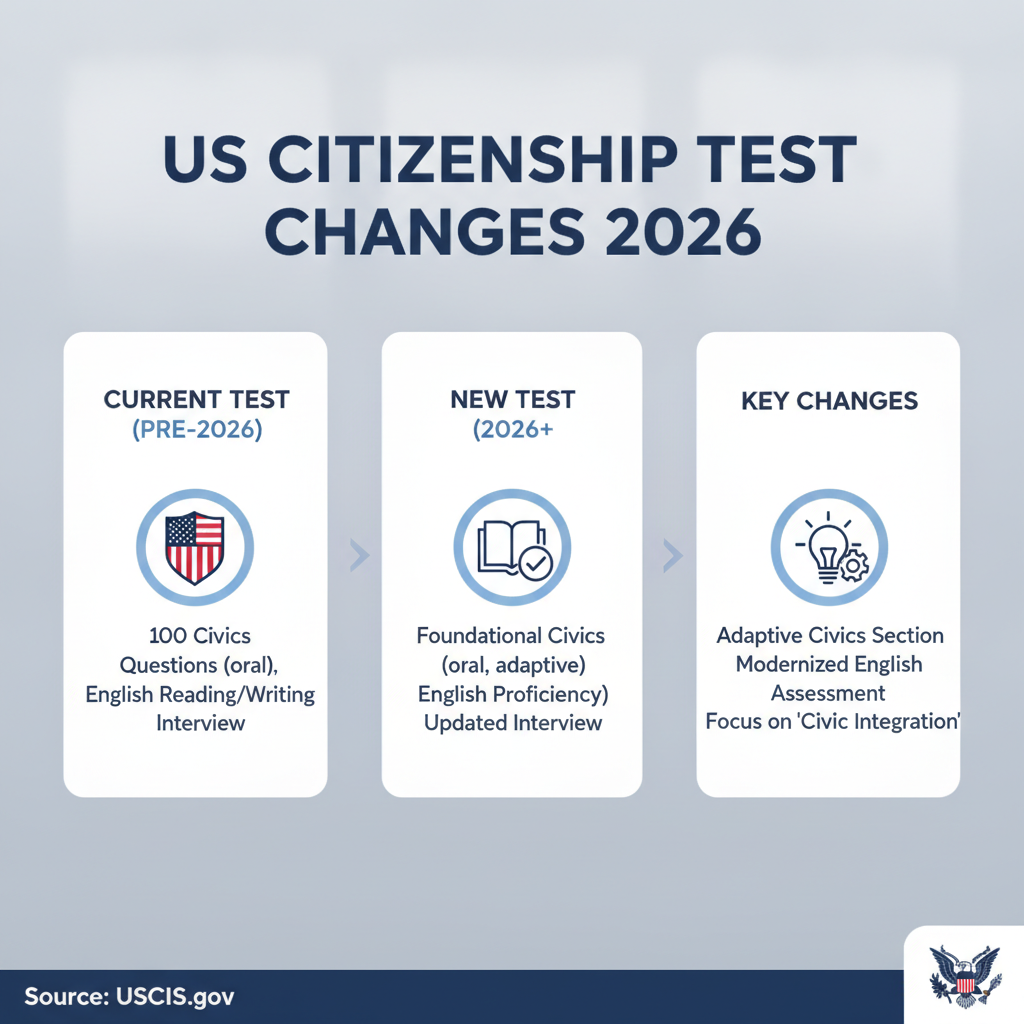
The news of impending changes to the U.S. Citizenship Test has generated considerable discussion within immigrant communities and among legal professionals. This guide is inspired by recent reports on these developments:
Naturalization Test Changes Coming in 2026 (Citizenship)
What This News Means for Immigrants in Orlando and Across Florida
For individuals residing in the Sunshine State, especially in vibrant communities like Orlando and across Central Florida, understanding these upcoming changes is paramount. Florida is home to a diverse immigrant population, and many are on their path to becoming naturalized citizens. These updates will directly impact how you prepare for and experience your citizenship interview.
Why this news is showing up now
The U.S. Citizenship and Immigration Services (USCIS) regularly reviews and updates the naturalization process to ensure it remains relevant and effective. The discussion around new Civics Test questions and requirements for 2026 stems from a multi-year effort by USCIS to refine the test. Following a pilot program initiated in December 2022, USCIS has been gathering feedback on a redesigned civics test. This pilot aimed to assess the effectiveness of a new format that focuses more on civics concepts and critical thinking rather than rote memorization, and potentially includes a more interactive English speaking component.
The last significant revision to the civics test occurred in 2020 under the previous administration, which was later reverted to the 2008 version in 2021 due to concerns about its complexity and potential barriers to naturalization. The current initiative for 2026 aims to find a balanced approach, enhancing the test’s integrity while ensuring it remains fair and accessible. This ongoing evaluation and public feedback process are why these changes are now prominently discussed, signaling a formal rollout in the near future.
How it can affect Florida residents
If you are an immigrant living in Orlando, Miami, Tampa, or any other part of Florida and plan to apply for naturalization, these changes will directly impact your preparation strategy. The Orlando USCIS Field Office, like all other field offices across the nation, will implement the new test. This means:
- Altered Study Materials: The official study guides provided by USCIS will be updated. You’ll need to ensure you’re using the most current materials for the 2026 test.
- Different Interview Experience: The format of the Civics Test portion of your naturalization interview may become more interactive, potentially involving scenario-based questions that require you to apply civics knowledge, rather than just recall facts.
- English Language Assessment: While the English reading and writing components are not expected to change drastically, there might be subtle shifts in how the speaking ability is assessed, possibly integrating more into the civics portion.
- Preparation Window: If you are eligible now, applying before the changes take effect might allow you to take the current version of the test. However, if your application processing extends into 2026, or if you apply closer to that date, you will likely face the new test.
For Central Florida residents, staying updated is key. Imigrar is closely monitoring these developments to provide timely advice and assistance to our clients throughout Orange County and along the I-4 corridor.
Need Help Preparing for Naturalization? Don't navigate these changes alone. Our Orlando immigration team is ready to assist you in understanding the new requirements and preparing for your citizenship journey. Call +1 786-791-3106 for a free consultation, or message us online. Se Habla Español.
What Naturalization Test Changes Are (and Why They Matter)
At its core, naturalization is the process by which a foreign citizen or national can become a U.S. citizen. A critical component of this process is demonstrating an understanding of English and knowledge of U.S. history and government. This is assessed through the Naturalization Test, which comprises an English test (reading, writing, speaking) and a Civics Test.
A plain-English definition
The "Naturalization Test Changes Coming in 2026" refer to anticipated modifications to how applicants for U.S. citizenship will be tested on their knowledge of American government and history, and potentially their English speaking ability. While the exact details are still being finalized, the general direction suggests a shift from purely factual recall to a more conceptual understanding of civics. This could mean more interactive questions, scenario-based discussions, or a different format for evaluating an applicant's comprehension of constitutional principles and civic duties.
These changes matter because they require a different approach to preparation. Instead of just memorizing the 100 civics questions and answers, future applicants may need to understand the underlying concepts and be able to articulate them in their own words. This aims to ensure that new citizens have a deeper, more practical grasp of their rights and responsibilities.
Key terms you need to know
To fully understand the naturalization process and the upcoming changes, familiarize yourself with these essential terms:
- Naturalization: The process by which a lawful permanent resident (green card holder) can become a U.S. citizen.
- U.S. Citizenship and Immigration Services (USCIS): The government agency responsible for overseeing lawful immigration to the United States. They administer the naturalization process and the test. (USCIS official website)
- Form N-400: The official application form for Naturalization. This form initiates the entire process.
- English Test: One part of the naturalization test, assessing an applicant's ability to read, write, and speak basic English.
- Civics Test: The other part of the naturalization test, assessing an applicant's knowledge of U.S. history, government, and civics. This is the component undergoing the most significant changes.
- Lawful Permanent Resident (LPR): An individual who has been granted the privilege of permanently residing in the United States; commonly known as a "green card holder."
- Continuous Residence: A requirement for naturalization, meaning an applicant must maintain a continuous presence in the U.S. for a specified period (typically 3 or 5 years) prior to applying.
- Physical Presence: The actual time an applicant has spent in the U.S. during their period of continuous residence.
- Good Moral Character: A critical eligibility requirement, meaning an applicant must have adhered to certain moral standards and avoided specific criminal offenses.
- Oath of Allegiance: The final step in the naturalization process, where an applicant formally pledges loyalty to the United States.
Current Naturalization Law: The Foundation
The legal framework for naturalization is primarily found in the Immigration and Nationality Act (INA). Specifically, Chapter 2 of Title III of the INA (Sections 301-347) outlines the conditions and procedures for becoming a naturalized U.S. citizen. This foundation will remain, even as the test format evolves. The changes are to the *assessment method*, not the underlying eligibility requirements.
Federal requirements
To be eligible for naturalization under current law, most applicants must meet several federal requirements:
- Age: Be at least 18 years old at the time of filing Form N-400.
- Lawful Permanent Resident Status: Be a Lawful Permanent Resident (green card holder) for at least 5 years (or 3 years if married to a U.S. citizen and meet other specific requirements).
- Continuous Residence: Have maintained continuous residence in the U.S. as an LPR for at least 5 years (or 3 years if married to a U.S. citizen) immediately preceding the date of filing the application. Absences from the U.S. can affect this.
- Physical Presence: Be physically present in the U.S. for at least half of the required continuous residence period (e.g., 30 months out of 5 years).
- Residency in State/USCIS District: Reside for at least 3 months in the state or USCIS district where you file your Form N-400. For Orlando residents, this would be the Orlando USCIS Field Office jurisdiction.
- Good Moral Character: Demonstrate good moral character for the statutory period (typically 3 or 5 years) leading up to your application and until you take the Oath of Allegiance. This involves having no certain criminal convictions, tax issues, or other violations.
- English Language Proficiency: Be able to read, write, and speak basic English. There are exceptions for age and length of residency (the "50/20" and "55/15" rules) and for those with medical disabilities.
- Knowledge of U.S. History and Government: Pass the Civics Test, demonstrating knowledge and understanding of the fundamentals of U.S. history, and principles and form of government.
- Attachment to the U.S. Constitution: Be willing to take the Oath of Allegiance to the United States.
These requirements are foundational. While the *method* of testing English and civics knowledge may change, the *requirement* to demonstrate that knowledge will not.
Important: You can find more detailed information on eligibility and the naturalization process directly on the USCIS official website.
Florida-specific considerations
While the requirements for naturalization are federal, the process is experienced locally. For Florida residents, especially those in Orlando and surrounding areas, there are specific local considerations:
- USCIS Field Offices: Your naturalization interview will typically take place at the USCIS Field Office closest to your residence. For many in Central Florida, this is the Orlando USCIS Field Office. Understanding local office procedures and wait times is helpful.
- Community Resources: Florida has numerous non-profit organizations and community centers that offer free or low-cost English classes and civics test preparation. Leveraging these local resources can be immensely beneficial.
- Local Attorneys: An experienced Orlando immigration attorney, like those at Imigrar, can provide invaluable assistance tailored to the local processing environment and specific challenges faced by Florida residents.
There are no Florida-specific laws that add to or subtract from federal naturalization requirements. However, local support networks and legal expertise can make a significant difference in your application's success.
Confused by Naturalization Requirements? Imigrar helps clients in Orlando and nationwide understand complex immigration laws. For a free consultation and personalized guidance, call +1 786-791-3106 or contact us online. Se Habla Español.
How to Prepare for the Naturalization Test (Current and Future): A Complete Step-by-Step Guide
Preparing for U.S. citizenship involves more than just studying for a test; it’s a multi-step legal process. This guide outlines the typical steps, incorporating how to approach preparation given the upcoming 2026 changes.
1) Determine Your Eligibility
Before anything else, confirm you meet the basic naturalization eligibility requirements. This is the foundation of your application.
- Check Your Green Card Status: Ensure you have been a Lawful Permanent Resident for the required period (generally 5 years, or 3 years if married to a U.S. citizen).
- Review Continuous Residence & Physical Presence: Calculate your time spent in the U.S. and abroad. Long absences can break continuous residence.
- Assess Good Moral Character: Be honest about any past legal issues, even minor ones. Certain crimes can disqualify you. It's best to consult with an attorney if you have any concerns.
- Age and Residency: Confirm you are 18 or older and have lived in your state/USCIS district for at least 3 months. For Orlando residents, this means within the Orlando Field Office’s jurisdiction.
Required Documents for Eligibility Assessment (for your own review):
- Your Permanent Resident Card (Green Card)
- Travel history (dates of all trips outside the U.S. since becoming an LPR)
- Any relevant court documents if you have a criminal record
2) Prepare and File Form N-400
Once you’ve confirmed eligibility, the next step is to accurately complete and submit your Application for Naturalization, Form N-400.
- Gather Supporting Documents: Collect all necessary documents, including copies of your green card, marriage certificate (if applicable), tax returns, selective service registration (if applicable), and travel records.
- Complete Form N-400: Fill out the form meticulously. Any errors or omissions can lead to delays or even denial. Be truthful and thorough.
- Pay the Filing Fee: As of the current date, the fee for Form N-400 is typically $725 ($640 for the application and $85 for biometrics), though fees can change. Check the USCIS Forms page for the most current fee. Fee waivers may be available for eligible applicants.
- Submit Your Application: Mail your completed Form N-400 and supporting documents to the correct USCIS lockbox facility.
- Biometrics Appointment: After filing, you will receive a notice for a biometrics appointment at an Application Support Center (ASC). This involves fingerprinting and photographing for background checks.
Required Documents for Form N-400 Filing (copies, unless originals requested):
- Copy of front and back of your Permanent Resident Card
- Copies of all passports (U.S. and foreign) held since becoming an LPR
- Copies of marriage certificates, divorce decrees, death certificates (if applicable)
- Copies of tax returns for the past 3 or 5 years (depending on eligibility category)
- Evidence of selective service registration (for males aged 18-26)
- Certified court dispositions for any arrests or convictions (even if charges were dropped)
Warning: Never send original documents unless specifically requested by USCIS. Always keep copies of everything you submit.
3) Master the English Language Test
The English test has three components: speaking, reading, and writing. While the civics test is getting an overhaul, the English test typically remains consistent, but the way speaking is assessed might become more integrated with the civics portion.
- Speaking Test: This is assessed during your interview. The USCIS officer will evaluate your ability to understand and respond to questions in English. Practice conversing about your application, personal history, and civics topics.
- Reading Test: You will read one of three sentences correctly to demonstrate your ability to read English. The sentences often relate to civics or historical figures.
- Writing Test: You will write one of three sentences dictated by the officer correctly to demonstrate your ability to write English. These sentences are also typically related to civics.
Practical Tip: Practice speaking English daily. Watch English news, listen to podcasts, and engage in conversations. For reading and writing, use the official USCIS vocabulary lists available on their website.
4) Study for the Civics Test (Current and Future-Proofing)
This is where the 2026 changes will have the most impact. For now, applicants take the 2008 version of the test, which consists of 100 questions. You will be asked up to 10 questions from this list, and you must answer 6 correctly to pass.
- Current Test: Thoroughly study all 100 questions and answers provided in the official USCIS Civics Test Study Guide. Memorization is effective for this version.
- Future-Proofing for 2026 Changes: While memorizing the 100 questions is good for current applicants, future applicants will need to develop a deeper understanding. Focus on the *concepts* behind the questions. For example, instead of just memorizing "What is the 'rule of law'?", understand what it means and why it's important.
- Anticipate Scenario-Based Questions: The pilot program included questions like "Why is it important to pay federal taxes?" or "What is an example of civic participation?" These require you to think critically and explain concepts. Practice articulating your answers in complete sentences.
- Utilize Official Resources: Always use the latest official USCIS study materials. These will be updated closer to 2026. (USCIS Study Materials)
Reminder: USCIS has not yet released the new official study materials for the 2026 test. Continue to study the current 100 questions, but also start building a conceptual understanding of U.S. government and history.
5) Attend Your Naturalization Interview
After your biometrics and background checks are complete, USCIS will schedule your naturalization interview. This is a critical step.
- Preparation: Review your entire Form N-400. The officer will ask questions about your application, personal history, and eligibility. Be prepared to answer questions about your good moral character, travel history, and any changes since you filed.
- What to Bring: Bring your interview notice, Permanent Resident Card, passport, state-issued ID, and all original supporting documents (even if you submitted copies).
- The Interview: The officer will administer the English test and the Civics Test. They will also review your application and ask questions under oath.
- New Test Format (if applicable): If you are interviewed under the new 2026 test format, be prepared for a more interactive civics test. The officer might present scenarios and ask how they relate to U.S. principles or require you to explain civics concepts.
Required Documents for Interview (originals):
- Interview Appointment Notice
- Permanent Resident Card
- State-issued identification (e.g., Florida Driver's License)
- All passports, U.S. and foreign, current and expired
- Original birth certificates, marriage certificates, divorce decrees, death certificates, etc., that were submitted as copies with N-400
- Tax transcripts for the last 3 or 5 years
- Proof of selective service registration (if applicable)
- Proof of any child support/alimony payments (if applicable)
- Certified court dispositions for any arrests or convictions (even if charges were dropped)
- Any documents showing changes to your personal information since filing (e.g., new address, new job)
6) Receive a Decision and Take the Oath of Allegiance
After your interview, the officer will typically inform you whether your application has been recommended for approval, continued, or denied.
- Approval: If approved, you will receive a notice for your Oath of Allegiance ceremony.
- Continuance: If some information is missing or further review is needed, your case may be continued. You might be asked to provide additional documents or re-take a portion of the test.
- Denial: If denied, you will receive a written explanation. You may have options to appeal the decision.
- Oath Ceremony: This is the final step where you officially become a U.S. citizen. You will return your Permanent Resident Card and receive your Certificate of Naturalization.
Congratulations: Upon taking the Oath of Allegiance, you are a U.S. citizen! This is a moment of immense pride and the culmination of a long journey, allowing you to keep your family together and build a future in the United States.

Practical Steps You Can Take Today
Whether you're applying now or planning for 2026, proactive preparation is your best strategy.
- Start Studying NOW: Even if the test changes, foundational knowledge of U.S. history and government will remain relevant. Begin studying the current 100 civics questions and practice your English.
- Review Your Eligibility Thoroughly: Use the USCIS website to confirm you meet all requirements. Pay close attention to continuous residence and good moral character.
- Organize Your Documents: Create a dedicated binder or digital folder for all your immigration documents. Ensure all copies are clear and originals are readily accessible. This includes birth certificates, marriage licenses, tax returns, and travel records.
- Practice English Daily: Engage in conversations, read English newspapers (like the Orlando Sentinel for local news), listen to English radio or podcasts, and write short sentences.
- Seek Legal Counsel Early: An immigration attorney can help you assess eligibility, prepare your Form N-400, identify potential issues, and guide you through the interview, especially with the upcoming test changes.
- Stay Informed: Regularly check the official USCIS official website for updates on the 2026 test changes. Imigrar will also provide updates as they become available.
- Consider Applying Sooner Rather Than Later: If you are currently eligible, applying before the 2026 changes are fully


