


The path to U.S. citizenship is a significant journey, representing the culmination of years of hard work, dedication, and a deep commitment to the United States. For many, the final hurdle is the Naturalization Test – a crucial component of the application process that assesses an applicant's understanding of English and U.S. civics. As of 2026, significant updates to this test are taking effect, and understanding these changes is paramount for anyone aspiring to become a U.S. citizen.
At Imigrar, an immigration law firm based in Orlando, Florida, we are committed to keeping immigrant families together and informed. Our team closely monitors all developments from U.S. Citizenship and Immigration Services (USCIS) to ensure our clients receive the most accurate and up-to-date guidance. This comprehensive guide will break down the Naturalization Test Changes Coming in 2026 (Citizenship), providing you with the knowledge and practical steps you need to navigate this new landscape successfully.
What This News Means for Immigrants in Orlando and Across Florida
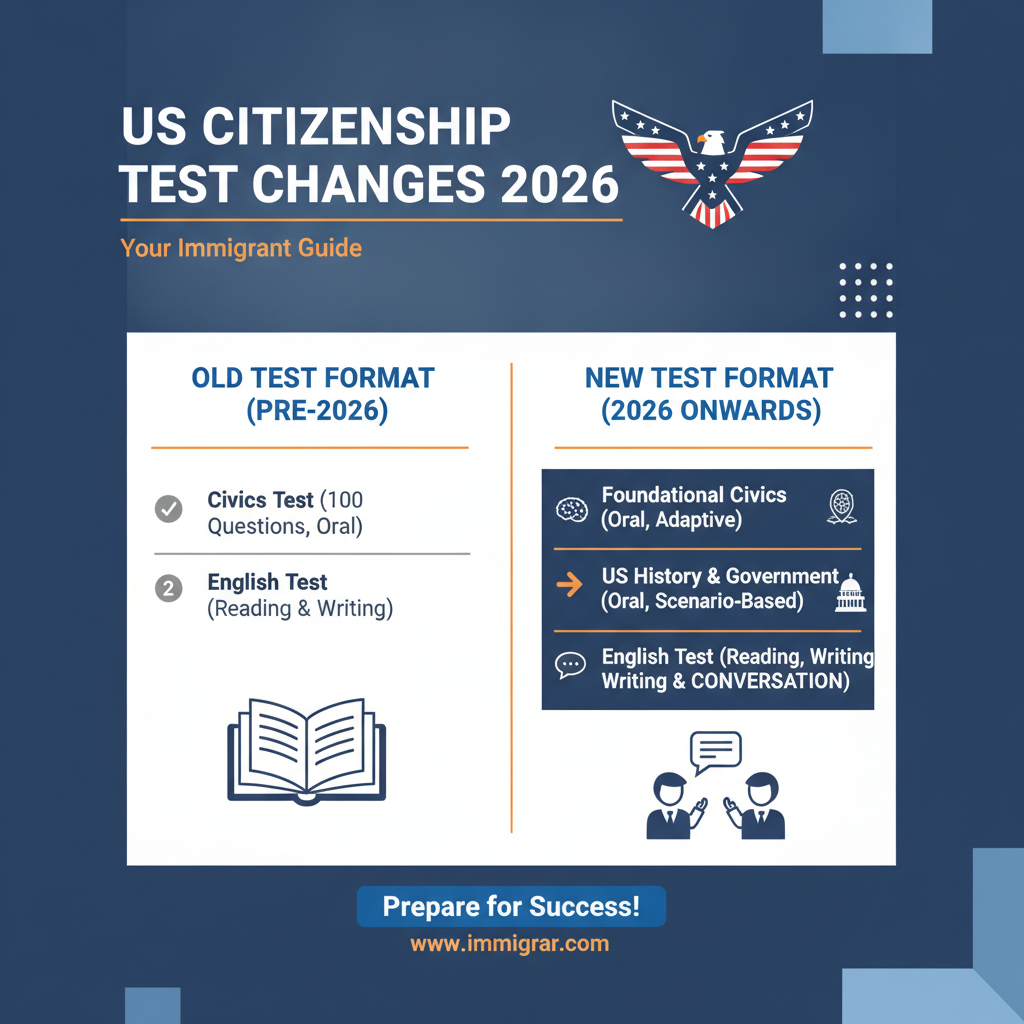
The announcement of changes to the Naturalization Test is a critical development for individuals seeking U.S. citizenship, particularly for the vibrant immigrant communities throughout Florida. While the core purpose of the test remains the same – to ensure applicants have a basic understanding of English and American history and government – the specifics of how this knowledge is assessed are evolving. This means that preparation strategies that worked in the past may need to be adjusted.
Why this news is showing up now
USCIS periodically reviews and updates the Naturalization Test to ensure it remains relevant, effective, and fair. The most recent significant review led to a revised civics test in December 2020, which was subsequently withdrawn in February 2021 due to concerns about its complexity and potential barriers to naturalization. Following this, USCIS initiated a new process to develop an updated test. This current wave of news stems from USCIS's ongoing commitment to this review process, with the goal of implementing a refined test that is standardized, accessible, and accurately reflects a civics curriculum. The 2026 timeline indicates the culmination of extensive research, pilot programs, and public feedback, leading to the official rollout of these new questions and requirements.
For individuals in Orlando, Central Florida, and throughout the nation, this isn't just a procedural update; it's a call to action to proactively prepare for what's ahead. The current date, September 1, 2026, means these changes are either very new or are being implemented in phases throughout the year, making immediate understanding and preparation essential.
How it can affect Florida residents
Florida is home to one of the largest and most diverse immigrant populations in the United States. From the bustling communities in Miami and Tampa to the rapidly growing international population in Orlando and along the I-4 corridor, thousands of individuals apply for naturalization each year. The upcoming changes to the Naturalization Test will directly impact these applicants. Here’s how:
- Updated Study Materials: New civics questions will necessitate new study guides and materials. Applicants must ensure they are studying the most current information provided by USCIS.
- Preparation Strategy Adjustment: The format or emphasis of the test might shift, requiring applicants to adjust their study methods, perhaps focusing more on certain historical periods, governmental functions, or English comprehension skills.
- Increased Anxiety: Any change to a critical process can cause apprehension. Immigrants already facing language barriers or cultural differences may find these updates daunting.
- Local USCIS Field Offices: Applicants in Florida, whether dealing with the Orlando USCIS Field Office, Miami, or Tampa, will all be subject to the same national test standards. This means consistent information and preparation are key across the state.
Imigrar understands these concerns. Our role is to demystify these changes, provide clear guidance, and support our Orlando and nationwide clients through every step of their naturalization journey, ensuring they are fully prepared for the updated test.
Need Help? Our Orlando immigration team is ready to assist. Call +1 786-791-3106 for a free consultation, or message us online. Se Habla Español.
What Naturalization Test Changes Are (and Why They Matter)
The term "Naturalization Test Changes Coming in 2026" refers to the modifications USCIS has introduced to the examination required for most applicants seeking U.S. citizenship. These changes are not simply minor tweaks; they represent a thoughtful reevaluation of how future citizens demonstrate their commitment to and understanding of American civic life. These updates matter immensely because the test is a non-negotiable component for most applicants, and success hinges on proper preparation based on the most current requirements.
A plain-English definition
At its core, naturalization is the process by which a foreign national becomes a U.S. citizen. The Naturalization Test is a two-part assessment that helps USCIS determine if an applicant meets certain statutory requirements for citizenship. It consists of:
- English Test: This evaluates an applicant’s ability to read, write, and speak basic English. The officer will assess your ability to understand questions, speak about personal information, and read/write simple sentences.
- Civics Test: This assesses an applicant’s knowledge and understanding of U.S. history, government, and civics.
The "changes" coming in 2026 specifically mean that the questions asked during the Civics Test, and potentially the method of administration or the depth of expected answers, have been revised. These revisions are designed to ensure the test accurately reflects what USCIS believes is essential civic knowledge for new citizens.
Key terms you need to know
Navigating the naturalization process requires understanding specific terminology. Here are some key terms:
- Naturalization: The process by which a lawful permanent resident (Green Card holder) becomes a U.S. citizen.
- USCIS (U.S. Citizenship and Immigration Services): The federal agency responsible for administering immigration and naturalization benefits. This is the agency you will interact with throughout your application.
- Form N-400: The official "Application for Naturalization" form that initiates the citizenship process. This is the primary document you will submit.
- Civics Test: The portion of the naturalization interview that assesses your knowledge of U.S. history and government. This is where the 2026 changes are primarily focused.
- English Test: The portion of the naturalization interview that assesses your ability to read, write, and speak basic English.
- Lawful Permanent Resident (LPR): An individual who has been granted the privilege of residing permanently in the United States and has a "Green Card." Eligibility for naturalization typically begins after a certain period as an LPR.
- Good Moral Character: A statutory requirement for naturalization, meaning applicants must demonstrate adherence to community standards of morality. Certain criminal offenses or other issues can prevent an applicant from meeting this requirement.
- Oath of Allegiance: The final step in the naturalization process, where new citizens pledge their loyalty to the United States.
Understanding these terms is foundational to comprehending the entire naturalization process and the significance of the upcoming test changes.
Current Immigration Law: The Foundation
The framework for naturalization, including the requirements for the English and Civics tests, is established by federal law, primarily the Immigration and Nationality Act (INA). While the test content itself can be updated by USCIS, the underlying legal requirements for becoming a citizen remain consistent unless Congress enacts new legislation.
Federal requirements
The bedrock of naturalization is found in Chapter 2 of Title III of the INA. Specifically, Section 312 of the INA (8 U.S.C. §1423) mandates that naturalization applicants demonstrate:
- An understanding of the English language, including an ability to read, write, and speak words in ordinary usage.
- A knowledge and understanding of the fundamentals of U.S. history and principles and form of government (civics).
Beyond these test requirements, other federal eligibility criteria for naturalization include:
- Age: Be at least 18 years old at the time of filing Form N-400.
- Lawful Permanent Residency: Have been a Lawful Permanent Resident for a specific period (generally 5 years, or 3 years if married to a U.S. citizen and living with them).
- Continuous Residence and Physical Presence: Maintain continuous residence in the U.S. for the required period and be physically present for at least half of that time.
- Good Moral Character: Demonstrate Good Moral Character for the statutory period leading up to the application and until the oath of allegiance.
- Attachment to the Principles of the U.S. Constitution: Be able to demonstrate a commitment to the U.S. Constitution.
- Residency in USCIS District: Reside in the state or USCIS district for at least 3 months prior to filing the application. For those in Orlando, this means living within the jurisdiction of the Orlando USCIS Field Office.
It's crucial to understand that even with changes to the test questions, these fundamental legal requirements for naturalization, as outlined in the INA, remain unchanged.
Florida-specific considerations
While naturalization is a federal process and there are no Florida-specific laws governing eligibility or the test itself, several practical considerations are unique to residents of the Sunshine State:
- USCIS Field Offices: Florida hosts several key USCIS Field Offices, including those in Orlando, Miami, and Tampa. Your interview will be scheduled at the office closest to your residence. For residents of Orange County and surrounding Central Florida, the Orlando office is your primary point of contact.
- Processing Times: Processing times for Form N-400 can vary significantly by field office. It's essential to check the USCIS Processing Times for the Orlando office regularly to set realistic expectations.
- Diverse Populations: Florida's diverse population means many applicants may require assistance in multiple languages. Imigrar proudly offers services in both English and Spanish (Se Habla Español) to meet these needs.
- Accessibility: For many Central Florida residents, travel to the Orlando Field Office is a straightforward drive along the I-4 corridor. However, understanding local transportation and parking options can be helpful on interview day.
Reminder: While the test content is national, local factors like interview scheduling and field office procedures can influence your experience. An experienced local attorney, like those at Imigrar, can provide invaluable insights into the specific nuances of the Orlando USCIS Field Office.
For more detailed information on naturalization, always refer to the USCIS official website on Citizenship.
How to Prepare for the Naturalization Test Changes: A Complete Step-by-Step Guide
The announcement of Naturalization Test Changes Coming in 2026 means that preparation strategies must be proactive and adaptable. Here’s a step-by-step guide to help you get ready for your citizenship journey.
1) Understand the Current Test and Anticipate Changes
Even with new questions coming, the core subjects of the civics test—U.S. history, government, and civics—remain constant. Start by familiarizing yourself with the existing 100 civics questions and answers provided by USCIS. This provides a strong foundation. As for the changes, USCIS has indicated a move towards potentially more interactive questions that gauge a deeper understanding rather than rote memorization. They may also include questions on more contemporary civics topics. Monitor USCIS announcements closely for official new study guides.
- Documents/Materials:
- Current USCIS Civics Test Study Guide (100 questions)
- USCIS website updates and news alerts
- Sample questions released by USCIS (when available)
2) Master the English Language Requirements
The English test assesses your ability to read, write, and speak basic English. The 2026 changes are primarily focused on the civics portion, but strong English skills are crucial for both parts of the interview. Practice speaking English regularly, read simple English texts, and write basic sentences. The interviewing officer will assess your ability to understand questions, answer them coherently, and read/write a sentence dictated by them.
- Documents/Materials:
- English language learning materials (ESL classes, online resources)
- Sample reading and writing sentences from USCIS
- Personal identification documents (passport, driver's license) to practice speaking about yourself
3) Familiarize Yourself with the Existing Civics Questions
While new questions are coming, the current 100 civics questions cover fundamental aspects of American governance and history. Studying these now will give you a robust knowledge base. Many of the core concepts, such as the branches of government, important historical figures, and key amendments, are likely to remain relevant, even if the specific phrasing of questions changes. Aim for a deep understanding, not just memorization.
- Documents/Materials:
- Official USCIS Civics Test study materials (current version)
- Flashcards, online quizzes, and practice tests
- Basic U.S. history and government textbooks
4) Monitor Official USCIS Announcements for 2026 Changes
Important: The most critical step is to stay informed. USCIS is the sole authoritative source for information regarding the Naturalization Test Changes Coming in 2026. Regularly check the USCIS website, particularly the "Citizenship" and "News" sections. Subscribe to USCIS email updates if available. Do not rely on unofficial sources for test content. An experienced immigration attorney will also keep you informed of official updates.
- Documents/Materials:
- Access to the USCIS official website
- Subscription to USCIS news alerts
- Records of any communication from USCIS regarding your application
5) Gather and Organize Your Documentation
Even though the test questions are changing, the documentary requirements for Form N-400 remain stringent. Start compiling all necessary documents now. This includes your Permanent Resident Card (Green Card), proof of continuous residence, tax returns for the past 5 years (or 3 years if applicable), marriage certificates (if applying based on marriage to a U.S. citizen), birth certificates of children, and any other documents related to your eligibility, such as records of arrests or traffic citations. Organizing these early will prevent delays.
- Documents/Materials:
- Form I-551 (Permanent Resident Card)
- State identification (e.g., Florida driver's license)
- All passports (current and expired)
- Tax transcripts from the IRS for the relevant period
- Marriage certificates, divorce decrees, birth certificates
- Court dispositions for any arrests or citations
- Proof of selective service registration (for male applicants aged 18-26)
6) Seek Professional Legal Guidance
Navigating the naturalization process, especially with impending test changes, can be complex. An immigration attorney can assess your eligibility, review your Form N-400, help you understand the specific implications of the 2026 changes, and prepare you for your interview. They can also represent you if any issues arise. This is particularly valuable for complex cases or if you have concerns about your eligibility or past record.
- Documents/Materials:
- All personal and immigration-related documents you have gathered
- Any questions or concerns you have about your eligibility or the process
- Copies of any previous immigration applications
Need Help? Our Orlando immigration team is ready to assist. Call +1 786-791-3106 for a free consultation, or message us online. Se Habla Español.
Practical Steps You Can Take Today for Naturalization Success
Don't wait until the last minute to prepare for your naturalization application and the updated test. Here are actionable steps you can take right now to set yourself up for success, whether you're in Orlando, other parts of Florida, or anywhere nationwide.
Actionable Checklist:
- Start Studying Now: Begin by reviewing the current 100 civics questions. Even if new questions are introduced, this foundation is invaluable. Use flashcards, online quizzes, and study groups.
- Improve Your English: Enroll in an ESL class, practice speaking with native English speakers, watch English-language news, and read simple books. Strong English skills are key to both test components.
- Gather All Required Documents: Create a checklist of all documents needed for Form N-400 and start collecting them immediately. Don't underestimate the time it takes to obtain birth certificates, marriage licenses, or court records.
- Verify Your Eligibility: Double-check all eligibility requirements, including continuous residence, physical presence, and Good Moral Character. Address any potential issues proactively.
- Stay Informed: Regularly check the USCIS official website for the latest updates on the 2026 test changes. Official announcements will provide the most accurate information.
- Consult an Immigration Attorney: A free consultation with Imigrar can clarify your eligibility, review your preparedness, and guide you through the specific nuances of the new test, especially if your case is in Orlando or Central Florida.
Document Preparation Guidance:
Proper document preparation is critical for a smooth application process. Here’s what to focus on:
- Originals vs. Copies: Always keep original documents safe and submit high-quality copies unless USCIS specifically requests originals. Bring originals to your interview.
- Translations: Any document not in English must be accompanied by a certified English translation.
- Completeness: Ensure every section of Form N-400 is filled out accurately and completely. Missing information can lead to delays or denials.
- Evidence of Good Moral Character: This is often overlooked. Provide police clearances, tax records, and evidence of community involvement if relevant. If you have any criminal history, no matter how minor, discuss it with an attorney.
- Proof of Residency: Utility bills, leases, and employment records can demonstrate continuous residence.
Timeline Expectations:
The naturalization process is not instantaneous. Here’s a general timeline:
- Application Preparation: Can take anywhere from a few weeks to several months, depending on how quickly you gather documents and complete Form N-400.
- USCIS Processing: After filing, expect a waiting period for biometrics appointments, interview scheduling, and final decision. This can range from 6 months to over a year, varying by field office (e.g., the Orlando USCIS Field Office processing times). Check USCIS Processing Times for current estimates.
- Test Preparation: Consistent study for at least 3-6 months is advisable for both the English and Civics portions, especially with new questions coming.
- New Test Implementation: While the changes are "coming in 2026," the exact date of full implementation within the year might vary. Be prepared for the new test if your interview is scheduled in late 2026 or beyond.
Warning: Do not delay your application if you are already eligible. While you need to prepare for the new test, delaying your application indefinitely could prolong your wait for citizenship.
Need Help? Our Orlando immigration team is ready to assist. Call +1 786-791-3106 for a free consultation, or message us online. Se Habla Español.

How Imigrar Helps Immigrants in Orlando Prepare for Naturalization
At Imigrar, we understand that the journey to U.S. citizenship is one of the most significant steps an immigrant can take. With the Naturalization Test Changes Coming in 2026, having an experienced legal partner by your side is more crucial than ever. Our firm, conveniently located in Orlando, Florida, is dedicated to guiding individuals and families through the complexities of immigration law, always with our tagline "Keep Families Together" at heart.
Our experience and expertise
Our team of dedicated immigration attorneys possesses extensive experience in naturalization cases. We are intimately familiar with USCIS procedures, legal requirements, and the nuances of preparing for the citizenship interview. We pride ourselves on:
- Up-to-Date Knowledge: We continuously monitor all USCIS announcements and policy changes, including the latest updates on the Naturalization Test. This ensures our clients are always prepared for the most current requirements.
- Comprehensive Case Review: We thoroughly review your eligibility, address any potential issues with your Good Moral Character, continuous residence, or physical presence, and ensure your Form N-400 is meticulously prepared and submitted.
- Personalized Test Preparation: We go beyond simply providing study materials. We offer personalized guidance on what to expect during the English and Civics tests, help you practice, and provide strategies for confidently answering questions, especially in light of the 2026 changes.
- Interview Readiness: We conduct mock interviews to help you feel comfortable and confident speaking with an immigration officer, covering both personal history questions and test questions.
- Local Insight: As an Orlando-based firm, we have a strong understanding of the specific procedures and expectations at the Orlando USCIS Field Office, benefiting clients in Orange County and across Central Florida.
We are not just lawyers; we are advocates committed to your success. We understand the hopes and dreams tied to becoming a U.S. citizen, and we work tirelessly to help you achieve them.
Free consultation offer
Starting your naturalization journey with confidence begins with clear, expert advice. That's why Imigrar offers a free consultation to discuss your eligibility, answer your questions about the 2026 Naturalization Test changes, and outline how we can assist you. This is a no-obligation opportunity to understand your options and the path ahead.
Don't let the new test requirements deter you. Contact us today. Se Habla


