

As an immigrant in the United States, the ability to work legally is often crucial for financial stability, personal growth, and contributing to your community. The **Employment Authorization Document (EAD)**, commonly known as a work permit, is your key to this opportunity. At Imigrar, we understand that navigating the complexities of U.S. immigration law, especially with frequent updates from USCIS, can be daunting. This comprehensive guide is designed to clarify the latest **EAD application and renewal updates** as of early 2026, offering practical advice for you and your family.
Need Help? Our Orlando immigration team is ready to assist. Call +1 786-791-3106 for a free consultation, or message us online. Se Habla Español.
The reporting that sparked this guide:
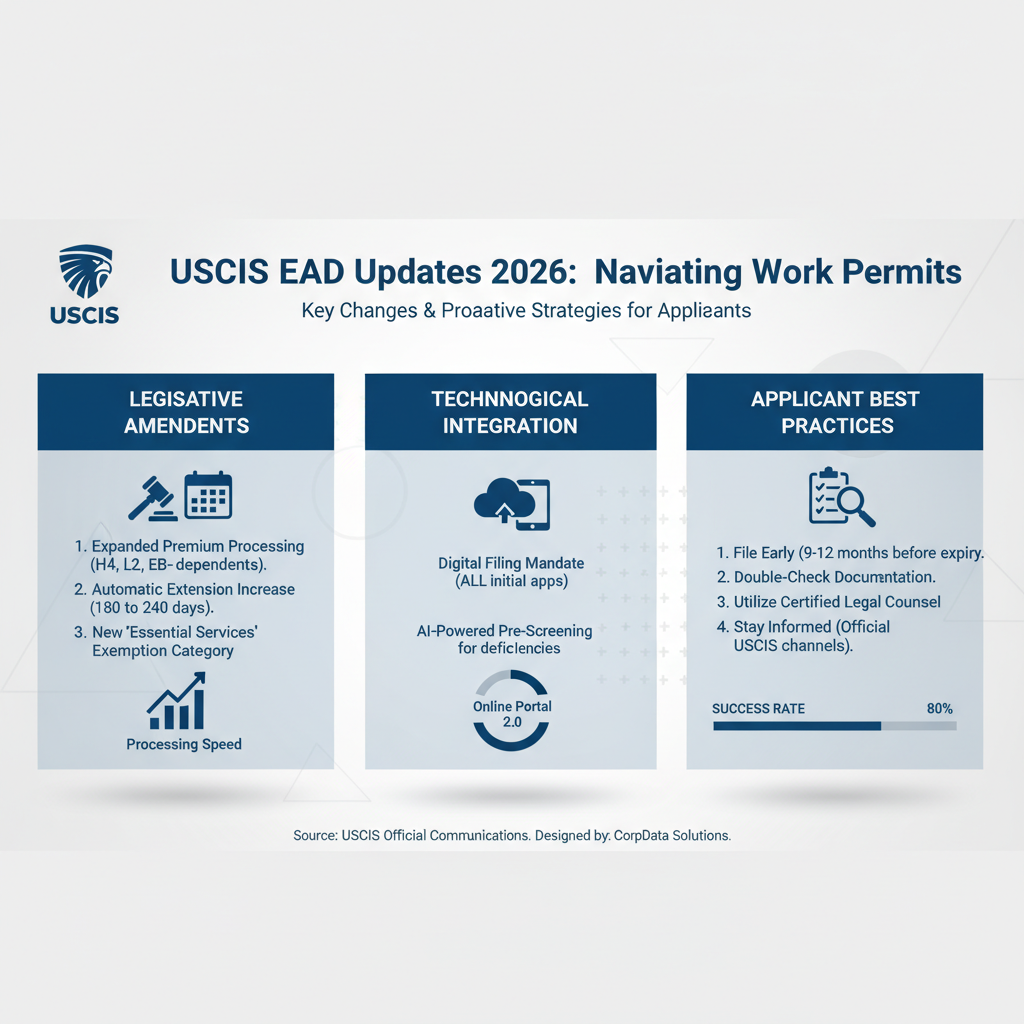
Employment Authorization Document Processing (USCIS)
What This News Means for Immigrants in Orlando and Across Florida
Recent developments and ongoing efforts by U.S. Citizenship and Immigration Services (USCIS) concerning **Employment Authorization Document (EAD)** processing are of critical importance to thousands of immigrants. These updates, often aimed at streamlining processes or addressing backlogs, directly impact your ability to legally work and live in the U.S. Understanding these changes is not just about compliance; it's about protecting your livelihood and planning your future.
Why this news is showing up now
The immigration system is constantly evolving, driven by policy shifts, legislative actions, and operational challenges. In recent years, USCIS has faced significant backlogs across various application types, including **Form I-765, Application for Employment Authorization**. In response, the agency has implemented several strategies and temporary final rules to alleviate these delays. These efforts include extending the validity period for some EADs, expanding the automatic extension period for certain renewal applications, and improving internal processing efficiencies.
As of early 2026, USCIS continues to refine its approach to EAD processing. The "news" you're seeing often reflects ongoing adjustments, success metrics of previous initiatives, or announcements about new measures designed to further reduce processing times and improve the applicant experience. This continuous reporting highlights the agency's commitment to addressing these critical issues, even if the progress can sometimes feel slow from an applicant's perspective. It's a dynamic situation that requires constant monitoring and adaptation.
How it can affect Florida residents
For immigrants residing in Florida, particularly in vibrant metropolitan areas like Orlando, these **USCIS EAD updates** have tangible effects. Florida is home to a diverse immigrant population, with many individuals and families relying on their EADs to work in various sectors – from hospitality along the I-4 corridor to agriculture, healthcare, and technology across Orange County and beyond. Longer processing times can lead to job loss, financial hardship, and immense stress for families.
Conversely, positive changes, such as extended automatic renewal periods, can provide much-needed stability and peace of mind. If your case is in Orlando, the efficiency of the local USCIS Field Office, while primarily handling interviews for other application types, can indirectly influence the overall system. More directly, the national processing centers where **Form I-765** applications are adjudicated dictate wait times for Central Florida residents just as much as for those in other states. Being informed allows you to plan your application or renewal strategically, ensuring you maintain your legal work authorization without interruption.
What Employment Authorization Document (EAD) Processing Is (and Why It Matters)
At its core, **Employment Authorization Document (EAD)** processing refers to the entire lifecycle of applying for or renewing a work permit from USCIS. This process begins with determining your eligibility, submitting your application, undergoing background checks, and ultimately receiving a decision from the government. Why does it matter so much? Because without a valid EAD, most non-U.S. citizens are legally prohibited from working in the United States.
For many, an EAD is not just a document; it's a lifeline. It enables individuals to support themselves and their families, pay taxes, contribute to the economy, and integrate more fully into American society. Delays in EAD processing can lead to job loss, inability to open bank accounts, obtain driver's licenses, or even access essential services. Therefore, understanding this process and staying informed about its updates is paramount.
A plain-English definition
An **Employment Authorization Document (EAD)**, often called a "work permit," is a card issued by USCIS that grants certain non-citizens permission to work legally in the United States for a specific period. It's proof that you are authorized to be employed. It doesn't grant you a specific visa or green card, but it allows you to work while you are in a particular immigration status or while your application for a more permanent status (like a green card) is pending.
Key terms you need to know
- EAD (Employment Authorization Document): The official name for the work permit card.
- Form I-765: This is the official application form you must submit to USCIS to request an EAD.
- USCIS (U.S. Citizenship and Immigration Services): The government agency responsible for processing immigration benefits, including EADs. USCIS official website
- Adjustment of Status (AOS): The process of applying for a green card (lawful permanent residence) while physically present in the United States. Many individuals with pending AOS applications are eligible for an EAD.
- Asylum Seeker/Asylee: An individual who has applied for asylum (protection from persecution) or has been granted asylum. Both categories are often eligible for EADs.
- Nonimmigrant Status: A temporary visa status (e.g., F-1 student, J-1 exchange visitor, H-4 spouse of an H-1B worker) where certain categories may be eligible for an EAD to work in specific circumstances.
- Automatic EAD Extension: A temporary measure that allows certain EAD categories to continue working for a period (currently up to 540 days) beyond the expiration date of their EAD card, provided they filed a timely renewal application.
- Biometrics Appointment: An appointment at an Application Support Center (ASC) where USCIS collects your fingerprints, photograph, and signature for background checks.
- Request for Evidence (RFE): A letter from USCIS requesting additional documents or information to support your application.
- Premium Processing: An expedited service available for certain immigration petitions, but generally not for **Form I-765** unless filed concurrently with an underlying petition that qualifies for premium processing.
Concerned about EAD processing times? Let Imigrar guide you through the latest updates and ensure your application is perfectly prepared. Call +1 786-791-3106 today for your free consultation. Se Habla Español.
Current Immigration Law: The Foundation for Work Authorization
The legal framework for obtaining an **Employment Authorization Document (EAD)** is primarily found within the Immigration and Nationality Act (INA) and its corresponding regulations, specifically 8 CFR Part 274a. These laws outline the various categories of non-citizens who are eligible to apply for work authorization. It's important to understand that an EAD is not a standalone immigration benefit but rather a derivative benefit tied to an underlying immigration status or application.
For example, individuals with a pending application for **Adjustment of Status (Form I-485)**, asylum applicants, certain nonimmigrant visa holders (like H-4 spouses or F-1 students with specific employment authorizations), and beneficiaries of certain humanitarian programs (like Temporary Protected Status or Deferred Action for Childhood Arrivals) are among the many categories eligible for an EAD. The specific eligibility category you fall under determines the requirements, duration, and conditions of your work authorization.
Federal requirements
Federal law, specifically 8 CFR 274a.12, defines who is eligible for an EAD. These categories are extensive and include, but are not limited to:
- Applicants for **Adjustment of Status** (Green Card applicants) who have filed **Form I-485**.
- Asylum applicants whose application (**Form I-589**) has been pending for at least 150 days.
- Refugees and Asylees.
- Nonimmigrants in certain categories, such as H-4 spouses of H-1B nonimmigrants, L-2 spouses of L-1 nonimmigrants, and certain E, K, and O visa holders.
- F-1 students seeking Optional Practical Training (OPT) or Curricular Practical Training (CPT).
- Individuals granted Temporary Protected Status (TPS) or Deferred Action for Childhood Arrivals (DACA).
- U-visa and T-visa applicants.
- Parolees.
Each category has specific requirements and documentation needs. The core federal requirement for all is the submission of **Form I-765, Application for Employment Authorization**, along with supporting evidence proving eligibility under one of the regulatory categories. USCIS issues the EAD, and it is valid nationwide, allowing you to work in any state, including Florida.
Reminder: The validity period of an EAD can vary significantly depending on your eligibility category. Some EADs are issued for one year, while others may be valid for two or five years. Always check your specific category's typical validity period and consider applying for renewal well in advance.
Florida-specific considerations
While EADs are federal documents, their impact is felt locally. For Central Florida residents, having a valid EAD means you can legally work in Orlando's bustling tourism and hospitality industry, contribute to the growing tech sector, or support local businesses in Orange County. Without it, finding stable employment becomes incredibly difficult, if not impossible, for non-citizens.
In Florida, a valid EAD is essential not only for employment but also for obtaining a Florida driver's license or state identification card, which requires proof of lawful presence and work authorization. It's also critical for renting property, opening bank accounts, and accessing many other services that require proof of identity and legal status. The Orlando USCIS Field Office, while not directly processing **Form I-765** applications, serves as a local point of contact for interviews related to underlying applications (like **Form I-485**) that often make an individual eligible for an EAD.
For more details on EAD eligibility and categories, you can always refer to the USCIS official website.
How to Apply for or Renew Your EAD: A Complete Step-by-Step Guide
Applying for or renewing your **Employment Authorization Document (EAD)** can seem complex, but breaking it down into manageable steps makes the process much clearer. Follow this comprehensive guide to ensure you submit a strong and complete application.
1) Determine Your Eligibility
Before you even touch a form, you must confirm you are eligible for an EAD. As discussed, eligibility is tied to your immigration status or another pending application. USCIS categorizes eligibility by specific codes (e.g., (c)(9) for **Adjustment of Status** applicants, (c)(8) for asylum applicants). It's crucial to identify the correct category that applies to you.
- Required Documents for this step (for self-assessment):
- Proof of your current immigration status (e.g., I-94 Arrival/Departure Record, visa stamp, pending application receipt notices like **Form I-485** or **Form I-589**).
- Any previous EAD cards.
2) Gather Required Documents
This is arguably the most critical step. Missing documents are a leading cause of delays and denials. The exact documents vary based on your eligibility category, but a general list includes:
- Required Documents:
- Two identical passport-style photos (taken within 30 days of filing).
- Copy of your last EAD card (front and back), if renewing.
- Copy of your **Form I-94**, Arrival/Departure Record.
- Copy of your passport biographical page (with photo and identity information).
- Copy of your visa (if applicable).
- Copy of your birth certificate (with certified translation if not in English).
- Copy of your marriage certificate (if applicable, e.g., for H-4 spouses).
- Evidence of your underlying eligibility (e.g., receipt notice for **Form I-485** or **Form I-589**, copy of your asylum grant, proof of TPS status).
- Copies of any previous work permits or government-issued IDs.
- If applying based on a spouse's status (e.g., H-4 EAD), copies of your spouse's visa, **Form I-797** approval notice for their status, and marriage certificate.
3) Complete Form I-765, Application for Employment Authorization
Download the latest version of **Form I-765** from the USCIS official website. Read the instructions carefully. Fill out the form completely and accurately. Pay close attention to:
- Part 1. Reason for Applying: Indicate if you are applying for initial permission, replacement, or renewal.
- Part 2. Information About You: Ensure your name, date of birth, and A-Number (if you have one) match your other immigration documents.
- Part 2. Eligibility Category: Enter the correct eligibility code (e.g., (c)(9) for AOS applicants).
- Required Documents for this step:
- A fully completed and signed **Form I-765**.
4) Prepare Supporting Evidence
This involves organizing all the documents you gathered in step 2 to specifically support your eligibility category. For example:
- If you are an **Adjustment of Status** applicant: Include a copy of your **Form I-485** receipt notice.
- If you are an asylum applicant: Include a copy of your **Form I-589** receipt notice and proof your application has been pending for at least 150 days.
- If you are an H-4 spouse: Include copies of your spouse's **Form I-797** approval for H-1B, their **Form I-140** approval, and your marriage certificate.
- Required Documents for this step:
- All relevant supporting documents specific to your eligibility category (as listed in step 2).
5) Pay the Filing Fee
The **Form I-765** filing fee varies and can be found on the USCIS website. You can pay by money order, personal check, cashier's check, or by credit card using **Form G-1450, Authorization for Credit Card Transactions**. In some cases, you may be eligible for a fee waiver by filing **Form I-912, Request for Fee Waiver**. Be aware that some categories (e.g., asylum applicants) may not require a fee.
- Required Documents for this step:
- Check or money order payable to "U.S. Department of Homeland Security" for the correct fee, or **Form G-1450**.
- If applicable, **Form I-912, Request for Fee Waiver**, with supporting documentation.
6) File Your Application
Once your application packet is complete, mail it to the correct USCIS lockbox facility. The mailing address depends on your eligibility category and where you reside. Check the USCIS website for the most current filing addresses. It is highly recommended to:
- Make a complete copy of your entire application packet for your records.
- Send your application via certified mail with a return receipt requested, or a similar service that provides tracking.
- Required Documents for this step:
- The complete, organized application packet with a cover letter outlining contents.
7) Attend Biometrics Appointment (If Required)
After filing, USCIS will send you a receipt notice (**Form I-797C**) and, if required for your case, a separate appointment notice for biometrics. This appointment typically takes place at a local Application Support Center (ASC), which for Orlando residents might be the ASC in Orlando itself.
- Important: Bring your appointment notice and a valid photo ID (e.g., passport, driver's license) to your biometrics appointment.
Following these steps meticulously will significantly increase your chances of a smooth EAD application process. However, given the complexities and frequent updates, legal counsel is always advisable.
Practical Steps You Can Take Today for Your EAD Application
Proactive preparation is your best defense against delays and complications in the EAD application process. Here are actionable steps you can take starting today, whether you're applying for the first time or renewing your work permit.
Actionable Checklist:
- Verify Your Eligibility: Double-check your immigration status and ensure you fall into one of the eligible EAD categories. Consult the USCIS website or an immigration attorney.
- Download the Latest Forms: Always use the most current version of **Form I-765** from the USCIS Forms page. USCIS often rejects outdated forms.
- Start Gathering Documents Early: Don't wait until the last minute. Some documents, like birth certificates or marriage certificates, might require translations or certified copies that take time to obtain.
- Organize Your Packet: Use a cover letter, tabs, and clear labels to present your application neatly. This helps USCIS officers process your application more efficiently.
- Track Processing Times: Regularly check the USCIS Processing Times website for your specific form and filing location. This helps set realistic expectations and know when to inquire about delays.
- Understand the Automatic EAD Extension: If you're renewing, familiarize yourself with the 540-day automatic extension rule (for eligible categories) to avoid gaps in employment.
- Consult an Attorney: Even if you feel confident, a quick consultation can identify potential issues or ensure you're aware of all the latest policies.
Document Preparation Guidance
- Copies, Not Originals: Unless specifically requested by USCIS, always send copies of your supporting documents, not originals. Keep your originals safe.
- Translations: Any document not in English must be accompanied by a complete English translation and a certification by the translator that the translation is accurate and they are competent to translate.
- Clarity and Legibility: Ensure all copies are clear, legible, and true reproductions of the original documents.
- Consolidate: If you have multiple applications pending (e.g., **Form I-485** and **Form I-765**), you can often file them concurrently or reference the receipt number of the underlying application in your EAD application.
Timeline Expectations
Warning: EAD processing times can fluctuate significantly due to USCIS workload, policy changes, and the specific service center handling your case. While USCIS aims to process EADs efficiently, delays are common.
- Typical Processing: Historically, EAD processing could take anywhere from a few months to over a year. Recent USCIS efforts have aimed to bring most processing within the 3-6 month range, but this is not guaranteed for all categories.
- Automatic Extension: For eligible EAD categories, filing a timely renewal application (before your current EAD expires) can grant you an automatic extension of your work authorization for up to 540 days. This is a critical provision that helps prevent gaps in employment for many individuals. Ensure your eligibility for this extension.
- Responding to RFEs: If you receive a **Request for Evidence (RFE)**, respond promptly and thoroughly. Failure to do so can lead to delays or denial.
- Online Status Check: Use your receipt number to check your case status online at the USCIS website.
Important: Always plan to renew your EAD at least 5-6 months before its expiration date, especially if you are not eligible for the automatic extension or wish to minimize any potential gap in employment.
Don't risk a gap in your work authorization. Let Imigrar's experienced Orlando team help you navigate EAD renewals and applications efficiently. Call us at +1 786-791-3106 for a free consultation. Se Habla Español.

How Imigrar Helps Immigrants in Orlando and Beyond
At Imigrar, our mission is simple: "Keep Families Together." We understand the profound impact that a valid **Employment Authorization Document (EAD)** has on your ability to live a stable, productive life in the U.S. Based in Orlando, Florida, we are intimately familiar with the unique needs and challenges faced by immigrants in Central Florida, from Orange County to the broader I-4 corridor. However, our expertise and services extend nationwide, assisting clients across the country with their immigration journeys.
Our experience and expertise
Our team of dedicated immigration attorneys possesses extensive experience in all facets of U.S. immigration law, including the intricate process of applying for and renewing EADs. We stay abreast of the latest USCIS updates, policy changes, and processing trends, ensuring our advice is always current and accurate. We have successfully assisted countless clients with their **Form I-765** applications, guiding them through eligibility determination, meticulous document preparation, and strategic filing.
We pride ourselves on our personalized approach. We know that every client's situation is unique, and we take the time to understand your specific circumstances, answer your questions, and develop a tailored strategy. Whether you're an asylum seeker, an **Adjustment of Status** applicant, an H-4 spouse, or an F-1 student, we have the knowledge to navigate your particular EAD eligibility category.
Free consultation offer
We believe that access to sound legal advice should be a right, not a privilege. That's why Imigrar offers a free initial consultation to discuss your EAD application or renewal. This no-obligation consultation allows you to:
- Understand your eligibility for an EAD.
- Get clarity on the application process and required documents.
- Discuss current USCIS processing times and potential challenges.
- Learn how our firm can support you every step of the way.
During your consultation, we'll provide an honest assessment of your case and outline the best path forward. Our goal is to empower you


