


At Imigrar, our mission is to Keep Families Together. We understand that the ability to work legally in the United States is often fundamental to a family's stability and future. That's why we're dedicated to keeping our clients informed about critical developments in immigration law and processing, especially concerning the Employment Authorization Document (EAD), often referred to as a work permit.
The reporting that sparked this guide
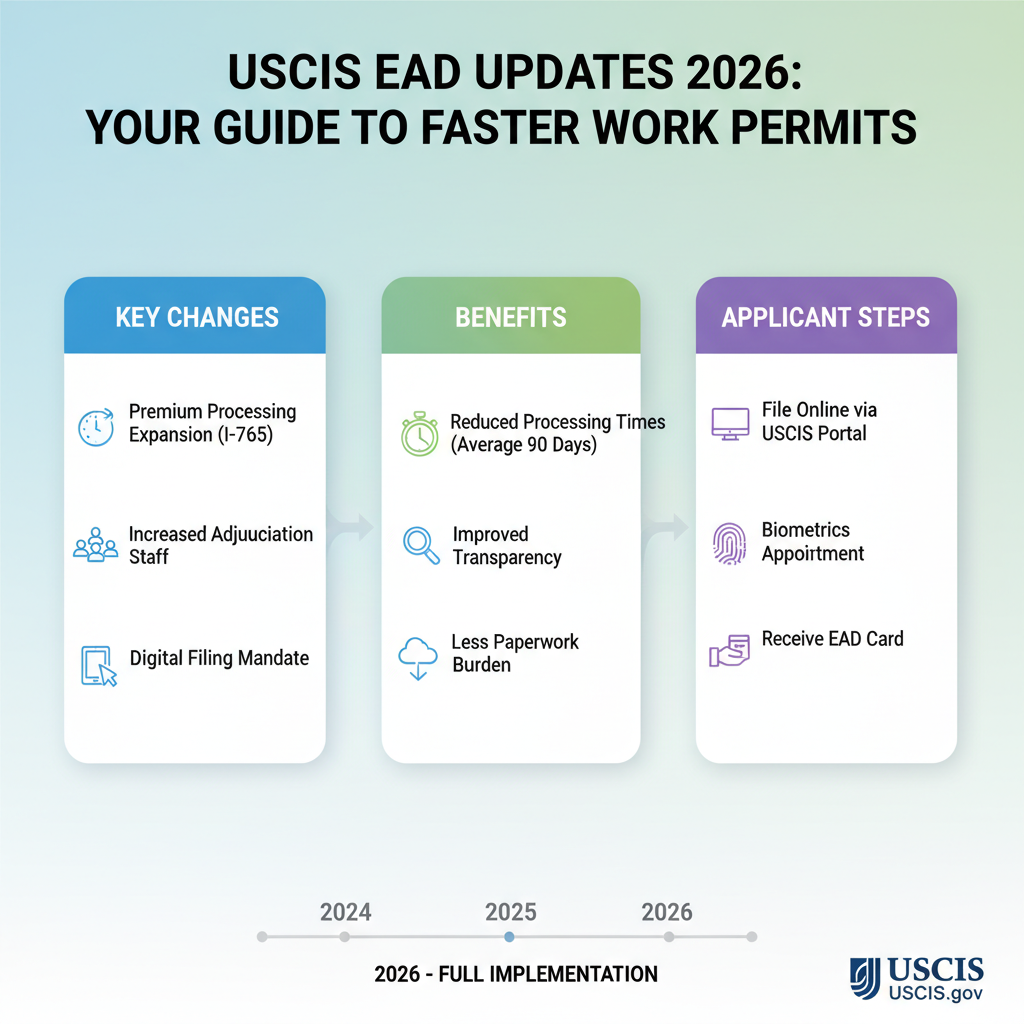
Recent discussions and policy adjustments at USCIS regarding the processing of Employment Authorization Documents have been a significant topic in immigration news. These updates aim to address long-standing backlogs and improve efficiency, directly impacting hundreds of thousands of applicants nationwide. While specific policy details can evolve, the overarching goal of streamlining EAD processing remains a key focus for the agency, influencing everything from application timelines to eligibility considerations.
For ongoing information and official updates, please refer to the primary source of immigration news:
Employment Authorization Document Processing (USCIS)
What This News Means for Immigrants in Orlando and Across Florida
The landscape of immigration processing is constantly shifting, and staying informed is paramount. For individuals and families residing in Orlando, Central Florida, and throughout the Sunshine State, updates to Employment Authorization Document (EAD) processing carry significant weight. These changes aren't just bureaucratic adjustments; they have real-world implications for your ability to work, support your family, and build a stable life in the U.S.
Why this news is showing up now
The discussion around EAD processing is not new, but it has gained renewed urgency due to several factors. For years, USCIS has grappled with an unprecedented volume of applications, exacerbated by the global pandemic and staffing challenges. This led to significant backlogs and unacceptably long processing times for critical documents like the EAD, leaving many immigrants in limbo, unable to work or facing job loss due to expired permits.
In response to immense pressure from immigrant advocates, legal professionals, and the public, USCIS has implemented various strategies to tackle these issues. These strategies include:
- Temporary Final Rules (TFRs): USCIS has, at times, introduced temporary rules to provide relief, such as increasing the automatic extension period for certain EAD renewal applicants. For example, the automatic extension period for certain EAD categories was temporarily increased to 540 days from the previous 180 days to give applicants more time while their renewals are processed. This measure, while temporary, has been crucial in preventing gaps in employment authorization.
- Internal Efficiency Measures: The agency is continually evaluating and streamlining internal processes, optimizing resource allocation, and leveraging technology to speed up adjudication.
- Prioritization: Certain categories of EAD applications, such as those for healthcare and childcare workers, have sometimes been prioritized to address critical workforce needs.
- Increased Staffing and Funding: Efforts to secure additional funding and hire more personnel are ongoing to meet the demand.
These initiatives are what drive the "news" around EAD processing – they represent USCIS's active attempts to improve a system that has historically caused considerable stress and uncertainty for applicants.
How it can affect Florida residents
Florida, a state with a vibrant and diverse immigrant population, is particularly impacted by EAD processing updates. From the bustling metropolis of Miami to the tourist hub of Orlando, and agricultural communities across the state, immigrants play a vital role in Florida's economy and culture. Here's how these updates can affect you if you're in Florida:
- Employment Stability: Faster processing times mean less anxiety about job security. If you're waiting for an initial EAD or a renewal, a quicker turnaround can prevent gaps in employment, allowing you to maintain your income and support your family without interruption. This is especially crucial for families along the I-4 corridor and in major economic centers like Orlando, where a stable workforce is key.
- Economic Impact: When immigrants can work legally and without interruption, they contribute to Florida's economy through taxes, consumer spending, and filling essential labor gaps. Delays in EAD processing can stifle this contribution, affecting local businesses and the broader state economy.
- Planning and Certainty: Knowing that your EAD application will be processed within a more predictable timeframe allows for better life planning. This includes housing, education for children, and long-term financial stability, which is a core part of Imigrar's mission to Keep Families Together.
- Local USCIS Field Offices: While EAD applications are primarily processed at USCIS Service Centers, residents of Orlando and Central Florida interact with the Orlando USCIS Field Office for biometrics appointments and sometimes for interviews related to underlying immigration petitions (like Adjustment of Status) that make them eligible for an EAD. Efficient processing at service centers indirectly reduces the burden on local offices and improves overall system flow.
- Driving and State ID: In Florida, an EAD is often a crucial document required to obtain a state driver's license or identification card, which are essential for daily life, commuting, and even accessing certain services. Quicker EAD processing means quicker access to these vital state documents.
Understanding these updates and their potential impact is the first step toward navigating the EAD application process successfully. Imigrar is here to guide you through every change and ensure your application is as strong as possible.
Need Help Navigating EAD Updates? The rules can be complex and change frequently. Our Orlando immigration team is ready to assist you in understanding the latest processing times and requirements. Call +1 786-791-3106 for a free consultation, or message us online. Se Habla Español.
What Employment Authorization Document (EAD) Processing Is (and Why It Matters)
For many immigrants seeking to establish a new life in the United States, the ability to work legally is not just a desire but a necessity. The document that grants this permission is the Employment Authorization Document, commonly known as an EAD or a work permit. Understanding what an EAD is, why its processing matters, and the terminology surrounding it is crucial for anyone navigating the U.S. immigration system.
A plain-English definition
An Employment Authorization Document (EAD) is a card issued by U.S. Citizenship and Immigration Services (USCIS) that provides temporary permission for certain non-citizens to work legally in the United States. Think of it as your official U.S. work permit. It's typically a plastic card, similar to a driver's license, containing your photo, identifying information, and a validity date. The EAD is proof that you are authorized to work for any employer in the U.S. (unless specific restrictions apply to your category, though this is rare for a general EAD).
It's important to note that an EAD is generally *not* a visa and does not grant you immigration status. Instead, it is a benefit granted based on an underlying immigration status or application you already have or are pursuing. For example, if you have applied for a Green Card (Adjustment of Status), you may be eligible for an EAD while your application is pending.
Key terms you need to know
Navigating immigration processes involves a unique vocabulary. Here are some essential terms related to EADs:
- USCIS (U.S. Citizenship and Immigration Services): The government agency responsible for processing most immigration benefits, including EADs. This is the primary authority you'll interact with for your application. USCIS official website
- Form I-765, Application for Employment Authorization: This is the official form you must file with USCIS to apply for an EAD or to renew an existing one. Accurate completion of this form is paramount.
- Eligibility Category: USCIS assigns specific categories to individuals who are eligible for an EAD. Your eligibility depends on your current immigration status or the immigration benefit you are pursuing. Common categories include asylum applicants, refugees, individuals applying for Adjustment of Status, certain nonimmigrant visa holders (like H-4 spouses or L-2 spouses), and students authorized for Optional Practical Training (OPT).
- Adjustment of Status (AOS): The process by which an eligible applicant already in the United States can apply for lawful permanent resident status (a Green Card) without having to return to their home country. Many AOS applicants file for an EAD concurrently with their Form I-485.
- Nonimmigrant Visa: A visa issued to foreign nationals seeking to enter the U.S. temporarily for a specific purpose (e.g., tourism, work, study). Some nonimmigrant visa holders (e.g., certain spouses of treaty traders or skilled workers) may be eligible for EADs.
- Processing Times: The amount of time USCIS estimates it will take to process a particular application, such as Form I-765. These times vary significantly based on the application type, the service center, and current agency workload. You can check current processing times on the USCIS website. USCIS Processing Times
- Receipt Notice (Form I-797C): A document issued by USCIS acknowledging that they have received your application. It contains a Receipt Number that you can use to track your case online.
- Biometrics Appointment: An appointment at an Application Support Center (ASC) where USCIS collects your fingerprints, photograph, and signature. This data is used for background checks and identity verification.
- Request for Evidence (RFE): A letter from USCIS requesting additional documents or information to support your application. Responding to an RFE accurately and on time is critical.
- Automatic Extension: For certain EAD renewal categories, USCIS may grant an automatic extension of an expiring EAD, allowing you to continue working for a specific period (currently 540 days for eligible categories, as of early 2026, though this can change) while your renewal application is pending.
Understanding these terms will empower you to better comprehend the EAD application process and any updates announced by USCIS. The EAD is not merely a piece of plastic; it is a gateway to financial independence and stability, making its processing a matter of profound importance for immigrants and their families across Florida.
Current Immigration Law: The Foundation for EADs
The authority to grant employment authorization stems from the complex body of U.S. immigration law, primarily the Immigration and Nationality Act (INA) and its implementing regulations in the Code of Federal Regulations (CFR), specifically 8 CFR Part 274a. These laws define who is eligible for an EAD and under what conditions. Understanding this legal framework is essential for a successful application.
Federal requirements
Federal law dictates the specific categories of non-citizens who may apply for an Employment Authorization Document. Eligibility is not universal; it is tied to your underlying immigration status or the immigration benefit you are seeking. The most common federal requirements and eligibility categories include:
- Asylum Seekers and Refugees: Individuals who have filed an application for asylum (after 150 days from filing) or have been granted asylum or refugee status.
- Applicants for Adjustment of Status (Green Card Applicants): Those who have filed Form I-485, Application to Register Permanent Residence or Adjust Status, and whose application is pending. This is a very common pathway for EAD eligibility.
- Certain Nonimmigrant Visa Holders:
- Spouses of certain high-skilled workers (e.g., H-4 spouses whose principal spouse has an approved Form I-140 or has reached a certain stage in their green card process).
- Spouses of L-1 intracompany transferees (L-2 spouses).
- Spouses of E-1/E-2 treaty traders/investors (E spouses).
- Students: F-1 students authorized for Optional Practical Training (OPT) or Curricular Practical Training (CPT).
- Individuals Granted Temporary Protected Status (TPS): Nationals of certain designated countries who cannot return safely to their home country.
- Deferred Action for Childhood Arrivals (DACA) Recipients: Those granted deferred action under DACA.
- Individuals with Pending U-Visa or T-Visa Applications: Victims of certain crimes or human trafficking.
- Parolees: Individuals paroled into the U.S. for humanitarian reasons or significant public benefit.
Each category has specific requirements and supporting documentation. USCIS uses Form I-765, Application for Employment Authorization, to process these requests. It's crucial to identify your correct eligibility category (e.g., (c)(9) for Adjustment of Status applicants, (c)(26) for H-4 spouses) on the form, as an incorrect category can lead to delays or denial.
For detailed information on eligibility categories and all related forms, always refer to the USCIS official website and USCIS Forms page.
Florida-specific considerations
While immigration law and EAD eligibility are federal matters, there are practical considerations for Florida residents:
- Driver's Licenses and State IDs: In Florida, a valid EAD is typically required to obtain or renew a Florida driver's license or state identification card. This is essential for daily life, commuting to work, and proving identity for various services. Without an EAD, obtaining these documents can be challenging or impossible.
- Employment Verification (I-9): All employers in Florida, like those nationwide, must verify the employment eligibility of their new hires using Form I-9, Employment Eligibility Verification. Your EAD serves as a primary "List A" document to satisfy this requirement, proving both your identity and your authorization to work.
- Local Resources: For Central Florida residents, understanding the location of the Orlando USCIS Field Office for biometrics appointments is important. While EAD applications are sent to USCIS Service Centers (which are not in Florida), local appointments are a necessary step for many applicants.
- Legal Support in Florida: Given Florida's large immigrant population, there are many legal resources available. Firms like Imigrar specialize in navigating the federal immigration system while understanding the local context and needs of Florida's diverse communities, from Orlando to Miami.
The foundation of current immigration law regarding EADs is designed to provide a legal pathway for certain non-citizens to contribute to the U.S. workforce. Staying compliant with these federal laws and understanding their local implications is key to securing and maintaining your work authorization.
Confused by EAD eligibility categories or federal requirements? Don't risk a denial due to a technicality. Imigrar's experienced attorneys in Orlando can help you determine your eligibility and prepare a strong application. Call us at +1 786-791-3106 for a free consultation. Se Habla Español.

How to Apply for or Renew Your EAD: A Complete Step-by-Step Guide
Applying for or renewing your Employment Authorization Document (EAD) is a critical process that requires precision and attention to detail. This guide breaks down the steps involved, offering practical advice to help you navigate the journey successfully. Remember, these steps apply to both initial applications and renewals, with slight variations.
1) Determine Your Eligibility Category
Before you even touch Form I-765, you must clearly identify the specific category under which you are eligible for an EAD. This is arguably the most crucial first step, as an incorrect category can lead to delays or denial.
- Action: Review the USCIS website's "Who May File Form I-765" section or consult with an immigration attorney.
- Common Categories to Consider:
- (c)(8): Asylum applicant (pending for at least 150 days).
- (c)(9): Adjustment of Status applicant (pending Form I-485).
- (c)(26): H-4 spouse of an H-1B nonimmigrant (with approved Form I-140 or certain other conditions).
- (a)(17): Spouse of an L-1 visa holder.
- (c)(3)(i), (ii), (iii): F-1 student with OPT.
- (a)(10): Granted asylum.
- (a)(12): Granted Temporary Protected Status (TPS).
- Important: Your eligibility category will dictate the supporting documents required.
2) Gather Required Documents
Once your eligibility category is clear, you can begin collecting the necessary supporting documents. This phase often takes the most time, so start early.
- Action: Create a checklist based on your eligibility category and gather original documents and copies.
- General Required Documents (may vary by category):
- Two identical passport-style photos (taken within the last 30 days, white background).
- Copy of your last EAD (if renewing).
- Copy of your Form I-94, Arrival/Departure Record (front and back, or printout from CBP website).
- Copy of your passport biographical page.
- Copy of your visa (if applicable).
- Copy of your birth certificate.
- Copy of your marriage certificate (if applying as a spouse).
- Proof of your underlying immigration status or application (e.g., Form I-485 Receipt Notice, Form I-589 Receipt Notice, H-1B Approval Notice (Form I-797) for your spouse, approved Form I-140 for H-4 EAD).
- Proof of any previous EADs, even if expired or from a different category.
- Any other documents specifically required for your eligibility category (e.g., academic transcripts for OPT, evidence of relationship for spouses).
- Reminder: Do NOT send original documents unless specifically requested by USCIS. Provide clear photocopies.
3) Complete Form I-765 Accurately
The application form itself is crucial. Any errors, omissions, or inconsistencies can lead to RFEs or even denials.
- Action: Download the latest version of Form I-765 from the USCIS Forms page. Read the instructions thoroughly.
- Key Points for Completion:
- Fill out all sections completely and accurately. If a section doesn't apply, write "N/A."
- Ensure your name, date of birth, and other biographical information match your identity documents exactly.
- Properly select your eligibility category in Part 2, Item 27.
- If renewing, clearly indicate that you are applying for a renewal in Part 1, Item 1.
- Consider including Form G-1145, E-Notification of Application/Petition Acceptance, to receive text and email notifications when USCIS accepts your application.
- Sign the form with a wet signature. Do not use a typed signature.
- Warning: Double-check everything. A minor mistake can cause significant delays.
4) Pay the Filing Fee (or Request a Fee Waiver)
Most EAD applications require a filing fee. This fee can change, so always check the current amount on the USCIS website.
- Action: Determine the correct filing fee and preferred payment method.
- Fee Information:
- As of early 2026, the fee for Form I-765 is typically $410, but verify this on the USCIS website.
- Payment can usually be made by money order, personal check, cashier's check, or by credit card using Form G-1450, Authorization for Credit Card Transactions.
- Make checks payable to "U.S. Department of Homeland Security."
- Fee Waivers: Certain applicants, particularly those with very low income or receiving public benefits, may be eligible for a fee waiver. You must file Form I-912, Request for Fee Waiver, along with your Form I-765 and supporting documentation for the waiver.
- Important: Incorrect fee amounts or improper payment methods will lead to your application being rejected.
5) File Your Application
Once your application is complete and all documents are gathered, it's time to mail it to USCIS.
- Action: Assemble your application package and mail it to the correct USCIS Service Center.
- Assembly Tips:
- Organize documents neatly, perhaps with tabs or separators.
- Place payment on top, followed by Form G


