

The reporting that sparked this guide: Employment Authorization Document Processing (USCIS)
What This News Means for Immigrants in Orlando and Across Florida
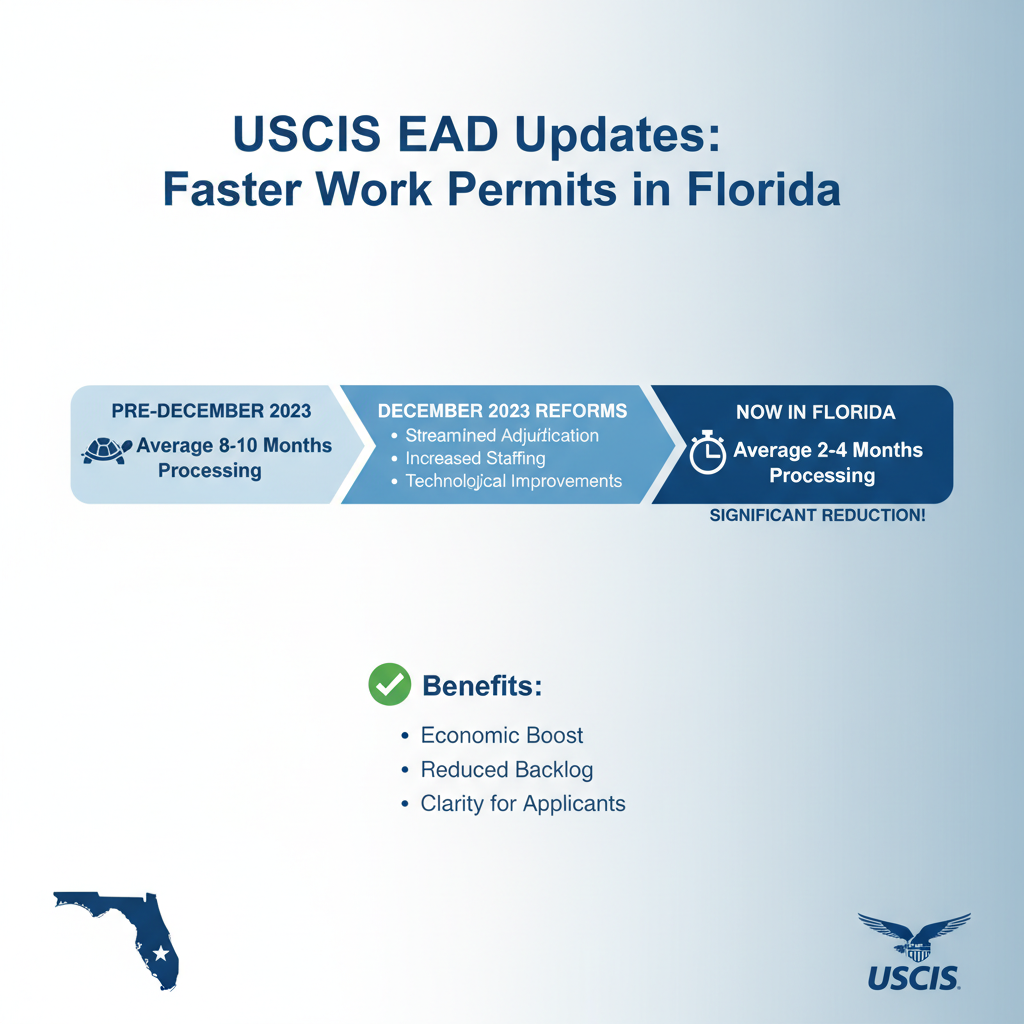
For immigrants across the United States, and especially here in Florida, the ability to work legally is not just about financial stability; it's about dignity, integration, and building a future. The Employment Authorization Document, or EAD, commonly known as a work permit, is the cornerstone for this dream. Recent updates from U.S. Citizenship and Immigration Services (USCIS) regarding EAD application and renewal processing have been a beacon of hope for many, signaling a concerted effort to address long-standing backlogs and streamline the path to employment for eligible individuals.
As of late August 2026, USCIS has continued to implement strategies aimed at improving efficiency, reducing processing times, and providing clearer guidance for applicants. These efforts are a direct response to the immense challenges faced by applicants during periods of extended delays, which left many families in limbo, unable to work and support themselves despite having valid underlying immigration processes underway. Understanding these updates is crucial for anyone seeking to apply for or renew their EAD.
Why this news is showing up now
The current focus on expediting EAD processing stems from a confluence of factors. The COVID-19 pandemic severely impacted USCIS operations, leading to unprecedented backlogs across almost all immigration benefit requests, including Form I-765, Application for Employment Authorization. As the nation recovered, the agency faced immense pressure from advocacy groups, lawmakers, and the public to resolve these delays, which were preventing thousands of eligible individuals from contributing to the economy and providing for their families. In response, USCIS initiated a series of operational improvements and policy changes.
These initiatives, which began rolling out in 2022 and have been refined and expanded through 2026, include increased staffing, technological enhancements, and policy adjustments such as the expansion of the automatic extension period for certain EAD renewal categories. The goal has been to reduce the overall median processing time for all forms, with a particular emphasis on high-volume applications like the EAD. The news you're seeing now reflects the ongoing commitment and the tangible results of these efforts, offering a more optimistic outlook for applicants compared to the challenging years prior.
How it can affect Florida residents
Florida, with its vibrant and diverse immigrant population, is significantly impacted by these USCIS updates. From the agricultural fields of South Florida to the bustling tourism and tech industries of Orlando and the I-4 corridor, immigrants play a vital role in our state's economy. Delays in EAD processing have had a disproportionate effect on families here, leading to job losses, financial hardship, and immense stress.
For Central Florida residents, particularly those in Orange County and surrounding areas, faster EAD processing means a quicker return to employment or the ability to start new jobs. This directly translates to improved economic stability for families, increased tax contributions, and a stronger local economy. The Orlando USCIS Field Office and Application Support Center serve thousands of applicants annually, and any improvement in national processing times directly benefits these local communities. Whether you're an asylum seeker awaiting a decision, an applicant for Adjustment of Status (AOS) based on family or employment, or a DACA recipient renewing your work authorization, these updates mean a potentially shorter wait time before you can legally earn a living and pursue your American dream right here in Florida. It reinforces our state’s ability to "Keep Families Together" by ensuring they can thrive economically.
Need Help? Navigating EAD applications can be complex, especially with ongoing updates. Our Orlando immigration team is ready to assist. Call +1 786-791-3106 for a free consultation, or message us online. Se Habla Español.
What Employment Authorization Document (EAD) Is (and Why It Matters)
The Employment Authorization Document (EAD) is one of the most critical documents for many immigrants in the United States. Without it, most non-citizens are not permitted to work legally. Understanding what an EAD is, and why it holds such immense significance, is the first step toward securing your ability to earn a living in the U.S.
A plain-English definition
Simply put, an Employment Authorization Document (EAD) is a card issued by USCIS that proves you are authorized to work in the United States for a specific period. It is often referred to as a "work permit." The physical card looks similar to a driver's license, featuring your photo, name, birth date, immigration category, and an expiration date. It's the document you present to an employer to verify your eligibility to work, typically alongside a Social Security card, when completing Form I-9, Employment Eligibility Verification.
An EAD is not a visa, nor is it a green card. It's a temporary authorization to work based on an underlying immigration status or application you have pending with USCIS. For instance, if you have applied for a green card through Adjustment of Status (AOS), you are often eligible to apply for an EAD while your green card application is pending. This allows you to work legally during what can sometimes be a lengthy waiting period.
Key terms you need to know
To navigate the EAD process effectively, it's essential to understand several key terms:
- USCIS (U.S. Citizenship and Immigration Services): The federal agency responsible for administering the country's lawful immigration system, including processing EAD applications.
- Form I-765, Application for Employment Authorization: The official form you must submit to USCIS to apply for or renew your EAD.
- Eligibility Category: A specific code (e.g., (c)(9) for Adjustment of Status applicants, (c)(8) for asylum applicants, (a)(5) for asylees) that determines why you are eligible for an EAD. This is crucial for completing Form I-765 correctly.
- Adjustment of Status (AOS): The process by which an eligible immigrant already in the United States can apply for lawful permanent resident status (a green card) without having to return to their home country. Many AOS applicants are eligible for an EAD.
- Nonimmigrant Status: A temporary stay in the U.S. for a specific purpose (e.g., student visa, tourist visa, work visa). Some nonimmigrants and their dependents may be eligible for an EAD.
- Receipt Notice (Form I-797C): A document sent by USCIS confirming they have received your application. It contains your receipt number, vital for tracking your case.
- Biometrics Appointment: An appointment at a USCIS Application Support Center (ASC) where your fingerprints, photograph, and signature are taken for identity verification and background checks. This is often required for EAD applicants. For Central Florida residents, this usually takes place at the Orlando ASC.
- Processing Times: The estimated time it takes USCIS to process an application from submission to decision. These can vary significantly based on form type, service center, and eligibility category. You can check current times on the USCIS Processing Times page.
- Automatic Extension: A provision that allows certain EAD renewal applicants to continue working for a period (currently up to 540 days, as of late 2026, though this can change) beyond their card's expiration date, provided their renewal application was filed on time and is for the same eligibility category.
- Request for Evidence (RFE): A letter from USCIS requesting additional documentation or information to support your application.
The EAD matters profoundly because it allows individuals to legally work, earn an income, pay taxes, and contribute to their communities. For many, it's a bridge to a more permanent immigration status, providing essential stability during often lengthy immigration processes. For families in Orlando and across Florida, an EAD means the difference between struggling to make ends meet and building a secure future, upholding Imigrar's mission to "Keep Families Together."
Current Immigration Law: The Foundation for Your Work Permit
The legal framework for obtaining an Employment Authorization Document (EAD) is rooted in federal immigration law, primarily the Immigration and Nationality Act (INA) and its corresponding regulations in the Code of Federal Regulations (CFR). While the EAD is a federal benefit, understanding the specific legal underpinnings is crucial for determining eligibility and navigating the application process successfully.
Federal requirements
The authority for USCIS to grant employment authorization comes from the INA and is detailed in 8 Code of Federal Regulations (CFR) Part 274a.12. This regulation outlines the various classes of aliens authorized to be employed in the United States. These classes are divided into two main groups:
- Aliens authorized incident to status: These individuals are automatically authorized to work due to their immigration status (e.g., lawful permanent residents, asylees, refugees). They may choose to apply for an EAD as proof of their authorization, but it's not strictly required for employment.
- Aliens who must apply for employment authorization: This is the larger group, encompassing those whose authorization to work is contingent upon USCIS granting their Form I-765 application. This includes, but is not limited to:
- Applicants for Adjustment of Status (AOS) to lawful permanent resident (8 CFR 274a.12(c)(9)). This is a very common category for EADs, often filed concurrently with Form I-485, Application to Register Permanent Residence or Adjust Status.
- Applicants for asylum or withholding of deportation or removal (8 CFR 274a.12(c)(8)). These individuals must wait 180 days after filing their asylum application before they can apply for an EAD.
- Spouses of certain nonimmigrant visa holders, such as H-4 spouses of H-1B visa holders (8 CFR 274a.12(c)(26)) or L-2 spouses of L-1 visa holders.
- Students with certain types of optional practical training (OPT) (8 CFR 274a.12(c)(3)).
- DACA (Deferred Action for Childhood Arrivals) recipients (8 CFR 274a.12(c)(33)).
- Applicants for Temporary Protected Status (TPS) (8 CFR 274a.12(a)(12) or (c)(19)).
- Individuals granted Parole (8 CFR 274a.12(c)(11)).
The specific category under which you apply dictates the evidence required and sometimes the validity period of the EAD. It is critical to select the correct category on your Form I-765. For the most accurate and up-to-date information on eligibility and requirements, always refer to the USCIS official website and the instructions for Form I-765 found at USCIS Forms I-765 page.
Florida-specific considerations
While EAD eligibility and processing are governed by federal law and USCIS policies, there are practical considerations for Florida residents:
- Orlando USCIS Field Office & Application Support Center: For many Central Florida applicants, biometrics appointments will be scheduled at the Orlando Application Support Center. All inquiries and follow-ups are handled at the federal level, but local resources and support networks are invaluable.
- State ID and Driver's Licenses: Once you receive your EAD, you can use it to apply for a Florida driver's license or state identification card. The Department of Highway Safety and Motor Vehicles (DHSMV) will verify your immigration status through the Systematic Alien Verification for Entitlements (SAVE) program.
- Employment Opportunities: Florida's diverse economy offers various employment opportunities for individuals with work authorization. From the service industry in Orlando to healthcare and technology across the state, an EAD opens doors to legal employment.
- Legal Support: Given the complex nature of immigration law, accessing experienced legal counsel in your local area is paramount. Firms like Imigrar in Orlando specialize in assisting Florida residents with their EAD and other immigration needs, ensuring compliance with both federal regulations and local practicalities.
Understanding these foundational laws and local impacts empowers you to approach your EAD application with confidence. Always remember that immigration law is dynamic, and consulting with an expert is the best way to ensure your application meets all current requirements.

How to Apply for or Renew Your EAD: A Complete Step-by-Step Guide
Applying for or renewing your Employment Authorization Document (EAD) can seem daunting, but by breaking it down into manageable steps, the process becomes much clearer. This guide will walk you through each stage, whether you're applying for the first time or seeking to renew your existing work permit. Remember, accuracy and completeness are key to avoiding delays.
1) Determine Your Eligibility Category and Gather Initial Information
Before you even touch Form I-765, you must confirm your specific eligibility category. This is perhaps the most critical first step, as it dictates the required documentation and often the success of your application. Common categories include:
- (c)(9): Filed with Form I-485, Application to Register Permanent Residence or Adjust Status (green card application).
- (c)(8): Asylum applicant (pending for at least 180 days).
- (a)(5): Granted asylum.
- (c)(26): Spouse of certain H-1B nonimmigrant.
- (c)(33): DACA recipient.
- (c)(19): Granted Temporary Protected Status (TPS).
- (c)(3)(i): F-1 student seeking Optional Practical Training (OPT).
Once you've identified your category, gather the following basic information and documents:
- Your Alien Registration Number (A-Number), if you have one.
- Your USCIS Online Account Number, if applicable.
- Your Social Security Number (SSN), if you have one.
- Your passport and visa information.
- Your Form I-94, Arrival/Departure Record (print from CBP website).
- Any previous EAD cards (for renewals).
- Important: Ensure all your personal information (name, date of birth, etc.) is consistent across all documents. Discrepancies can lead to RFEs or denials.
2) Complete Form I-765, Application for Employment Authorization
This is the core of your application. You can either file electronically through the USCIS online portal (if eligible for your category) or by mailing a paper form. Carefully read the official Form I-765 instructions before starting. Key sections to pay close attention to:
- Part 1: Reason for Applying: Indicate if it's an initial application, renewal, or replacement.
- Part 2: Information About You: Fill in all personal details exactly as they appear on your official documents. This includes your name, address, date and place of birth, country of citizenship, and immigration history.
- Part 2, Question 27: Eligibility Category: Enter the correct three-character code (e.g., (c)(9)) you identified in Step 1. This is critical.
- Warning: Any blank fields, typos, or inconsistencies can cause significant delays or even lead to a denial. If a question doesn't apply, write "N/A" (Not Applicable).
3) Compile Required Supporting Documents
The documents you need will vary based on your eligibility category. However, a general list often includes:
- Two identical, passport-style photos: Taken within 30 days of filing, with a white background, unretouched. Write your A-Number (if applicable) and full name lightly on the back of each photo.
- Copy of your most recent Form I-94, Arrival/Departure Record: Proves your lawful admission and current immigration status.
- Copy of your last EAD card (front and back): Required for renewals.
- Copy of your passport biographical page and visa page.
- Copy of your birth certificate.
- Proof of your underlying immigration status or application:
- For (c)(9) (AOS): Copy of your Form I-485 Receipt Notice (Form I-797C) or a copy of the concurrently filed Form I-485.
- For (c)(8) (Asylum): Copy of your Form I-589, Application for Asylum and for Withholding of Removal Receipt Notice.
- For (c)(26) (H-4 spouse): Copy of your spouse's H-1B approval notice (Form I-797), proof of marriage (marriage certificate), and your H-4 approval notice.
- For (c)(33) (DACA): Copy of your most recent Form I-797C for Form I-821D, Consideration of Deferred Action for Childhood Arrivals.
- Any other documents specific to your category: Check the Form I-765 instructions meticulously.
- Important: Provide clear, legible photocopies of all documents. Do not send original documents unless specifically requested by USCIS.
4) Pay the Filing Fee (or Request a Fee Waiver)
As of late 2026, the filing fee for Form I-765 is typically $410, plus a separate biometrics services fee of $85 (if required for your category), totaling $495. However, fees are subject to change, so always verify the current fees on the
You may also be interested in: Stay informed on the latest DACA program updates for 2026. This comprehensive guide covers eligibility, the renewal process, required documents, and c... Facing your Green Card interview in Orlando or anywhere in Florida? This comprehensive guide from Imigrar provides step-by-step preparation tips, esse... Prepare confidently for your Green Card interview with Imigrar's comprehensive guide. Learn what to expect, gather crucial documents, and ace your USC... Stay informed on USCIS processing times and updates for 2026. This guide from Imigrar helps Orlando and Florida immigrants understand new timelines, r...Related Articles


