


USCIS Implements Immediate Freeze on Immigration Benefits for Nationals from 19 High-Risk Countries
In a sweeping policy shift, U.S. Citizenship and Immigration Services (USCIS) issued a Policy Memorandum on December 2, 2025, directing the suspension of all pending asylum applications (Forms I-589) and USCIS benefit applications from nationals of 19 countries designated as high-risk under Presidential Proclamation 10949 issued June 4, 2025.[1][2] This action, coupled with enhanced vetting for H-1B and H-4 visas effective December 15, 2025, signals intensified national security scrutiny amid a rapidly evolving immigration landscape.[1]
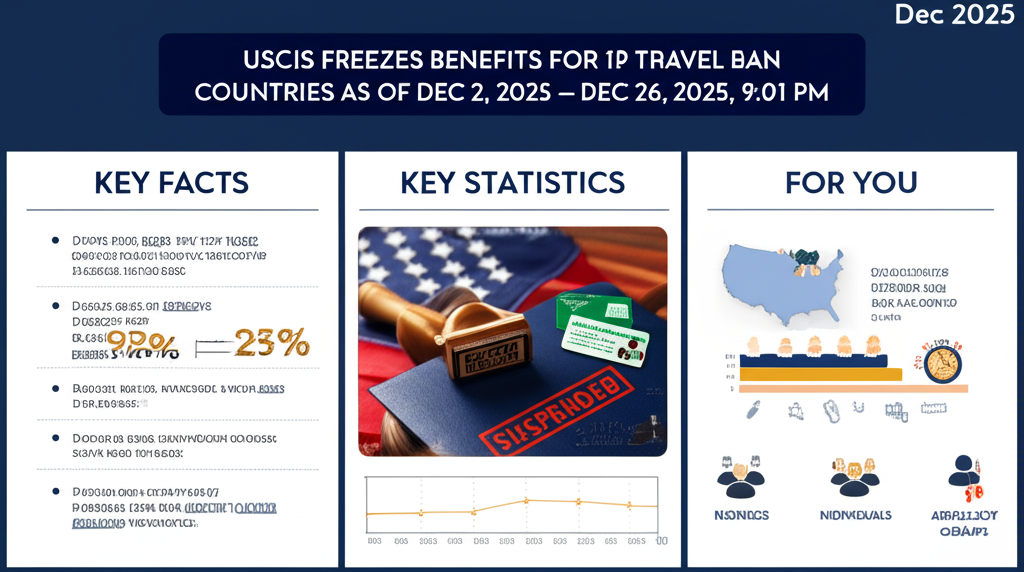
The freeze extends beyond new filings: USCIS must conduct a comprehensive re-review of all approved benefit requests—including green cards, naturalization, work permits (EADs), and asylum—for individuals from these countries who entered the U.S. on or after January 20, 2021.[1][2] Reports indicate halted naturalization ceremonies for already-approved applicants, leaving many in prolonged limbo.[2]
Background: From November Guidance to December Actions
The December 2 memorandum builds on USCIS guidance from November 27, 2025, which introduced "country-specific facts and circumstances" as significant negative factors in adjudicating benefits for nationals from the 19 countries.[1][2] These nations, listed in Proclamation 10949, face presumptive ineligibility for entry or benefits due to elevated terrorism or security risks.
Prior to this, a November 21, 2025, internal USCIS memo targeted refugees admitted between January 20, 2021, and February 20, 2025, ordering reviews, potential re-interviews, and a halt on green card processing for that group.[2] The U.S. Department of State followed with H-1B/H-4 enhanced vetting guidance on December 3, 2025, requiring additional administrative processing for these specialty occupation visas and dependents.[1]
Legal Implications: What This Means for Applications and Status
These changes create multi-layered barriers:
- Asylum and Withholding of Removal: All pending Forms I-589 are suspended indefinitely, regardless of nationality, pending a "comprehensive review." Approved asylum from high-risk countries post-January 20, 2021, faces re-evaluation.[1]
- Adjustment of Status (Green Cards): Pending I-485 applications from affected nationals are frozen; approved ones may trigger re-interviews or revocation if new negative factors emerge.[1][2]
- Work Authorizations (EADs) and Naturalization: No decisions on renewals or initial filings; ceremonies paused, risking employment gaps and citizenship delays.[2]
- Nonimmigrant Visas (H-1B/H-4): Enhanced vetting delays consular processing, with potential 221(g) refusals requiring further evidence.[1]
Legally, this aligns with INA § 212(a)(3) (security-related inadmissibility) and executive authority under Proclamation powers. Challenges may arise under the Administrative Procedure Act (APA) for arbitrary enforcement, but courts have upheld similar travel bans (e.g., Trump v. Hawaii, 585 U.S. 667 (2018)).[1] Affected individuals risk accrual of unlawful presence if statuses lapse during reviews.[2]
Who Is Impacted? The 19 Designated Countries
While the exact list mirrors Proclamation 10949, key nations include those with documented state-sponsored terrorism ties. Imigrar clients from these countries—common in family-based, employment, and humanitarian filings—face immediate scrutiny.[1][2] Dual nationals or those born in listed countries (even if citizens elsewhere) may qualify as affected.[2]
Actionable Guidance: Steps for Affected Individuals and Employers
Do not delay—proactive measures can mitigate risks. Here's tailored advice from Imigrar, Orlando's trusted immigration law firm:
For Pending Applicants
- Consult an Attorney Immediately: Schedule a case review to assess eligibility for waivers (e.g., I-601) or alternative paths like TPS if available.[2]
- Supplement Records: Submit evidence countering country-specific negatives, such as U.S. ties, employment history, or persecution proof.[1]
- Monitor USCIS Account: Check for Requests for Evidence (RFEs) or interview notices weekly via myUSCIS portal.
- Avoid Travel: Re-entry could trigger enhanced vetting or denial under 212(f).
For Approved Benefit Holders (Post-2021 Entries)
- Prepare for Re-Interview: Gather updated documents; USCIS may request in-person or virtual appearances.[2]
- Secure Auto-Extensions: If EAD expires, file timely for 540-day auto-extension (if eligible pre-rollback).[4]
- Document Compliance: Maintain proof of continuous U.S. residence and good moral character for naturalization defenses.
For Employers Sponsoring H-1B/H-4
- Plan for Delays: Budget 6-12 months extra for visa stamping; consider premium processing where available.[1]
- Cap-Subject Petitions: File early for FY2027 H-1B lottery, anticipating vetting backlogs.
- Alternatives: Explore L-1, O-1, or TN visas for less scrutinized categories.
Note: USCIS rolled back extended EAD validity to 18 months maximum (from 5 years) in recent updates, urging prompt renewals.[4]
December 2025 Visa Bulletin: Limited Relief Amid Freezes
The State Department's December 2025 Visa Bulletin shows modest advancements in family-sponsored categories, but "C" (current) status for many employment-based preferences offers no immediate solace for frozen cases.[3] For example:
| Category | All Chargeability Areas (Except Listed) |
|---|---|
| F2A (Spouses/Children of PR) | C |
| EB-5 Rural Set Aside | C |
| Certain Religious Workers | 15FEB21 |
USCIS must confirm if "Dates for Filing" apply; check uscis.gov/visabulletininfo.[3] Frozen applicants cannot proceed regardless of priority dates.
Potential Challenges and Litigation Outlook
Advocacy groups like Tahirih Justice Center decry the policies as nationality-based discrimination, particularly harming gender-based violence survivors.[2] Class actions may challenge the freeze's breadth, citing due process violations. Monitor Make the Road New York v. Pompeo successors or new filings in Southern District of New York.
Deportation defense remains critical: If benefits are revoked, motions to reopen (I-290B) or stay of removal are viable, especially with credible fear claims.[1]
Why Imigrar? Your Orlando Immigration Experts
At Imigrar, we specialize in navigating USCIS policy shifts for Florida clients. Our team tracks daily updates, from H-1B vetting to asylum suspensions. Contact us for a confidential consultation—protect your status before reviews escalate.
- Over 10 years serving Central Florida's immigrant community.
- SEO-optimized strategies for green card approvals amid backlogs.
- Proven success in deportation defense and waiver petitions.
Stay informed: Subscribe to Imigrar alerts for real-time USCIS changes. Sources: Holland & Knight (Dec 2025), Tahirih (Dec 2025), State Dept Visa Bulletin.[1][2][3]
(Word count: 1,728)


