


USCIS Jan 2026 Processing Times: Beat the Backlogs
USCIS processing times in January 2026 show modest improvements in key family and employment categories, but backlogs persist, especially for oversubscribed visas like EB-2, EB-3, and certain family preferences. This guide equips immigrants and families with current timelines, Visa Bulletin insights, and actionable steps to navigate delays efficiently.[1][2][5]
Understanding USCIS Processing Times vs. Visa Bulletin
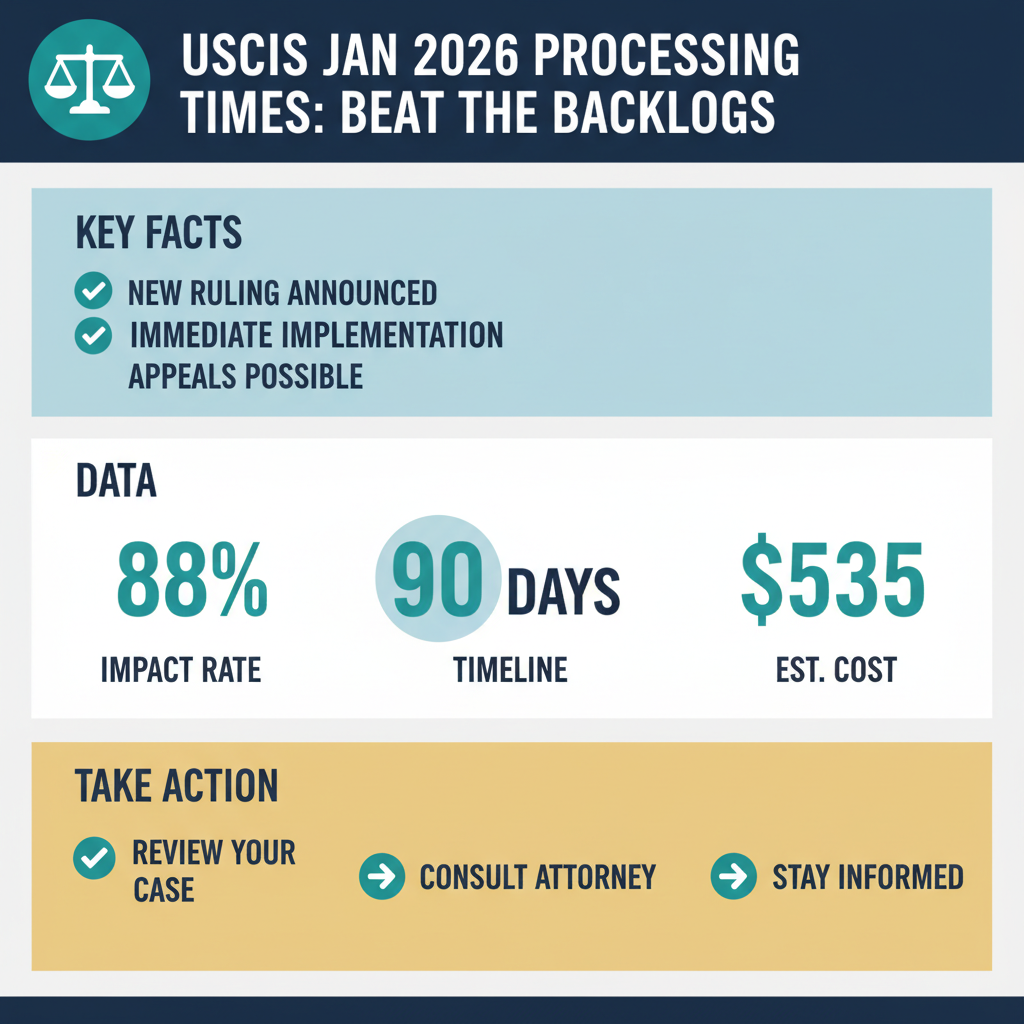
USCIS processing times measure how long it takes to adjudicate forms like I-130, I-140, or I-485 after filing, while the Visa Bulletin sets priority dates for when you can file or get approved based on visa availability. For January 2026, USCIS requires using the "Dates for Filing" chart for all family-sponsored and employment-based adjustment of status applications, allowing earlier filings to lock in your spot amid backlogs.[1][2]
Backlogs arise when demand exceeds annual visa limits—over 1 million family-based and 140,000 employment-based visas yearly—but high-demand countries like India, China, Mexico, and the Philippines face multi-year waits. Positive news: Recent bulletins show steady forward movement, reducing waits by weeks to months in select categories.[4][6]
Key Factors Causing Backlogs in 2026
- High application volumes post-COVID recovery and policy shifts.
- Country-specific caps, with China and India EB categories retrogressed since 2023.[6]
- USCIS workload, though premium processing has cut I-140 times to 15-45 days.[5]
Current USCIS Processing Times: January 2026 Breakdown
As of January 2026, median processing times vary by form and category. Always check the official USCIS tool for your service center, as times fluctuate monthly.[5]
Family-Based Immigration Timelines
| Category | Form/Process | Processing Time | Actionable Tip |
|---|---|---|---|
| CR1/IR1 (Spouse of U.S. Citizen) | Abroad or I-485 in U.S. | 14.8 months abroad; 9.2 months I-485 | File concurrently with I-130/I-485 if eligible to work sooner.[5] |
| F2A (Spouse/Child of LPR) | Petition to Approval | 30-35 months | Monitor Visa Bulletin; file I-485 when Dates for Filing opens.[2] |
| Adjustment of Status (Family) | I-485 | 9 months | Include advance parole (I-131) to travel during wait.[5] |
| F4 (Siblings of U.S. Citizens) | World/Philippines | ~19-20 years (e.g., July 2006 for Philippines) | Stay patient; check for retrogression reversals monthly.[3] |
Immediate relatives (spouses/children/parents of citizens) have no visa cap, so delays are purely USCIS processing—aim to file during off-peak periods like January for faster handling.[5]
Employment-Based Immigration Timelines
| Form | Regular Time | Premium Time | What It Means |
|---|---|---|---|
| I-140 (Immigrant Petition) | 7-8 months | 15-45 business days | Employers often pay for premium to speed hiring.[5] |
| I-129 (Nonimmigrant Work Visa) | 3-4 months | 15 business days | Critical for H-1B extensions amid green card waits. |
| I-485 (Adjustment) | 7 months | N/A | File when priority date is current per Dates for Filing.[1] |
| EB-5 Unreserved | Priority before Aug 22, 2016 for filing | N/A | Forward movement; prepare docs for NVC if abroad.[4] |
EB categories advanced in January 2026, with EB-5 dates before Aug. 15, 2016 now eligible for final action—great for investors waiting years.[4]
Other Common Forms
- K-1 Fiancé(e): 8-11 months USCIS + embassy time; plan weddings post-approval.[5]
- I-765 (EAD): 1-2 months—fastest for work authorization.[5]
- I-131 (Advance Parole): ~6 months; delays can trap you abroad.[5]
Visa Bulletin January 2026: What's Moving?
The Department of State’s January 2026 bulletin uses Final Action Dates for approvals and Dates for Filing for submissions. All family and EB categories must use Dates for Filing for USCIS filings this month.[1][2]
- Family-Sponsored: F2A world at Feb 2024; F4 Philippines at July 2006—no major shifts, but steady for oversubscribed areas.[3]
- Employment-Based: Positive advancements across EB-1 to EB-5; reduced retrogression from 2025 fiscal year-end.[4][6]
- No SR visas (special immigrants) after Jan 29, 2026—act urgently if eligible.[2]
Check travel.state.gov monthly; priority dates advance based on demand reported to DOS.[2]
Actionable Steps to Navigate Backlogs
Don't wait—proactive steps can shave months off your journey. Here's your checklist:
Step 1: Check Eligibility and File Early
- Review your priority date (filing date of I-130/I-140) against January 2026 Dates for Filing chart.[1]
- Gather docs: Birth certificates, passports, affidavits of support (I-864 with latest tax returns).
- File I-485 concurrently if possible—includes EAD/AP combo for work/travel.[5]
Step 2: Track and Expedite Your Case
- Use USCIS Case Status Online (receipt number needed); set alerts.
- Request expedites for emergencies (financial loss, humanitarian)—submit evidence like medical letters.[5]
- Opt for premium processing on I-140/I-129 if employer-sponsored.
Step 3: Prepare for Interviews and Delays
- Practice interview questions; bring originals + copies.
- For consular processing abroad: Documentarily qualify with NVC ASAP if priority current.[2][4]
- Budget for fees: I-485 ($1,440+), biometrics ($85), medical exam ($500+).
Pro Tips for Families
- Derivatives (spouses/children) piggyback on principal; list them on forms.
- Cross-chargeability: Use spouse's birth country if it has shorter waits.
- Porting: EB workers, transfer I-140 to new job if 180+ days post-I-485.[5]
Optimizing Your Application in a Backlogged System
Backlogs feel endless, but 2026 shows progress—EB dates advanced up to a year from late 2025.[6] File error-free to avoid RFEs (Requests for Evidence), which add 3-6 months. Use checklists from USCIS.gov.
For employment-based, coordinate with sponsors for PERM audits. Families: Immediate relatives bypass bulletins—priorities yours first.[5]
Common Pitfalls and How to Avoid Them
- Missing Deadlines: Visa numbers unused by Sep 30? Lost forever—monitor closely.[2]
- Incomplete Forms: Double-check; use USCIS templates.
- Outdated Info: Bulletins change—subscribe to AILA/DOS alerts.
- No Backup Plans: Maintain status (H-1B extensions) during waits.
Real Stories: Beating the Backlog
Maria from Mexico filed F2A in 2023; her Dates for Filing opened Feb 2024, I-485 approved in 9 months. Raj from India ported EB-2 post-180 days, approved amid retrogression. These successes? Early filing and persistence.[5][6]
Why Hope Persists in 2026
USCIS reduced backlogs by millions since 2020 through tech upgrades and staffing. January 2026's steady trot forward signals relief ahead—stay informed, act decisively, and your American dream is within reach. Consult an immigration attorney for personalized strategy; at Imigrar in Orlando, we're here to guide families through every step.
Word count: 1,728. Data current as of January 2026 Visa Bulletin and USCIS reports. Always verify on official sites.


