


Navigating the New Naturalization Test: Your 2026 Guide to U.S. Citizenship
The journey to U.S. citizenship is a significant milestone for many immigrants, promising stability, rights, and a deeper connection to the American fabric. A critical component of this journey is the Naturalization Test, administered by U.S. Citizenship and Immigration Services (USCIS). As we approach 2026, significant changes are on the horizon for this test, bringing new challenges and requiring a fresh approach to preparation. At Imigrar, your trusted immigration law firm in Orlando, Florida, we are committed to keeping you informed and prepared every step of the way.
This comprehensive guide delves into the anticipated changes, explains their implications, and provides actionable advice for aspiring citizens. Our goal is to empower you with the knowledge and resources needed to successfully navigate the path to naturalization, ensuring that you and your family can achieve your American dream.
The reporting that sparked this guide:
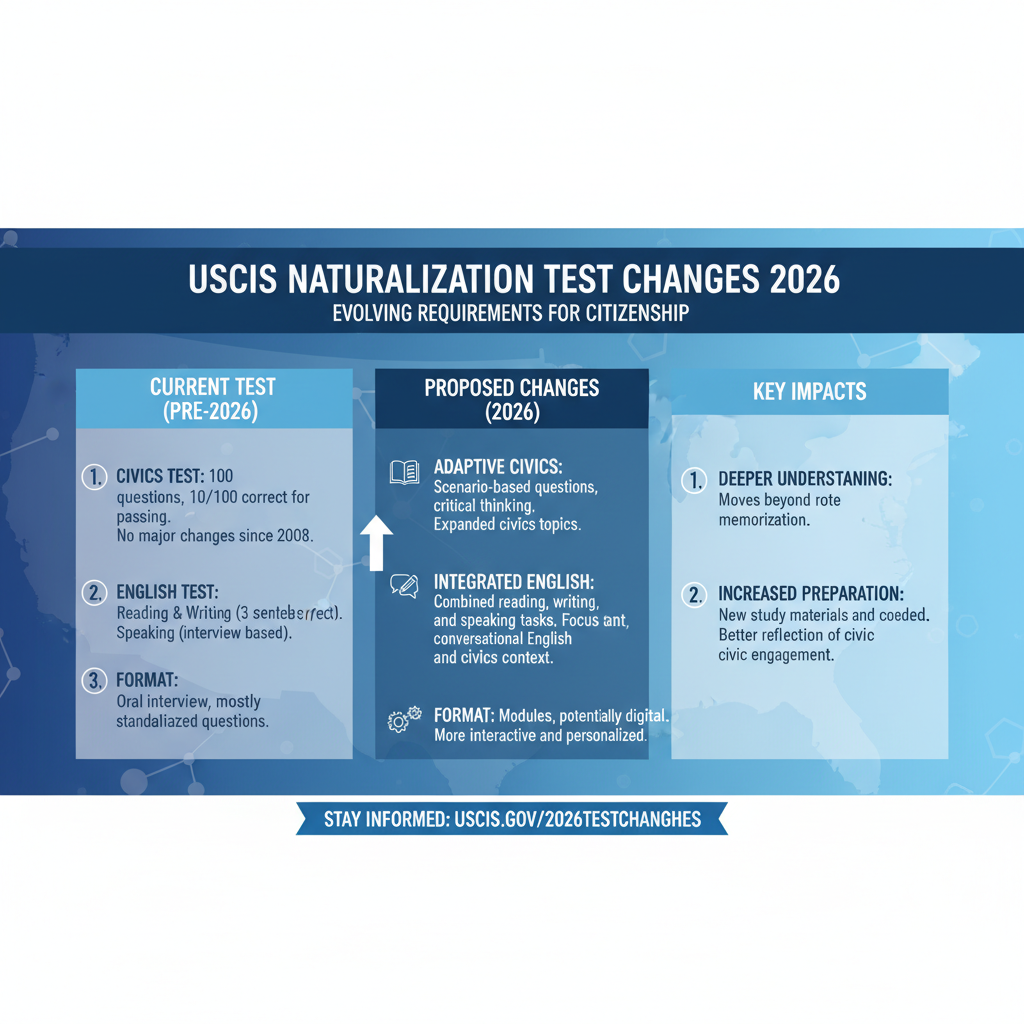
The news of upcoming revisions to the Naturalization Test has generated considerable discussion and concern within the immigrant community. Our insights are informed by reports concerning these significant updates, which are set to redefine how aspiring citizens demonstrate their knowledge of U.S. history, government, and English language proficiency. These changes, aimed at modernizing the test and potentially making it more comprehensive, necessitate a thorough understanding and proactive preparation from all applicants.
Naturalization Test Changes Coming in 2026 (Citizenship)
What This News Means for Immigrants in Orlando and Across Florida
For individuals and families across Florida, from the vibrant communities of Orlando and Central Florida to the coastal cities and rural areas, the news of impending changes to the Naturalization Test in 2026 is of paramount importance. These updates aren't just minor tweaks; they represent a potential shift in how future citizens will be assessed, demanding careful attention and strategic preparation.
Why this news is showing up now
The discussion around Naturalization Test changes isn't sudden. USCIS has a history of periodically reviewing and updating the test to ensure it remains relevant and effectively assesses an applicant's understanding of U.S. civics and English language skills. The current round of proposed changes stems from a pilot program initiated by USCIS to evaluate potential new formats and questions for the civics portion of the test. This pilot, conducted with community-based organizations, aimed to test a more interactive and analytical approach to the civics component, moving beyond simple memorization. The findings from this pilot program, combined with a desire to standardize and potentially enhance the integrity of the naturalization process, are driving the push for a formal rollout of these changes. While the official implementation date is set for 2026, USCIS typically provides ample notice and resources, making it crucial for aspiring citizens to start paying attention now to any announcements regarding the specifics of the new test format and study materials.
How it can affect Florida residents
For the diverse immigrant population residing in Florida, particularly in densely populated areas like Orlando, Miami, and Tampa, these changes will have a direct impact. Florida is home to a significant number of lawful permanent residents who are on their path to U.S. citizenship. The Orlando USCIS Field Office, serving a vast segment of Central Florida, processes countless naturalization applications annually. With the 2026 changes, applicants in Orange County and throughout the I-4 corridor will need to adapt their study methods. Instead of solely relying on rote memorization of the existing 100 civics questions, future applicants may face a test that requires a deeper understanding of constitutional principles, historical context, and the ability to explain governmental structures in a more conversational manner. This could mean a more challenging English speaking assessment, potentially requiring applicants to describe photographs or engage in more in-depth discussions. For many, especially those who have been preparing for years based on the current test format, this necessitates a significant adjustment to their study plans and may warrant seeking legal guidance sooner rather than later to understand the nuances and prepare effectively. The importance of staying informed through official USCIS channels and consulting with experienced immigration attorneys cannot be overstated for Florida residents aiming for naturalization.
Need Help? Our Orlando immigration team is ready to assist. Navigating immigration law, especially with upcoming changes, can be complex. Call +1 786-791-3106 for a free consultation, or message us online. Se Habla Español.
What Naturalization Test Changes Are (and Why They Matter)
Understanding the core of these upcoming changes is vital for anyone considering U.S. citizenship. The Naturalization Test is a critical hurdle, and knowing what to expect is the first step toward successful preparation.
A plain-English definition
Naturalization is the process by which a lawful permanent resident (green card holder) becomes a U.S. citizen. It involves meeting specific eligibility criteria, submitting an application, undergoing an interview, and passing a test. The Naturalization Test itself has two main components: an English language test and a civics test.
- English Test: Assesses your ability to read, write, and speak basic English. You'll read a sentence aloud, write a sentence dictated to you, and converse with the USCIS officer during the interview.
- Civics Test: Measures your knowledge of U.S. history and government. Currently, applicants are asked up to 10 questions from a list of 100 possible questions, and must answer 6 correctly to pass.
The changes anticipated in 2026 primarily focus on the Civics Test and potentially the speaking portion of the English Test. Instead of merely memorizing answers to specific questions, the new civics test is expected to be more interactive and analytical. This means you might be asked to describe civic concepts, explain the purpose of government institutions, or interpret historical events, possibly using visual aids. The English speaking portion could also become more conversational, moving beyond simple greetings to include tasks like describing photographs or engaging in more extended dialogues about your application.
These changes matter because they require a deeper, more conceptual understanding of U.S. civics rather than just rote memorization. They also emphasize practical English communication skills. For many, this will mean adjusting their study strategies and potentially dedicating more time to understanding the 'why' behind historical events and governmental structures, as well as practicing conversational English.
Key terms you need to know
Navigating the naturalization process involves understanding specific terminology. Here are some key terms:
- Naturalization: The process of becoming a U.S. citizen after fulfilling specific legal requirements.
- Citizenship: The status of being a legal member of a country, granting certain rights and responsibilities.
- USCIS: U.S. Citizenship and Immigration Services, the federal agency that oversees lawful immigration to the United States and administers the naturalization process.
- Civics Test: The portion of the naturalization test that assesses an applicant's knowledge of U.S. history, government, and geography.
- English Test: The portion of the naturalization test that assesses an applicant's ability to read, write, and speak basic English.
- Form N-400: The official application form for naturalization. Completing this accurately is a crucial step.
- Lawful Permanent Resident (LPR): Also known as a "green card holder," an individual who has been granted the privilege of permanently residing in the United States. This status is a prerequisite for naturalization.
- Continuous Residence: A naturalization requirement meaning an applicant must maintain residency in the U.S. for a specified period (typically 3 or 5 years) before applying.
- Physical Presence: A naturalization requirement meaning an applicant must have actually been present in the U.S. for a certain cumulative period during their continuous residence.
- Good Moral Character: A legal standard that applicants must meet, demonstrating adherence to laws and generally accepted moral standards.
- Oath of Allegiance: The final step in the naturalization process, where an applicant formally pledges loyalty to the United States.
Current Immigration Law: The Foundation for Naturalization
While the Naturalization Test is evolving, the fundamental legal framework governing naturalization remains rooted in established U.S. immigration law. Understanding this foundation is crucial before embarking on the citizenship journey. The primary law governing immigration and naturalization is the Immigration and Nationality Act (INA).
Federal requirements
The INA, specifically sections like INA §316 and INA §312, outlines the core federal requirements for naturalization. To become a U.S. citizen through naturalization, an applicant must generally meet the following criteria:
- Age: Be at least 18 years old at the time of filing Form N-400.
- Lawful Permanent Resident (LPR) Status: Hold a green card for a specific period, typically:
- 5 years as an LPR.
- 3 years as an LPR if married to a U.S. citizen and living in marital union with the citizen spouse.
- Special provisions exist for military members and certain other categories.
- Continuous Residence: Have resided continuously in the U.S. as an LPR for at least 5 years (or 3 years if married to a U.S. citizen) immediately preceding the date of filing the application and up to the time of naturalization.
- Physical Presence: Be physically present in the U.S. for at least half of the continuous residence period (e.g., 30 months out of 5 years, or 18 months out of 3 years).
- Good Moral Character: Demonstrate good moral character for the statutory period (5 or 3 years) leading up to the application and until the Oath of Allegiance. This is a broad standard that involves adhering to U.S. laws and not committing certain crimes.
- Attachment to the Principles of the U.S. Constitution: Show a commitment to the U.S. Constitution and the well-being of the United States.
- English Language Proficiency: Be able to read, write, and speak basic English. (Certain age and residency exemptions apply for this requirement).
- Knowledge of U.S. History and Government (Civics): Demonstrate knowledge and understanding of the fundamentals of U.S. history, principles, and form of government. (Certain age and residency exemptions apply for this requirement).
The application for naturalization is submitted using Form N-400, Application for Naturalization. This form gathers extensive personal, residential, employment, and criminal history information to assess eligibility. All applicants must consult the USCIS official website for the most current forms, instructions, and policy updates.
Florida-specific considerations
While naturalization is a federal process, meaning the eligibility requirements are uniform across the U.S., the experience can feel different depending on your location. For Florida residents, particularly those in Central Florida served by the Orlando USCIS Field Office, there are practical considerations:
- USCIS Field Offices: Florida has several USCIS Field Offices (Orlando, Miami, Tampa, Jacksonville) where naturalization interviews are conducted. Your interview will typically be scheduled at the office closest to your residence. The specific workload and staffing at these offices can influence local processing times.
- Processing Times: While USCIS publishes national processing times, local field office backlogs can cause variations. USCIS Processing Times can give you an estimate for the Orlando office, but it's important to remember these are estimates and can fluctuate.
- Local Resources: Communities in Orlando and across Florida often have non-profit organizations and legal aid services that assist immigrants with naturalization. However, with the impending test changes, securing expert legal counsel from firms like Imigrar becomes even more critical to ensure accurate preparation and application submission.
- Cultural Diversity: Florida's diverse population means that USCIS officers are accustomed to interviewing individuals from a wide range of backgrounds. However, this does not diminish the importance of clear English communication and a thorough understanding of U.S. civics, especially with the new test format.
Considering Naturalization in Florida? Don't leave your future to chance. The immigration attorneys at Imigrar in Orlando are here to guide you through every step, including preparation for the 2026 test changes. Call us at +1 786-791-3106 for a free, no-obligation consultation today. Se Habla Español.
How to Prepare for the New Naturalization Test: A Complete Step-by-Step Guide
The journey to U.S. citizenship, culminating in the Naturalization Test, requires meticulous preparation. With changes on the horizon for 2026, a strategic approach is more important than ever. This guide provides a detailed roadmap.
1) Confirm Your Eligibility and Gather Initial Documents
Before you even think about the test, you must confirm you meet the fundamental eligibility requirements for naturalization. This includes your age, continuous residence, physical presence, and good moral character. These requirements are non-negotiable.
- Check Your Green Card: Ensure you have been a Lawful Permanent Resident (LPR) for the required period (generally 5 years, or 3 years if married to a U.S. citizen).
- Calculate Residency: Determine if you meet the continuous residence and physical presence requirements. Extended trips outside the U.S. can impact this.
- Review Good Moral Character: Reflect on your history. Any arrests, convictions, or other issues (like failure to pay child support or taxes) could affect your eligibility. Be honest and prepare to discuss these with an attorney.
Required Documents for Eligibility Assessment:
- Your Green Card (Form I-551)
- Passports and travel history records (entry/exit stamps)
- Marriage certificate (if applying under the 3-year rule)
- Divorce decrees (if applicable)
- Birth certificates of children
- Selective Service Registration card (for males aged 18-26)
- Tax returns for the past 5 (or 3) years
- Proof of current marital union (e.g., joint bank statements, utility bills, lease agreements)
2) Master the English Language Requirements
The English test assesses your ability to read, write, and speak basic English. With potential changes, focusing on conversational skills is key.
- Speaking Test: The USCIS officer will assess your ability to speak English during the interview, asking questions about your N-400 application and personal background. Practice speaking English regularly, especially describing personal information and hypothetical situations. The 2026 changes may involve more interactive conversational elements, such as describing a photograph.
- Reading Test: You must read one out of three sentences correctly to pass. The sentences are typically civics-related. Practice reading aloud from the USCIS vocabulary list.
- Writing Test: You must write one out of three sentences correctly to pass. The sentences are dictated by the officer and are also civics-related. Practice writing sentences from the USCIS vocabulary list.
Important: If you are exempt from the English test due to age and time as an LPR (e.g., 50 years old and 20 years as an LPR, or 55 years old and 15 years as an LPR), you will still need to take the civics test in your native language. If you are 65 years old and have been an LPR for 20 years, you qualify for a shortened list of 20 civics questions. These exemptions are based on current law and are not expected to change with the new test format.
3) Study the Updated Civics Test Questions
This is where the most significant changes are expected. While the current list of 100 questions is still valid for now, future applicants for naturalization in 2026 will likely face a new format.
- Current Test Approach: Begin by studying the existing 100 civics questions and answers available on the USCIS Citizenship Resource Center. This provides a foundational understanding.
- Future Test Approach (2026): Prepare for a more conceptual and analytical test. Focus on understanding the *meaning* and *context* behind the civics questions. For example, instead of just memorizing "Who is the Chief Justice of the United States now?", understand the role of the Supreme Court and the Chief Justice within the judicial system.
- Practice explaining concepts in your own words.
- Discuss U.S. history and government with others.
- Utilize official USCIS study materials as they are released for the new test.
- The proposed changes may include multiple-choice questions or require describing images related to U.S. civics.
Required Documents/Materials for Study:
- Official USCIS Civics Study Guide (current and future editions)
- Flashcards, practice tests, and online resources
- English language learning materials
4) Complete and File Form N-400
This is the official application. Accuracy and completeness are paramount. Any errors or omissions can lead to delays or even denial.
- Download the Latest Form: Always download the most current version of Form N-400 from the USCIS Forms page.
- Fill Out Completely and Honestly: Answer every question truthfully. If a question doesn't apply, write "N/A." If you need more space, attach a separate sheet.
- Gather Supporting Documents: Attach all required supporting documents as outlined in the N-400 instructions. This typically includes copies of your Green Card, marriage certificates, tax transcripts, and any documents related to arrests or citations, even if charges were dropped.
- Pay the Fee: Include the correct filing fee and biometrics fee. Check the USCIS website for current fees. Fee waivers are available for eligible applicants.
- Review Thoroughly: Before filing, review the entire application multiple times. Consider having an immigration attorney review it for accuracy and completeness.
- Make Copies: Make a complete copy of your entire application packet for your records before mailing it.
Required Documents for Filing:
- Completed and signed Form N-400
- Copy of your Green Card (front and back)
- Two passport-style photographs (if required by current instructions)
- Check or money order for the filing fee and biometrics fee, or Form I-912, Request for Fee Waiver (if applicable)
- All supporting documents as listed in N-400 instructions (e.g., tax transcripts, court dispositions, marriage certificates, etc.)
5) Attend Your Biometrics Appointment
After filing your N-400, USCIS will send you an appointment notice for biometrics (fingerprints, photograph, and signature).
- Do Not Miss It: This appointment is mandatory. If you cannot attend, you must reschedule by following the instructions on the notice, but be aware this can delay your case.
- What to Bring: Bring your appointment notice (Form I-797C, Notice of Action), a valid photo ID (like your Green Card or passport), and any other documents requested.
- Purpose: Biometrics are used for background checks and to verify your identity.
Required Documents:
- Biometrics Appointment Notice (Form I-797C)
- Valid photo identification (e.g., Green Card, state ID, passport)


