


Breaking: USCIS Suspends Final Adjudications for Nationals of 19 Travel Ban Countries
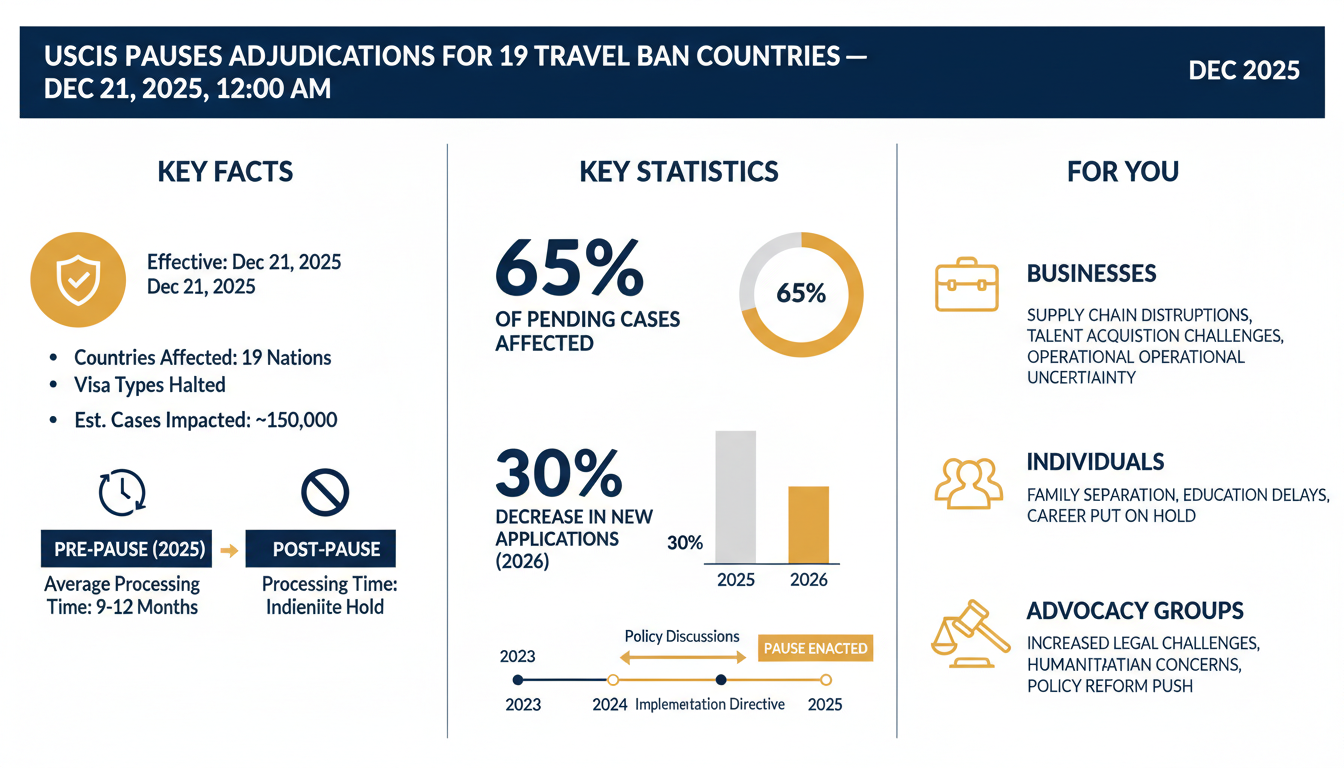
On December 2, 2025, U.S. Citizenship and Immigration Services (USCIS) issued internal guidance pausing all final adjudications for individuals from 19 designated "travel ban" countries, a move prompted by heightened national security concerns.[1] This unprecedented hold affects approvals, denials, and even naturalization oath ceremonies across all form types, including visa applications, green card adjustments, and citizenship processes.[1] Immigration attorneys report immediate impacts, such as canceled interviews and ceremonies for nationals of Venezuela, Iran, and Afghanistan.[1]
Background and Triggering Events
The pause stems from a November 26, 2025, shooting incident involving National Guard members in Washington, DC, leading USCIS to update its Policy Manual.[1] Officers are now directed to consider "relevant country-specific factors" for applicants from these 19 countries, originally listed under Presidential Proclamation (PP) 10949 issued June 4, 2025.[1][2] The countries include: Afghanistan, Myanmar (Burma), Chad, Republic of the Congo, Equatorial Guinea, Eritrea, Haiti, Iran, Libya, Somalia, Sudan, Yemen, Burundi, Cuba, Laos, Sierra Leone, Togo, Turkmenistan, and Venezuela.[1]
This development builds on a December 16, 2025, White House proclamation expanding entry restrictions to five additional countries—Burkina Faso, Mali, Niger, South Sudan, and Syria—citing deficiencies in vetting, high overstay rates, and security risks.[2] While the USCIS pause predates this expansion, it aligns with a broader policy shift integrating national security into immigration adjudications.[1][2]
Legal Implications: What This Means for Immigration Processes
The USCIS guidance creates an indefinite administrative hold until new vetting protocols are established, effectively freezing cases at the final decision stage.[1] This does not halt initial filings or interviews but prevents approvals or denials, leaving applicants in limbo.[1]
Impacts on Key Immigration Pathways
- Adjustment of Status (Green Cards): Form I-485 interviews for Venezuelan nationals have been canceled, with no final decisions issued.[1] Family-based, employment-based, and diversity visa adjustments are stalled.
- Naturalization (Citizenship): Oath ceremonies for eligible applicants from affected countries, such as Iran and Afghanistan, are postponed indefinitely.[1]
- Nonimmigrant Visas: While primarily affecting adjustment cases, the pause extends to all form types, potentially delaying extensions or changes of status.[1]
- Deportation Defense: Pending removal proceedings may see prolonged stays of removal if tied to USCIS benefits, but individuals must monitor deadlines to avoid accrual of unlawful presence.[1]
Exceptions appear limited; the policy applies broadly without carve-outs for valid visa holders or prior approvals.[1] This contrasts with Proclamation 10949's waivers for diplomats, athletes, and national interest cases, which do not override the USCIS hold.[2]
Connection to Broader Policy Shifts
Simultaneously, USCIS proposed rescinding 2022 public charge rules on November 19, 2025, granting officers greater discretion in deeming applicants inadmissible based on public benefits use.[1] Though unrelated directly, this amplifies scrutiny for high-risk nationals. DHS also moved to terminate Temporary Protected Status (TPS) for Haiti and Burma (Myanmar), though a federal judge blocked Syria's termination—highlighting judicial checks on executive actions.[1]
Actionable Guidance: Steps for Affected Individuals
If you or a client hail from one of the 19 countries with a pending USCIS case, act promptly to mitigate risks. Imigrar, your Orlando-based immigration law firm, recommends the following:
Immediate Actions
- Check Case Status: Use the USCIS online portal or call 1-800-375-5283 to confirm if your case is paused. Note any interview cancellations.[1]
- Preserve Evidence: Gather proof of timely filings, such as receipt notices (I-797), to argue against unlawful presence accrual in future defenses.
- Request Expedites if Eligible: Submit Form I-907 for humanitarian, emergency, or U.S. government interest reasons—though success is uncertain under the pause.[1]
Strategic Filing Options
- Consular Processing Abroad: If eligible, pivot to National Visa Center processing, as the proclamation allows waivers for valid pre-effective visas.[2]
- TPS or Asylum Alternatives: For Haiti or Myanmar nationals, explore TPS extensions despite termination notices; Syria beneficiaries retain protection per court order.[1]
- Religious Worker Visas: Note the Visa Bulletin for December 2025, where H.R. 5371 extends Certain Religious Workers (SR) until January 30, 2026—final actions must occur before January 29, 2026.[3]
Deportation Defense Strategies
Facing ICE enforcement? The pause may indirectly aid by delaying benefit denials used in removal proceedings. File motions to reopen or stay removal citing the hold, referencing USCIS Policy Manual updates.[1] Consult counsel immediately to avoid bars under INA § 212(a).
| Country | Key Impact | Potential Waiver Path |
|---|---|---|
| Venezuela | Adjustment interviews canceled | National interest waiver[2] |
| Iran, Afghanistan | Naturalization oaths paused | Case-by-case[2] |
| Haiti | TPS termination + pause | Judicial challenge[1] |
Long-Term Outlook and Expert Analysis
USCIS has pledged further guidance on enhanced vetting, but no timeline exists.[1] The December 16 proclamation signals ongoing expansions, potentially adding more countries.[2] Historical precedents, like Trump-era bans, faced legal challenges; monitor federal courts for injunctions similar to the Syria TPS block.[1]
Public charge NPRM comments close 30 days post-November 19 publication, influencing green card eligibility.[1] Visa Bulletin data shows retrogression risks in employment categories, compounding delays.[3]
Why This Matters for Florida Families
Orlando's diverse communities, including large Venezuelan and Haitian populations, face acute disruptions. Delays exacerbate family separations and employment gaps. Proactive legal planning is essential to navigate this evolving landscape.
Contact Imigrar for Personalized Assistance
At Imigrar, our experienced attorneys in Orlando specialize in visa applications, green card adjustments, citizenship, and deportation defense. Schedule a consultation to assess your case amid these USCIS changes. Protect your immigration future—contact us today.
Disclaimer: This article provides general information based on recent developments as of December 2025. It is not legal advice. Consult a licensed attorney for your specific situation. Sources include USCIS guidance, White House proclamations, and Visa Bulletin.[1][2][3]


