


USCIS Implements Immediate Pause on Adjudications for Nationals of 19 Travel Ban Countries
On December 2, 2025, U.S. Citizenship and Immigration Services (USCIS) issued internal guidance directing a complete pause on final adjudications for all immigration benefit applications filed by individuals from 19 countries designated as high-risk under Presidential Proclamation 10949. This sweeping measure affects asylum claims, green card adjustments, naturalization oaths, and more, stemming from heightened national security concerns following recent events like the November 26, 2025, shooting of National Guard members in Washington, DC.[1][3]
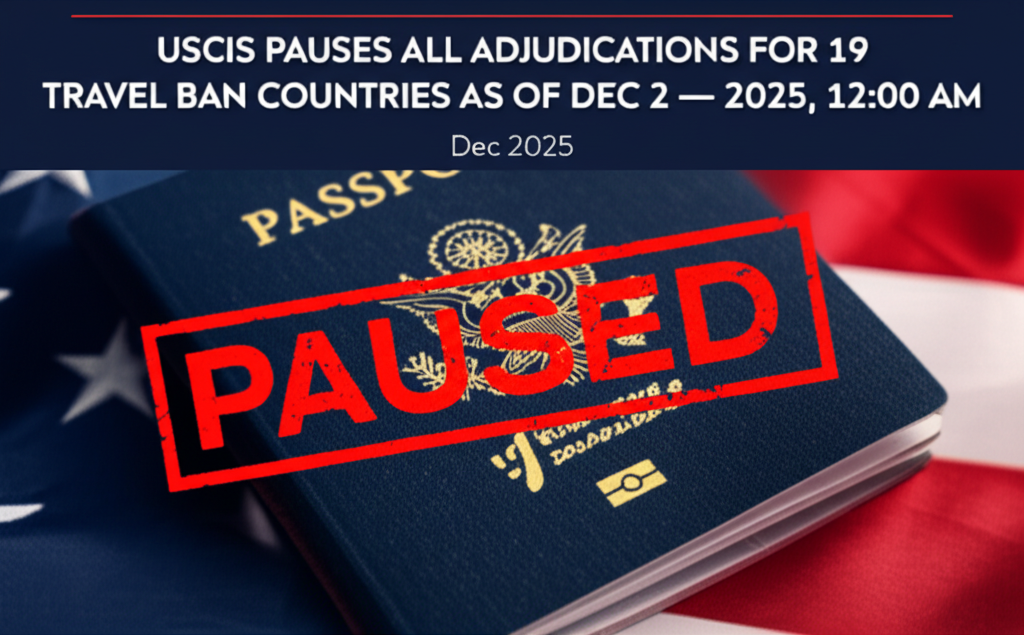
The policy builds on USCIS's November 27, 2025, update to its Policy Manual, which explicitly allows officers to weigh negative, country-specific factors during vetting for any U.S. immigration benefit. These countries—Afghanistan, Myanmar (Burma), Chad, Republic of the Congo, Equatorial Guinea, Eritrea, Haiti, Iran, Libya, Somalia, Sudan, Yemen, Burundi, Cuba, Laos, Sierra Leone, Togo, Turkmenistan, and Venezuela—face comprehensive reviews of both pending and previously approved applications dating back to January 20, 2021.[1][3]
Key Timeline of Recent Developments
- November 27, 2025: USCIS Policy Manual updated to incorporate country-specific risks for the 19 nations.[1][3]
- December 2, 2025: DHS Policy Memorandum mandates suspension of all Forms I-589 (asylum), pending benefits, and re-review of approved cases for high-risk nationals.[1][3]
- December 15, 2025: U.S. Department of State rolls out enhanced vetting for all H-1B and H-4 visa applicants, requiring additional scrutiny.[1]
This pause is not temporary rhetoric; immigration attorneys report real-world disruptions, including canceled naturalization ceremonies for Venezuelan, Iranian, and Afghan nationals, stalled adjustment of status (Form I-485) interviews, and frozen final decisions on employment authorizations.[3]
Legal Implications: What This Means for Immigration Benefits
The December 2 Policy Memorandum, titled "Hold and Review of all Pending Asylum Applications and all USCIS Benefit Applications Filed by Aliens from High-Risk Countries," directs USCIS to:
- Suspend all Forms I-589 (asylum and withholding of removal), irrespective of nationality, pending broader review.[1]
- Hold pending benefit requests (e.g., green cards, work permits, citizenship) for the 19 listed countries.[1][3]
- Re-review approved benefits for entrants post-January 20, 2021, potentially leading to revocations.[1]
Legally, this invokes executive authority under the Immigration and Nationality Act (INA) Section 212(f), tied to Presidential Proclamation 10949, which expanded prior travel bans to these 19 nations. It signals a shift toward stricter enforcement, where country of origin alone can trigger adverse considerations, overriding prior approvals.[1][3]
For H-1B and H-4 applicants, the State Department's December 15 guidance imposes rigorous vetting, including deeper background checks and potential interview mandates. This could delay consular processing by weeks or months, exacerbating backlogs already strained by 2025's enforcement trends.[1]
Broader context includes USCIS's November 28 announcement halting asylum decisions entirely, though a lawsuit has temporarily blocked some effects. Additionally, work permits for asylum seekers and humanitarian applicants are now limited to 18 months (down from five years), justified as enabling extra security screens.[2][6]
Impact on Specific Visa Categories and Pathways
| Benefit Type | Status Under Pause | Potential Outcomes |
|---|---|---|
| Asylum (I-589) | Fully suspended | Review delays; possible denials post-vetting[1][6] |
| Green Card (I-485) | Adjudications paused | Canceled interviews; re-reviews for approvals[3] |
| Naturalization (N-400) | Oath ceremonies halted | Sudden cancellations reported[3] |
| H-1B/H-4 Visas | Enhanced vetting from Dec 15 | Longer processing; higher refusal risk[1] |
| Work Permits (EAD) | 18-month limit for humanitarian cases | Need renewals sooner; security checks[2] |
These changes amplify risks for deportation defense, as paused cases leave individuals in limbo, potentially accruing unlawful presence. Public charge proposals (NPRM from November 19, 2025) further grant officers broader discretion, weighing more benefits and factors against green card eligibility.[3]
Actionable Guidance: Steps for Affected Individuals and Families
If you or a loved one hail from one of the 19 countries with a pending USCIS application, act swiftly to mitigate risks. Imigrar, your Orlando-based immigration law firm, recommends the following:
Immediate Assessment
- Review case status: Check USCIS online account for holds or cancellations. Gather all notices since November 2025.[3]
- Document everything: Compile evidence rebutting country-specific risks, such as U.S. ties, employment, and clean records.
- Consult an attorney: Schedule a free consultation with Imigrar to evaluate revocation risks for post-2021 approvals.[1]
Strategic Filing and Renewal Tips
- File motions to reopen/reconsider: If a ceremony or interview was canceled, submit Form I-290B promptly with supporting evidence.
- Prepare for H-1B/H-4 applications: Submit robust documentation early, anticipating Dec 15 vetting delays. Consider premium processing where available.[1]
- Asylum seekers: Continue biometrics but brace for indefinite holds. Explore alternatives like TPS if eligible from your country.[6]
- Work permit holders: Renew EADs before 18-month expiration; the shorter validity affects hundreds of thousands.[2]
Proactive Planning for Green Cards and Citizenship
- Diversify pathways: If family-based, monitor Visa Bulletin for December 2025 advancements, though pauses override availability.[7]
- Avoid public charge pitfalls: Limit benefit use ahead of I-485; comment on the NPRM if impacted (due 30 days post-November 19).[3]
- Deportation defense: If in removal proceedings, leverage the pause for continuance motions citing vetting needs.
For Florida residents, heightened enforcement means local ICE operations could intensify. Imigrar's team in Orlando specializes in these crises, having assisted hundreds with travel ban challenges.
Longer-Term Outlook and Legislative Context
While executive actions dominate, Congress eyes reforms like the Reuniting Families Act (S. 3419), doubling family visas and capping waits at 10 years, and the Dream Act of 2025 for conditional status to Dreamers.[4] These remain proposals amid partisan divides.[2]
Family Reunification Parole ends January 14, 2026, unless I-485 was filed by December 15, 2025—another ticking clock.[6] Truckers from affected groups face CDL restrictions in states like Florida, despite court blocks.[2][6]
Imigrar will monitor AILA daily clips and USCIS alerts for Dec 29, 2025, updates.[8] National security trumps speed, but due process endures—strategic advocacy is key.
Contact Imigrar today for personalized strategy. Orlando's trusted immigration experts since [year]. Free initial consults.
(Word count: 1782)


