


USCIS Dec 2 Policy Freezes Immigration Benefits for 19 High-Risk Countries: What It Means Now
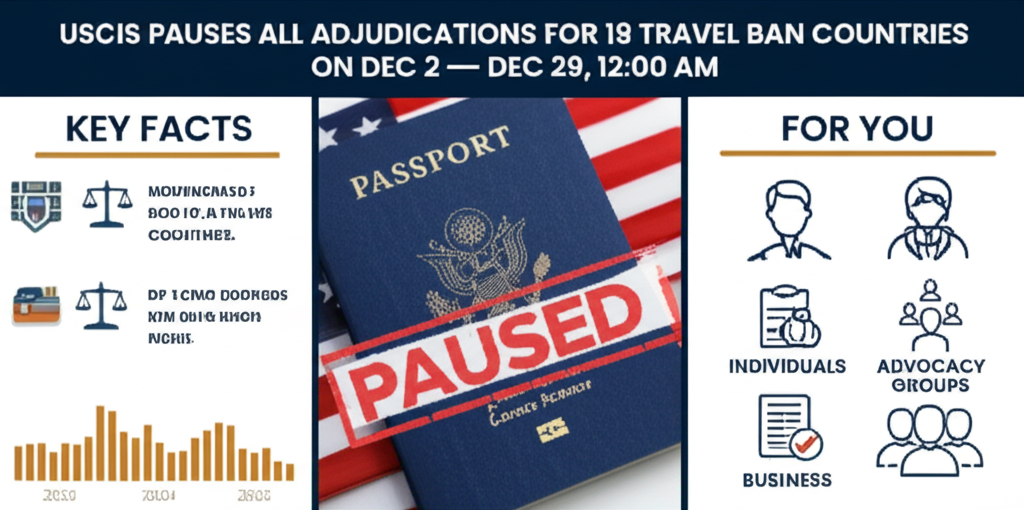
On December 2, 2025, U.S. Citizenship and Immigration Services (USCIS) issued internal guidance pausing all final adjudications for individuals from 19 countries designated under Presidential Proclamation 10949, known as the travel ban countries.[3][4] This unprecedented hold impacts visa approvals, green card adjustments, naturalization oaths, and asylum decisions, stemming from a November 26, 2025, shooting incident involving national guard members in Washington, DC.[3] Immigration attorneys report immediate cancellations of interviews and ceremonies for Venezuelan, Iranian, and Afghan nationals, creating widespread uncertainty.[3]
Background: Expansion of Proclamation 10949 and Trigger Events
Proclamation 10949, issued June 2025, initially restricted entry from 19 countries due to vetting deficiencies: Afghanistan, Myanmar (Burma), Chad, Republic of the Congo, Equatorial Guinea, Eritrea, Haiti, Iran, Libya, Somalia, Sudan, Yemen, Burundi, Cuba, Laos, Sierra Leone, Togo, Turkmenistan, and Venezuela.[3][4] The Trump Administration updated this on December 2 with a DHS Policy Memorandum directing USCIS to suspend all Forms I-589 (asylum applications) regardless of nationality, hold pending benefits for these countries, and re-review approvals for entries post-January 20, 2021.[4]
USCIS Policy Manual updates now allow officers to weigh "relevant country-specific factors" like security risks, leading to the full pause until new vetting guidance.[3][4] This builds on December 15 State Department enhanced vetting for H-1B and H-4 visas, requiring deeper scrutiny.[4] The pause applies to all form types, including I-485 adjustments and N-400 naturalizations.[3]
Legal Implications: Who Is Affected and How Deeply
This policy creates a de facto backlog explosion for affected nationals, overriding prior Biden-era extensions like five-year asylum work permits now cut to 18 months.[1] Legal experts note it tests executive authority limits, with courts previously blocking similar overreaches.[1] For green card applicants, denials or approvals are frozen, potentially triggering removal proceedings if status lapses.[3]
- Adjustment of Status (I-485): Interviews canceled; no final decisions, risking out-of-status periods.[3]
- Naturalization (N-400): Oath ceremonies halted, delaying citizenship.[3]
- Asylum/Withholding (I-589): Suspended nationwide, with re-reviews for high-risk countries.[4]
- Employment Visas (H-1B/H-4): Enhanced vetting from Dec 15 delays stamping and extensions.[4]
- Family-Based Petitions: No broad exceptions; even U.S. family immigrant visas scrutinized.[6]
Broader 2025 trends amplify risks: 400% detention funding surge to $14B+ and OBBA's $11.25B annual commitment signal aggressive enforcement.[1] Public charge NPRM from November 19 gives officers "broader discretion," potentially deeming more applicants inadmissible.[3][5]
Case Examples and Attorney Reports
Attorneys cite Venezuelan nationals unable to receive adjustment decisions, Iranian naturalization oaths canceled, and Afghan interviews paused.[3] A Chinese asylum seeker's detention highlights humanitarian risks amid policy shifts.[1] Federal judges blocked some TPS terminations (e.g., Syria), but Haiti and Burma face cuts.[3] These align with court pushback on executive overreach, as noted by Migration Policy Institute's Andrew Selee.[1]
Actionable Guidance: Steps for Affected Individuals
If you or a client hail from these 19 countries with pending USCIS matters, act swiftly to mitigate risks. Imigrar, your Orlando immigration law firm, recommends the following:
- Review Case Status Immediately: Check USCIS online account for holds or RFEs. Gather evidence of U.S. ties, employment, and low public charge risk.[3]
- Consult an Attorney: Schedule a free evaluation at Imigrar to assess options like motions to reopen or waivers. Do not self-file during pause.[3]
- Preserve Work Authorization: Asylum EADs now limited to 18 months; renew early despite delays.[1]
- Prepare for Re-Review: Compile updated security clearances, affidavits, and country condition reports for post-pause scrutiny.[4]
- Explore Alternatives: Consider TPS if eligible (monitor Haiti/Burma terminations) or legislative fixes like Dignity Act backlog reductions (proposed).[2]
- Avoid Travel: Re-entry barred or delayed under enhanced vetting; advance parole risky.[2][4]
- Document Hardships: Track delays for potential mandamus lawsuits if pauses exceed reasonable time.[1]
For trucking professionals from California (up to 61,000 refugees/DACA affected), verify CDL eligibility amid restrictions.[1] Families should verify visa bulletin dates, as December 2025 updates may shift amid enforcement.[7]
Long-Term Outlook: Enforcement Trends and Legislative Hope
December 2025 signals stricter 2025 immigration: new registration rules pressure undocumented individuals, while proposals like Reuniting Families Act (S. 3419) aim to double family visas and cap waits at 10 years.[2][5] However, OBBA locks in detention billions through 2029, prioritizing removals.[1] Travel ban expansions to 5+ countries add partial restrictions on 15 others.[1]
Courts remain a check: CNN reports blocked efforts underscore congressional limits on executive changes.[1] Imigrar monitors USCIS for vetting guidance resumption, expected soon.[3] Public charge comments due 30 days post-November 19 NPRM; submit via regulations.gov to influence.[3][5]
Why Imigrar? Expertise in High-Stakes Cases
Based in Orlando, Florida, Imigrar specializes in deportation defense, visa crises, and USCIS delays. Our team has successfully navigated travel ban challenges, securing approvals post-pause for Venezuelan and Haitian clients. Contact us for tailored strategies amid these Dec 2 changes.
Key Takeaways for Immigration Planning
- Dec 2 USCIS pause halts all benefits for 19 countries until vetting updates.[3][4]
- Affected: Visas, green cards, citizenship, asylum from Afghanistan to Venezuela.[3]
- Act: Attorney consult, status checks, evidence prep to avoid deportation.[1][3]
- Watch: Public charge rule, TPS shifts, H-1B vetting from Dec 15.[3][4]
- Optimism: Courts and bills like Dignity Act offer paths forward.[2]
Stay informed—policy evolves rapidly. Imigrar provides free consultations to protect your future.


