


The journey through the U.S. immigration system can be complex and often fraught with uncertainty, especially when it comes to understanding how long your application will take. For immigrants and their families in Orlando, across Florida, and nationwide, one of the most pressing concerns is always the USCIS processing times. These times dictate not just when a dream might be realized, but also how long families remain separated, careers are put on hold, and lives are in limbo.
At Imigrar, an immigration law firm based in Orlando, Florida, our mission is to "Keep Families Together." We understand the profound impact that delays and unpredictable processing times have on our clients. That's why we are committed to providing professional, accurate, and actionable information to help you navigate this critical aspect of your immigration journey.
Today, we delve into the latest USCIS processing time updates for 2026, offering a comprehensive guide to help you understand what they mean for your case, what steps you can take, and how our expert team can support you.
The reporting that sparked this guide: USCIS Processing Times and Updates for 2026 (USCIS)
What This News Means for Immigrants in Orlando and Across Florida
The U.S. Citizenship and Immigration Services (USCIS) is the federal agency responsible for administering the country's lawful immigration system. Periodically, USCIS updates its processing time charts, reflecting the average time it takes to adjudicate different types of applications and petitions. These updates are more than just numbers; they represent the tangible wait for thousands of individuals and families.
Why this news is showing up now
USCIS processing times are dynamic and subject to constant change. The agency regularly reviews and publishes updated processing ranges for all forms processed at its service centers and field offices. These updates typically occur monthly and are a reflection of several factors:
- Workload Fluctuations: The sheer volume of applications received can surge or dip, directly impacting how quickly cases are processed. Increased filings can lead to longer waits.
- Staffing Levels and Budget: USCIS operations are largely fee-funded. Budget constraints, hiring freezes, or increased staffing can significantly influence processing efficiency.
- Policy Changes: New immigration policies, administrative directives, or changes in how applications are reviewed can alter processing procedures and timelines. For example, increased interview requirements or enhanced vetting processes can add months to an application.
- Technological Upgrades: Investments in new technology or system overhauls can initially cause delays but are intended to improve efficiency in the long run.
- Pandemic Aftermath and Backlogs: The lingering effects of the COVID-19 pandemic, including office closures, reduced capacity, and a build-up of older cases, continue to contribute to existing backlogs, which USCIS is actively working to address in 2026.
The updates for 2026 are particularly significant as USCIS continues to implement strategies to reduce backlogs and improve efficiency, while also adapting to evolving immigration landscapes. Understanding these underlying reasons helps manage expectations and strategize effectively.
How it can affect Florida residents
Florida, and particularly Central Florida, is home to a vibrant and diverse immigrant community. The impact of USCIS processing times on residents here is often profound:
- Family Separation: Longer processing times for family-sponsored visas (like Form I-130) mean prolonged separation for families, causing immense emotional and financial strain. Orlando, as a hub for many international communities, sees this impact acutely.
- Economic Impact: Delays in employment authorization (Form I-765) or green card processing (Form I-485) can prevent individuals from working legally, affecting their ability to contribute to Florida's economy and support their families. This can be especially challenging in a growing metropolitan area like Orlando.
- Uncertainty and Stress: The anxiety of not knowing when an application will be approved can be overwhelming. This uncertainty affects long-term planning for housing, education, and career development for residents in Orange County and surrounding areas.
- Local Field Office Workload: The Orlando USCIS Field Office handles a high volume of interviews and local adjustments of status. Increased processing times at this specific office can lead to longer waits for interviews and final decisions for Central Florida residents.
- Travel Restrictions: Delays in obtaining travel documents (Form I-131) can prevent immigrants from visiting family abroad, particularly for those with urgent humanitarian needs.
For individuals along the I-4 corridor and across the state, these updates are not abstract figures but direct determinants of their future and stability in the United States. Navigating these complexities requires careful planning and, often, expert legal guidance.
Need Help? Our Orlando immigration team is ready to assist. Call +1 786-791-3106 for a free consultation, or message us online. Se Habla Espa��ol.
What USCIS Processing Times Are (and Why They Matter)
Understanding USCIS processing times is fundamental to managing your immigration journey effectively. Far from being a simple countdown, these times are complex estimates that reflect the operational realities of a vast federal agency.
A plain-English definition
Simply put, USCIS processing times are the estimated periods it takes for USCIS to process a specific type of application or petition from the date it is received until a final decision is made. These are not guaranteed timelines but rather a historical average based on the completion of cases over a recent period. USCIS typically publishes a range, for example, "5.5 to 10.5 months," indicating that 80% of adjudicated cases for that specific form and office were processed within that timeframe.
It's crucial to understand that your individual case might fall outside this range due to various factors, including its complexity, completeness, the need for additional evidence (Request for Evidence - RFE), or even random variations in processing queues.
Key terms you need to know
To effectively monitor and understand your case's progress, familiarize yourself with these essential terms:
- Receipt Date: This is the exact date USCIS physically received your application or petition. It's usually printed on your Form I-797C, Notice of Action (receipt notice). This date is critical for determining if your case is outside normal processing times.
- Priority Date: Relevant for family-sponsored and employment-based green card categories that are numerically limited. The Priority Date is established when a petition (e.g., Form I-130 or Form I-140) is properly filed with USCIS or, in some employment-based cases, when a labor certification application is received by the Department of Labor. This date determines your place in the visa queue and whether a visa number is "current" according to the Visa Bulletin.
- Visa Bulletin: Published monthly by the U.S. Department of State, this bulletin lists the "final action dates" and "dates for filing" for various visa categories and countries. It indicates when a visa number is available for applicants whose Priority Date is earlier than the date listed in their category. If your priority date is not "current," you cannot proceed with your green card application, regardless of USCIS processing times for other forms.
- Current Date: In the context of the Visa Bulletin, this means your Priority Date is earlier than the date listed in the bulletin for your category and country, signifying that a visa number is available.
- Notice Date: The date printed on any notice or correspondence from USCIS (e.g., approval notice, RFE).
- Service Request: An inquiry made to USCIS when your case falls outside the normal processing times or if you have other specific questions or issues.
- Case Inquiry: Similar to a service request, this is an official contact with USCIS to check on the status of your case, usually when it has exceeded the posted processing times.
- National Benefits Center (NBC): One of the USCIS processing centers that handles various forms, often acting as a preliminary processing hub before cases are forwarded to local field offices for interviews.
- Field Office: Local USCIS offices (e.g., the Orlando USCIS Field Office) that handle interviews, local adjustments of status, and other localized services. Processing times can vary significantly between different field offices.
Understanding these terms is your first step toward demystifying the immigration process. USCIS processing times matter immensely because they dictate the pace of your life, affecting everything from your ability to work and travel to your family's reunification and overall stability in the U.S.
Current Immigration Law: The Foundation Governing Processing Times
The framework for USCIS processing times is embedded within the broader context of U.S. immigration law, primarily the Immigration and Nationality Act (INA) and its subsequent amendments. While the INA doesn't specify exact processing times for every form, it establishes the categories, eligibility requirements, and procedures that USCIS must follow, indirectly influencing how long it takes to process applications.
Federal requirements
USCIS operates under federal mandates to adjudicate immigration benefits. Key sections of the INA that are relevant to understanding processing times include:
- INA Section 203: Outlines the numerical limitations for family-sponsored and employment-based immigrants, creating the visa queue that necessitates the Visa Bulletin and directly impacts waiting times for green cards. For example, INA 203(a) details family preference categories (F1, F2A, F2B, F3, F4) each with specific annual limits.
- INA Section 204: Specifies the requirements for filing immigrant petitions (e.g., Form I-130 for family relatives, Form I-140 for employment-based immigrants). The proper filing and adjudication of these foundational petitions are the first steps in many green card processes.
- Administrative Procedure Act (APA): While not specific to immigration, the APA generally governs how federal agencies operate, including requirements for timely decision-making and transparency. Although USCIS is granted discretion, there's an expectation of reasonable processing.
USCIS is legally required to process applications fairly and efficiently. However, the definition of "efficiently" often clashes with the reality of high volume and limited resources. The agency must ensure that all eligibility requirements are met, conduct background checks, and, where necessary, schedule interviews. Each of these steps contributes to the overall processing time.
Some forms have statutory processing deadlines, though these are rare and primarily for certain humanitarian cases. For the vast majority of applications, there are no strict legal deadlines, allowing for the wide ranges we see published.
Important: The completeness and accuracy of your application are paramount. An incomplete application or one requiring a Request for Evidence (RFE) will inevitably lead to significant delays, regardless of the published processing times.
Florida-specific considerations
While immigration law is federal, its application can have regional nuances. For Florida residents, especially those in Orlando and the greater Central Florida area, certain factors come into play:
- Orlando USCIS Field Office: This office serves a large and diverse immigrant population. The volume of interviews for Adjustment of Status (Form I-485) and naturalization (Form N-400) conducted here can influence local processing times. A surge in applications or staffing shortages at this particular office can create backlogs specific to Orlando applicants.
- Diverse Population: Florida's demographic makeup, with significant populations from Latin America, the Caribbean, and other regions, means a high demand for various immigration services. This high demand can contribute to local processing pressures.
- State-Level Impact: While Florida does not have its own immigration laws (as immigration is federal), state policies and economic conditions can indirectly affect immigrants. For example, local job markets influence employment-based petitions, and state resources for immigrant integration can affect overall stability during long waits.
When preparing your application, you will interact with various USCIS forms. Some of the most common forms whose processing times are critical include:
- Form I-130, Petition for Alien Relative: The first step for family-sponsored immigrants.
- Form I-485, Application to Register Permanent Residence or Adjust Status: The application for a green card from within the U.S.
- Form I-765, Application for Employment Authorization: Allows eligible non-citizens to work in the U.S.
- Form I-131, Application for Travel Document: For Advance Parole or Reentry Permits.
- Form N-400, Application for Naturalization: To become a U.S. citizen.
- Form I-129F, Petition for Alien Fiancé(e): For K-1 visas.
Always refer to the USCIS Forms page for the latest versions and instructions. The current law dictates how these forms are processed, and staying informed is vital.
Need expert guidance on your immigration case? Imigrar's attorneys specialize in navigating complex USCIS processing. Contact us today for a free consultation at +1 786-791-3106. Se Habla Español.
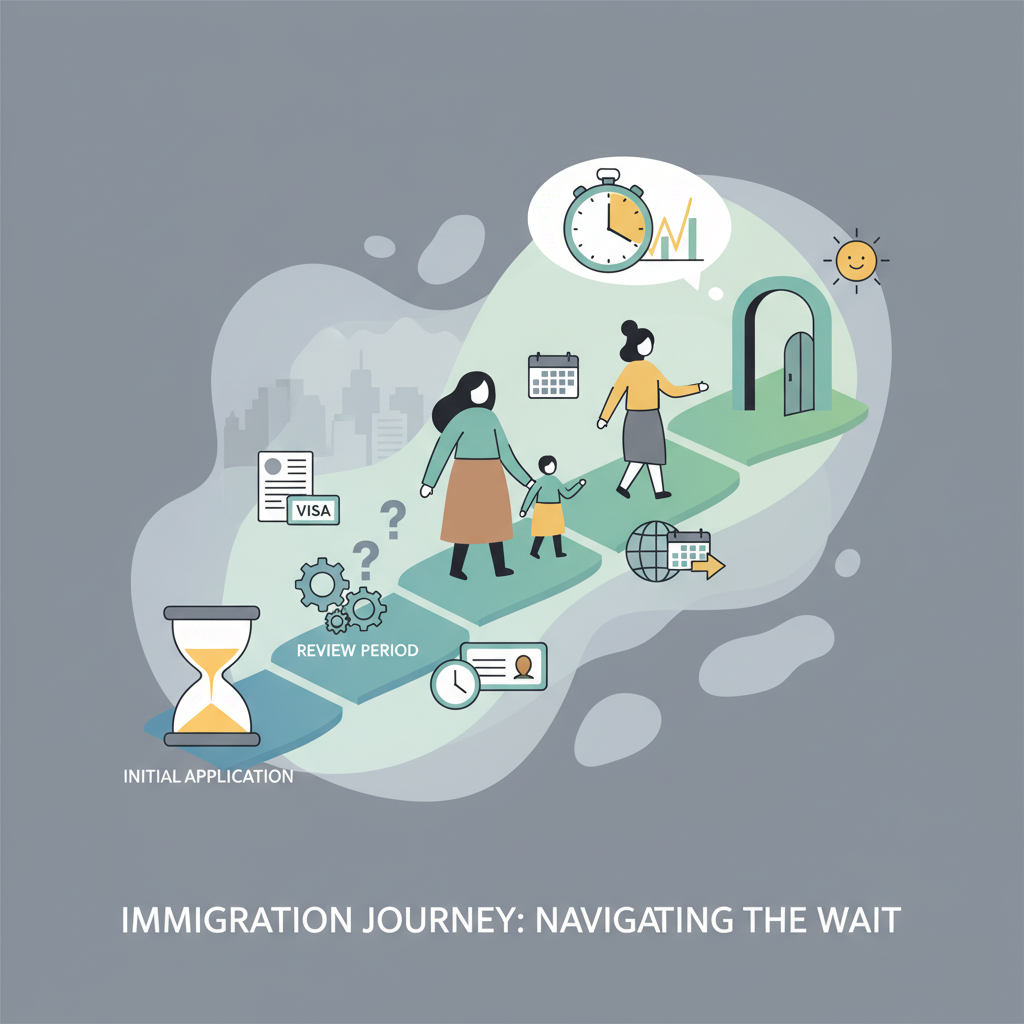
How to Monitor Your USCIS Case and Understand Processing Times: A Complete Step-by-Step Guide
Proactively monitoring your immigration case and understanding USCIS processing times is crucial for managing expectations and identifying when intervention might be necessary. This guide provides actionable steps for applicants in Orlando, Florida, and across the nation.
1) Understand the USCIS Processing Times Page
Your first and most important tool is the official USCIS Processing Times page. This is where USCIS publishes its estimates for various forms.
- Navigate the Page: Go to egov.uscis.gov/processing-times.
- Select Your Form: Choose the specific form you filed (e.g., Form I-130, Form I-485).
- Choose Your Office: Select the relevant USCIS Service Center (e.g., California Service Center, Nebraska Service Center) or Field Office (e.g., Orlando Field Office) that is processing your application. This information is typically found on your Form I-797C, Notice of Action.
- Interpret the Range: USCIS will display a range (e.g., "5.5 to 10.5 months"). This means 80% of similar cases are completed within this timeframe. They also provide a "Case Inquiry Date," which is the date before which you can submit an inquiry if your case hasn't been processed.
Required Documents/Information for this step: Your Form I-797C (Receipt Notice) to identify your form type and the processing center/field office.
2) Track Your Case Status Online
Beyond general processing times, you can track the specific status of your individual case using your Receipt Number.
- Access the Tool: Visit egov.uscis.gov/casestatus/landing.do.
- Enter Your Receipt Number: This 13-character code (e.g., EAC-XX-XXX-XXXXX, WAC-XX-XXX-XXXXX) is on your Form I-797C.
- Review Status Updates: The system will show your case's current status (e.g., "Case Was Received," "Fingerprint Review Was Completed," "Interview Was Scheduled," "New Card Is Being Produced"). While this doesn't give a timeline, it tells you what stage your application is in.
- Sign Up for Alerts: You can create a USCIS online account to receive email and text notifications about changes to your case status.
Required Documents/Information for this step: Your Receipt Number (from Form I-797C).
3) Understand Your Priority Date and the Visa Bulletin (If Applicable)
If you are applying for a green card through a family-sponsored or employment-based category, your Priority Date is critical. This step applies to numerically limited visa categories.
- Locate Your Priority Date: This is typically found on your Form I-797, Approval Notice for the underlying petition (e.g., Form I-130, Form I-140).
- Check the Visa Bulletin: Visit the U.S. Department of State Visa Bulletin monthly.
- Find Your Category and Country: Locate your specific visa category (e.g., F2A for spouses/children of green card holders, EB-3 for skilled workers) and your country of chargeability.
- Compare Dates: Your Priority Date must be "current" (i.e., earlier than the date listed in the "Final Action Dates" chart or "Dates for Filing" chart) for you to proceed with your green card application (Form I-485 or consular processing). If your date is not current, you must wait, regardless of how quickly USCIS processes other forms.
Required Documents/Information for this step: Form I-130 Approval Notice (or other petition approval), knowledge of your visa category and country of chargeability.
4) Know When to Make a Case Inquiry (Outside Normal Processing Times)
If your case has been pending longer than the "Case Inquiry Date" listed on the USCIS Processing Times page for your form and office, it's time to make an inquiry.
- Verify Eligibility: Double-check that your Receipt Date is indeed earlier than the "Case Inquiry Date."
- Submit an e-Request: The easiest way is online via the USCIS e-Request tool. Select "Case Outside Normal Processing Times."
- Call USCIS Contact Center: You can also call the USCIS Contact Center at 1-800-375-5283. Be prepared for potentially long wait times.
- Consult an Attorney: An attorney can submit an inquiry on your behalf, often with more specific details and follow-up.
Required Documents/Information for this step: Your Receipt Number, Receipt Date, and the current USCIS Processing Times for your form and office.
5) Prepare for Potential Delays and RFEs
Even within normal processing times, delays can occur. Being prepared can mitigate their impact.
- Respond Promptly to RFEs/NOIDs: If USCIS sends a Request for Evidence (RFE) or a Notice of Intent to Deny (NOID), respond immediately and thoroughly. Failure to do so, or providing incomplete information, will cause significant delays or even denial.
- Keep Copies of Everything: Maintain a complete copy of every document you submit to USCIS, along with proof of mailing (e.g., tracking numbers).
- Update Your Address: If you move, promptly update your address with USCIS using Form AR-11 or through your online account. Missing a crucial notice (like an interview appointment) due to an outdated address can lead to severe consequences. For Central Florida residents, this is particularly important if moving between Orange County and neighboring counties.
Required Documents/Information for this step: Original RFE/NOID Notice (if applicable), all requested documents, proof of new address (if applicable).
6) Consider Expedite Requests (When Applicable)
Expediting a case is rare, but possible under specific, urgent circumstances.
- Review Criteria: USCIS typically considers expedite requests based on severe financial loss, urgent humanitarian


