

The reporting that sparked this guide
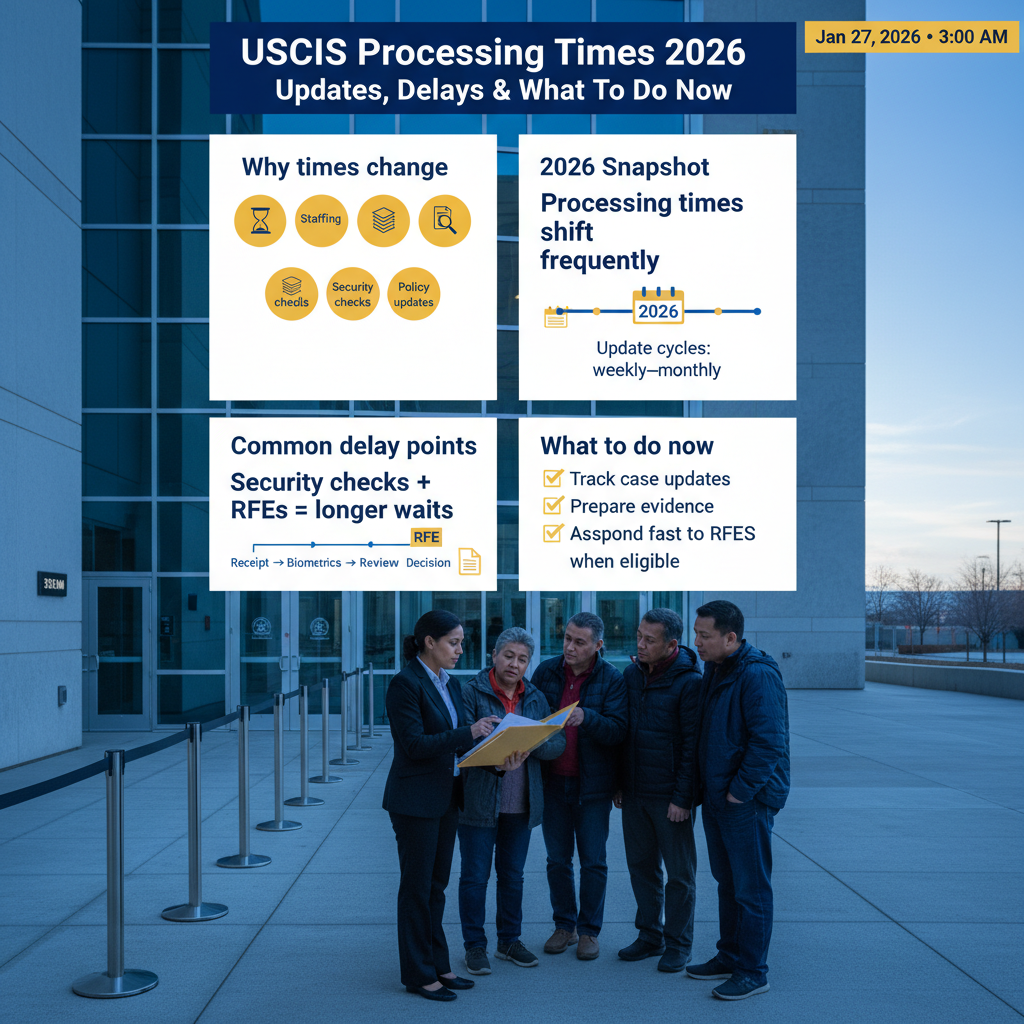
The reporting that sparked this guide comes from ongoing USCIS-related updates and coverage aggregated here: USCIS Processing Times and Updates for 2026 (USCIS).
Reminder: USCIS processing times change frequently based on staffing, workload, security checks, and policy updates. This article explains how to interpret 2026 processing-time trends and what you can do to reduce delays.
Need Help? Our Orlando immigration team is ready to assist. Call +1 786-791-3106 for a free consultation, or message us online. Se Habla Español.
What This News Means for Immigrants in Orlando and Across Florida
Why this news is showing up now
USCIS processing times are a “moving target,” and in 2026 they remain a top concern because more applicants are tracking cases online, employers are planning start dates around work authorization, and families are making life decisions (housing, travel, school) based on when approvals arrive. USCIS also continues to refine digital filing systems, appointment scheduling, and internal workload distribution, which can cause processing times to improve in some categories while worsening in others.
Important: The “processing time” you see online is not a promise. It is a statistical estimate based on how long USCIS took to complete a certain percentage of cases recently. Your case can be faster—or much slower—depending on background checks, missing evidence, interviews, and whether your case is routed to a different office.
In 2026, many applicants are also paying closer attention to timing because of:
- Increased use of online accounts and electronic notices (which can help, but also creates new risks if you miss a message).
- Greater reliance on Form I-765 (work permits) and Form I-131 (travel documents) while waiting for Adjustment of Status decisions.
- More “case status anxiety” due to long waits and uneven timelines between service centers and field offices.
How it can affect Florida residents
For Central Florida residents—especially along the I-4 corridor (Orlando, Kissimmee, Sanford, Lakeland, and Tampa-area commuters)—processing-time shifts affect real-life planning. If your case is in Orlando, you may be dealing with:
- Interview scheduling timelines at the Orlando USCIS Field Office.
- Biometrics appointments that may be scheduled at a nearby Application Support Center (ASC), requiring time off work.
- Mail delivery issues that can occur in high-volume areas of Orange County, which can be critical if you receive a Request for Evidence (RFE) with a strict deadline.
Florida also has a large immigrant workforce and many mixed-status families. Delays can impact:
- Renewal timing for work authorization and driver’s license planning.
- Employer onboarding and I-9 compliance timing.
- Travel plans when Advance Parole is pending.
- Family unity—especially when Form I-130 petitions and consular processing are delayed.
What USCIS Processing Times and Updates for 2026 Is (and Why It Matters)
A plain-English definition
“USCIS processing times” are USCIS’s published estimates of how long it takes the agency to decide certain immigration applications and petitions—such as Form I-130 family petitions, Form I-485 green card applications, Form N-400 naturalization applications, and Form I-765 work permits.
In plain terms: processing times are a roadmap for expectations, not a guarantee. They help you decide when to file, how to plan work and travel, and when you may be eligible to ask USCIS to take action if your case is outside the normal range.
Key terms you need to know
- Receipt Notice: The first notice USCIS sends confirming it received your filing and assigned a receipt number.
- Biometrics: Fingerprints/photo appointment used for background checks (sometimes reused from prior filings).
- RFE (Request for Evidence): USCIS asks for additional documents; this can add weeks or months.
- NOID (Notice of Intent to Deny): A serious warning that USCIS plans to deny unless you respond persuasively.
- Interview: Many Form I-485 and Form N-400 cases require an in-person interview at a field office (for Central Florida, often the Orlando office).
- Priority Date: The date that determines your place in line for certain immigrant visas (especially family preference and employment-based categories). Your Priority Date is critical for visa bulletin timing.
- Case Outside Normal Processing Time: A status that may allow you to submit an online inquiry with USCIS.
- 180 days: A common timing concept in immigration (for example, some benefits and portability rules can hinge on roughly six months). Your specific rule depends on the category.
- 90-day window: A timing concept that appears in different contexts (for example, certain renewals or filing windows). Always confirm the rule for your benefit type.
Warning: Misunderstanding processing times can lead to avoidable problems—like filing too early, filing too late, traveling without proper authorization, or missing an RFE deadline.
Need Help? Our Orlando immigration team is ready to assist. Call +1 786-791-3106 for a free consultation, or message us online. Se Habla Español.
Current Immigration Law: The Foundation
USCIS processing times sit on top of a legal framework primarily found in the Immigration and Nationality Act (INA) and related federal regulations. While processing-time “targets” are administrative, your eligibility and required evidence are legal requirements.
Federal requirements
Most family- and employment-based immigration rules come from the Immigration and Nationality Act (INA) (Title 8 of the U.S. Code), implemented through regulations in 8 C.F.R. (Code of Federal Regulations). Some common examples that drive what USCIS must review (and therefore what can slow a case) include:
- Eligibility for family-based immigration through Form I-130 (Petition for Alien Relative).
- Eligibility for Adjustment of Status through Form I-485 (Application to Register Permanent Residence or Adjust Status).
- Employment authorization through Form I-765 (Application for Employment Authorization).
- Travel authorization (Advance Parole) through Form I-131 (Application for Travel Document).
- Naturalization eligibility through Form N-400 (Application for Naturalization).
USCIS also conducts required security and background checks, which can be influenced by identity verification, name variations, prior immigration history, and certain criminal or immigration violations. These checks are part of why two similar cases can have very different timelines.
Official resources you should use:
- USCIS official website
- USCIS Processing Times
- USCIS Forms
- U.S. Department of State (visa bulletin and consular processing information)
- Executive Office for Immigration Review (immigration court information)
Florida-specific considerations
Immigration law is federal, but Florida residents face practical, local factors that can affect case progress:
- Field office scheduling: If your case is in Orlando, interview availability at the Orlando USCIS Field Office can affect your Form I-485 or Form N-400 timeline.
- Address stability: Central Florida moves (Orange County, Osceola County, Seminole County) are common. Address changes must be reported, and mail delays can cause missed deadlines.
- Travel patterns: Many Florida residents travel internationally. Leaving the U.S. while Adjustment of Status is pending—without proper travel authorization—can create serious consequences.
Reminder: Always keep USCIS updated with your current address and track notices in your online account when available.
How to Check and Respond to USCIS Processing Times: A Complete Step-by-Step Guide
This step-by-step guide focuses on the most common “processing time” action item in 2026: checking your timeline correctly, preventing delays, and escalating appropriately when your case is truly overdue.
1) Identify your exact form type and where USCIS is processing it
Start by confirming what you filed and which office is handling it. Processing times vary dramatically depending on form type and location.
- Form I-130 (family petition)
- Form I-485 (green card / Adjustment of Status)
- Form I-765 (work permit)
- Form I-131 (Advance Parole / travel document)
- Form N-400 (naturalization)
Documents to gather:
- Your USCIS receipt notice(s) (Form I-797C) for each filing
- Your receipt number(s) (e.g., IOE, MSC, LIN, SRC, WAC)
- A copy of the full application packet you filed (or attorney copy)
- Your USCIS online account login (if applicable)
2) Use USCIS’s official processing-time tool the right way
Go to USCIS Processing Times and select:
- The form number (example: Form I-485)
- The category (example: family-based, employment-based, asylum-based)
- The office (service center or field office)
USCIS typically shows a range and/or a percentile-based completion time. Also look for the “receipt date for a case inquiry” (the date after which you may submit an inquiry).
Documents to gather:
- A screenshot/PDF of the processing-time page for your form and office (save the date)
- Your receipt date from the I-797C notice
- Any RFE/NOID notices and response delivery proof
3) Track your case status and notices (and don’t rely on one channel)
Use the USCIS case status tool and your online account (if you have one). Sometimes online status updates lag behind internal movement, and sometimes mail arrives before the website updates.
Documents to gather:
- USCIS online account access (if you created one)
- Copies of all notices received (receipt, biometrics, RFE, interview)
- Proof of delivery for any submissions (USPS/UPS/FedEx tracking)
Important: If you receive an RFE, respond by the deadline. Missing it can lead to denial. If you move, file an address change promptly and keep proof.
4) Prevent delays by “front-loading” strong evidence (especially for family cases)
Many delays come from avoidable RFEs. A well-prepared filing can reduce the chance that USCIS pauses your case to ask for documents.
Documents to gather (examples):
- Identity: passports, birth certificates (with certified translations if needed)
- For Form I-130: marriage certificate, divorce decrees, proof of bona fide marriage (leases, bank statements, insurance, photos)
- For Form I-485: lawful entry evidence (I-94), medical exam (as required), prior immigration documents
- For Form I-864 (common with family AOS): tax transcripts, W-2s/1099s, pay stubs, employment letter
If your case is in Orlando, remember that interview preparation matters—officers may ask detailed questions about your relationship history, addresses, and prior immigration entries.
5) Escalate appropriately if your case is outside normal processing time
If your receipt date is earlier than the “case inquiry date” shown in the USCIS tool, you may be able to submit an “outside normal processing time” request with USCIS. If that does not resolve the issue, you may consider additional escalation pathways depending on the facts.
Documents to gather:
- Receipt notices and receipt numbers
- USCIS processing-time screenshot showing your case is outside normal time
- Any RFE response proof and copies of what you sent
- Evidence of urgent harm (job loss letter, medical documentation) if requesting expedited handling
Warning: Expedite requests are discretionary and require strong evidence. Filing repeated inquiries without strategy can create confusion and rarely speeds things up.
6) Prepare for the interview or final decision—before USCIS asks
In 2026, interview scheduling can be unpredictable. Being ready reduces stress and helps avoid last-minute scrambling that can lead to missed appointments or weak responses.
Documents to gather:
- Updated relationship evidence (for marriage-based cases)
- Updated proof of income/employment (for affidavit of support cases)
- Certified court dispositions for any arrests/citations (even if dismissed)
- Passports, IDs, and originals of civil documents
7) If denied, act fast—deadlines can be short
Denials can sometimes be addressed through motions, appeals, refiling, or alternative strategies (including consular processing). The correct path depends on the denial basis and your immigration history.
Documents to gather:
- The full denial notice (every page)
- Your entire filing copy and supporting evidence
- Any prior immigration decisions or court documents
- Proof of timely responses to USCIS requests
Important: Some post-decision options have strict deadlines. Do not wait—get legal advice quickly.
Need Help? Our Orlando immigration team is ready to assist. Call +1 786-791-3106 for a free consultation, or message us online. Se Habla Español.
Practical Steps You Can Take Today
Processing times may be out of your control, but delays caused by missing evidence or missed notices are often preventable. Here’s a practical checklist you can start today—especially helpful for Central Florida residents dealing with frequent moves or busy work schedules.
- 1) Create (or secure) your USCIS online account: Make sure you can access notices and track updates. Use a strong password and keep recovery options updated.
- 2) Build a “USCIS case binder” (digital + paper): Save every I-797 notice, every filing, every RFE response, and delivery confirmations.
- 3) Audit your address history and file address changes: If you moved in Orange County or along the I-4 corridor, confirm USCIS has your correct address and that your mailbox is reliable.
- 4) Prepare for an RFE before it happens: Gather civil documents, translations, tax transcripts, and relationship evidence now, not later.
- 5) Plan your work authorization timeline: If you rely on an EAD, set calendar reminders well in advance. Don’t wait until the last minute to renew where renewal is permitted.
- 6) Avoid risky travel: If you filed Form I-485, do not travel internationally unless you have the correct travel authorization and understand the risks.
- 7) Check the Visa Bulletin if your case depends on a visa number: Track your Priority Date and category using U.S. Department of State resources.
Timeline expectations (general): In 2026, many applicants experience “lumpy” progress—long quiet periods followed by fast movement once biometrics, security checks, or interview scheduling aligns. If your case is in Orlando, interview wait times can be a major variable for Form I-485 and Form N-400.
Reminder: Always use the official USCIS tools and keep copies of what you submit. When in doubt, consult an attorney before making decisions that affect your status.
How Imigrar Helps Immigrants in Orlando
At Imigrar, we help individuals and families navigate USCIS processing delays with a plan—not guesswork. Our team supports clients in Orlando, across Central Florida, and nationwide with strategies designed to reduce avoidable delays and respond effectively when USCIS requests more information.
- Case strategy tailored to your form type: Form I-130, Form I-485, Form I-765, Form I-131, and more.
- RFE/NOID response preparation to protect your case and reduce the risk of denial.
- Interview preparation—especially important if your case is scheduled at the Orlando USCIS Field Office.
- Guidance on timing, Priority Date tracking, and travel/work planning while your case is pending.
We understand what delays mean for real families. Our tagline is “Keep Families Together”, and we take that mission seriously.
Call +1 786-791-3106 for a free consultation. Se Habla Español.
Frequently Asked Questions
Q: How do I know if I’m eligible to file even if processing times are long?
A: Eligibility depends on the benefit—not the processing time. For example, Form I-130 eligibility depends on the family relationship and proof of it; Form I-485 eligibility depends on admission/parole, category eligibility, and whether a visa is available (often tied to your Priority Date). If you’re unsure, get a legal screening before filing—filing the wrong application can waste months and fees.
Q: Can long USCIS processing times affect my current immigration status?
A: Yes, depending on your situation. Some applicants maintain valid nonimmigrant status while a case is pending; others rely on pending Adjustment of Status and related benefits like an EAD. Warning: Do not assume you are ���safe” just because you filed—timing, category, and prior status matter. If you are in removal proceedings, consult resources like Executive Office for Immigration Review and speak with counsel immediately.
Q: What are the most accurate ways to check my timeline in 2026?
A: Use the official tools: USCIS Processing Times for general timelines and your USCIS online account/case status for your specific case updates. Save screenshots monthly. If your receipt date is earlier than the posted “case inquiry date,” you may be able to request action through USCIS.
Q: What documents are most commonly requested in RFEs that slow cases down?
A: Common RFE triggers include missing civil documents (birth/marriage certificates), missing translations, insufficient financial evidence for Form I-864, unclear proof of lawful entry for Form I-485, and weak evidence of a bona fide marriage for Form I-130/Form I-485 marriage cases. Preparing a complete packet from the start is one of the best ways to reduce delays.
Q: How much does it cost to file, and do delays increase costs?
A: USCIS filing fees vary by form and can change, so confirm current fees on USCIS Forms and the instructions for your specific filing. Delays can increase costs indirectly—such as needing updated documents, medical exams (in some scenarios), or additional attorney time for RFEs. Planning ahead helps reduce unexpected expenses.
Q: What happens if USCIS denies my case after a long wait?
A: A denial can have serious consequences, especially if you relied on a pending application to remain in the U.S. Options may include refiling, filing a motion to reopen/reconsider, appealing (when permitted), or pursuing consular processing. Important: deadlines can be short—don’t wait. Bring the full denial notice and your filing copy to a consultation immediately.
Q: If my case is in Orlando, will it be faster or slower than other cities?
A: It depends on the benefit type and local workload. Field-office steps like interviews can vary. If your case is in Orlando, the timing often hinges on interview scheduling at the Orlando USCIS Field Office, completeness of your packet, and whether background checks clear quickly.
Common Mistakes (and How to Avoid Them)
Mistake #1: Using the wrong processing-time category or office
USCIS processing-time pages require you to select the correct category and the correct office. Choosing the wrong category can make you think your case is “late” when it isn’t—or the reverse. How to avoid it: Match the category listed on your receipt notice and confirm whether your step is handled by a service center or a field office.
Mistake #2: Responding to an RFE without a complete, organized package
RFEs are time-sensitive, and weak responses can lead to denial or additional delays. How to avoid it: Answer every point, include a cover letter, tabbed exhibits, and proof of delivery. Keep a full copy of what you sent.
Mistake #3: Moving and missing notices (especially in high-mobility Central Florida)
Missed biometrics or interview notices can set a case back months or cause denial. How to avoid it: Update your address, monitor your USCIS account, and ensure your mailbox is secure—particularly if you move within Orange County or along the I-4 corridor.
Need Help? Our Orlando immigration team is ready to assist. Call +1 786-791-3106 for a free consultation, or message us online. Se Habla Español.
Closing: Don’t Let Processing Delays Derail Your Plans
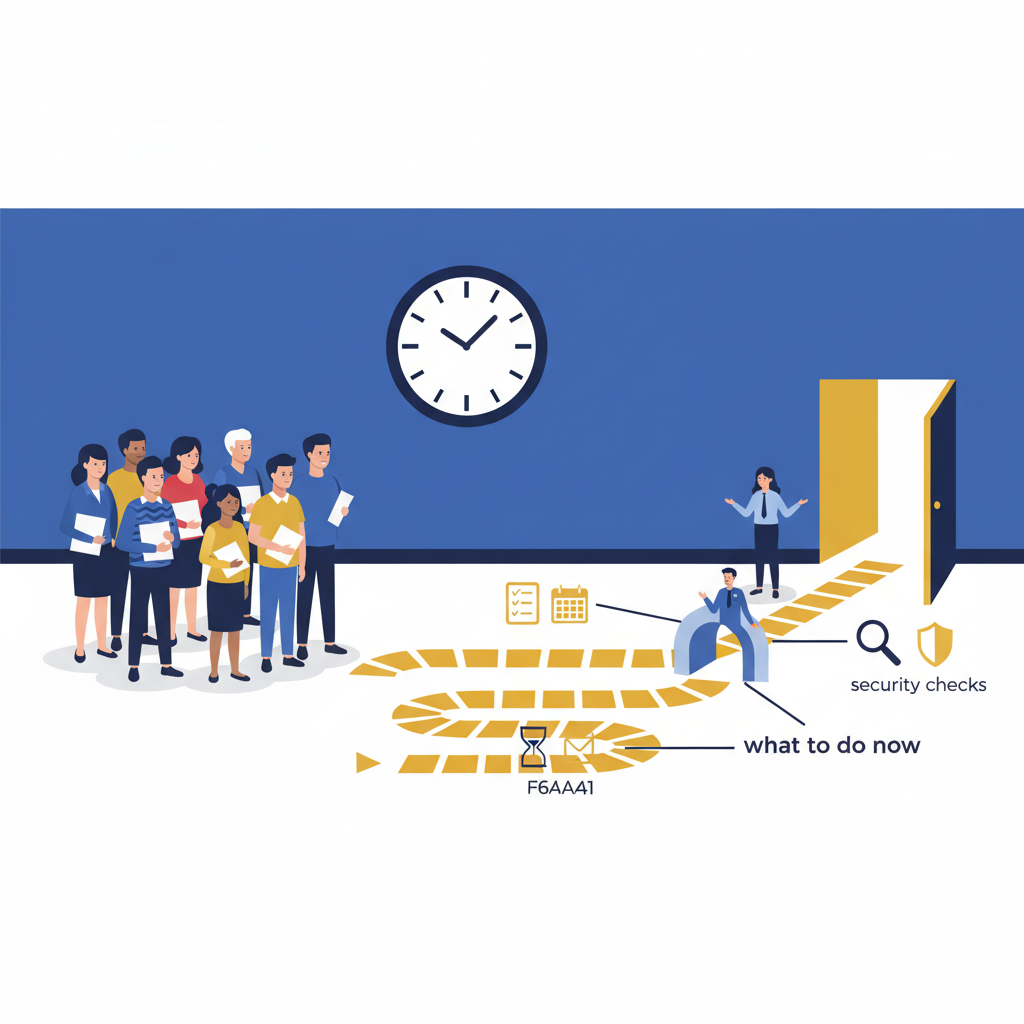
USCIS processing times in 2026 continue to change, but the best way to protect your case is consistent: file correctly, document thoroughly, track your Priority Date when it applies, respond quickly to USCIS notices, and escalate only when you’re truly outside normal processing time.
If your case is in Orlando—or you’re anywhere in Florida and want a clear plan—Imigrar can help you understand your timeline, reduce avoidable delays, and respond strategically if USCIS requests more evidence.
Need help now? Call +1 786-791-3106 for a free consultation or message us online. Se Habla Español.


