

Navigating the U.S. immigration system can often feel like a journey through a labyrinth, with one of the most unpredictable elements being the time it takes for applications to be processed by U.S. Citizenship and Immigration Services (USCIS). As of July 2026, new updates and trends in USCIS processing times continue to shape the immigration landscape, directly impacting individuals and families striving to build their lives in the United States, including those in Orlando and throughout Florida.
At Imigrar, our mission is to "Keep Families Together," and we understand that long wait times and uncertain timelines can be a significant source of stress and anxiety. That's why we’ve prepared this comprehensive guide to help you understand the latest developments, what they mean for your case, and how to navigate the complexities effectively.
Need Help? Our Orlando immigration team is ready to assist. Call +1 786-791-3106 for a free consultation, or message us online. Se Habla Español.
NEWS SOURCE REFERENCE SECTION
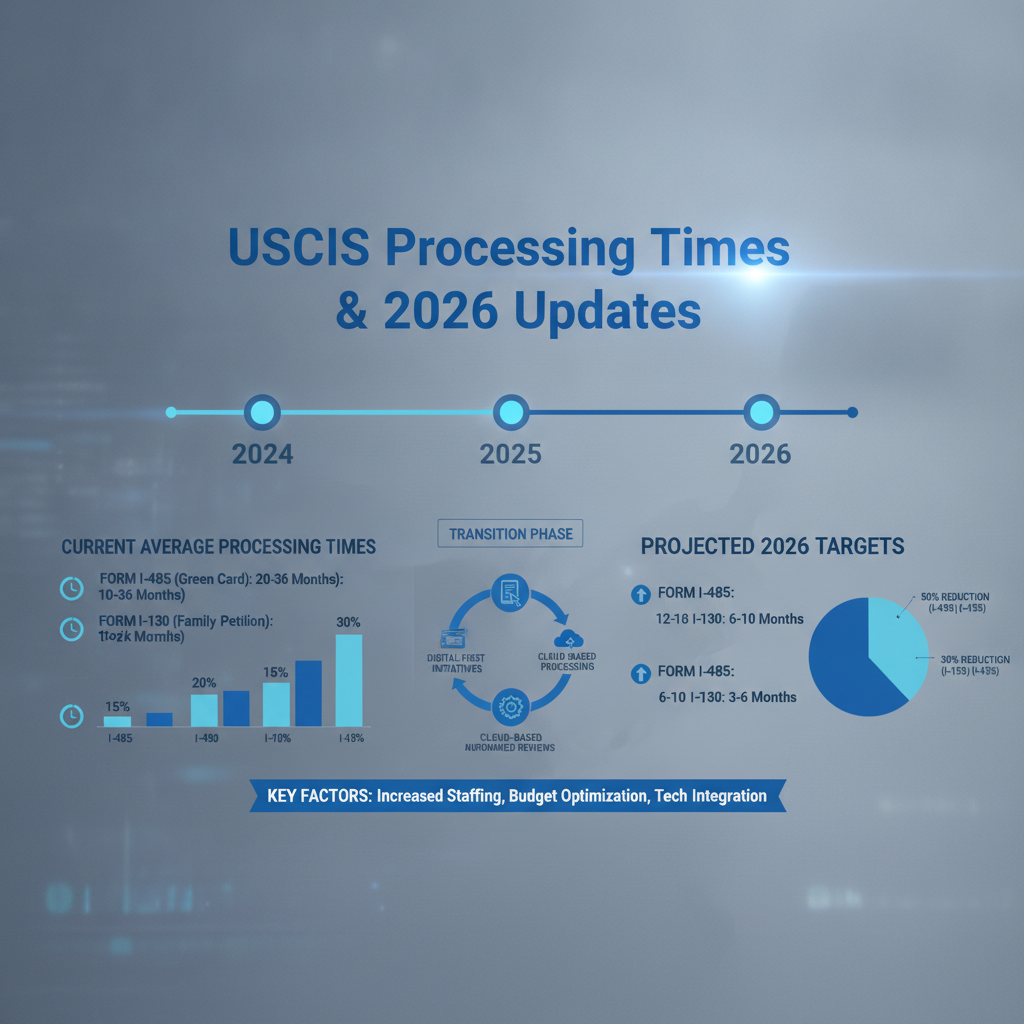
The reporting that sparked this guide: USCIS Processing Times and Updates for 2026 (USCIS)
What This News Means for Immigrants in Orlando and Across Florida
The continuous flow of updates regarding USCIS processing times is not merely bureaucratic news; it has tangible implications for every immigrant and their family. Whether you are seeking to adjust your status, reunite with loved ones, or secure employment authorization, understanding these fluctuations is paramount.
Why this news is showing up now
USCIS regularly updates its reported processing times, typically on a monthly basis, to reflect the current workload, staffing levels, and efficiency of its service centers and field offices. These updates are crucial because they provide the public with an estimate of how long it might take for a particular application or petition to be processed. The "news" around USCIS processing times is therefore a constant, evolving narrative driven by several factors:
- Caseload Volume: The sheer number of applications received by USCIS directly impacts processing times. Periods of high application volume, often spurred by new policies or increased demand, inevitably lead to longer waits.
- Staffing and Resources: USCIS, like any large government agency, is subject to budgetary constraints and staffing fluctuations. Adequacy of personnel, technology, and infrastructure plays a critical role in how quickly cases move through the system.
- Policy Changes: New immigration policies or changes in existing regulations can alter processing procedures, sometimes requiring additional scrutiny or new forms, which can temporarily lengthen processing times.
- Technological Upgrades: While intended to improve efficiency in the long run, the implementation of new digital systems or databases can sometimes cause temporary delays during the transition phase.
- National Security and Public Safety Checks: All applications undergo rigorous background and security checks, which are non-negotiable and can vary in duration depending on the individual's history and other factors.
As of July 2026, USCIS continues its efforts to address backlogs accumulated during previous years, particularly those exacerbated by the COVID-19 pandemic and subsequent operational adjustments. While some categories have seen improvements, others continue to experience extended wait times, making these regular updates a critical source of information for applicants.
How it can affect Florida residents
For immigrants residing in Florida, particularly in densely populated areas like Orlando, Tampa, and Miami, USCIS processing times have several direct and indirect effects:
- Local Field Office Impact: The Orlando USCIS Field Office, like others across the state (e.g., Miami, Tampa), handles interviews for various applications, including Adjustment of Status (Form I-485) and Naturalization (Form N-400). Fluctuations in processing times at these local offices directly affect how quickly residents in Central Florida can complete their immigration journey. Longer processing times at the local level mean longer waits for interviews and final decisions for Orlando residents.
- Economic Stability: Extended waits for work permits (Form I-765) or travel documents (Form I-131) can significantly impact an individual's ability to work, travel, and contribute to Florida's economy. This is particularly relevant in a state heavily reliant on diverse labor forces, including those in hospitality, agriculture, and healthcare.
- Family Reunification: For families seeking to reunite, especially through family-sponsored petitions (Form I-130), protracted processing times can mean years of separation. This emotional and logistical burden is a primary concern for many of Imigrar's clients. Our tagline, "Keep Families Together," underscores the gravity of these delays.
- Planning and Uncertainty: Long and unpredictable processing times make it exceedingly difficult for individuals and families to plan their futures. Decisions about education, career, housing, and even starting a family often hinge on the resolution of an immigration application. This uncertainty can be particularly stressful for those along the I-4 corridor, from Tampa to Orlando, who may be awaiting crucial status changes.
- Legal Complexities: The longer a case is pending, the higher the chance that an applicant’s circumstances might change, or new immigration policies might be introduced. This can introduce additional legal complexities, potentially requiring amendments to applications or new strategies, making expert legal counsel from firms like Imigrar even more vital.
Important: While USCIS processing times are federal, their impact is deeply felt at the local level. An Orlando resident awaiting an Adjustment of Status might experience different wait times than someone in a less populous state, purely due to the volume of cases handled by the local field office and regional service centers.
What USCIS Processing Times Are (and Why It Matters)
At its core, understanding USCIS processing times is about managing expectations and strategizing your immigration journey. These times are not merely statistics; they are the timeline for your dreams and aspirations.
A plain-English definition
USCIS processing times refer to the estimated period it takes for USCIS to adjudicate (make a decision on) a particular immigration application or petition, from the date of receipt until a final decision is issued. These times are published on the USCIS Processing Times page and vary significantly based on:
- Form Type: Different forms (e.g., Form I-130, Form I-485, Form I-765) have different processing requirements and, therefore, different timelines.
- Filing Location/Service Center: USCIS operates several service centers (e.g., California, Nebraska, Texas, Vermont) and field offices (like the Orlando USCIS Field Office). Each location may have varying workloads and processing efficiencies for the same form type.
- Case Type/Category: Within a single form type, there might be different categories (e.g., immediate relatives vs. preference categories for family petitions) that affect processing.
- Individual Case Complexity: Factors unique to an applicant, such as background checks, requests for evidence (RFE), or interview requirements, can extend processing times.
These published times are estimates, not guarantees. They represent the time it took USCIS to process 80% of completed cases over the past six months. This means 20% of cases took longer, and some took less.
Key terms you need to know
To effectively navigate USCIS processing times, familiarize yourself with these essential terms:
- USCIS (U.S. Citizenship and Immigration Services): The federal agency responsible for administering the country's lawful immigration system, including processing visa petitions, adjustment of status applications, and naturalization requests. USCIS official website.
- Processing Times: The estimated duration from the date USCIS receives an application to the date it issues a decision.
- Receipt Date: The exact date USCIS received your application or petition. This is crucial for tracking your case and checking processing times. You'll find this on your Form I-797C, Notice of Action.
- Priority Date: For certain visa categories (e.g., family-preference and employment-based categories), this is the date your petition was properly filed with USCIS. It determines your place in the visa queue and when you can apply for a visa or Adjustment of Status. You must check the Visa Bulletin, published by the U.S. Department of State, to see if your priority date is current.
- Adjustment of Status (AOS): The process by which an eligible immigrant already in the U.S. can apply for lawful permanent resident (green card) status without having to return to their home country. This typically involves filing Form I-485.
- Consular Processing: The process for obtaining an immigrant visa through a U.S. embassy or consulate abroad. This is for individuals outside the U.S.
- Biometrics Appointment: An appointment at an Application Support Center (ASC) where USCIS collects fingerprints, photographs, and a signature for background checks. This is a mandatory step for many applications, including Form I-485, Form I-765, and Form N-400.
- Request for Evidence (RFE): A notice from USCIS asking for additional information or documentation to support your application. Responding promptly and completely to an RFE is critical to avoid delays or denials.
- Notice of Intent to Deny (NOID): A notice from USCIS indicating its intention to deny your application unless you provide specific information or evidence to overcome the grounds for denial. This is a serious notice requiring immediate legal attention.
- Case Status Online: The USCIS online tool that allows you to track the progress of your application using the 13-character receipt number.
Current Immigration Law: The Foundation
USCIS processing times are not arbitrary; they are governed by the overarching framework of U.S. immigration law, primarily the Immigration and Nationality Act (INA). The law dictates who is eligible for what benefits and the general procedures for applying, which in turn influences how applications are processed.
Federal requirements
The INA (Title 8 of the U.S. Code) establishes the categories of immigrants, the eligibility criteria, and the application processes. While the INA doesn't specify exact processing times, it sets the stage for the complexity and scrutiny involved in each application. Key federal requirements that impact processing include:
- Eligibility Criteria: Every immigration benefit has specific eligibility requirements outlined in the INA and subsequent regulations. USCIS must verify that each applicant meets these criteria. For instance, family-based immigration (INA § 201-204) requires proof of a qualifying relationship and financial sponsorship, typically through Form I-130 and Form I-864.
- Background and Security Checks: All applicants undergo mandatory background and security checks to ensure they do not pose a national security risk or fall under grounds of inadmissibility (INA § 212). These checks are a significant factor in processing times.
- Annual Quotas: Many visa categories, particularly family-preference and employment-based visas, are subject to annual numerical limits (INA § 201-203). This creates a visa queue, making the Priority Date and Department of State's Visa Bulletin critical. Even if an application is processed, a green card cannot be issued until a visa becomes available.
- Proper Filing and Documentation: The INA and 8 Code of Federal Regulations (CFR) mandate that applications be filed correctly, with all required forms, fees, and supporting documentation. Incomplete applications are a primary cause of delays and RFEs.
Common USCIS forms directly impacted by these federal requirements and processing times include:
- Form I-130, Petition for Alien Relative: Filed by a U.S. citizen or lawful permanent resident to establish a relationship with an eligible foreign relative who wishes to immigrate. Processing times vary widely by relationship category and service center.
- Form I-485, Application to Register Permanent Residence or Adjust Status: The primary form for individuals already in the U.S. to apply for a green card. This often involves an interview at a local field office, such as the Orlando USCIS Field Office.
- Form I-765, Application for Employment Authorization: Used to request an Employment Authorization Document (EAD), often filed concurrently with Form I-485. Delays here mean delays in work authorization.
- Form I-131, Application for Travel Document: Used to apply for a Reentry Permit, Refugee Travel Document, or Advance Parole Document, often filed concurrently with Form I-485.
- Form N-400, Application for Naturalization: For eligible lawful permanent residents to apply for U.S. citizenship. This also typically requires an interview at a local field office.
You can find all official forms and instructions on the USCIS Forms page.
Florida-specific considerations
While immigration law is federal, its implementation and impact often have local nuances. For Florida residents, these considerations are particularly relevant:
- Local Field Office Caseload: The Orlando USCIS Field Office serves a large and diverse population. The volume of applications and interviews scheduled at this specific office can affect local processing times for forms like Form I-485 and Form N-400, which require in-person interaction.
- Immigration Court System: For individuals in removal proceedings, the processing times of applications filed with USCIS can interact with the timelines of the immigration courts, overseen by the Executive Office for Immigration Review (EOIR). Delays in USCIS processing can sometimes complicate court cases.
- State-level Support Services: Florida offers various community and legal aid services that can assist immigrants, though they do not directly influence federal processing times. However, connecting with these resources can help manage the impact of delays.
- Local Economy and Demographics: Florida's robust tourism and agricultural sectors, especially in areas like Orange County, attract immigrants seeking work. Processing times for employment-based visas or work permits directly affect these industries and the individuals within them.
Reminder: State laws generally do not dictate federal immigration processing. However, understanding the local operational context and available resources is vital for any immigrant in Florida.
Navigating complex USCIS forms and processing times can be overwhelming. Let Imigrar guide you. We offer free consultations for Florida residents and clients nationwide. Call us today at +1 786-791-3106. Se Habla Español.
How to Navigate USCIS Processing Times: A Complete Step-by-Step Guide
Managing your expectations and proactively engaging with the USCIS system is key. This guide focuses on how to monitor and address delays in your application process.
1) Understand Your Application's Journey and Typical Timelines
Before you even check processing times, you need to understand the typical path your specific application will take. Each form has a unique lifecycle:
- Initial Filing: Submit your application with all required forms, fees, and initial evidence. You'll receive a Form I-797C, Notice of Action, with your Receipt Number.
- Biometrics Appointment: For many forms (e.g., I-485, I-765, N-400), you'll receive a notice for a biometrics appointment at an ASC.
- Evidence Requests (RFE/NOID): USCIS may issue an RFE or NOID if they need more information or intend to deny your case. Prompt response is critical.
- Interview (if applicable): Applications like I-485 and N-400 often require an interview at a local field office, such as the Orlando USCIS Field Office.
- Decision: USCIS issues an approval or denial notice.
Required Information:
- A copy of your filed application/petition.
- Your Form I-797C, Notice of Action (containing your Receipt Number and Receipt Date).
- Understanding of your specific visa category (e.g., family-based immediate relative, employment-based EB-2).
2) Regularly Check Official USCIS Processing Times
This is your primary tool for managing expectations. USCIS updates its processing times monthly.
- Go to the Official Page: Visit the USCIS Processing Times website.
- Select Your Form: Choose the specific form number you filed (e.g., Form I-485).
- Select Your Field Office or Service Center: This is critical. For forms processed at service centers (like Form I-130, Form I-765 without an I-485), select the service center that sent your receipt notice (e.g., Nebraska Service Center). For forms with local interviews (like Form I-485 and Form N-400), select the Orlando USCIS Field Office (or your local field office).
- Compare Your Receipt Date: The website will show an estimated range. Compare your Receipt Date to the "Case Inquiry Date" or the "Receipt date for a case inquiry" listed. If your Receipt Date is *before* the listed date, your case is outside normal processing times.
Required Information:
- Your Receipt Number (13 characters, e.g., EAC-23-123-54321).
- Your Receipt Date.
3) Track Your Case Status Online
Beyond general processing times, you can check the specific status of your individual case.
- Visit Case Status Online: Go to the USCIS Case Status Online tool.
- Enter Your Receipt Number: Input your 13-character Receipt Number.
- Review Status: The system will display the last action taken on your case (e.g., "Case Was Received," "Biometrics Appointment Was Scheduled," "Request for Evidence Was Sent").
Reminder: This tool shows *what* has happened, not *when* it will be decided. It's a snapshot, not a predictor.
4) What to Do if Your Case is Outside Normal Processing Times
If your Receipt Date is earlier than the "Case Inquiry Date" on the USCIS Processing Times page for your specific form and location, you can submit an "e-Request" online.
- Submit an e-Request: On the USCIS website, navigate to the "Tools" section and find "Case Outside Normal Processing Times." You will need to provide your Receipt Number, form type, and other identifying information.
- Wait for a Response: USCIS aims to respond to e-Requests within 30 days. They may provide an update, indicate that they are still reviewing the case, or state that no action is needed yet.
- Contact USCIS Directly (Tier 1 or Tier 2 Officer): If you don't receive a satisfactory response or need further clarification, you can call the USCIS Contact Center. Be prepared with your Receipt Number and details. You may initially speak with a Tier 1 officer; if they cannot assist, you can request to speak with a Tier 2 officer.
Warning: Do not submit multiple e-Requests for the same issue, as this can sometimes further complicate your case. Give USCIS time to respond to your initial inquiry.
5) Consider Expedite Requests (in limited circumstances)
USCIS has specific criteria for expediting a case, and approvals are rare and granted on a case-by-case basis. An expedite request is typically considered for:
- Severe financial loss to a company or individual.
- Urgent humanitarian reasons.
- Compelling U.S. government interests.
- Clear error by USCIS.
- Emergencies.
How to Request:
- Call the USCIS Contact Center and explain your situation.
- Be prepared to provide compelling evidence (e.g., eviction notices, medical reports, letters from employers) to support your claim.
- USCIS will review the request and may ask for additional documentation.
Important: Merely wanting your case to be faster is not a valid reason for an expedite request. You must demonstrate severe hardship or other compelling circumstances.
6) Seek Congressional Assistance (after exhausting other avenues)
If your case is significantly delayed and you have exhausted other options (e-Request, contacting USCIS), you can contact your U.S. Representative or Senator's office for assistance. Congressional offices have liaisons with USCIS and can make inquiries on behalf of their constituents.
- Find Your Representative: Visit House.gov or Senate.gov to find your elected officials based on your Orlando or Florida address.
- Contact Their Office: Explain your situation, provide your Receipt Number, and include any relevant documentation. You will likely need to sign a privacy release form.
Note: Congressional inquiries do not guarantee an expedited decision, but they can sometimes prompt USCIS to review a stalled case or provide more detailed information.
7) Consult with an Experienced Immigration Attorney
This step can and often should happen at any point in the process, especially if you anticipate delays or encounter issues. An attorney from Imigrar can:
- Evaluate Your Case: Determine if your application was filed correctly and if there are any underlying issues causing delays.
- Advise on Strategy: Help you understand your options, whether it's submitting an e-Request, pursuing an expedite, or preparing for potential RFEs or interviews.
- Communicate with USCIS: Attorneys can often navigate the USCIS Contact Center more efficiently and may have direct lines of communication for certain issues.
- Address Complex Issues: If your case involves complex legal issues, criminal history, or potential inadmissibility, an attorney is essential.
- File a Mandamus Action: In rare cases of extreme, unreasonable delay, an attorney might advise filing a "Writ of Mandamus" in federal court to compel USCIS to make a decision. This is a significant legal step.
Required Information:
- All original immigration documents and copies.
- All correspondence from USCIS.
- Detailed timeline of your application.

Practical Steps You Can Take Today
While you cannot directly control USCIS processing times, you can take proactive steps to minimize delays and manage the process effectively.
Actionable checklist for all applicants:
- Keep Copies of Everything: Before mailing any application to USCIS, make a complete copy of every single document. This includes forms, supporting evidence, photos, and checks.
- Organize Your Documents: Maintain a well-organized file (digital and/or physical) of all your immigration documents, notices, and correspondence. This will be invaluable if you need to respond to an RFE or consult with an attorney.
- Track Your Mail: When mailing applications, always use a service that provides tracking and delivery confirmation (e.g., USPS Certified Mail, FedEx, UPS). This proves your submission date.
- Check USCIS Case Status Regularly: Make it a habit to check your Case Status Online and the
Related Articles
You may also be interested in:
-
DACA Renewal: Your Essential Guide to Navigating Updates in 2026
Stay informed on DACA program updates and renewal requirements. This guide provides comprehensive steps, eligibility, and legal insights for Deferred ...
-
TPS Extension Alert 2026: What Orlando Immigrants Need to Know
Breaking news on Temporary Protected Status (TPS) extensions for designated countries. Learn what this means for you, how to re-register, and how Imig...
-
USCIS Processing Times & Updates for 2026: Your Guide to
Understand the latest USCIS processing times and updates for 2026. Get practical advice, timelines, and expert guidance to navigate your immigration j...
-
Naturalization Test 2026: Your Guide to Upcoming Changes for
Prepare for the updated Naturalization Test in 2026. This guide from Imigrar, your Orlando immigration law firm, details new civics questions and requ...
-
DACA Renewal: Your Essential Guide to Navigating Updates in 2026


