

The immigration landscape is constantly shifting, and staying informed about changes from U.S. Citizenship and Immigration Services (USCIS) is paramount for anyone navigating the path to living and working in the United States. As we move through 2026, new data and operational adjustments continue to impact USCIS processing times, directly affecting the lives and plans of countless immigrants and their families.
At Imigrar, an immigration law firm based in Orlando, Florida, we understand that waiting for an immigration decision can be one of the most stressful periods in an applicant's life. Our mission is to "Keep Families Together," and that means providing you with the most up-to-date, accurate, and actionable information to help you understand and manage your immigration journey.
This comprehensive guide dives deep into the latest USCIS processing times and updates for 2026, offering clarity, practical steps, and expert advice to help you prepare, respond, and succeed. Whether you're in Orlando, elsewhere in Florida, or across the nation, Imigrar is here to guide you.
NEWS SOURCE REFERENCE SECTION
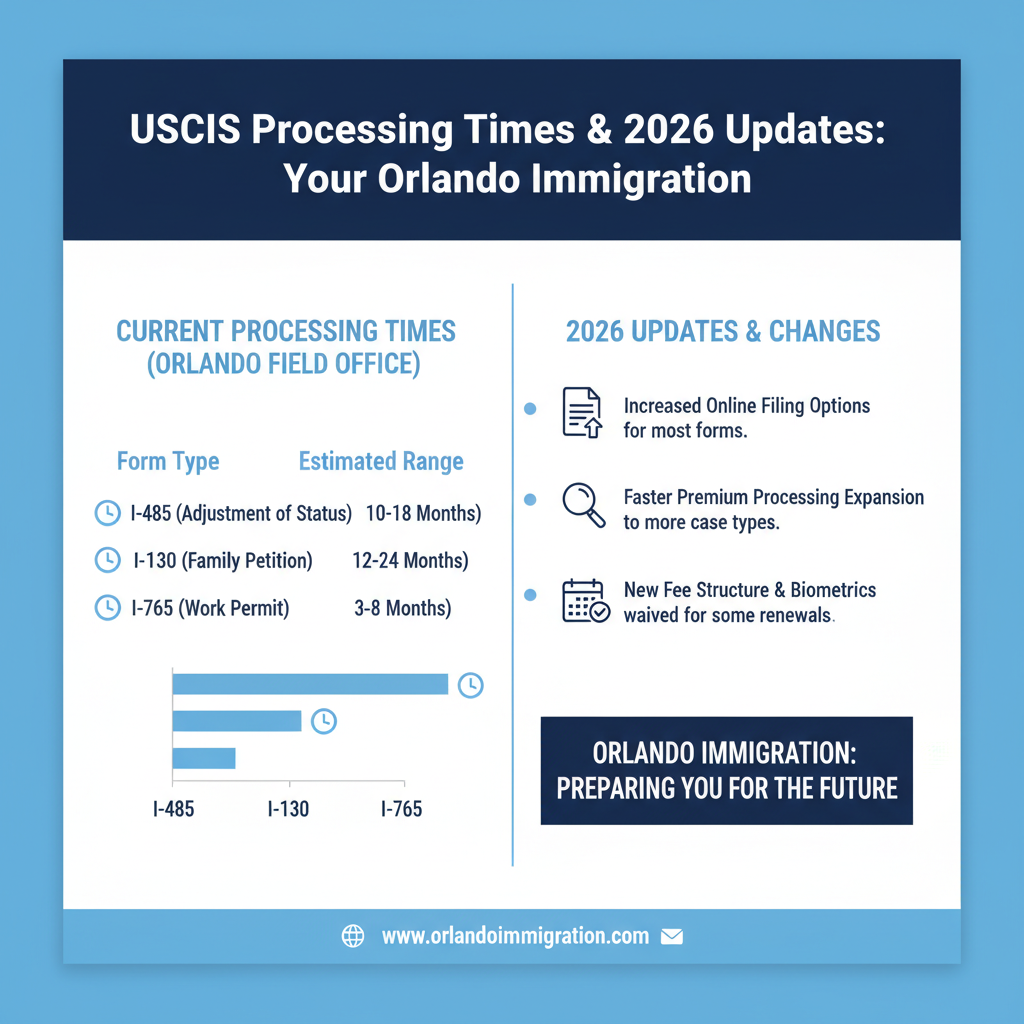
The reporting that sparked this guide: USCIS Processing Times and Updates for 2026 (USCIS)
What This News Means for Immigrants in Orlando and Across Florida
The ongoing adjustments to USCIS processing times are not just bureaucratic statistics; they represent real-world impacts on families, careers, and futures. For immigrants in Orlando, across Florida, and throughout the United States, understanding these changes is critical for effective planning and managing expectations.
Why this news is showing up now
USCIS processing times are dynamic, continually influenced by a multitude of factors. The updates we are seeing in 2026 are a culmination of several ongoing trends and recent developments:
- Post-Pandemic Backlog Recovery: While significant strides have been made, some backlogs from the COVID-19 pandemic and previous administrative challenges continue to affect various application types. USCIS has been working to reduce these, but new applications keep coming in.
- Increased Application Volume: The demand for immigration benefits remains high. A consistent or increasing volume of applications, especially for popular categories like family-based visas, employment-based visas, and naturalization, naturally extends processing times.
- Resource Allocation and Staffing: USCIS's ability to process cases efficiently is directly tied to its funding, staffing levels, and technological infrastructure. Congressional appropriations, fee revenue, and internal operational shifts play a significant role.
- Policy Changes and Executive Actions: New immigration policies, executive orders, and regulatory changes can necessitate adjustments in processing procedures, sometimes temporarily slowing down operations as new guidelines are implemented and staff are trained.
- Technological Modernization Efforts: USCIS is continually working to modernize its systems, transitioning to a more digital platform. While this promises long-term efficiency, initial implementation phases can sometimes introduce temporary delays as systems are integrated and staff adapt.
- Global Events: Geopolitical events, humanitarian crises, and other international developments can lead to new programs or shifts in priorities, affecting resource allocation and processing speeds for other categories.
These factors combine to create a constantly evolving picture of processing times, making regular updates from USCIS essential and the topic of ongoing news coverage.
How it can affect Florida residents
Florida is home to a vibrant and diverse immigrant population, and changes in USCIS processing times have a profound impact on residents across the state, particularly in major metropolitan areas like Orlando. Here’s how:
- Orlando USCIS Field Office Impact: The Orlando USCIS Field Office (located in South Orlando) handles interviews for many local adjustment of status, naturalization, and asylum cases. Fluctuations in processing times at this office can directly affect residents in Orange County and the wider Central Florida region. Longer waits mean more uncertainty for families hoping to finalize their green cards or become U.S. citizens.
- Economic Implications: Delays in employment-based visas (like H-1B, L-1) or employment authorization documents (Form I-765) can prevent skilled workers from filling critical roles in Florida's growing industries, including tourism, technology, and healthcare. This impacts both the individuals and the businesses relying on their expertise.
- Family Reunification: For families along the I-4 corridor and throughout Florida, delays in family-based petitions (like Form I-130) mean prolonged separation from loved ones, often for years. This can cause significant emotional and financial strain. Imigrar's tagline, "Keep Families Together," underscores the gravity of these delays.
- Planning and Stability: Uncertainty about when an application will be processed makes it difficult for immigrants to plan their lives. This includes decisions about employment, education, housing, and travel. For those awaiting an Adjustment of Status (Form I-485), the inability to travel internationally or change jobs without risk can be highly restrictive.
- Renewals and Extensions: Delays in processing renewals for green cards (Form I-90), work permits (Form I-765), or other non-immigrant visas can lead to gaps in legal status, employment authorization, or travel ability, creating significant stress and potential legal complications for Florida residents.
- Increased Stress and Anxiety: The emotional toll of waiting, often for years, cannot be overstated. Immigrants and their families in Florida often live with a cloud of uncertainty, impacting their mental well-being and overall quality of life.
Understanding these impacts is the first step toward navigating them effectively. Imigrar is committed to supporting our Orlando and Florida clients through these challenges, offering clear guidance and steadfast representation.
Need Help? Our Orlando immigration team is ready to assist. Call +1 786-791-3106 for a free consultation, or message us online. Se Habla Español.
What USCIS Processing Times Are (and Why They Matter)
When you submit an application to USCIS, you embark on a waiting period that can range from a few weeks to several years. This waiting period is known as the USCIS processing time. Understanding what these times represent and why they fluctuate is crucial for managing your expectations and planning your future.
A plain-English definition
Simply put, USCIS processing time refers to the period it takes for U.S. Citizenship and Immigration Services to review, adjudicate, and make a decision on an immigration application or petition from the date they receive it. These times are not fixed; they are estimates based on how long it has taken USCIS to process similar cases in the recent past.
USCIS publishes these estimated processing times online, typically updated monthly. They are usually presented as a range (e.g., "7.5 to 11.5 months") and vary significantly based on:
- Form Type: Different forms (e.g., Form I-130 for family petitions vs. Form I-765 for work permits) have different processing complexities and backlogs.
- Filing Location: Whether your application is processed at a specific USCIS Service Center (like Nebraska, Texas, California, Vermont, or Potomac) or a local USCIS Field Office (like the Orlando USCIS Field Office) can impact the timeline. Each location may have different caseloads and staffing levels.
- Case Complexity: Cases with missing documents, requests for evidence (RFEs), or other complications naturally take longer.
- Application Volume: A surge in applications for a particular form can extend processing times across the board.
- Policy and Operational Changes: As discussed, new policies or changes in how USCIS operates can affect efficiency.
For applicants, these processing times dictate when they can expect to receive their green card, work permit, travel document, or citizenship certificate. They are not merely statistics but milestones that govern life-changing decisions.
Key terms you need to know
Navigating USCIS processing times requires familiarity with specific terminology:
- Receipt Date: This is the date USCIS physically receives your application. It is stamped on your Form I-797C, Notice of Action (receipt notice) and is the official start date for your application's processing.
- Notice Date: The date USCIS issues a notice (like a receipt notice, RFE, or approval notice).
- Priority Date: Crucial for certain family-sponsored and employment-based visa categories, this is the date your petition (e.g., Form I-130 or Form I-140) was properly filed with USCIS. For visa categories subject to annual numerical limits, a visa number must be available for your Priority Date to move forward with your green card application (either through Adjustment of Status or consular processing). You can track your Priority Date against the U.S. Department of State Visa Bulletin.
- Normal Processing Time: The estimated range of time USCIS expects to take to process a given form type at a specific service center or field office.
- Outside Normal Processing Times: If your application has been pending longer than the upper end of the posted processing time range for your form type and filing location, your case is considered "outside normal processing times," making you eligible to submit an online Service Request.
- Service Center: One of five regional centers (California, Nebraska, Texas, Vermont, Potomac) where many applications are initially processed.
- Field Office: Local USCIS offices (like the Orlando USCIS Field Office) that handle interviews, biometric appointments, and some localized adjudications.
- Case Inquiry: A formal request for information about your case status, usually submitted if your case is outside normal processing times or if you have an urgent need.
- Expedite Request: A request to USCIS to speed up the processing of your application due to urgent circumstances, such as severe financial loss, urgent humanitarian reasons, or national interest.
- Request for Evidence (RFE): A letter from USCIS asking for additional documents or information to support your application. Responding promptly and thoroughly to an RFE is critical.
- Notice of Intent to Deny (NOID): A notice from USCIS indicating their intention to deny your application unless you provide specific information or explanation within a given timeframe. This is a serious notice requiring immediate attention.
Understanding these terms empowers you to track your case more effectively and know when to take action.
Current Immigration Law: The Foundation of Processing Times
While USCIS processing times are operational estimates, they are fundamentally governed by a complex framework of U.S. immigration laws, regulations, and policies. These laws dictate who is eligible for what benefits, how many visas are available, and the procedural steps USCIS must follow. Understanding this legal foundation helps demystify why some cases take longer than others.
Federal requirements
The vast majority of immigration law in the United States is federal. Key pieces of legislation and their implementing regulations dictate the processing of applications:
- Immigration and Nationality Act (INA): This is the bedrock of U.S. immigration law. Sections of the INA establish the various visa categories (e.g., family-sponsored, employment-based), eligibility criteria, grounds of inadmissibility, and the process for Adjustment of Status or consular processing. For example, INA Section 201-203 establishes the annual numerical limitations for certain immigrant visa categories, directly influencing Priority Dates and wait times.
- Annual Quotas and Preference Categories: Many immigrant visa categories are subject to annual numerical caps set by Congress. These caps create backlogs, especially for countries with high demand, leading to long waits for a current Priority Date to become available. The U.S. Department of State Visa Bulletin, updated monthly, reflects the current availability of visa numbers.
- USCIS Regulations and Policy Manual: USCIS operates under regulations published in the Code of Federal Regulations (CFR) and its own comprehensive Policy Manual. These documents detail the specific procedures for filing applications, required evidence, interview protocols, and adjudication standards. Changes to these can directly affect processing workflows.
- Public Charge Rule: While subject to frequent changes, the "public charge" rule (INA Section 212(a)(4)) requires applicants for certain visas or Adjustment of Status to demonstrate they are not likely to become a "public charge" (i.e., primarily dependent on government assistance). The documentation required for this assessment can add complexity to applications.
- Biometrics and Background Checks: Federal law mandates extensive background checks and biometric data collection (fingerprints, photos, signatures) for most immigration applicants. These checks are critical for national security and public safety and can sometimes contribute to processing delays if there are complications or inter-agency coordination issues.
All immigration applications, including commonly used forms like Form I-130 (Petition for Alien Relative), Form I-485 (Application to Register Permanent Residence or Adjust Status), Form I-765 (Application for Employment Authorization), Form I-140 (Immigrant Petition for Alien Worker), and Form N-400 (Application for Naturalization), must adhere to these federal requirements. You can find all official forms and instructions on the USCIS Forms page on the USCIS official website.
Florida-specific considerations
While federal law dictates the core of immigration processes, Florida's unique context can influence the *experience* of those navigating these laws:
- High Volume of Cases: Florida has a large and diverse immigrant population, leading to a high volume of cases processed at the Orlando USCIS Field Office and other field offices in the state (e.g., Miami, Tampa). This high volume can contribute to longer local processing times for interviews or localized adjudications compared to areas with lower demand.
- State-Specific Support: Florida does not have its own immigration laws that directly impact federal processing times. However, the state may offer certain integration services or resources for immigrants, which, while not directly tied to USCIS processing, can be helpful during the waiting period.
- Economic Impact of Delays: Florida's economy, heavily reliant on industries like agriculture, tourism, and hospitality, often depends on immigrant labor. Delays in work permits or employment-based visas can have a noticeable impact on these sectors and the state's overall economic health.
It is important to remember that the legal framework for immigration is federal. While state-level policies or local conditions can affect the immigrant experience in Florida, they do not change the fundamental requirements or processing procedures set by USCIS. Our team at Imigrar stays abreast of both federal and local nuances to provide comprehensive advice.
How to Monitor and Potentially Expedite Your USCIS Case: A Complete Step-by-Step Guide
Navigating USCIS processing times can feel like an exercise in patience, but there are proactive steps you can take to monitor your case and, in certain situations, inquire about delays or even request expedited processing. This guide outlines the essential steps for immigrants in Orlando, Florida, and across the nation.
1) Understand Your Application Type and Its Typical Processing Range
Before you do anything else, know what you've filed. Each USCIS form (e.g., Form I-130, Form I-485, Form I-765, Form N-400) has different processing expectations.
- Locate Your Form Number: Find the specific form number on your receipt notice (Form I-797C).
- Identify Your Service Center/Field Office: Your receipt notice will also indicate which USCIS Service Center (e.g., Nebraska, Texas) or USCIS Field Office (e.g., Orlando USCIS Field Office) is processing your case.
- Check Official Processing Times: Visit the USCIS Processing Times webpage. Select your form number and the correct filing location to see the estimated range. This range indicates how long it has taken USCIS to process 80% of similar cases in the past six months.
2) Locate Your Receipt Number and Track Your Case Online
Your Receipt Number is your most important identifier. It's a 13-character code starting with three letters (e.g., EAC, WAC, LIN, SRC, MSC, IOE).
- Find It: Your Receipt Number is prominently displayed on all notices from USCIS, especially your Form I-797C, Notice of Action.
- Create a MyUSCIS Account: If you haven't already, create an account on my.uscis.gov. You can add your case to your account using your Receipt Number to receive status updates and view your case history.
- Use the Case Status Online Tool: Enter your Receipt Number directly into the USCIS Case Status Online tool. This provides the most recent public update on your case.
3) Compare Your Processing Time to USCIS's Posted Ranges
Once you know your processing center/field office and the current posted times, compare them to your own Receipt Date.
- Determine Your Eligibility for Inquiry: If your Receipt Date is *earlier* than the "receipt date for a case inquiry" listed on the USCIS Processing Times page for your form and location, your case is considered "outside normal processing times."
- Understand the "80% Rule": USCIS aims to process 80% of cases within the posted range. If your case falls outside this, it's an outlier, and you have grounds for an inquiry.
4) Submit an "Outside Normal Processing Time" Service Request (If Applicable)
If your case is indeed outside normal processing times, you can submit a service request.
- Online Submission: The easiest way is through the USCIS e-Request tool. Select "Case outside normal processing time" and follow the prompts.
- Information Needed: You will need your Receipt Number, personal information, and details about your application.
- Follow-up: USCIS typically responds to service requests within 30 days. You will receive a written response or an update to your online case status.
5) Consider Expedite Requests or Congressional Inquiries (for specific situations)
For truly urgent situations, an expedite request might be an option.
- Expedite Criteria: USCIS considers expedite requests based on:
- Severe financial loss to a company or person.
- Urgent humanitarian reasons.
- Compelling U.S. government interests (e.g., national security).
- Clear USCIS error.
- How to Request: You can request an expedite by calling the USCIS Contact Center (+1-800-375-5283) or through a written request. You MUST provide compelling evidence to support your claim (e.g., medical records, eviction notices, employer letters).
- Congressional Inquiry: If your case is significantly delayed or has unique circumstances, contacting your U.S. Representative or Senator's office for a congressional inquiry can sometimes prompt USCIS to review your case. They have dedicated liaisons with USCIS.
6) Prepare for Interviews or Requests for Evidence (RFEs)
Even with delays, be prepared for the next steps.
- Respond Promptly to RFEs: If you receive a Request for Evidence (RFE), respond thoroughly and within the specified deadline (often 87 days, but check the notice). Failure to do so can lead to denial.
- Prepare for Interviews: For applications like Adjustment of Status (Form I-485) or naturalization (Form N-400), an interview at your local USCIS Field Office (like the Orlando USCIS Field Office) is often required. Gather all original documents, review your application, and practice answering questions.
- Legal Counsel for RFEs/Interviews: An attorney can help you prepare a robust RFE response or accompany you to your interview, providing invaluable support and advocacy.
7) Seek Legal Counsel for Complex Cases or Extended Delays
If you're facing persistent delays, complex issues, or simply feel overwhelmed, professional legal assistance is invaluable.
- Expert Assessment: An immigration attorney can evaluate your specific situation, determine if a delay is truly unusual, and advise on the best course of action.
- Advocacy: Lawyers can communicate directly with USCIS on your behalf, submit formal inquiries, prepare strong expedite requests, and challenge unjustifiable delays.
- Problem Solving: If there are underlying issues causing the delay (e.g., background check issues, missing documents), an attorney can help identify and address them.
Is Your Case Stuck? Don't face USCIS delays alone. Our experienced immigration attorneys in Orlando can help you understand your options and advocate for your case. Call us today for a free consultation at +1 786-791-3106. Se Habla Español.

Practical Steps You Can Take Today to Manage Your Immigration Case
While USCIS processing times are largely out of your direct control, there are many proactive steps you can take to ensure your application moves as smoothly as possible and to manage the waiting period effectively. For immigrants in Orlando, Florida, and beyond, these actions can make a significant difference.
Actionable Checklist:
- Regularly Check Your Case Status Online: Make it a habit to check the USCIS Case Status Online tool with your Receipt Number at least once a month. Sign up for email and text alerts via your MyUSCIS account.
- Keep Copies of EVERYTHING: Maintain a meticulously organized file of every document you send to USCIS and every notice you receive from them. This includes your initial application, supporting documents, receipt notices (Form I-797C), RFEs, and approval notices.
- Respond Promptly and Thoroughly to RFEs


