


Navigating the U.S. immigration system can often feel like a journey through an intricate maze, with one of the most unpredictable elements being the time it takes for applications to be processed. For immigrants and their families across Florida and the nation, understanding USCIS processing times is not just helpful; it's essential for planning futures, making critical life decisions, and managing expectations.
At Imigrar, an immigration law firm rooted in Orlando, Florida, our mission is to "Keep Families Together." We understand the anxiety and uncertainty that come with long waits and fluctuating timelines. That's why we've prepared this comprehensive guide to the latest USCIS processing times and updates for 2026, offering clarity, practical advice, and actionable steps to help you navigate your immigration journey with confidence.
The reporting that sparked this guide
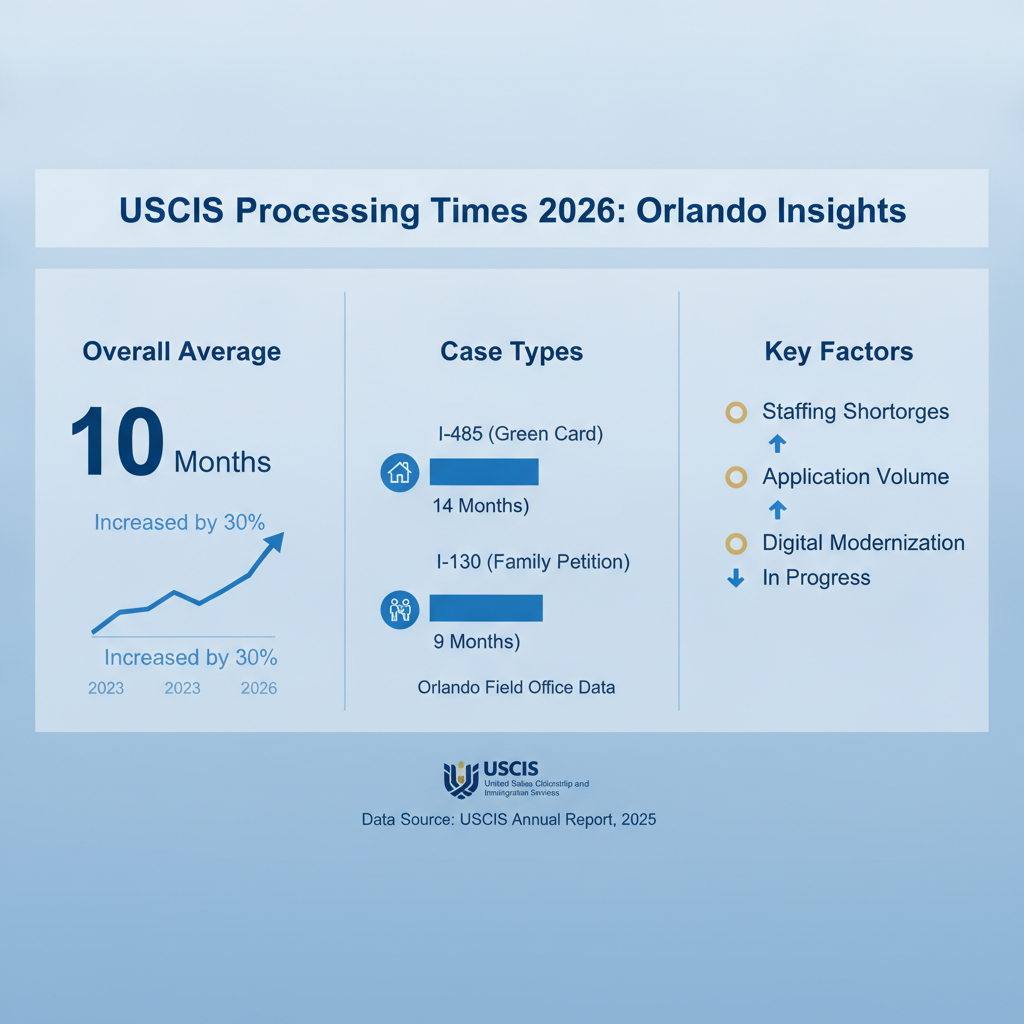
Our insights and the urgency of this topic are directly informed by ongoing reports and official communications from U.S. Citizenship and Immigration Services (USCIS) regarding their operational efficiency and updated processing metrics. Staying abreast of these announcements is crucial for anyone involved in an immigration case.
USCIS Processing Times and Updates for 2026 (USCIS)
What This News Means for Immigrants in Orlando and Across Florida
The continuous flow of information from USCIS regarding processing times is more than just administrative data; it's a lifeline for thousands of individuals and families. For those living in Orlando, Central Florida, and indeed, across the entire state, these updates directly impact their lives, their livelihoods, and their dreams.
Why this news is showing up now
USCIS is a dynamic agency, constantly working to manage an immense caseload, adapt to new policies, and implement technological improvements. Processing times are not static; they are a reflection of various factors:
- Caseload Volume: The sheer number of applications received significantly impacts how long it takes to process each one. A surge in filings for specific forms can lead to longer waits.
- Resource Allocation: USCIS's ability to hire and retain staff, allocate budget, and upgrade systems directly affects efficiency. Efforts to reduce backlogs often involve shifting resources, which can impact different application types unevenly.
- Policy Changes: New immigration policies, executive orders, or legislative changes can introduce new requirements, necessitate retraining of officers, or alter processing procedures, leading to temporary adjustments in timelines.
- Technological Modernization: USCIS continues to invest in digitizing processes and improving online tools. While intended to speed things up long-term, implementation phases can sometimes cause short-term fluctuations.
- National Security & Public Safety Mandates: Enhanced vetting procedures, while critical, can add layers of review that extend processing durations for certain cases.
The updates we're seeing now in 2026 are part of USCIS's ongoing commitment to transparency and its continuous effort to manage its workload effectively, often with a stated goal of reducing backlogs to pre-pandemic levels or even better. These regular reports help the public understand the current operational reality.
How it can affect Florida residents
Florida, a vibrant and diverse state, is home to a significant immigrant population. The impact of USCIS processing times here is particularly pronounced:
- Local Field Office Impact: The Orlando USCIS Field Office, along with others in Florida (like Miami and Tampa), handles a large volume of interviews and local adjustments of status. Fluctuations in national processing times inevitably trickle down to these local offices, affecting wait times for interviews and decisions for Central Florida residents. If your case is in Orlando, understanding these local variations is key.
- Economic and Social Planning: Delays can affect an immigrant's ability to work, travel, or obtain certain state-issued benefits (like a driver's license in some cases, although federal immigration status is paramount). For families, it means prolonged separation or uncertainty about when loved ones can legally join them in the U.S. This directly impacts those along the I-4 corridor who might be waiting on employment authorization or a Green Card.
- Community Anxiety: Prolonged waits can cause significant stress for individuals and families, impacting mental health and financial stability. Knowing what to expect, even if it's a long wait, can help manage anxiety.
- Increased Demand for Legal Services: When processing times become lengthy or confusing, the need for expert legal guidance from firms like Imigrar in Orlando often increases. We help decipher complex updates and advocate for our clients.
For Central Florida residents, especially those in Orange County, understanding these updates is not just about a date on a calendar; it's about making informed decisions about jobs, education, housing, and family reunification. Imigrar is here to help you navigate these nuances.
Need Help? Our Orlando immigration team is ready to assist. Call +1 786-791-3106 for a free consultation, or message us online. Se Habla Español.
What USCIS Processing Times Are (and Why They Matter)
When you submit an application to U.S. Citizenship and Immigration Services, one of the first questions that comes to mind is, "How long will this take?" The answer lies in understanding USCIS processing times. These times are critical because they dictate the pace of your immigration journey, impacting everything from your ability to work to your eligibility for a Green Card or U.S. citizenship.
A plain-English definition
In simple terms, USCIS processing times represent the estimated period it takes for USCIS to process a specific form or application from the date they receive it until they make a final decision. These are not exact deadlines but rather historical averages based on the completion of similar cases over a recent period. They are published by USCIS to provide applicants with a general expectation.
It's important to understand that these times can fluctuate significantly based on various factors, including the type of application, the specific USCIS service center or field office handling the case, the completeness of the application, and the current workload of the agency. A case might be completed faster or slower than the posted average, but the posted times offer the best available guidance.
Key terms you need to know
To accurately interpret and manage your expectations regarding USCIS processing times, it's crucial to understand a few key terms:
- Processing Time: This is the estimated range of time (e.g., 10 to 14 months) that USCIS expects to take to process a particular form from the date of receipt to a final decision. You can check these times for various forms at the USCIS Processing Times page.
- Receipt Date: This is the exact date USCIS officially received your application. It's usually noted on the receipt notice (Form I-797C, Notice of Action) you receive after filing. Your processing time countdown begins from this date.
- Priority Date: Primarily relevant for family-sponsored and employment-based Green Card categories that are subject to annual numerical limits. The Priority Date is the date your petition (e.g., Form I-130 for family, Form I-140 for employment) was properly filed with USCIS. This date determines your place in line for a visa. For your Green Card application (Form I-485 or consular processing), your Priority Date must be "current" according to the monthly Visa Bulletin issued by the U.S. Department of State.
- Current for Filing: The Visa Bulletin often has two charts for preference categories: "Dates for Filing Applications" and "Final Action Dates." If your Priority Date is "current for filing," it means you can submit your Green Card application (Form I-485) even if a final visa isn't immediately available.
- Adjustment of Status (AOS): This refers to the process of applying for a Green Card (permanent residency) from within the United States. It typically involves filing Form I-485, Application to Register Permanent Residence or Adjust Status.
- Consular Processing: This is the alternative to AOS, where you apply for your Green Card through a U.S. embassy or consulate in your home country. This process is managed by the U.S. Department of State.
- Request for Evidence (RFE): A common occurrence where USCIS determines that your initial application lacks necessary documentation or information. They will issue an RFE asking for specific evidence. Responding promptly and accurately within the given deadline (often a 90-day window) is crucial to avoid delays or denial.
- Notice of Intent to Deny (NOID): A more serious notice indicating that USCIS intends to deny your application unless you provide compelling evidence to overcome their concerns. This requires immediate and strategic action, often with legal counsel.
- Case Status Online: USCIS provides an online tool where you can check the status of your application by entering your 13-character receipt number. This is an excellent way to track progress.
Understanding these terms empowers you to better track your case, prepare for potential requests, and manage the waiting period. While processing times are estimates, they serve as a vital guide for all immigrants, especially those in Florida, planning their futures.
Current Immigration Law: The Foundation
All immigration processes, including the determination of processing times, are rooted in federal law. The cornerstone of U.S. immigration is the **Immigration and Nationality Act (INA)**, a comprehensive body of law that governs who can enter, reside, and become a citizen of the United States. Understanding the relevant sections of the INA provides context for why certain applications exist and what foundational requirements they entail.
Federal requirements
The INA outlines the various pathways to legal immigration, primarily categorized into family-based, employment-based, humanitarian, and diversity visa programs. Each category has specific eligibility criteria and requirements that must be met, regardless of where in the U.S. you reside.
- Family-Based Immigration (INA § 201, 203): This is one of the most common pathways. U.S. citizens and Lawful Permanent Residents (LPRs) can petition for certain eligible family members.
- Immediate Relatives (INA § 201(b)): Spouses, unmarried children under 21, and parents of U.S. citizens. These categories are not subject to annual numerical limits, meaning there's no Priority Date backlog, though processing still takes time. The primary form is Form I-130, Petition for Alien Relative.
- Family Preference Categories (INA § 203(a)): Adult children of U.S. citizens, spouses and unmarried children of LPRs, and siblings of U.S. citizens. These categories are numerically limited, meaning applicants must wait for their Priority Date to become current according to the Visa Bulletin.
- Employment-Based Immigration (INA § 203(b)): Various categories for workers with specific skills or investments, also subject to annual numerical limits. Common forms include Form I-140, Immigrant Petition for Alien Worker.
- Adjustment of Status (INA § 245): Allows eligible individuals already present in the U.S. to apply for a Green Card without leaving the country. Key requirements often include lawful entry and a currently available visa (if applicable). The main application is Form I-485, Application to Register Permanent Residence or Adjust Status.
- Naturalization (INA § 316, 319): The process by which eligible LPRs can become U.S. citizens, typically requiring 5 years of permanent residency (3 years if married to a U.S. citizen), continuous residence, physical presence, and good moral character. The application is Form N-400, Application for Naturalization.
All applications must adhere to strict guidelines, including providing accurate information, submitting all required documentation, and paying the correct filing fees. The USCIS official website is the primary source for all forms, instructions, and policy manuals.
Florida-specific considerations
While immigration law is federal, certain state-level considerations can indirectly affect immigrants in Florida:
- Local USCIS Field Offices: The Orlando USCIS Field Office and others across Florida process local interviews for Green Card applications (Form I-485), naturalization applications (Form N-400), and other local services. Their specific caseloads and operational efficiencies can influence local processing times, even within national averages.
- State ID and Driver's Licenses: Florida's Department of Highway Safety and Motor Vehicles (FLHSMV) has specific requirements for immigrants seeking state identification or driver's licenses, which often depend on valid federal immigration status and documentation. Delays in federal processing can therefore delay access to these state services.
- Notario Fraud Prevention: Florida has laws designed to protect immigrants from unauthorized practice of law by "notarios" who falsely claim to be attorneys. Imigrar is a licensed law firm, ensuring you receive legitimate and expert advice.
- Access to Services: For Central Florida residents, particularly in Orange County, local resources and non-profit organizations often work in conjunction with federal immigration processes. Awareness of state and local support networks can be beneficial.
It's crucial for immigrants in Florida to understand that while state laws govern many aspects of daily life, federal law always dictates immigration status. Any discrepancies or confusion should prompt immediate consultation with a qualified immigration attorney.
Reminder: Always refer to the official USCIS Forms page for the most current versions of forms and instructions. Using outdated forms is a common mistake that leads to denials or delays.
Navigating Complex Immigration Laws? Imigrar has the expertise you need. Call +1 786-791-3106 for a free consultation to discuss your specific case. Se Habla Español.

How to Navigate USCIS Processing Times: A Complete Step-by-Step Guide
Understanding and proactively managing your immigration case in light of USCIS processing times is paramount. This guide outlines the essential steps to stay informed, prepare effectively, and act strategically throughout your application journey.
1) Understand Your Application Type and Category
Before you even check processing times, you must clearly identify the specific USCIS form you have filed or intend to file, and the immigration category it falls under. This is the foundation for everything else.
- Identify Your Form: Are you filing Form I-130 (family petition), Form I-485 (Green Card application), Form I-765 (work permit), Form I-131 (travel document), or Form N-400 (naturalization)?
- Determine Your Category: For family-based petitions, are you an "immediate relative" (spouse, unmarried child under 21, or parent of a U.S. citizen) or in a "family preference" category (e.g., F1, F2A, F2B, F3, F4)? For employment-based, which preference category (EB-1, EB-2, EB-3, etc.)? This distinction is crucial because immediate relatives are not subject to visa backlogs, while preference categories are, meaning your Priority Date will factor heavily into your wait time.
- Note Your Filing Location: Did you send your application to a USCIS Service Center (e.g., California, Nebraska, Texas, Vermont) or does your case involve a local Field Office (like the Orlando USCIS Field Office for interviews)? Processing times vary by location.
Required Documents (for identification):
- Your copy of the filed application form.
- Form I-797C, Notice of Action (Receipt Notice) from USCIS.
- Any previous notices or correspondence from USCIS.
2) Locate Your Current Processing Time
Once you know your form type and filing location, you can check the official USCIS website for current processing estimates.
- Visit the Official Page: Go to the USCIS Processing Times page.
- Select Your Form: Choose your specific form number from the dropdown menu.
- Select Your Field Office or Service Center: Based on where your application was sent or where your interview will be held. For Orlando residents, this might be the Orlando Field Office for some applications, or one of the Service Centers for others.
- Interpret the Results: USCIS provides a range (e.g., "10.5 Months to 14.5 Months"). This indicates the time it took to process 80% of completed cases over the past six months. Your case might fall within, below, or above this range.
Important: These times are estimates. Do not mistake them for guarantees or exact deadlines. They are a guide to help manage expectations.
3) Monitor Your Case Status Online
In addition to checking general processing times, you can track the specific status of your individual case online.
- Use Your Receipt Number: Locate the 13-character receipt number on your Form I-797C, Notice of Action. It usually starts with three letters (e.g., "EAC," "WAC," "LIN," "SRC," "MSC," or "IOE").
- Access the Tool: Go to the USCIS Case Status Online tool and enter your receipt number.
- Review Updates: The system will show you the latest action taken on your case (e.g., "Case Was Received," "Biometrics Appointment Was Scheduled," "Request for Evidence Was Sent," "New Card Is Being Produced").
- Sign Up for Alerts: You can also create a USCIS online account to receive email and text notifications about changes to your case status. This is highly recommended for all applicants, including those in Central Florida.
Required Documents:
- Your Form I-797C, Notice of Action with your receipt number.
4) Respond Promptly to USCIS Requests
One of the most critical steps to avoid unnecessary delays is to respond quickly and accurately to any requests from USCIS.
- Request for Evidence (RFE): If you receive an RFE, it means USCIS needs more information or documentation to make a decision. The RFE will specify exactly what is needed and provide a deadline (often a 90-day window). Gather all requested documents carefully.
- Notice of Intent to Deny (NOID): A NOID is more serious and indicates USCIS plans to deny your case. You will have a limited time to respond with strong evidence to overcome their concerns. Seek legal counsel immediately if you receive a NOID.
- Interview Notices: For Green Card (Form I-485) and naturalization (Form N-400) applications, an interview is often required. Prepare thoroughly, gather all original documents, and attend on time. For Orlando residents, this will likely be at the Orlando USCIS Field Office.
Required Documents (for responding to an RFE/NOID):
- The original RFE or NOID letter.
- All documents specifically requested in the RFE/NOID.
- A cover letter detailing the enclosed documents.
- Copies of your original application and previously submitted evidence.
5) Know When and How to Make an Inquiry (e-Request)
If your case is taking longer than the posted processing times, you may be able to make an inquiry.
- Check "Outside Normal Processing Times": Before making an inquiry, use the USCIS Processing Times tool to confirm that your case is indeed "outside normal processing times." The tool will tell you the earliest date you can make an inquiry.
- Submit an e-Request: If eligible, you can submit an online "e-Request" for cases outside normal processing times. This is often the fastest way to get an update.
- Contact USCIS: If the e-Request does not yield results or if your situation is complex, you can call the USCIS Contact Center. Be prepared to provide your receipt number and details of your case.
- Congressional Inquiry: In cases of extreme and documented delays, or if you have a compelling humanitarian reason, an inquiry through your congressional representative's office might be an option.
Warning: Do not make inquiries prematurely. USCIS will not


