


At Imigrar, we understand that waiting for an immigration application to be processed can be one of the most stressful periods in an immigrant's journey. The U.S. Citizenship and Immigration Services (USCIS) is continually working to improve efficiency, but understanding their processing times and how they impact your case is crucial. As we move through 2026, staying informed about the latest updates is more important than ever.
The reporting that sparked this guide:
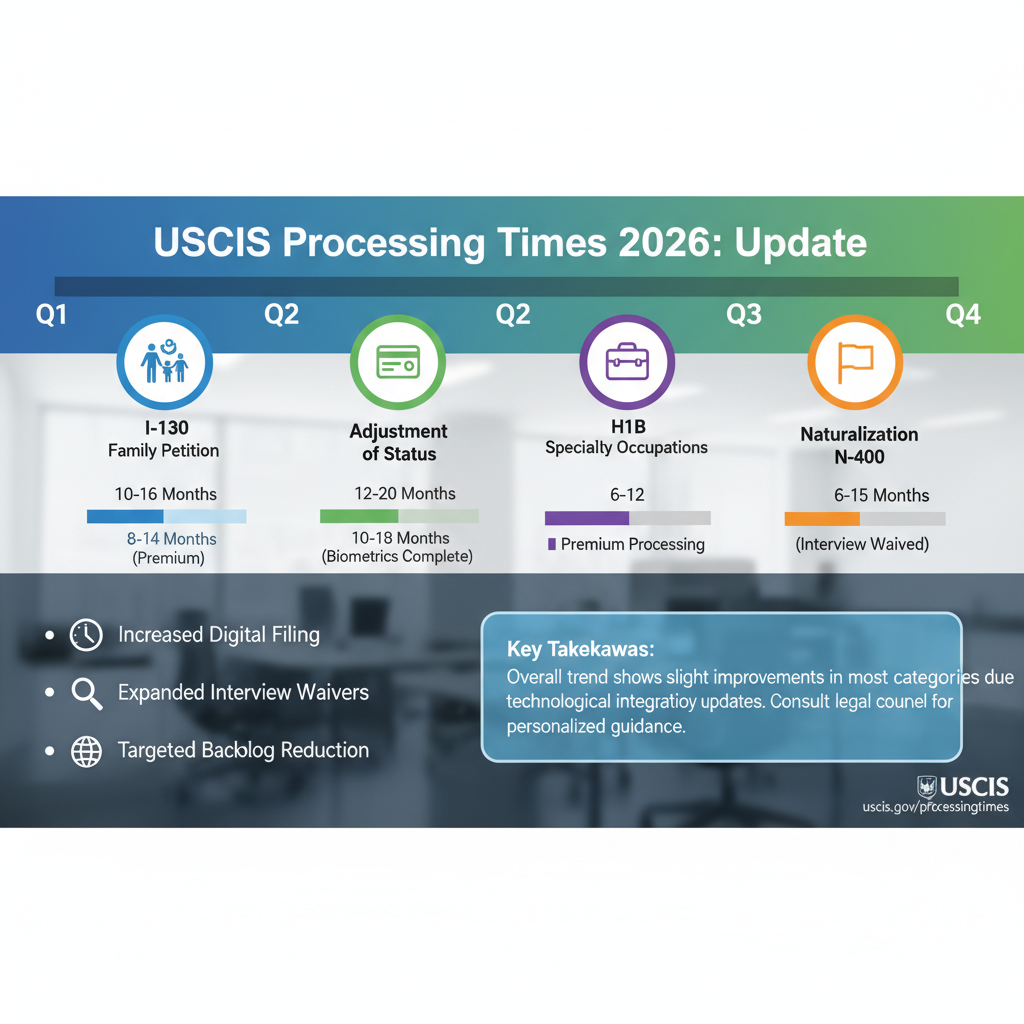
USCIS Processing Times and Updates for 2026 (USCIS)
What This News Means for Immigrants in Orlando and Across Florida
The constant evolution of USCIS processing times is a topic of paramount importance for anyone navigating the U.S. immigration system. For immigrants residing in Orlando, Central Florida, and indeed across the entire nation, these updates directly impact family reunification, employment opportunities, and the path to permanent residency or citizenship.
Why this news is showing up now
In 2026, the discussion around USCIS processing times continues to be a prominent one due to several factors. Following the significant backlogs experienced in prior years, USCIS has been under continuous pressure to enhance operational efficiency, reduce processing delays, and provide more transparent and predictable timelines. This involves a combination of technological upgrades, staffing adjustments, and policy recalibrations aimed at streamlining the adjudication process. The ongoing efforts to digitize records, expand online filing options, and improve communication channels are all part of this drive. Therefore, news related to "USCIS Processing Times and Updates for 2026" reflects the agency's commitment, and the public's keen interest, in seeing these improvements materialize and understanding their practical implications. These updates are not singular events but rather a continuous stream of information reflecting the dynamic nature of immigration caseloads and administrative responses.
How it can affect Florida residents
For individuals and families living in Florida, particularly in a vibrant and diverse hub like Orlando and the surrounding Orange County, these processing time updates carry specific weight. Florida is home to a vast immigrant population, with many families pursuing various immigration benefits, from green cards to naturalization. The efficiency of USCIS processing directly impacts:
- Family Reunification: Longer processing times for petitions like Form I-130 (Petition for Alien Relative) mean families are separated for extended periods, directly contradicting Imigrar's mission to "Keep Families Together."
- Economic Stability: Delays in processing Form I-765 (Application for Employment Authorization) or employment-based green cards can prevent individuals from working legally, affecting their ability to support themselves and their families along the I-4 corridor and throughout the state.
- Uncertainty and Stress: Prolonged waits create immense psychological stress and uncertainty, making long-term planning difficult for residents across Central Florida.
- Local USCIS Field Office Impact: The Orlando USCIS Field Office handles a significant volume of interviews and local adjudications. Changes in national processing priorities or resource allocation can directly affect how quickly cases are processed locally.
Understanding these updates allows Florida residents to better plan their lives, prepare for potential delays, and strategically navigate the immigration system. It also underscores the critical need for experienced legal guidance.
Need Help Navigating USCIS Processing Times? Our Orlando immigration team is ready to assist. Don't face the complexities alone. Call +1 786-791-3106 for a free consultation, or message us online. Se Habla Español.
What USCIS Processing Times Are (and Why It Matters)
USCIS processing times are a critical metric for anyone with an active immigration application. They represent the estimated period USCIS expects to take to process a specific form at a particular service center or field office. Understanding these times is essential for managing expectations, planning your life, and knowing when it's appropriate to take action, such as submitting an inquiry.
A plain-English definition
Simply put, USCIS processing times tell you how long it might take for your immigration application to be approved or denied. When you submit a form to USCIS, it enters a queue. The processing time displayed on the USCIS website is an estimate of how long it takes for the majority of similar cases to be completed. It's usually presented as a range (e.g., 10.5 to 14 months) or as the time it takes to process 80% of cases. These times are not fixed guarantees but rather historical averages that are updated monthly or quarterly. They can fluctuate based on the volume of applications, staffing levels, policy changes, and the complexity of individual cases.
Important: Your individual case might take more or less time than the published estimates due to unique factors, such as requests for additional evidence (RFEs), interview scheduling, or background checks.
Key terms you need to know
To effectively understand and track your application, familiarize yourself with these essential terms:
- Receipt Date: This is the date USCIS officially received your application. It's crucial for determining your place in the processing queue. You'll find this on your Form I-797C, Notice of Action.
- Priority Date: For certain preference-based immigration categories (like family-sponsored or employment-based green cards), this is the date your petition (e.g., Form I-130 or Form I-140) was properly filed with USCIS. Your green card application (Form I-485) cannot be approved until your Priority Date becomes "current" according to the Visa Bulletin.
- Visa Bulletin: Published monthly by the U.S. Department of State, this bulletin indicates when a Priority Date becomes "current" for various visa categories and countries. It's vital for those applying for an immigrant visa or Adjustment of Status. You can find more information on the USCIS Visa Bulletin Information page.
- Current Date: When your Priority Date is earlier than the date listed for your category and country in the Visa Bulletin, your date is "current," meaning an immigrant visa number is available for you.
- Service Request: If your application is pending longer than the published processing times, you may be eligible to submit an inquiry to USCIS, known as a service request.
- Case Status Online: The USCIS online tool where you can enter your receipt number to check the latest status of your application. This is different from processing times, as it tells you the specific action taken on *your* case. Access it via the USCIS Case Status Online tool.
- Adjustment of Status (AOS): The process of applying for a green card while you are physically present in the United States (typically using Form I-485).
Current Immigration Law: The Foundation
Understanding USCIS processing times requires a foundational knowledge of the immigration laws and regulations that govern the adjudication process. While USCIS aims for efficiency, all its actions must align with federal statutes and established procedures. The primary legislative framework is the Immigration and Nationality Act (INA), which dictates who is eligible for various immigration benefits and the processes involved.
Federal requirements
The INA, along with regulations published in the Code of Federal Regulations (CFR), sets forth the eligibility criteria for different immigration benefits, the types of forms required, and the general procedural steps USCIS must follow. For instance:
- Statutory Deadlines: While many forms do not have strict statutory deadlines for adjudication, some do. For example, USCIS generally aims to adjudicate Form N-400 (Application for Naturalization) within a reasonable timeframe after an interview, though this can vary significantly.
- Adjudicative Discretion: For many applications, USCIS officers have a degree of discretion in their decisions, especially for benefits like waivers or certain humanitarian programs. This discretion must be exercised within legal bounds but can influence the depth and time spent reviewing a case.
- Background Checks: A mandatory part of almost all immigration applications involves security and background checks. These are conducted by various federal agencies and can sometimes be the primary cause of extended processing times, as USCIS must wait for these clearances.
- Form Requirements: Each USCIS form, such as Form I-130 (Petition for Alien Relative), Form I-485 (Application to Register Permanent Residence or Adjust Status), Form I-765 (Application for Employment Authorization), or Form I-131 (Application for Travel Document), has specific filing instructions and evidentiary requirements. Failure to adhere to these can lead to delays or denials. You can find all official forms on the USCIS Forms page.
- Interviews: Many applications, especially for green cards and naturalization, require an interview at a USCIS Field Office, such as the one in Orlando. Scheduling and conducting these interviews consume significant resources and time.
These federal requirements form the bedrock of the immigration process, and any updates to processing times are ultimately a reflection of how USCIS is managing these complex legal mandates.
Florida-specific considerations
While immigration law is federal, its application has local impacts. For Florida residents, especially those in Orlando and the Central Florida region, several considerations are worth noting:
- Orlando USCIS Field Office: The local field office plays a crucial role in conducting interviews for Adjustment of Status, naturalization, and other benefits. The workload and staffing levels at this office directly influence local processing times for these steps.
- Demographic Trends: Florida's diverse population means a high volume of various application types. For instance, family-based petitions are consistently high, as are applications from individuals seeking asylum or temporary protected status (TPS), depending on current global events.
- Legal Resources: The accessibility of qualified legal assistance in the Orlando area is vital. Navigating federal immigration law can be daunting, and having local attorneys familiar with the Orlando Field Office's procedures can be a significant advantage.
- State Legislation Impact: Although Florida does not have its own immigration laws, state legislation (e.g., related to professional licensing for immigrants or in-state tuition) can indirectly affect how immigrants plan their futures and thus the urgency or complexity of their federal immigration applications.
Staying informed about both federal requirements and local operational nuances is key to a successful immigration journey in Florida.
Confused by Immigration Law? Imigrar's legal experts in Orlando simplify complex regulations and guide you through every step. Call +1 786-791-3106 for your free consultation today. Se Habla Español.
How to Navigate USCIS Processing Times: A Complete Step-by-Step Guide
Effectively managing your immigration application involves proactive monitoring and understanding the USCIS system. Here’s a comprehensive step-by-step guide to help you navigate processing times, especially important in 2026 as USCIS continues its efficiency efforts.
1) Understand Your Application Type and Form
Before you even check processing times, you need to know exactly what you've filed. Different forms are processed by different USCIS Service Centers or Field Offices, and each has its own unique processing queue.
Action: Identify the specific USCIS form number (e.g., Form I-130, Form I-485, Form N-400, Form I-765) and the category under which you filed. Locate your Receipt Number on your Form I-797C, Notice of Action. This number typically starts with three letters (e.g., "EAC," "WAC," "LIN," "SRC," "MSC," or "IOE") followed by 10 digits.
- Required Documents (for initial filing reference):
- Copy of your filed application form.
- Copy of the Form I-797C, Notice of Action (Receipt Notice).
- Any correspondence received from USCIS.
2) Check Official USCIS Processing Times
This is your primary source of information for estimated wait times. USCIS updates these times regularly, often monthly, to reflect current workloads.
Action: Visit the official USCIS Processing Times webpage. Select your specific form number and the Service Center or Field Office that is processing your case. For many forms, the Service Center is determined by where you mailed your application. For interview-based cases (like Adjustment of Status or Naturalization), you'll also need to check the local Field Office, such as the Orlando USCIS Field Office.
- Understanding the Data:
- Receipt Date for a Case Inquiry: This date indicates when you can submit an inquiry if your case is taking longer than the published times.
- Ranges: Often, USCIS provides a range (e.g., "10.5 to 14 months") indicating the time it took to process 80% of cases within that type. Your case might fall within, below, or above this range.
- Case Type: Ensure you select the correct specific case type (e.g., "I-485, Application to Register Permanent Residence or Adjust Status, Family-Based").
Reminder: Processing times are estimates. They can change, and your individual case may vary. Always refer to the official USCIS website for the most current information.
3) Monitor Your Case Status Online
While processing times give you an average, the USCIS Case Status Online tool provides real-time updates specific to *your* application.
Action: Enter your 13-character Receipt Number into the online tool. You'll see the last action taken on your case, such as "Case Was Received," "Request for Evidence Sent," "Interview Was Scheduled," or "Card Was Produced." You can also sign up for email and text message notifications for updates.
- What to Look For:
- Any change in status, even minor ones.
- Notifications about RFEs (Request for Evidence) or NOIDs (Notice of Intent to Deny).
- Interview notices.
- Approval or denial notices.
4) Know When and How to Make an Inquiry (Service Request)
If your case falls outside the normal processing times, USCIS allows you to make an inquiry.
Action: First, ensure your Receipt Date is earlier than the "Receipt Date for a Case Inquiry" listed on the USCIS processing times page for your specific form and office. If it is, you can:
- Submit an E-Request Online: Use the USCIS website to submit a "Case Outside Normal Processing Times" inquiry.
- Call the USCIS Contact Center: You can call 1-800-375-5283 to speak with a representative. Have your Receipt Number and personal information ready.
- Infopass Appointment (Limited Availability): While largely replaced by online tools, for certain complex issues, an appointment at a local field office (like Orlando's) might be possible, though rare for general processing time inquiries.
Warning: Do not make an inquiry if your case is still within the published processing times. This can unnecessarily burden the system and may not yield a helpful response.
5) Prepare for Potential Interviews or RFEs
Even with processing delays, you should always be ready to respond quickly to USCIS requests.
Action:
- RFEs: If you receive a Request for Evidence, respond promptly and thoroughly. The RFE will specify a deadline (usually 30 to 90 days). Gather all requested documents carefully.
- Interviews: For cases requiring an interview (e.g., Form I-485, Form N-400), prepare all original documents, be ready to discuss your application in detail, and consider bringing an attorney. The Orlando USCIS Field Office is a common location for interviews for Central Florida residents.
- Required Documents for Interviews/RFEs (general examples):
- Originals of all documents submitted with your application (birth certificates, marriage certificates, passports, etc.).
- Any additional evidence requested in an RFE.
- Proof of identity and legal status.
- Medical exam results (if applicable, Form I-693).
- Tax returns, employment letters, financial statements.
6) Seek Legal Counsel from an Experienced Immigration Attorney
The immigration process is complex, and processing times are just one piece of the puzzle. An attorney can provide strategic advice, especially if your case is delayed or encounters issues.
Action: Consult with an immigration attorney from a reputable firm like Imigrar, especially if:
- Your case is significantly outside normal processing times.
- You receive an RFE or NOID (Notice of Intent to Deny).
- You have a complex case history or criminal record.
- You need help preparing for an interview at the Orlando USCIS Field Office.
An attorney can help you understand the nuances of your case, prepare inquiries, respond to USCIS requests, and represent you in interviews, ensuring you have the best possible chance for a positive outcome.
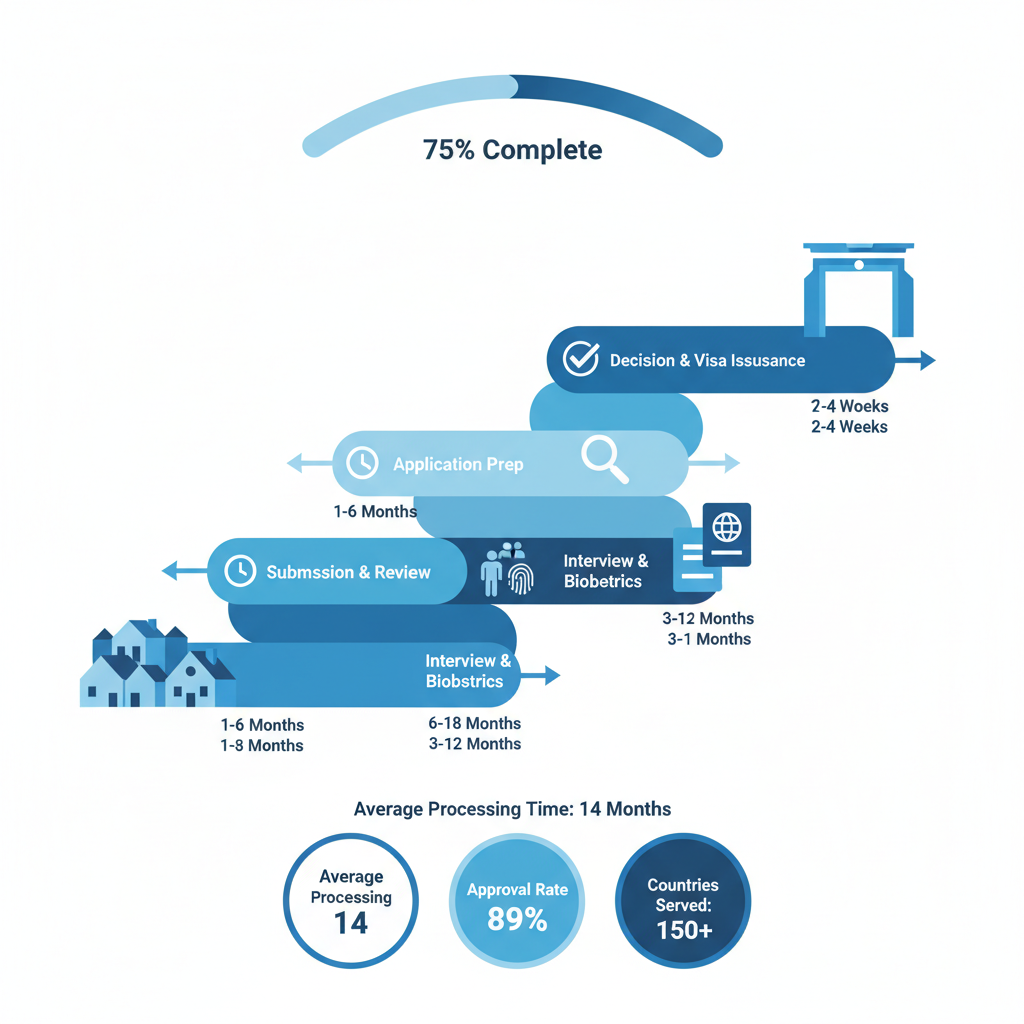
Practical Steps You Can Take Today
While you can't directly control USCIS processing times, you can take several proactive steps to minimize delays and manage your expectations. For immigrants in Orlando and nationwide, these actions can make a significant difference.
Here’s an actionable checklist:
- Organize and Digitize Your Documents: Create a well-organized system for all your immigration documents. Keep both physical and digital copies. This includes receipts, notices, correspondence, and all supporting evidence. This makes it easy to retrieve information if USCIS sends an RFE or schedules an interview.
- Keep Copies of Everything Submitted: Before mailing any application or response to USCIS, make a complete copy for your records. This includes the application form itself, all supporting documents, and the cover letter.
- Update Your Address Promptly: If you move, even within Orlando or to another city in Florida, you must update your address with USCIS within 10 days of moving. Use the USCIS Change of Address tool online. Failure to do so can result in missed notices, RFEs, or interview appointments, leading to significant delays or even denials.
- Monitor Your Case Status Regularly: Make it a habit to check your USCIS Case Status Online every few weeks. Also, regularly check the USCIS Processing Times for your specific form and service center/field office.
- Respond to USCIS Requests Immediately: If you receive a Request for Evidence (RFE) or a Notice of Intent to Deny (NOID), gather the requested information and respond well before the deadline. Delays in responding can lead to denials.
- Maintain Your Legal Status (If Applicable): If you are applying for Adjustment of Status while in the U.S., ensure you maintain your underlying nonimmigrant status until your green card is approved, if possible. Consult an attorney about maintaining status during long waits.
- Be Patient, but Vigilant: Immigration processing often involves long waits. While patience is necessary, vigilance in monitoring your case and responding to USCIS is equally important.
Document preparation guidance
- Clarity and Organization: Ensure all documents are clear, legible, and logically organized. Use cover sheets and tabs for different sections of evidence.
- Translations: Any document not in English must be accompanied by a complete and certified English translation.


