

The reporting that sparked this guide: USCIS Processing Times and Updates for 2026 (USCIS)
What This News Means for Immigrants in Orlando and Across Florida
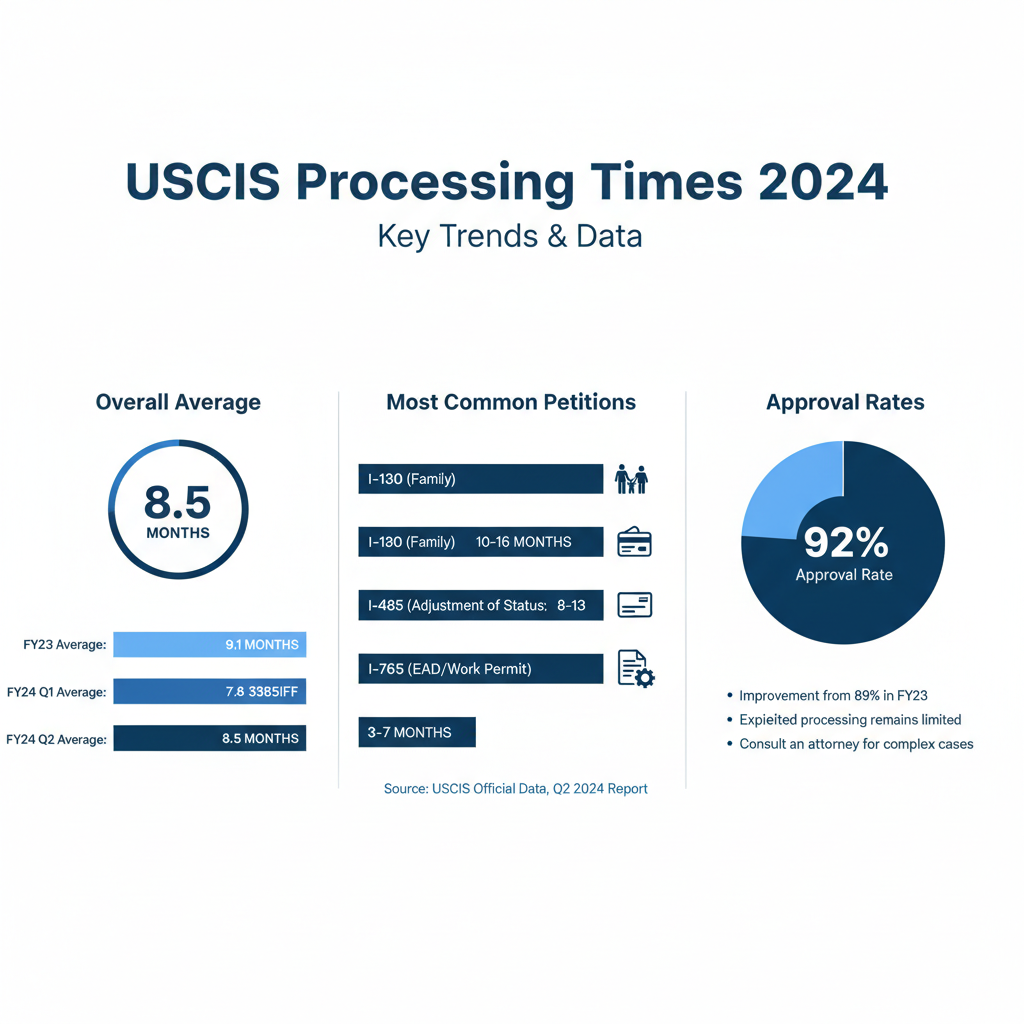
As of April 14, 2026, the United States Citizenship and Immigration Services (USCIS) continues to provide regular updates regarding the processing times for various immigration applications and petitions. For immigrants in Orlando, across Central Florida, and indeed nationwide, these updates are not just numbers; they are crucial indicators that directly impact your life plans, family reunification, and professional opportunities. At Imigrar, we understand the anxiety and uncertainty that come with waiting, and our mission is to provide clarity and steadfast support.
Why this news is showing up now
USCIS processing times are dynamic, constantly fluctuating due to a complex interplay of factors. These include:
- Caseload Volume: The sheer number of applications received directly impacts how long it takes to process them. Surges in filings for specific categories can create backlogs.
- Resource Allocation: The availability of USCIS officers, adjudicators, and support staff, as well as budget constraints, plays a significant role.
- Policy Changes: New immigration policies, executive orders, or regulatory adjustments can introduce new steps or change existing procedures, thereby affecting timelines.
- Technological Infrastructure: USCIS is continually working to modernize its systems, but transitions can sometimes lead to temporary delays or shifts in processing efficiency.
- Security Checks: Enhanced background and security checks, which are an integral part of the immigration process, can vary in duration and are often outside of USCIS's direct control.
- Global Events: Events like public health crises or international conflicts can disrupt operations, leading to temporary closures, reduced staffing, or changes in interview schedules, all of which impact processing.
The updates for 2026 reflect USCIS’s ongoing efforts to manage these variables and provide the public with the most current estimates. It’s a continuous process of adjustment and communication, aiming for transparency in an inherently complex system.
How it can affect Florida residents
For individuals and families in Orlando, Orange County, and throughout the I-4 corridor, these USCIS updates have very real and tangible effects:
- Planning Your Future: Longer processing times for applications like Form I-485 (Adjustment of Status) or Form N-400 (Application for Naturalization) mean extended periods of uncertainty regarding your ability to work, travel, or become a U.S. citizen.
- Family Reunification: Delays in processing Form I-130 (Petition for Alien Relative) can prolong the separation of families, a concern deeply felt by our clients, and one that resonates with Imigrar's tagline: "Keep Families Together."
- Employment Opportunities: For those awaiting Employment Authorization Documents (EADs) via Form I-765, extended processing times can mean significant delays in starting new jobs or continuing current employment legally.
- Travel Restrictions: Applicants for Adjustment of Status must be particularly cautious about international travel without an approved Advance Parole document (Form I-131), which itself is subject to processing delays.
- Local Field Office Impact: The Orlando USCIS Field Office, like others nationwide, manages a substantial caseload. Fluctuations in national processing times can also reflect specific backlogs or efficiencies at the local level for interview scheduling and certain application types.
- Economic Impact: Delays can have financial implications, requiring continued legal fees, prolonged uncertainty about income, and stress on household budgets.
Understanding these impacts is the first step toward navigating the system effectively. Imigrar is here to help you make sense of these updates and strategize for the best possible outcome.
Feeling overwhelmed by USCIS processing times? Our Orlando immigration team is ready to assist. Call +1 786-791-3106 for a free consultation, or message us online. Se Habla Español.
What USCIS Processing Times Are (and Why They Matter)
The phrase "USCIS processing times" is central to almost every immigration journey, yet its precise meaning and implications are often misunderstood. It’s more than just a waiting period; it’s a critical element that shapes the lives of countless individuals and families.
A plain-English definition
Simply put, USCIS processing times refer to the estimated duration it takes for the United States Citizenship and Immigration Services to process an application or petition from the moment it’s received until a final decision is made. These times are usually displayed as a range (e.g., "10 to 14 months") and are specific to the type of form and the particular USCIS service center or field office handling the case. They are estimates, not guarantees, and can change frequently.
It's important to differentiate between the time USCIS takes to process a case and the time it takes for a visa number to become available through the Visa Bulletin. While processing times dictate how long USCIS takes to adjudicate a petition, the Visa Bulletin (issued monthly by the U.S. Department of State) determines when an immigrant visa number is actually available for certain categories, based on annual numerical limits set by Congress. Both must be "current" for a green card to be issued to many family-based and employment-based applicants.
Key terms you need to know
Navigating USCIS processing times requires understanding a few key terms:
- Receipt Date: This is the date USCIS officially receives your application or petition. It’s typically stamped on your Form I-797C, Notice of Action, and is the starting point for calculating your processing time.
- Priority Date: For certain visa categories (primarily family-sponsored and employment-based), the Priority Date is the date USCIS receives your petition (e.g., Form I-130 or Form I-140). This date determines your place in the visa queue and is critical for tracking visa availability through the Visa Bulletin. Your priority date must be "current" for your Adjustment of Status or immigrant visa application to proceed to final adjudication.
- Case Status: This refers to the current stage of your application, which you can check online using your Receipt Number. Status updates range from "Case Was Received" to "New Card Is Being Produced" or "Decision Was Mailed."
- Processing Time Range: The estimated duration provided by USCIS for a specific form at a particular service center or field office. It's usually based on historical data of how long it took to complete 80% of similar cases.
- Case Inquiry Date: If your Receipt Date is older than the published Case Inquiry Date for your application type, it means your case is outside of normal processing times, and you may be eligible to submit an inquiry to USCIS.
- Adjustment of Status (AOS): The process by which an eligible foreign national already in the United States can apply for lawful permanent resident status (a Green Card) without having to return to their home country to complete visa processing. This typically involves filing Form I-485.
- Consular Processing: The process by which an eligible foreign national outside the United States applies for an immigrant visa at a U.S. embassy or consulate in their home country.
- Request for Evidence (RFE): A notice from USCIS requesting additional documents or information to support your application. Responding promptly and thoroughly is crucial to avoid further delays.
- Notice of Intent to Deny (NOID): A notice from USCIS indicating that they intend to deny your application unless you provide additional information or explanation within a specified timeframe. This is a serious notice and requires immediate attention.
Understanding these terms empowers you to track your application more effectively and anticipate potential hurdles. For residents of Orlando and Central Florida, knowing these distinctions can significantly reduce stress and improve planning.
Current Immigration Law: The Foundation for Processing Times
USCIS processing times are not arbitrary; they are governed by a complex framework of federal immigration laws and regulations. The administrative burden of adhering to these laws, conducting thorough background checks, and ensuring fairness for all applicants inherently contributes to the time it takes to process applications.
Federal requirements
The bedrock of U.S. immigration law is the Immigration and Nationality Act (INA). This comprehensive statute dictates who is eligible for various immigration benefits, the procedures for applying, and the criteria for approval or denial. Key sections of the INA that heavily influence processing times include:
- INA Section 201 and 203: These sections establish the numerical limitations and preference categories for family-sponsored and employment-based immigrant visas. The annual quotas and per-country limits lead to backlogs, especially for categories with high demand, as reflected in the Visa Bulletin. USCIS must wait for a visa number to become available (i.e., your Priority Date to become current) before it can finalize many green card applications.
- INA Section 245: This section governs Adjustment of Status. It outlines the eligibility requirements for individuals physically present in the U.S. to obtain lawful permanent resident status. The extensive vetting process, including interviews, medical exams, and background checks, contributes significantly to processing times for Form I-485.
- INA Section 316: This section details the requirements for naturalization, including continuous residence, physical presence, good moral character, and knowledge of U.S. history and government. The processing of Form N-400 involves interviews, background checks, and oath ceremonies, all of which contribute to the overall timeline.
- Admissibility and Grounds of Inadmissibility: Throughout the process, USCIS must determine if an applicant is admissible to the U.S. under INA Sections 212 and 237. These sections list various grounds of inadmissibility (e.g., health, criminal, security, public charge) that require careful review and can lead to RFEs or delays if issues arise.
Every application, from a simple petition to a complex adjustment of status, must adhere to these federal mandates. The need for meticulous review, fraud detection, and national security screenings means that certain processing steps cannot be rushed.
For more detailed information on specific laws and regulations, always refer to the USCIS official website.
Florida-specific considerations
While federal law applies uniformly across the nation, specific local factors can influence the experience of Florida residents:
- Orlando USCIS Field Office: This office serves a large and diverse immigrant population in Central Florida. The volume and complexity of cases handled here can impact local interview schedules and the processing of applications that require local adjudication (e.g., Form I-485 interviews, Form N-400 interviews).
- Demographic Trends: Florida has a significant population of immigrants from various countries, leading to a high volume of family-based petitions (Form I-130) and Adjustment of Status applications. This demand can put pressure on processing resources.
- Community Resources: The availability of local non-profit organizations and legal services, alongside firms like Imigrar, helps process applications correctly the first time, potentially preventing delays caused by errors.
- State-Level Policies (Indirect Impact): While Florida state laws don't directly control USCIS processing, state-level discussions and policies related to immigration can sometimes influence federal resource allocation or public perception, indirectly affecting the environment in which immigration processes occur.
Understanding these local nuances, combined with federal requirements, is key to developing a robust immigration strategy. Our Orlando-based team at Imigrar is intimately familiar with the local context and how it intertwines with federal immigration processes.
Worried about your application's timeline? Get expert guidance. Call Imigrar at +1 786-791-3106 for a free consultation. We serve clients nationwide and are right here in Orlando. Se Habla Español.

How to Track Your USCIS Case: A Complete Step-by-Step Guide
Staying informed about your immigration case status and understanding USCIS processing times is paramount. This guide will walk you through the essential steps to monitor your application effectively.
1) Understand Your Application Type and Relevant Forms
Before you can track your case, you need to know exactly what you’ve filed. Different forms have different processing paths and typical timelines. Common forms include:
- Form I-130, Petition for Alien Relative: Filed by a U.S. citizen or lawful permanent resident to establish a relationship with an eligible foreign national who wishes to immigrate to the U.S.
- Form I-485, Application to Register Permanent Residence or Adjust Status: Filed by an eligible foreign national already in the U.S. to become a lawful permanent resident.
- Form I-765, Application for Employment Authorization: Filed by foreign nationals seeking permission to work in the U.S. (often filed concurrently with Form I-485).
- Form I-131, Application for Travel Document: Filed by foreign nationals to obtain a Reentry Permit, Refugee Travel Document, or Advance Parole (often filed concurrently with Form I-485).
- Form N-400, Application for Naturalization: Filed by lawful permanent residents to become U.S. citizens.
Required Documents:
- Your copy of the submitted application/petition form.
- The Form I-797C, Notice of Action, received from USCIS after filing.
2) Locate Your Receipt Number
Your Receipt Number is a unique 13-character identifier assigned to your case by USCIS. It typically starts with three letters (e.g., EAC, WAC, LIN, SRC, MSC, IOE) followed by 10 numbers. This number is essential for checking your case status online and making inquiries.
Where to find it:
- On your Form I-797C, Notice of Action (Receipt Notice), which USCIS mails to you a few weeks after receiving your application.
- Important: Keep this notice in a safe place. It is your primary reference for all communication with USCIS.
3) Utilize the USCIS Online Tools
USCIS provides two primary online tools for tracking your case and checking processing times:
a. Check Your Case Status Online:
- Go to the USCIS Case Status Online page.
- Enter your 13-character Receipt Number in the designated field.
- Click "Check Status."
This tool will provide you with the most recent update on your specific case, such as "Case Was Received," "Request for Evidence Sent," "Interview Was Scheduled," or "New Card Is Being Produced."
b. Check Processing Times:
- Visit the USCIS Processing Times page.
- Select your "Form" from the dropdown menu (e.g., I-130, I-485).
- Select your "Form Category" (e.g., Petition for Relative, Adjustment of Status).
- Select the "Field Office or Service Center" that is processing your case. This information is typically found on your Form I-797C. For many Florida residents, the Orlando Field Office will be relevant for interviews, while service centers (e.g., Nebraska, Texas, Potomac, California, Vermont) handle initial processing for many petitions.
- Click "Get Processing Time."
The page will then display the estimated processing time range and the "Case Inquiry Date."
Required Information for Online Tools:
- Your 13-character Receipt Number.
- The specific USCIS form number and category.
- The USCIS service center or field office handling your case.
4) Interpret Processing Times and the Visa Bulletin
Understanding the numbers is critical:
- Processing Time Range: This is an estimate. If the range is "10 to 14 months," it means 80% of cases like yours are processed within that timeframe. Some may be faster, some slower.
- Case Inquiry Date: If your Receipt Date is *before* the published Case Inquiry Date, your case is considered "outside of normal processing times." This is your cue to take further action.
- Visa Bulletin (for Preference Categories): For family-sponsored and employment-based categories with annual numerical limits, you must also monitor the Visa Bulletin. Your Priority Date must be "current" in the final action dates chart for your category and country of chargeability before USCIS can finalize your Adjustment of Status application or before an immigrant visa can be issued abroad.
Reminder: The Visa Bulletin has two charts: "Dates for Filing" and "Final Action Dates." Most applicants can only file their Form I-485 when their priority date is current under the "Dates for Filing" chart, but the green card cannot be approved until their priority date is current under the "Final Action Dates" chart.
5) What to Do if Your Case is Outside Normal Processing Times
If your Receipt Date is older than the Case Inquiry Date listed for your application:
- Submit an e-Request: You can file an "Outside Normal Processing Time" inquiry online through the USCIS website. You will need your Receipt Number and basic case information.
- Contact USCIS by Phone: You can call the USCIS Contact Center at 1-800-375-5283. Be prepared to provide your Receipt Number and details about your application.
- Seek Congressional Assistance: In some cases, contacting your U.S. Representative or Senator's office for assistance can be helpful, especially if you face extreme delays or unresponsive communication from USCIS.
- Consult an Immigration Attorney: This is often the most effective step. An attorney can review your case, determine if an inquiry is appropriate, draft a compelling inquiry, and follow up with USCIS on your behalf. They can also assess if any other legal remedies are available.
Required Information for Inquiry:
- Your Receipt Number.
- The type of application/petition.
- Your name and contact information.
- The date your application was filed (Receipt Date).
6) Prepare for Interviews and RFEs
Even with long processing times, you must be ready to respond quickly to USCIS requests:
- Requests for Evidence (RFEs): If USCIS needs more information, they will


