

The journey through the U.S. immigration system can often feel like navigating a complex maze, with one of the most significant challenges being the unpredictable nature of application processing times. For immigrants and their families in Orlando, across Florida, and nationwide, understanding these timelines is crucial for planning futures, managing expectations, and ensuring compliance.
Today, 2026-08-28, we're diving deep into the latest USCIS processing time updates and what they mean for you. At Imigrar, our mission is to Keep Families Together, and providing clear, actionable information is a cornerstone of that commitment. We understand the anxiety and uncertainty that come with waiting, and we’re here to demystify the process.
Need Help Navigating USCIS Processing? Don't face the waiting game alone. Our experienced Orlando immigration team at Imigrar is ready to assist. Call +1 786-791-3106 for a free consultation, or message us online. Se Habla Español.
The reporting that sparked this guide
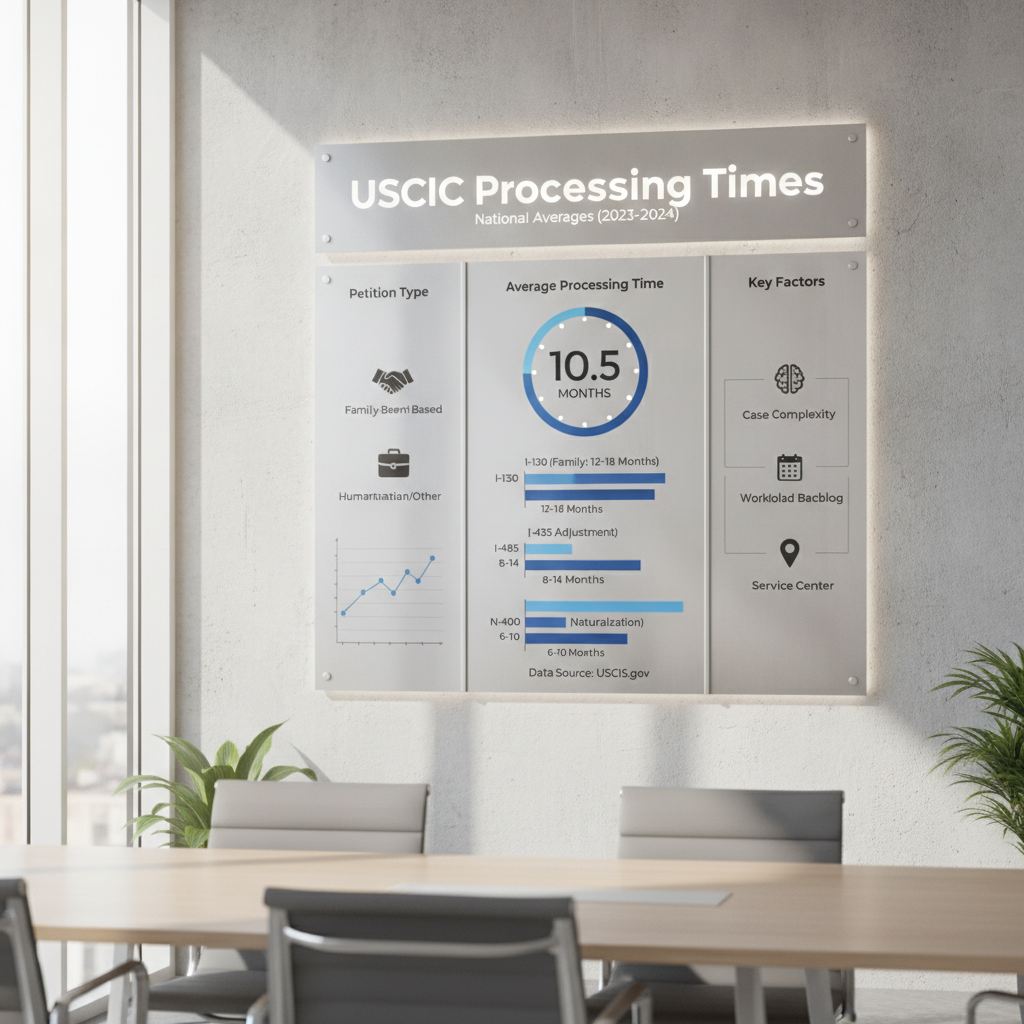
Our insights are informed by the latest updates from official sources, reflecting the dynamic nature of U.S. Citizenship and Immigration Services (USCIS) operations. The agency frequently adjusts its processing time estimates based on caseloads, staffing, and policy changes. Staying informed directly from the source is paramount:
USCIS Processing Times and Updates for 2026 (USCIS)
What This News Means for Immigrants in Orlando and Across Florida
The U.S. immigration system is a constantly evolving landscape. For those with pending applications, or those considering filing, the latest updates regarding USCIS processing times for 2026 are not just statistics – they are pivotal factors shaping lives and futures. These changes can impact everything from employment authorization to family reunification.
Why this news is showing up now
USCIS processing times are not static; they are dynamic estimates influenced by a multitude of factors. In 2026, we continue to see the effects of several ongoing trends and new developments:
- Caseload Fluctuations: The sheer volume of applications received by USCIS for various forms, from family petitions (Form I-130) to naturalization (Form N-400), directly impacts how long it takes to process each one. Spikes in certain application types can lead to longer waits.
- Staffing and Resources: USCIS's ability to process cases efficiently is heavily dependent on its workforce and technological infrastructure. Congressional funding, hiring initiatives, and advancements in digital processing capabilities can either alleviate or exacerbate backlogs.
- Policy Changes and Priorities: Administrative policy shifts can re-prioritize certain case types, temporarily speeding up some while slowing down others. For instance, a focus on border security might divert resources from family-based green card processing.
- Technology Rollouts: Ongoing efforts to modernize USCIS operations, including the expansion of online filing options and digital case management systems, are designed to improve efficiency in the long run. However, initial implementation phases can sometimes introduce temporary delays as systems are integrated and staff are trained.
- Post-Pandemic Recovery: While the immediate impacts of the global pandemic have largely subsided, residual effects on USCIS operations, such as interview backlogs and remote work adaptations, continue to influence processing timelines into 2026.
How it can affect Florida residents
Florida, particularly the Orlando area, is a vibrant hub for immigrant communities. As such, any changes to USCIS processing times have direct and significant implications for residents here:
- Local Field Office Impact: The Orlando USCIS Field Office, like others across the nation, manages interviews for adjustment of status (Form I-485), naturalization (Form N-400), and other local services. Longer national processing times often translate to extended waits for interviews and decisions at the local level.
- Economic Planning: Delays in obtaining work authorization (Form I-765) or green cards can severely impact an individual's ability to secure or maintain employment, affecting families' financial stability along the I-4 corridor and throughout Central Florida. Businesses relying on a stable workforce also feel the ripple effects.
- Family Reunification: For many Floridians, the primary goal is to reunite with loved ones. Extended processing times for family-based petitions (Form I-130) mean longer periods of separation, adding emotional strain to families striving to build a life together in Orange County and beyond.
- Travel Restrictions: Applicants whose travel documents (Form I-131 for Advance Parole) are delayed may be unable to visit family abroad, attend to emergencies, or conduct international business, impacting personal and professional lives.
- Uncertainty and Stress: The prolonged wait times contribute significantly to stress and anxiety for immigrants and their U.S. citizen or permanent resident family members. This uncertainty makes long-term planning for housing, education, and career development incredibly challenging.
Understanding these impacts is the first step toward effectively navigating the immigration process. Imigrar stands ready to guide you through these challenges, offering expert advice tailored to your unique situation.
What USCIS Processing Times Are (and Why It Matters)
When you submit an immigration application to USCIS, one of the most common and pressing questions is, "How long will it take?" The answer lies in understanding USCIS Processing Times. These aren't arbitrary figures; they are critical indicators that can dictate the course of your life.
A plain-English definition
USCIS Processing Times refer to the estimated duration it takes for U.S. Citizenship and Immigration Services to process and make a decision on a particular immigration application or petition. These times are generally calculated based on historical data – specifically, how long it took USCIS to complete cases similar to yours over a recent period (e.g., the last six months). They are estimates, not guarantees, and can fluctuate significantly depending on the form type, the USCIS service center or field office handling the case, and the complexity of the individual application.
Think of it like this: if you're waiting for a package, the shipping company gives you an estimated delivery window. USCIS processing times are similar, but for your immigration paperwork. They provide a general idea of when you might expect to hear back, helping you manage expectations and plan your next steps.
Key terms you need to know
Navigating the world of USCIS processing requires familiarity with specific terminology. Here are some essential terms:
- Processing Time: The estimated duration from the date USCIS receives an application or petition until it issues a decision.
- Receipt Date: The exact date USCIS officially receives your application or petition. This is crucial as it marks the beginning of your processing time. You'll find this on your Form I-797C, Notice of Action.
- Priority Date: For certain visa categories, particularly family-sponsored and employment-based green cards, the Priority Date is the date your petition (e.g., Form I-130 or Form I-140) was properly filed with USCIS. This date determines your place in the visa queue and becomes "current" when a visa number is available. It's listed in the Visa Bulletin, published monthly by the U.S. Department of State.
- Current Date: For visa availability, this refers to the date listed in the Visa Bulletin that must be met or passed for an immigrant visa to be available to you. If your Priority Date is earlier than the Current Date, you can proceed with your application.
- Service Request: An inquiry you can make with USCIS if your case is taking longer than the posted processing times. This formally notifies USCIS that your case is delayed.
- Case Inquiry: A broader term for contacting USCIS to ask about the status of your application, whether through an online tool, phone call, or in-person appointment.
- National Visa Center (NVC): A U.S. Department of State facility that handles immigrant visa applications after USCIS approves a petition but before the interview at a U.S. embassy or consulate abroad (for Consular Processing).
- Adjustment of Status (AOS): The process of applying for a green card (lawful permanent resident status) while physically present in the United States, typically using Form I-485. This is distinct from Consular Processing.
- Consular Processing: The process of applying for an immigrant visa at a U.S. embassy or consulate in your home country, after which you enter the U.S. as a lawful permanent resident.
- Request for Evidence (RFE): A notice from USCIS requesting additional documents or information to support your application. Responding promptly and thoroughly is critical.
- Notice of Intent to Deny (NOID): A notice from USCIS indicating their intention to deny your application and giving you an opportunity to submit additional evidence or arguments before a final decision is made.
Understanding these terms is vital, as they are used in official communications and on the USCIS website. Being able to interpret them correctly empowers you to monitor your case effectively and react appropriately to USCIS requests.
Current Immigration Law: The Foundation
The U.S. immigration system is governed by a complex web of federal laws, regulations, and policies. Understanding this legal framework is fundamental to comprehending USCIS processing times and the requirements for any immigration benefit. The primary legislation is the Immigration and Nationality Act (INA), which sets forth the conditions for entry, residence, and citizenship in the United States.
Federal requirements
The INA, codified in Title 8 of the U.S. Code, outlines the various categories under which individuals can immigrate to the U.S., including family-sponsored immigration, employment-based immigration, and humanitarian relief. USCIS operates under the Department of Homeland Security (DHS) and is responsible for administering many of these provisions.
- Family-Sponsored Immigration: Governed by INA sections such as INA §201 and INA §203, which establish immediate relative categories (spouses, minor children, and parents of U.S. citizens) and preference categories (unmarried adult children of U.S. citizens, spouses and children of LPRs, married adult children of U.S. citizens, and siblings of U.S. citizens). Each category has specific eligibility criteria and annual visa limits, which directly influence Priority Date movement and processing times.
- Adjustment of Status (AOS): The process defined in INA §245 allows eligible non-citizens to apply for lawful permanent resident status without leaving the U.S. Key requirements include having been inspected and admitted or paroled into the U.S., being eligible for an immigrant visa, and having an immigrant visa immediately available at the time of filing (unless filing as an immediate relative). The primary form for this is Form I-485, Application to Register Permanent Residence or Adjust Status.
- Naturalization: The process by which eligible lawful permanent residents can become U.S. citizens, as outlined in INA §316 and other sections. Requirements typically include continuous residence for a certain period (e.g., 5 years, or 3 years if married to a U.S. citizen), physical presence, good moral character, and demonstrating knowledge of U.S. history and government. The application is filed using Form N-400, Application for Naturalization.
- Employment Authorization: Many applicants for green cards or other benefits are eligible to apply for work authorization using Form I-765, Application for Employment Authorization. The processing time for this form is critical, as it allows individuals to legally work while their primary application is pending.
Important: All applications must be filed completely and accurately, with all required supporting documentation. Failure to do so is a leading cause of delays, RFEs, and potential denials. The burden of proof lies with the applicant.
Florida-specific considerations
While immigration law is federal, certain state-level considerations can indirectly interact with an immigrant's status and processing journey in Florida:
- Local USCIS Field Offices: Florida hosts several USCIS field offices, including a significant one in Orlando. These offices conduct interviews for adjustment of status, naturalization, and other processes. Local caseloads and staffing levels at the Orlando USCIS Field Office can impact the specific interview wait times for Central Florida residents.
- State ID and Driver's Licenses: The ability to obtain a Florida driver's license or state ID often depends on one's current immigration status and the validity period of their immigration documents. Delays in receiving new status or extensions can affect these practical aspects of daily life.
- Public Benefits: Eligibility for certain state or local public benefits in Florida is often tied to immigration status. Prolonged processing times for green cards can extend the period during which individuals may not qualify for such benefits.
- Legal Support: Florida's diverse population means there are numerous legal aid organizations and private law firms, like Imigrar, specializing in immigration law, offering crucial support to navigate the federal system. For residents in Orlando and surrounding areas like Kissimmee or Sanford, having local expert legal counsel is invaluable.
Remember, while there are Florida-specific practicalities, the core immigration laws and USCIS processing procedures are federal. For comprehensive information and forms, always refer to the USCIS official website and USCIS Forms page.
Facing Delays? Get Expert Guidance! Don't let USCIS processing times add to your stress. Imigrar provides clear strategies and support. Contact us at +1 786-791-3106 for a free consultation. Se Habla Español.

How to Track and Expedite Your USCIS Application: A Complete Step-by-Step Guide
Managing expectations and proactively monitoring your immigration application is key to navigating USCIS processing times. While you cannot directly control how fast USCIS works, you can empower yourself by understanding the process for tracking your case and, in certain circumstances, requesting expedited processing.
1) Understand Your Application's Starting Point (Receipt Date & Priority Date)
Your journey begins the moment USCIS acknowledges receipt of your application. This acknowledgment contains vital information.
- Action: Upon filing, USCIS will send you a Form I-797C, Notice of Action. This document is extremely important. It confirms that USCIS has received your application and provides your unique Receipt Number (e.g., EAC, WAC, LIN, SRC, or IOE followed by 10 digits).
- Receipt Date: Note the "Receipt Date" on your Form I-797C. This is the official date USCIS received your application and is the starting point for calculating your processing time.
- Priority Date (if applicable): If you filed a family-sponsored (Form I-130) or employment-based (Form I-140) petition, your Priority Date will also be on this notice. This date determines your place in the visa queue and is crucial for checking the monthly Visa Bulletin to see when an immigrant visa number becomes available for you.
- Required Documents: Keep your original Form I-797C, Notice of Action in a safe place. Make multiple copies.
2) Regularly Check Official USCIS Processing Times
USCIS provides estimated processing times online, which are updated monthly.
- Action: Visit the official USCIS Processing Times webpage. Select your application Form I-XXX, the application category, and the USCIS service center or field office handling your case.
- Service Centers (e.g., California, Nebraska, Texas, Vermont) typically handle mailed applications like Form I-130, Form I-140, Form I-765, and Form I-131.
- Field Offices (e.g., Orlando USCIS Field Office) primarily handle interviews for Form I-485 (Adjustment of Status) and Form N-400 (Naturalization).
- Understand the Estimates: USCIS displays a range (e.g., "6 to 12 months") or a completion rate (e.g., "80% of cases completed in X months"). Compare your Receipt Date to these estimates.
- Reminder: These are estimates based on historical data. Your actual processing time may vary.
- Required Documents: Your Receipt Number, the form number of your application, and the service center/field office listed on your Form I-797C.
3) Utilize the USCIS Case Status Online Tool
For more specific updates on your individual case, use the online case status checker.
- Action: Go to the USCIS Case Status Online tool. Enter your Receipt Number.
- What You'll See: This tool will show you the latest action taken on your case (e.g., "Case Was Received," "Request for Evidence Was Sent," "Interview Was Scheduled," "Card Was Produced"). It’s updated in real-time as USCIS processes your application.
- Set Up Alerts: You can create an account and opt to receive email or text message notifications whenever your case status changes.
- Required Documents: Your Receipt Number.
4) Know When and How to Make a Case Inquiry (Outside Normal Processing Times)
If your application has been pending longer than the posted processing times, you may be eligible to make a formal inquiry.
- Action: First, confirm your case is truly "outside normal processing times" by comparing your Receipt Date to the current estimates on the USCIS processing times webpage.
- Online Inquiry: If eligible, you can submit an "e-Request" online via the USCIS website. Select "Case Outside Normal Processing Time."
- Phone Inquiry: You can also call the USCIS Contact Center at 1-800-375-5283 (TTY for the deaf or hard of hearing: 1-800-767-1833). Have your Receipt Number and personal details ready.
- Important: Do not submit an inquiry if your case is still within the posted processing times, as this can tie up resources and won't expedite your case.
- Required Documents: Your Receipt Number, date of birth, mailing address, and other identifying information.
5) Consider Expedite Requests (When Applicable)
In certain urgent situations, you may be able to request that USCIS expedite the processing of your application. These requests are granted sparingly and require compelling evidence.
- Criteria for Expedite: USCIS considers expedite requests based on one or more of the following criteria:
- Severe financial loss to a company or person (e.g., imminent job loss, foreclosure).
- Urgent humanitarian reasons (e.g., critical medical condition, need to travel for a funeral).
- Extreme emergent circumstances.
- Compelling U.S. government interests (e.g., national security, urgent foreign policy matters).
- A request from a U.S. government agency.
- How to Submit: You typically make an expedite request by calling the USCIS Contact Center. They will guide you on how to submit supporting documentation.
- Evidence is Key: You must provide strong, verifiable evidence to support your claim. For example, a letter from an employer detailing financial loss, medical records for humanitarian reasons, or a letter from a government agency.
- Warning: False claims can have serious immigration consequences. Consult with an attorney before submitting an expedite request.
- Required Documents: Your Receipt Number, detailed explanation of the expedite reason, and verifiable supporting evidence (e.g., medical records, bank statements, employer letters, death certificates).
6) Respond Promptly to Requests for Evidence (RFEs) or Notices of Intent to Deny (NOIDs)
Receiving an RFE or NOID means USCIS needs more information or clarification before making a decision.
- Action: Read the RFE or NOID carefully. It will specify exactly what information or documents are needed and provide a deadline for response (often 87 days for RFEs, but check your specific notice).
- Gather Evidence: Collect all requested documents. Ensure they are complete, accurate, and properly translated if necessary.
- Submit on Time: Send your response well before the deadline. Missing the deadline can lead to denial. Use certified mail with return receipt or a courier service to track delivery.
- Importance: A timely and thorough response can prevent further delays or denial.
- Required Documents: The RFE/NOID letter, all requested evidence, and a cover letter clearly listing the contents.
7) Seek Legal Counsel for Complexities or Delays
Navigating USCIS processing can be overwhelming, especially with significant delays or complex issues.
- When to Consult: If your case is consistently outside normal processing times, you've received an RFE or NOID, you believe you qualify for an expedite, or you're unsure about any step, contacting an immigration attorney is highly advisable.
- Attorney's Role: An attorney can review your application, assess your situation, make inquiries on your behalf, help prepare RFE responses, and advocate for you with USCIS. For Orlando residents, Imigrar has extensive experience with the local USCIS Field Office and can provide tailored advice.
- Required Documents: All immigration-related documents you have: Form I-797C, copies of your application, any correspondence from USCIS, and personal identification documents.
Overwhelmed by USCIS Delays? Let Imigrar take the burden off your shoulders. We specialize in navigating complex immigration processes. Call +1 786-791-3106
Schedule a free consultation with our attorney-reviewed team todayHave Questions About Your Case?


