


As an immigrant or a family member supporting one, the waiting game for a USCIS application decision can be one of the most challenging aspects of the immigration journey. Understanding USCIS processing times is not just about patience; it's about strategic planning, managing expectations, and proactive engagement. For 2026, the U.S. Citizenship and Immigration Services (USCIS) continues to navigate evolving caseloads, policy adjustments, and operational efficiencies, leading to ongoing fluctuations in how long it takes to process critical immigration applications.
At Imigrar, an immigration law firm based in Orlando, Florida, our mission is to "Keep Families Together." We understand the profound impact that delays and uncertainties in processing times can have on your life. This comprehensive guide is designed to empower you with the latest information, practical advice, and actionable steps to navigate the 2026 USCIS processing times with confidence, whether you are in Orlando, across Florida, or anywhere nationwide. Se Habla Español.
Need Help? Our Orlando immigration team is ready to assist. Call +1 786-791-3106 for a free consultation, or message us online. Se Habla Español.
NEWS SOURCE REFERENCE SECTION
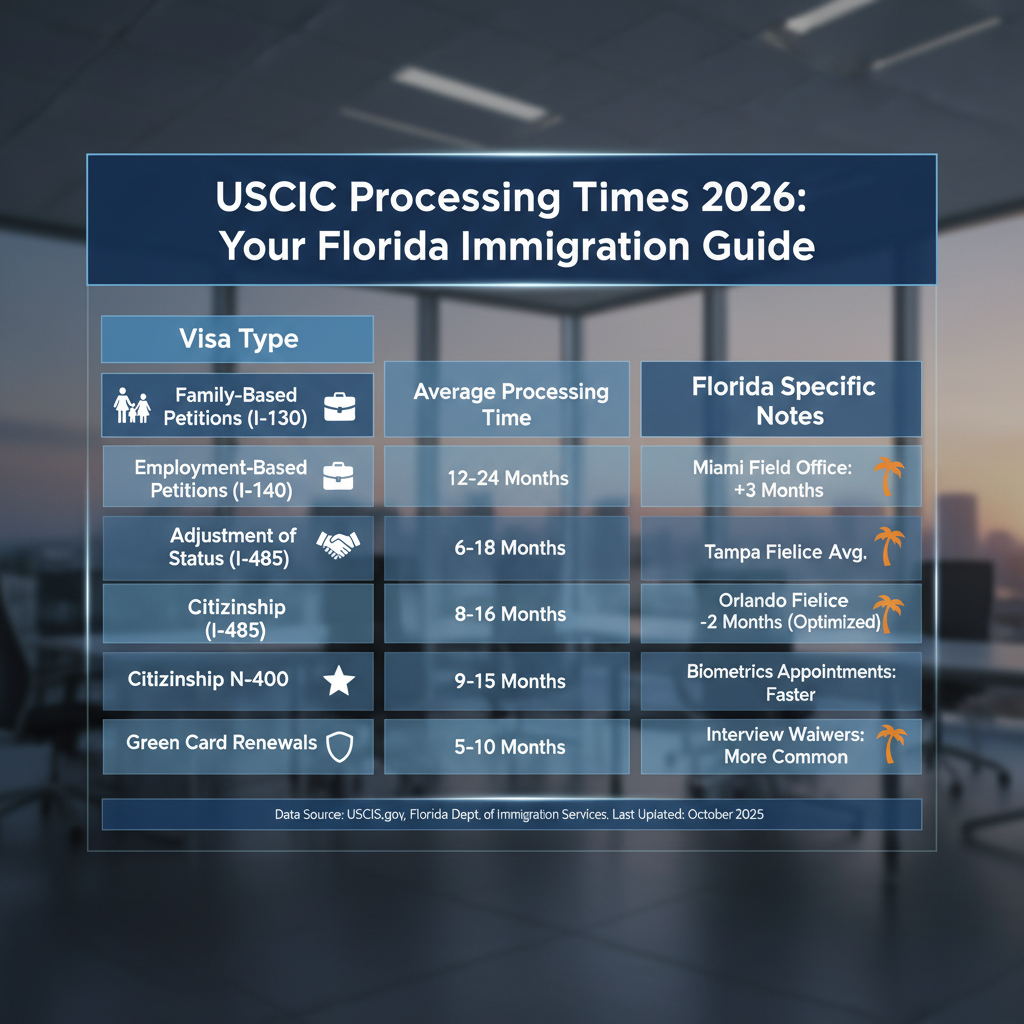
The reporting that sparked this guide: USCIS Processing Times and Updates for 2026 (USCIS)
What This News Means for Immigrants in Orlando and Across Florida
The continuous updates from USCIS regarding their processing times are more than just statistical reports; they are crucial indicators that directly affect the lives, plans, and peace of mind of countless individuals and families. For those building lives in Orlando, across Central Florida, and throughout the Sunshine State, these updates demand careful attention.
Why this news is showing up now
USCIS processing times are dynamic, reflecting the agency's efforts to manage a vast and complex workload. Several factors contribute to why these updates are consistently "news":
- Caseload Fluctuations: The number of applications filed varies significantly based on new policies, economic conditions, and global events. A surge in filings for specific application types, such as Form I-130 (Petition for Alien Relative) or Form I-485 (Application to Register Permanent Residence or Adjust Status), can quickly extend waiting periods.
- Resource Allocation: USCIS regularly reallocates staff and resources to address backlogs or prioritize certain application types, which can speed up some processes while slowing down others.
- Technological Upgrades: The ongoing modernization of USCIS systems aims to improve efficiency, but implementation phases can sometimes introduce temporary disruptions or shifts in processing patterns.
- Policy Changes: New immigration policies or executive orders can introduce additional review requirements or change eligibility criteria, impacting the time it takes to process applications.
- Budgetary Constraints: USCIS is largely fee-funded. Budget limitations can affect staffing levels and the ability to implement new processing strategies, directly influencing wait times.
For 2026, USCIS continues to strive for efficiency improvements, but the sheer volume of applications and the inherent complexity of immigration law mean that processing times will always be a critical, evolving metric that requires constant monitoring.
How it can affect Florida residents
Florida is a vibrant hub for diverse immigrant communities, and the impact of USCIS processing times resonates deeply here. For residents of Orlando and the broader Central Florida region, these updates have specific implications:
- Family Reunification: Delays in family-based petitions, such as Form I-130, mean longer separations for families hoping to "Keep Families Together." This can be particularly agonizing for those with loved ones abroad or waiting for Adjustment of Status within the U.S.
- Employment Authorization and Travel: For individuals with pending green card applications (Form I-485), the timely processing of Form I-765 (Application for Employment Authorization) and Form I-131 (Application for Travel Document or Advance Parole) is vital. Delays can lead to loss of employment, inability to travel for emergencies, and significant financial hardship for families in Orange County and beyond.
- Uncertainty and Planning: Extended processing times make it difficult for immigrants and their employers or sponsors to plan for the future. This uncertainty affects housing decisions, job opportunities along the I-4 corridor, and long-term financial stability.
- Local Field Office Impact: The Orlando USCIS Field Office, like others nationwide, manages interviews and certain local adjustments. Backlogs at the field office level can add further delays, even if national service centers are moving quickly.
- Mental and Emotional Strain: The prolonged wait can take a significant toll on mental health, causing stress, anxiety, and frustration for individuals and families in our community.
Understanding these impacts is the first step toward proactive planning. Imigrar is here to help you navigate these challenges and advocate for your case.
What USCIS Processing Times Are (and Why It Matters)
At its core, understanding USCIS processing times is about comprehending the estimated duration it takes for the U.S. Citizenship and Immigration Services to review and make a decision on an immigration application or petition. It's a critical metric that impacts nearly every aspect of the immigration journey.
A plain-English definition
Simply put, USCIS processing times are the estimated lengths of time, published by USCIS, that it takes for them to process a particular type of application or petition. When you file a form, say a Form I-130 for a family member, USCIS will provide a range of months (e.g., "10 to 24 months") within which they anticipate making a decision on similar cases. It's important to understand these are estimates, not guarantees. Your individual case might be processed faster or slower depending on its unique complexities, the specific service center handling it, and the volume of applications at that time.
Key terms you need to know
Navigating the USCIS landscape requires familiarity with several key terms that directly influence or explain processing timelines:
- Priority Date: This is the date USCIS receives your petition (usually Form I-130 or Form I-140 for employment-based petitions). For many visa categories, particularly family preference and employment-based visas, your Priority Date must become "current" according to the monthly U.S. Department of State's Visa Bulletin before you can apply for a green card or have one issued. This is a crucial factor determining your overall waiting period, often extending beyond the USCIS processing time for the initial petition.
- Receipt Date: This is the exact date USCIS officially received your application or petition. It's usually stamped on your Form I-797C (Notice of Action) and is what you use to track your case against posted processing times.
- Notice Date: The date printed on any official notice you receive from USCIS (e.g., receipt notices, RFEs, approval notices).
- Service Center: USCIS has several service centers (e.g., Nebraska, Texas, California, Vermont, Potomac) that process different types of applications. The processing times often vary significantly between these centers, so knowing which one is handling your case is vital.
- Field Office: These are local USCIS offices, like the Orlando USCIS Field Office, that handle interviews for certain applications (e.g., Form I-485 for Adjustment of Status) and some localized processing. Field office backlogs can impact the overall timeline.
- Adjustment of Status (AOS): This refers to the process of applying for a green card (permanent residency) from within the United States, typically using Form I-485. It's a common path for many immigrants in Florida.
- Consular Processing: This is the alternative path to obtaining a green card, where an applicant applies from outside the U.S. through a U.S. embassy or consulate in their home country.
- Visa Bulletin: Published monthly by the U.S. Department of State, the Visa Bulletin lists the availability of immigrant visas for family-sponsored and employment-based preferences. It dictates whether your Priority Date is current, allowing you to move forward with your green card application.
- Request for Evidence (RFE): A notice from USCIS asking for additional documents or information to support your application. Receiving an RFE will inevitably extend your processing time as USCIS waits for your response and then reviews the new evidence.
- Notice of Intent to Deny (NOID): A notice from USCIS indicating their intent to deny your application unless you provide compelling evidence to overcome their concerns. This is a serious development and requires immediate, expert attention.
Understanding these terms is crucial for interpreting USCIS updates and effectively managing your immigration journey. The impact of these times matters because they dictate when you can legally work, travel, reunite with family, or finally gain permanent residency in the U.S.
Current Immigration Law: The Foundation
The U.S. immigration system is governed by a complex framework of federal laws, regulations, and policies. While USCIS processing times are operational metrics, they are deeply intertwined with the legal requirements that applications must meet. The primary legislation is the Immigration and Nationality Act (INA), which provides the legal basis for nearly all immigration benefits.
Federal requirements
The Immigration and Nationality Act (INA), specifically sections such as INA 201 (defining immediate relatives), INA 203 (establishing family preference categories), and INA 245 (governing Adjustment of Status), dictates who is eligible for various immigration benefits and the requirements they must meet. For example:
- Family-Based Petitions: To sponsor a family member, a U.S. citizen or lawful permanent resident (LPR) must file Form I-130, Petition for Alien Relative. The INA specifies the qualifying relationships (spouses, children, parents, siblings) and their respective categories, which directly impact visa availability and, consequently, waiting times.
- Adjustment of Status: For an immigrant to apply for a green card from within the U.S. (Adjustment of Status via Form I-485), they must generally have been inspected and admitted or paroled into the U.S., be eligible for an immigrant visa, and have an immigrant visa immediately available. The INA also outlines grounds of inadmissibility, which can lead to denials if not properly addressed through waivers.
- Employment Authorization: Eligibility for an Employment Authorization Document (EAD) through Form I-765 is often tied to a pending Adjustment of Status application or specific nonimmigrant visa categories.
- Travel Documents: Form I-131 for Advance Parole allows certain applicants (e.g., those with pending Form I-485 applications) to travel internationally without abandoning their green card application.
Each form and application requires specific supporting documentation to prove eligibility, such as birth certificates, marriage certificates, financial affidavits (e.g., Form I-864, Affidavit of Support), and medical examination results (Form I-693). Failure to provide accurate and complete documentation, as required by federal law, is a leading cause of RFEs and processing delays.
For the most authoritative and up-to-date information on forms and legal requirements, always refer to the USCIS official website.
Florida-specific considerations
While immigration law is federal, the experience of navigating it can have local nuances. For Florida residents, particularly those in Orlando and the surrounding areas, certain factors may influence their immigration journey:
- Orlando USCIS Field Office: This office handles interviews for Adjustment of Status applications, naturalization applications, and other localized services. The efficiency and backlog at this specific field office can directly affect how quickly your case progresses once it reaches the interview stage.
- Local Legal Resources: Access to experienced immigration attorneys in Central Florida, like those at Imigrar, is crucial for navigating complex cases, understanding local trends, and addressing specific challenges that may arise within the Florida jurisdiction.
- Community Support: Florida's diverse communities offer valuable support networks, but localized information can sometimes be inaccurate or outdated. Relying on professional legal advice is paramount.
It's important to remember that state laws in Florida do not directly govern federal immigration processes. However, local resources, legal representation, and the specific operational status of the Orlando USCIS Field Office can indirectly affect your application's journey and overall timeline.
How to Navigate USCIS Processing Times: A Complete Step-by-Step Guide
Understanding USCIS processing times is one thing; proactively managing your expectations and actions based on them is another. This guide outlines key steps you can take to stay informed, prepare, and respond effectively throughout your immigration process, especially concerning the 2026 updates.
1) Understand Your Specific Application and Category
The first and most critical step is to have a clear understanding of the specific application(s) you have filed and the immigration category you fall under. Different forms are processed by different service centers, and various visa categories have distinct eligibility and waiting periods.
- Identify Your Forms: Know which USCIS forms you have submitted (e.g., Form I-130, Form I-485, Form I-765, Form I-131). Each form has its own processing timeline.
- Determine Your Visa Category: For family-based immigration, know if you are an Immediate Relative (spouse, unmarried child under 21, or parent of a U.S. citizen) or fall into one of the Family Preference categories (e.g., F1, F2A, F2B, F3, F4). For employment-based, identify your preference category (e.g., EB-1, EB-2, EB-3). Your category dictates whether the Visa Bulletin applies to you.
- Locate Your Receipt Notices: Your Form I-797C (Notice of Action) contains essential information: your Receipt Date, case number, and the USCIS service center processing your application. Keep these notices secure.
Required Documents for this Step: Original Form I-797C (Receipt Notices) for all filed applications, copies of your submitted application forms.
2) Monitor USCIS Processing Times Regularly
USCIS updates its processing times frequently, often monthly. Consistent monitoring is crucial for managing your expectations and knowing when it's appropriate to make an inquiry.
- Access the Official Tool: Visit the official USCIS Processing Times webpage. This is your primary source of information.
- Select Your Form and Office: On the page, select the correct USCIS form number (e.g., Form I-485), and then select the specific USCIS service center (e.g., Nebraska Service Center) or field office (e.g., Orlando Field Office) that is processing your application. Your Form I-797C will indicate which service center is handling your case. For Adjustment of Status applications, you might need to check both the service center (for initial processing) and your local field office (for interviews).
- Interpret the Data: USCIS provides a range (e.g., "8 to 16 months"). It also displays a "Case Inquiry Date."


