


The journey through the U.S. immigration system is often characterized by anticipation, hope, and, frequently, long waiting periods. As we navigate 2026, understanding the latest updates from U.S. Citizenship and Immigration Services (USCIS) regarding their processing times is more critical than ever. For individuals and families in Orlando, across Florida, and nationwide, these updates directly impact future plans, employment, and family reunification.
Feeling overwhelmed by USCIS processing times? Our Orlando immigration team at Imigrar is here to help you understand your case and navigate the system. Call +1 786-791-3106 for a free consultation, or message us online. Se Habla Español.
At Imigrar, our mission is to "Keep Families Together," and a crucial part of that is providing clear, actionable information to help you through every step of your immigration process. This comprehensive guide will break down the complexities of USCIS processing times in 2026, offering practical advice, detailing requirements, and pointing you to official government resources.
The reporting that sparked this guide
Our insights are informed by ongoing developments and official announcements concerning immigration processing. The continuous dialogue around efficiency and backlogs at USCIS, highlighted by recent reports, underscores the importance of staying informed. This guide is built upon the latest information available, including trends and statements often found through sources like: USCIS Processing Times and Updates for 2026 (USCIS).
What This News Means for Immigrants in Orlando and Across Florida
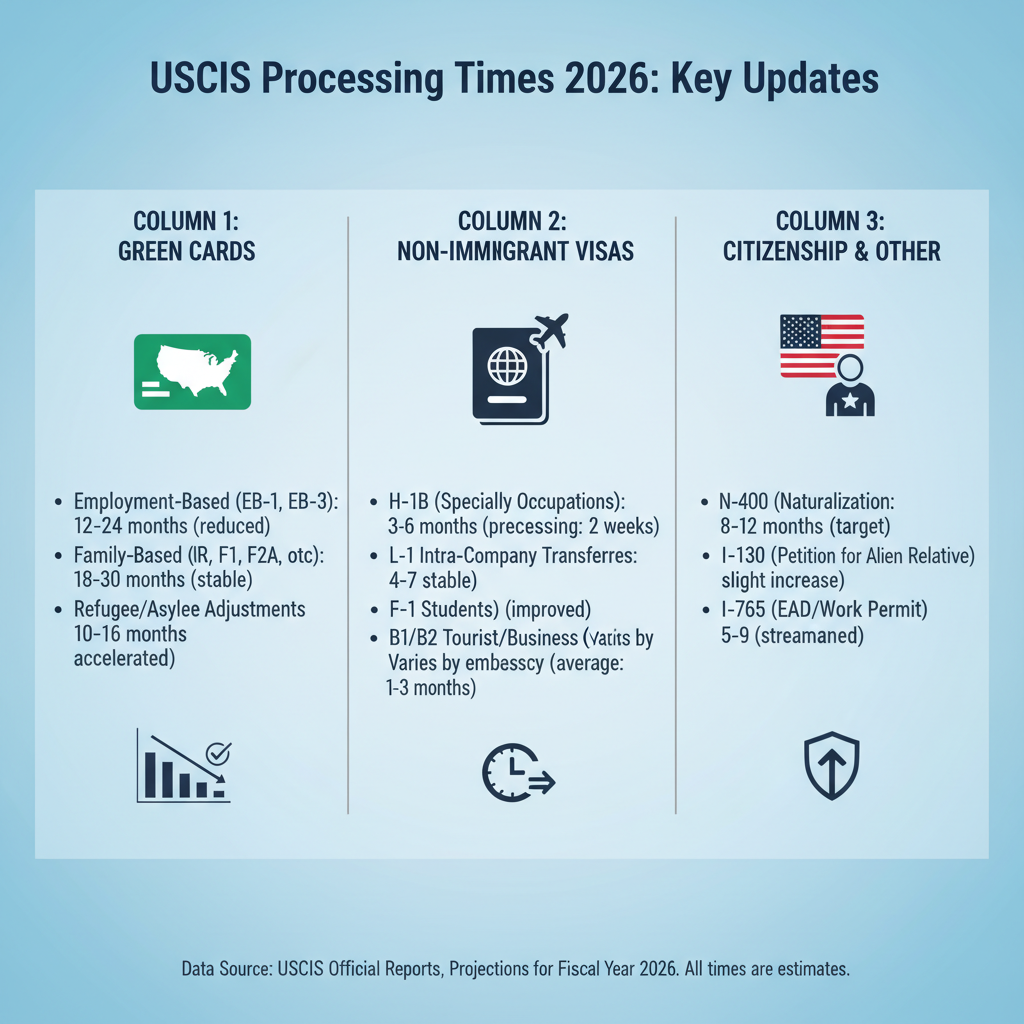
For immigrants and their families residing in the Sunshine State, particularly in bustling metropolitan areas like Orlando, updates to USCIS processing times are not just bureaucratic announcements; they are deeply personal. These changes can dictate when you can start a new job, reunite with loved ones, travel internationally, or finally become a U.S. citizen. Understanding the nuances of these updates is crucial for planning your life and making informed decisions.
Why this news is showing up now
The discussion around USCIS processing times is a perennial one, but it gains renewed urgency in specific periods. For 2026, several factors contribute to why this news is particularly prominent:
- Post-Pandemic Recovery and Backlog Reduction Efforts: Following the significant disruptions caused by the global pandemic, USCIS has been working to address a substantial backlog of applications. While progress has been made, the sheer volume of applications and operational adjustments continue to influence processing times.
- Budgetary and Staffing Fluctuations: USCIS primarily relies on fees from applications and petitions to fund its operations. Fluctuations in application volumes and congressional appropriations can impact staffing levels and technological investments, directly affecting processing efficiency.
- Policy Changes and New Initiatives: Any new immigration policies, executive orders, or internal USCIS initiatives aimed at streamlining processes or prioritizing certain case types can cause shifts in overall processing times. For instance, efforts to digitize more records or expand online filing options, while beneficial long-term, can have initial adjustment periods.
- Increased Demand: The consistent demand for immigration benefits, driven by family reunification, economic opportunities, and humanitarian needs, naturally puts pressure on the system. As the U.S. economy grows and global events unfold, the number of applications tends to rise.
- Technological Upgrades: USCIS continuously works to upgrade its systems. While intended to improve efficiency, the implementation of new technologies can sometimes lead to temporary adjustments in processing as the agency transitions.
These factors combine to create a dynamic environment where processing times are constantly under review and adjustment, making regular updates essential for applicants and legal professionals alike.
How it can affect Florida residents
Florida, with its diverse population and strategic location, is a major hub for immigrants. The impact of USCIS processing time updates is acutely felt here:
- Orlando Field Office Impact: For residents of Central Florida, the local Orlando USCIS Field Office plays a critical role in interviews for Adjustment of Status (Form I-485), naturalization (Form N-400), and asylum applications. Delays at this specific office can significantly prolong the final stages of many cases for Orange County and surrounding area residents.
- Family Reunification: Florida has a large number of family-based petitions. Extended processing times for forms like Form I-130 (Petition for Alien Relative) can mean years of separation for families seeking to reunite, directly impacting Imigrar’s core mission to "Keep Families Together."
- Employment and Economic Stability: For those seeking work authorization (Form I-765, Employment Authorization Document - EAD) or transitioning to employment-based green cards, delays can lead to gaps in employment, financial hardship, and uncertainty for businesses relying on foreign talent. This is particularly relevant for the I-4 corridor, a major economic artery in Florida.
- Travel Restrictions: Delays in obtaining or renewing travel documents (Form I-131, Advance Parole) can prevent Florida residents from visiting family abroad, attending critical events, or addressing urgent personal matters outside the U.S.
- Naturalization Delays: For long-term residents applying for U.S. citizenship via Form N-400, extended processing times can delay civic participation, voting rights, and the ability to sponsor other family members.
- Local Legal Resources: Increased processing times often lead to a greater demand for legal assistance. Immigration law firms in Orlando, like Imigrar, become vital resources for understanding complex updates, making inquiries, and advocating for clients.
In essence, processing time updates are not abstract figures; they are direct determinants of life-altering events for thousands of Florida residents. Staying informed and prepared is paramount.
What USCIS Processing Times Are (and Why They Matter)
When you submit an application or petition to USCIS, one of the first questions you likely have is, "How long will this take?" The answer lies in understanding USCIS processing times – a critical metric that impacts every applicant.
A plain-English definition
USCIS Processing Times refer to the estimated duration it takes for the U.S. Citizenship and Immigration Services to review, adjudicate, and make a decision on an immigration application or petition, from the date of receipt. These times are not guarantees but rather represent the average or median time frames for cases that have been completed within a specific period. They vary significantly based on the type of form, the specific USCIS service center or field office handling the case, and various other factors.
Think of it like this: if you send a letter, the delivery time depends on where you send it from, where it's going, and how busy the postal service is. USCIS processing is similar, but with much more complex "letters" (your applications) and a highly regulated "postal service" (USCIS).
Key terms you need to know
Navigating USCIS processing times requires familiarity with several key terms:
- Receipt Date: This is the date USCIS officially receives your application or petition. It's typically indicated on the Form I-797C, Notice of Action, which is your official receipt. This date is crucial for tracking your case and determining when you can make inquiries.
- Processing Time Range: USCIS typically publishes processing times as a range (e.g., 10 to 14 months) or as a median (e.g., 12 months). This range indicates the time it took for 80% of cases to be processed. Your case might fall within, below, or above this range.
- Case Inquiry Date: This is the earliest date you can contact USCIS to inquire about your case if it is taking longer than the published processing times. USCIS provides a specific tool for this on their website.
- Priority Date: Primarily for employment-based and family-sponsored green card applications, the Priority Date is the date your petition (usually Form I-130 or Form I-140) was properly filed with USCIS. It determines your place in the visa queue and is critical for understanding when a green card becomes available to you, according to the monthly Visa Bulletin.
- Service Center: These are the centralized processing facilities where USCIS handles most mail-in applications that do not require an interview. Examples include the Nebraska Service Center (NSC), Texas Service Center (TSC), California Service Center (CSC), and Vermont Service Center (VSC). The specific center depends on your location and the form type.
- Field Office: These local offices, like the Orlando USCIS Field Office, handle interviews for applications such as Adjustment of Status (Form I-485) and Naturalization (Form N-400), as well as certain other in-person services.
- EAD (Employment Authorization Document): This is your work permit, allowing you to legally work in the U.S. Delays in processing Form I-765 can interrupt employment.
- Advance Parole: A travel document (typically issued with Form I-131) that allows certain non-citizens to re-enter the U.S. after traveling abroad without abandoning their application for Adjustment of Status. Delays can restrict international travel.
- Adjustment of Status: The process by which an eligible non-citizen already in the United States can apply for lawful permanent resident status (a Green Card) without having to return to their home country to complete visa processing. This typically involves filing Form I-485.
- Request for Evidence (RFE): A notice from USCIS asking for additional information or documentation to support your application. Prompt and complete responses are critical.
Understanding these terms empowers you to track your application effectively and anticipate potential hurdles. Processing times matter because they directly impact your ability to work, travel, and live freely in the U.S., affecting everything from your financial stability to your emotional well-being and the ability of families to remain united.
Confused by USCIS terminology or worried about your case timeline? Imigrar offers clarity and expert guidance. Contact our Orlando office at +1 786-791-3106 for a free consultation. Se Habla Español.
Current Immigration Law: The Foundation Governing Processing
USCIS processing times are not arbitrary; they are governed by a complex framework of federal immigration laws and regulations. While no specific law dictates an exact processing time for every form, the Immigration and Nationality Act (INA) and subsequent regulations establish the procedures and requirements that USCIS must follow, which inherently influence how long applications take.
Federal requirements
The primary legal authority for U.S. immigration is the Immigration and Nationality Act (INA). This extensive body of law outlines who is eligible for various immigration benefits, the criteria for different visas, and the administrative processes involved. Key aspects of the INA that impact processing times include:
- Eligibility Criteria: Each form and immigration benefit has specific eligibility requirements detailed in the INA. USCIS officers must thoroughly review applications to ensure compliance, which takes time. For example, Section 204(b) of the INA governs the filing of visa petitions (like Form I-130 for relatives), while Section 245 outlines the requirements for Adjustment of Status (Form I-485).
- Documentation Requirements: The INA and federal regulations specify the types of documents required to prove eligibility (e.g., birth certificates, marriage licenses, financial records, police clearances). Incomplete or incorrect documentation is a major cause of delays, leading to RFEs. USCIS is legally obligated to request and review all necessary evidence.
- Background Checks and Security Screenings: All applicants for permanent residency and citizenship undergo rigorous background checks and security screenings, mandated by federal law. These processes involve multiple government agencies and can add significant time to processing, especially if there are any flags or complex histories.
- Numerical Limitations: Many immigration categories, particularly family-sponsored and employment-based green cards, are subject to annual numerical limits set by the INA. This creates backlogs and the concept of a Priority Date, meaning even if an application is processed, the green card might not be immediately available. The U.S. Department of State publishes the monthly Visa Bulletin reflecting these availabilities.
- Administrative Procedures Act (APA): While not specific to immigration, the APA requires federal agencies like USCIS to operate transparently and provide due process. This includes publishing processing times and establishing procedures for inquiries and appeals, which defines the framework within which processing occurs.
USCIS is continually striving to meet its mandate to process applications fairly and efficiently, but it must do so within these legal constraints, ensuring national security and preventing fraud.
Florida-specific considerations
While immigration law is federal, the experience of navigating it can have local nuances. For Florida residents, especially those in Orlando and the Central Florida region, these considerations are important:
- Orlando USCIS Field Office: The processing times for applications requiring an interview are directly tied to the caseload and staffing of the Orlando Field Office. For Form I-485 (Adjustment of Status) and Form N-400 (Naturalization) applicants, this local office is where final interviews are conducted. Long wait times for interviews at this specific office will extend overall processing times for local residents.
- Geographic Service Center Jurisdiction: Depending on the type of application, Florida residents typically send their forms to specific USCIS Service Centers, such as the Texas Service Center or Nebraska Service Center. The processing times published for these centers directly affect Florida applicants. For example, many family-based petitions (Form I-130) and employment authorization applications (Form I-765) for Florida residents are processed at these centers.
- Local Demographics and Application Volume: Florida's diverse population means a high volume of various application types, including family-based petitions, asylum claims, and Temporary Protected Status (TPS) applications. High local demand can contribute to localized backlogs or impact the efficiency of the Orlando Field Office.
- State-Level Support (or lack thereof): Unlike some states, Florida does not have its own state-level immigration laws that directly impact federal USCIS processing. However, state and local support services, such as legal aid organizations, can indirectly affect an applicant's ability to gather documents or prepare for interviews, which can influence processing efficiency.
Understanding that your application's journey may involve both national service centers and your local Orlando Field Office is key. Always refer to the USCIS official website for the most up-to-date information on forms, fees, and processing procedures. Commonly used forms include: Form I-130 (Petition for Alien Relative), Form I-485 (Application to Register Permanent Residence or Adjust Status), Form I-765 (Application for Employment Authorization), Form I-131 (Application for Travel Document), and Form N-400 (Application for Naturalization).
How to Track and Expedite Your USCIS Application: A Complete Step-by-Step Guide
Navigating the USCIS system, especially with fluctuating processing times, can feel like a labyrinth. However, understanding how to track your application and, when possible, how to expedite it, empowers you to stay informed and proactive. Here’s a detailed guide to help you manage your USCIS journey in 2026.
1) Understanding Your Application Type and Relevant Processing Center
Before you can track your case effectively, you need to know what you filed and where it's being processed. Different forms are handled by different USCIS entities, which have varying processing times.
- Identify Your Form Type: Common forms include:
- Form I-130: Petition for Alien Relative (family-based sponsorship).
- Form I-485: Application to Register Permanent Residence or Adjust Status (Green Card application).
- Form I-765: Application for Employment Authorization (EAD/work permit).
- Form I-131: Application for Travel Document (Advance Parole, Reentry Permit).
- Form N-400: Application for Naturalization (citizenship).
- Form I-140: Immigrant Petition for Alien Worker (employment-based sponsorship).
- Locate Your Service Center or Field Office: When you receive your Form I-797C, Notice of Action (receipt notice), it will indicate which Service Center (e.g., Nebraska, Texas, California, Vermont) or Field Office is handling your case. This is crucial because processing times are specific to these locations. For example, many Florida residents' family-based petitions are processed at the Texas Service Center, while their Adjustment of Status interviews take place at the Orlando Field Office.
Required Documents for this step: Your Form I-797C, Notice of Action (Receipt Notice).
2) Locating and Interpreting USCIS Processing Times
USCIS publishes estimated processing times online, which are your primary tool for understanding how long your case might take.
- Visit the Official USCIS Processing Times Page: Go to USCIS Processing Times.
- Select Your Form: Choose the specific form you filed (e.g., Form I-485).
- Select Your Field Office or Service Center: Based on your receipt notice, select the correct location. For Orlando residents, this might be "Orlando Field Office" for interview-based applications or a specific Service Center for others.
- Understand the Data: USCIS typically displays a range (e.g., "10 to 14 months") or a median time. This range represents the time it took for 80% of completed cases of that type at that location. Your case may fall within, above, or below this. Important: These are estimates, not guarantees.
Required Documents for this step: Your Form I-797C, Notice of Action (to identify form type and location).
3) Checking Your Case Status Online
Beyond general processing times, you can check the specific status of your individual case using your receipt number.
- Use the USCIS Case Status Online Tool: Visit USCIS Case Status Online.
- Enter Your Receipt Number: This is the 13-character code (e.g., EAC-XX-XXX-XXXXX) found on your Form I-797C.
- Interpret Your Status: The system will display the most recent action taken on your case (e.g., "Case Was Received,"


