

The reporting that sparked this guide: USCIS Processing Times and Updates for 2026 (USCIS)
What This News Means for Immigrants in Orlando and Across Florida
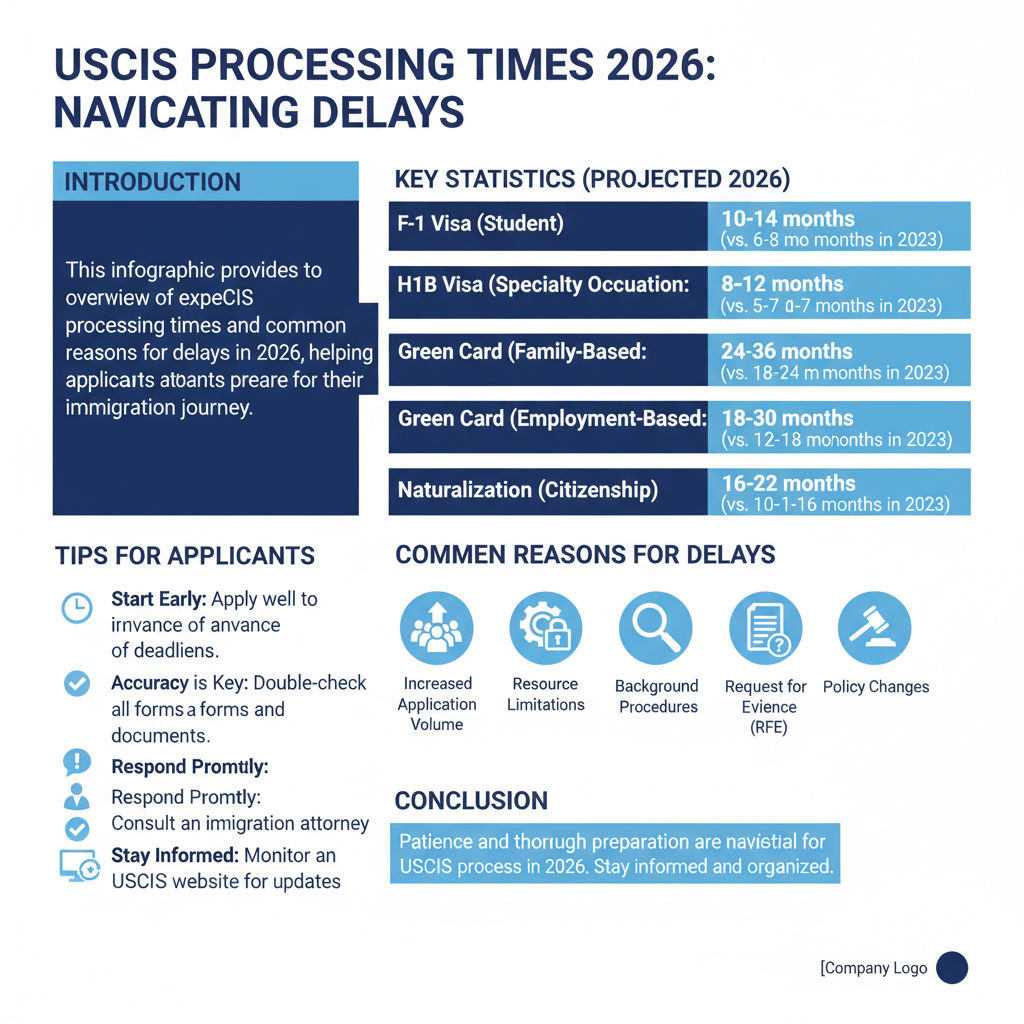
For individuals and families navigating the complex landscape of U.S. immigration, few topics generate as much anxiety and anticipation as USCIS processing times. As we move further into 2026, the United States Citizenship and Immigration Services (USCIS) continues to update its processing metrics, reflecting ongoing operational changes, evolving policy priorities, and fluctuating application volumes. For many, these updates aren't just statistics; they represent the difference between prolonged separation and family reunification, career opportunities, or a secure future.
Why this news is showing up now
USCIS processing times are not static; they are dynamic and subject to constant change. Updates frequently occur at the end of fiscal quarters or in response to new legislative mandates, budgetary adjustments, or significant shifts in staffing and technology. The current wave of updates for 2026 is likely influenced by several factors:
- Post-Pandemic Backlogs: While significant progress has been made, the lingering effects of the COVID-19 pandemic, which caused office closures and reduced operations, continue to impact processing queues.
- Increased Application Volume: Certain application types, particularly those related to family-based petitions and employment-based visas, have seen surges in filings, leading to longer queues.
- Technological Modernization: USCIS is continually implementing new digital tools and processes. While intended to improve efficiency long-term, these transitions can sometimes cause temporary delays or adjustments in reported times.
- Policy Changes: Administrative priorities and policy directives can shift resources, affecting which application types receive expedited attention and which experience longer waits.
- Staffing Levels: The availability of immigration officers and support staff directly correlates with USCIS's capacity to process applications efficiently.
These updates provide a crucial, albeit often frustrating, snapshot of the agency's current operational capacity and the expected waiting periods for various immigration benefits.
How it can affect Florida residents
Florida, particularly Central Florida and the Orlando metropolitan area, is home to a vibrant and diverse immigrant community. As such, any changes to USCIS processing times have a direct and profound impact on residents across the state. Whether you're in Orlando, Miami, Tampa, or along the I-4 corridor, these updates can:
- Delay Family Reunification: For those sponsoring relatives through forms like Form I-130 (Petition for Alien Relative), longer processing times mean extended periods of separation from loved ones.
- Impact Employment Opportunities: Delays in employment authorization documents (EADs) filed with Form I-765 can prevent individuals from working, affecting their financial stability and ability to contribute to the local economy in Orange County and beyond.
- Affect Travel Plans: Applications for Advance Parole (Form I-131) are essential for those with pending Adjustment of Status applications who wish to travel internationally without abandoning their case. Delays can put critical travel plans on hold.
- Create Uncertainty for Naturalization: Individuals applying for naturalization via Form N-400 face uncertainty regarding their citizenship ceremony dates, impacting their ability to vote or obtain a U.S. passport.
- Stress and Financial Strain: Prolonged waits can lead to significant emotional stress and financial burdens, as families budget for legal fees, application costs, and living expenses without a clear timeline.
The Orlando USCIS Field Office, like others nationwide, operates under these federal processing guidelines. While local offices handle interviews and some specific case types, the overall processing times for most forms are determined at service centers across the country. Understanding these updates is the first step toward strategically planning your immigration journey.
Need Help? Our Orlando immigration team is ready to assist. Call +1 786-791-3106 for a free consultation, or message us online. Se Habla Español.
What USCIS Processing Times Are (and Why They Matter)
Navigating the U.S. immigration system often feels like waiting in a queue where you can't see the front. USCIS processing times are the agency's best estimates of how long it will take to process an application, petition, or request from the date it is received until a decision is made. These times are crucial because they provide a benchmark for applicants and their legal representatives, helping to manage expectations and determine when it might be appropriate to make an inquiry about a delayed case.
A plain-English definition
Simply put, USCIS processing times represent the period, typically expressed in months or weeks, that USCIS needs to review and make a decision on a specific type of immigration application. These times vary significantly depending on the form number (e.g., Form I-130, Form I-485), the type of benefit requested, the USCIS service center or field office handling the case, and even the specific category within an application type. For example, a family-based petition for a spouse might have a different processing time than one for a sibling.
It's Important: These are estimates, not guarantees. Your individual case might be processed faster or slower than the posted times due to unique circumstances.
Key terms you need to know
To effectively understand and track your immigration case, familiarity with certain key terms is essential:
- Processing Time: The estimated duration USCIS takes to process a specific form at a particular service center or field office. These are regularly updated and publicly available.
- Receipt Date: The exact date USCIS officially received your application or petition. This is crucial for tracking your case and is typically found on the Form I-797C, Notice of Action, which USCIS sends after receiving your submission.
- Priority Date: For certain visa categories (primarily employment-based and some family-sponsored preferences), this is the date your petition was properly filed with USCIS or the Department of Labor. It determines your place in the visa queue, as visas are numerically limited. You must have a current Priority Date to apply for a green card. You can check the U.S. Department of State Visa Bulletin for current priority dates.
- Case Status Online: An online tool provided by USCIS (USCIS Case Status Online) where you can enter your Receipt Number to see the latest update on your specific case. This provides real-time (or near real-time) information, such as "Case Was Received," "Biometrics Appointment Was Scheduled," or "Interview Was Scheduled."
- Service Request (Outside Normal Processing Times): If your case has been pending longer than the posted processing times for your specific form and service center, you may be eligible to submit an "Outside Normal Processing Time" inquiry with USCIS. This is often the first formal step to inquire about a delayed case.
- Inquiry: A general term for contacting USCIS to ask about your case status, often through phone calls to the National Customer Service Center (NCSC) or online tools.
- Biometrics Appointment: An appointment at an Application Support Center (ASC) where USCIS collects fingerprints, photographs, and signatures for background checks. Delays in scheduling or processing biometrics can impact overall processing times.
- Request for Evidence (RFE): A letter from USCIS requesting additional documents or information to support your application. Failing to respond promptly or adequately to an RFE can significantly delay your case or lead to a denial.
- Notice of Intent to Deny (NOID): A notice indicating that USCIS intends to deny your application and providing you an opportunity to respond with additional evidence or explanation. This is a serious notice and requires immediate attention.
Understanding these terms empowers you to track your application more effectively and know when to seek further assistance. For Central Florida residents, staying informed can alleviate much of the stress associated with the waiting game.
Current Immigration Law: The Foundation of Processing
USCIS processing times are not arbitrary; they are the operational manifestation of complex federal immigration laws and regulations. The agency's procedures and timelines are governed by statutes passed by Congress, regulations issued by the Department of Homeland Security (DHS), and various administrative policies. While no single law dictates a specific processing time for every form, the legal framework underpins the entire system.
Federal requirements
The primary legal framework for U.S. immigration is the Immigration and Nationality Act (INA). This comprehensive statute outlines who is eligible for immigration benefits, the categories of visas, the application process, and the powers and duties of immigration agencies like USCIS. Key aspects of federal law that influence processing times include:
- Numerical Limitations: Many visa categories, particularly family-sponsored preference categories and most employment-based categories, are subject to annual numerical limits set by Congress. This creates visa backlogs and lengthy waits, especially for applicants from high-demand countries, regardless of how quickly USCIS processes the initial petition. The Priority Date system is a direct result of these limitations.
- Eligibility Requirements: Each immigration benefit (e.g., green card, citizenship, work authorization) has specific eligibility criteria defined by law. USCIS officers must thoroughly review each application to ensure compliance, which takes time.
- Security Checks: Federal law mandates extensive background and security checks for all applicants. These checks involve multiple government agencies and can be a significant factor in processing delays, especially for individuals with complex histories or those from certain regions.
- Administrative Procedure Act (APA): This federal law governs how federal agencies develop and issue regulations. It also requires agencies to process requests and applications within a "reasonable time." While "reasonable" is open to interpretation, it provides a legal basis for challenging undue delays.
- USCIS Mission: USCIS's mission, as part of the Department of Homeland Security, is to "secure America's promise as a nation of immigrants by providing accurate and useful information to our customers, granting immigration and citizenship benefits, promoting an understanding of citizenship, and ensuring the integrity of our immigration system." This mission guides their processing priorities and resource allocation.
Common USCIS forms directly impacted by these federal requirements include:
- Form I-130, Petition for Alien Relative
- Form I-485, Application to Register Permanent Residence or Adjust Status
- Form I-765, Application for Employment Authorization
- Form I-131, Application for Travel Document (for Advance Parole and Reentry Permits)
- Form N-400, Application for Naturalization
- Form I-90, Application to Replace Permanent Resident Card
- Form I-751, Petition to Remove Conditions on Residence
Understanding that these forms are processed under the strictures of federal law underscores the importance of accurate and complete submissions. You can always find the latest information and forms on the USCIS official website.
Florida-specific considerations
While immigration law is federal, and processing times are generally uniform across USCIS service centers, local USCIS field offices play a critical role in certain stages of the process, particularly for Adjustment of Status interviews and naturalization interviews. For Central Florida residents, the Orlando USCIS Field Office (Orlando Field Office Information) handles these in-person components.
Florida does not have its own state-level immigration laws that dictate USCIS processing times. However, the sheer volume of immigrants in Florida can indirectly affect local operations. A high volume of interviews at the Orlando Field Office, for instance, could lead to longer wait times for interview scheduling, even if the initial processing at a service center was relatively quick. Additionally, local resources, such as access to legal aid or community support services, can impact an applicant's ability to prepare and respond to USCIS requests efficiently.
Warning: Be wary of any claims about "Florida immigration laws" affecting federal processing. Immigration is solely a federal jurisdiction. Any specific state laws primarily concern issues like driver's licenses, public benefits, or state enforcement efforts, not federal application processing.
Overwhelmed by USCIS forms and legal jargon? Imigrar is here to simplify the process for you. Contact our Orlando office today at +1 786-791-3106 for expert guidance. ¡Se Habla Español!
How to Monitor and Understand Your USCIS Case: A Complete Step-by-Step Guide
The waiting period for an immigration application can be agonizing, but you don't have to wait passively. USCIS provides several tools and avenues for applicants to monitor their case status and understand the processing timeline. This guide will walk you through the essential steps.
1) Locate Your Receipt Number and Understand Your Application Type
Action: The very first step is to locate your unique Receipt Number. This 13-character code (e.g., EAC-23-123-45678) is assigned to your case when USCIS accepts your application. You will find it on the Form I-797C, Notice of Action, which USCIS mails to you shortly after receiving your submission. It's also critical to know the exact form number (e.g., Form I-130, Form I-485) and the specific category under which you applied, as processing times vary significantly by form and category.
Required Information/Documents:
- Your Form I-797C, Notice of Action (or any other official USCIS correspondence).
- A clear understanding of the specific USCIS form(s) you filed.
Tip: Keep all USCIS notices in a safe, organized file. You will need your Receipt Number for almost any inquiry.
2) Check Official USCIS Processing Times Online
Action: Once you have your Receipt Number and know your application type, visit the official USCIS website to check the estimated processing times. This is the most reliable source for current information.
Steps:
- Go to the USCIS Processing Times page.
- Select the "Form" you filed from the dropdown menu (e.g., I-130, I-485).
- Select the "Form Category" (e.g., "Family-based petition for spouse," "Application to Adjust Status based on family").
- Select the "Field Office or Service Center" that has jurisdiction over your application. This is typically indicated on your Form I-797C. For many applications, this will be a service center (e.g., California Service Center, Nebraska Service Center, Texas Service Center, Vermont Service Center). For interview-based applications, it might be your local field office (e.g., Orlando Field Office).
- Click "Get processing time."
The result will show a range (e.g., "6.5 to 10 months"). Your Receipt Date should fall within this range to be considered "within normal processing times."
Required Information/Documents:
- Your specific USCIS form number and category.
- The USCIS service center or field office processing your case.
Reminder: These are estimates. Factors like RFEs or background check delays can extend your individual case beyond the posted range.
3) Monitor Your Case Status Online
Action: In addition to checking estimated processing times, you should regularly monitor your individual case status online. This tool provides updates specific to your application.
Steps:
- Go to the USCIS Case Status Online page.
- Enter your 13-character Receipt Number without dashes.
- Click "Check Status."
You will see a brief description of the latest action taken on your case (e.g., "Case Was Received," "Biometrics Appointment Was Scheduled," "Interview Was Scheduled," "New Card Is Being Produced").
Required Information/Documents:
- Your Receipt Number.
Important: Set up a free USCIS online account to receive email notifications when your case status updates. This is particularly useful for Central Florida residents who want to stay informed without constant manual checks.
4) Understand Your "Receipt Date" vs. "Processing Time Frame"
Action: It's crucial to compare your Receipt Date (from your Form I-797C) with the "Case inquiry date" provided on the USCIS processing times page. The "Case inquiry date" is the earliest Receipt Date for which you can submit an "Outside Normal Processing Time" inquiry.
Example: If the posted processing time for your Form I-485 at the National Benefits Center is "9.5 months to 14 months," and the "Case inquiry date" is February 1, 2025, you cannot make an inquiry until your Receipt Date is on or before February 1, 2025.
Required Information/Documents:
- Your Receipt Date.
- The "Case inquiry date" from the USCIS processing times page.
Warning: Submitting an inquiry too early will likely result in a generic response stating your case is still within normal processing times and will not expedite your case.
5) When and How to Make an "Outside Normal Processing Time" Inquiry
Action: If your Receipt Date has passed the "Case inquiry date" listed on the USCIS processing times page, you are eligible to make an inquiry. This is a formal request for USCIS to look into your delayed case.
Steps:
- Go to the USCIS Online Inquiry Tool.
- Select "Case outside normal processing time."
- Follow the prompts, providing your Receipt Number and other requested information.
- You can also call the USCIS Contact Center at 1-800-375-5283, but the online tool is often more efficient.
USCIS typically responds to these inquiries within 30 days. The response might state that your case is under review, that a specific action is needed, or that it remains within an extended processing window.
Required Information/Documents:
- Your Receipt Number.
- Your personal identifying information (name, date of birth, address).
- Details of your application (form type, filing date).
Reminder: Keep a record of your inquiry, including the date submitted and any confirmation numbers.
6) What to Do If Your Case is Still Delayed After an Inquiry
Action: If you've made an inquiry and your case remains significantly delayed with no satisfactory explanation, or if the delay is causing extreme hardship, you have further options.
Options:
- Contact Your Congressional Representative: Your U.S. Senator or Representative has a constituent services office that can make inquiries on your behalf. This can sometimes prompt a review of your case.
- Request an Infopass Appointment (Limited Availability): While largely replaced by the online tools, in some specific urgent situations, you might be able to schedule an appointment at your local USCIS field office (like the Orlando USCIS Field Office) to speak with an officer. Check the USCIS website for current guidance on scheduling.
- Seek Legal Counsel: If your case is severely delayed, or you are facing unique circumstances, an experienced immigration attorney can assess your situation, communicate with USCIS on your behalf, and explore legal remedies, such as filing a Writ of Mandamus in federal court to compel USCIS to make a decision.
Required Information/Documents:
- All previous USCIS correspondence.
- Proof of prior inquiries (dates, confirmation numbers).
- Documentation of hardship, if applicable.
Important: Consulting with an immigration lawyer, especially for complex or extremely delayed cases, is highly recommended. Imigrar has extensive experience in these situations for clients in Orlando and across the country.
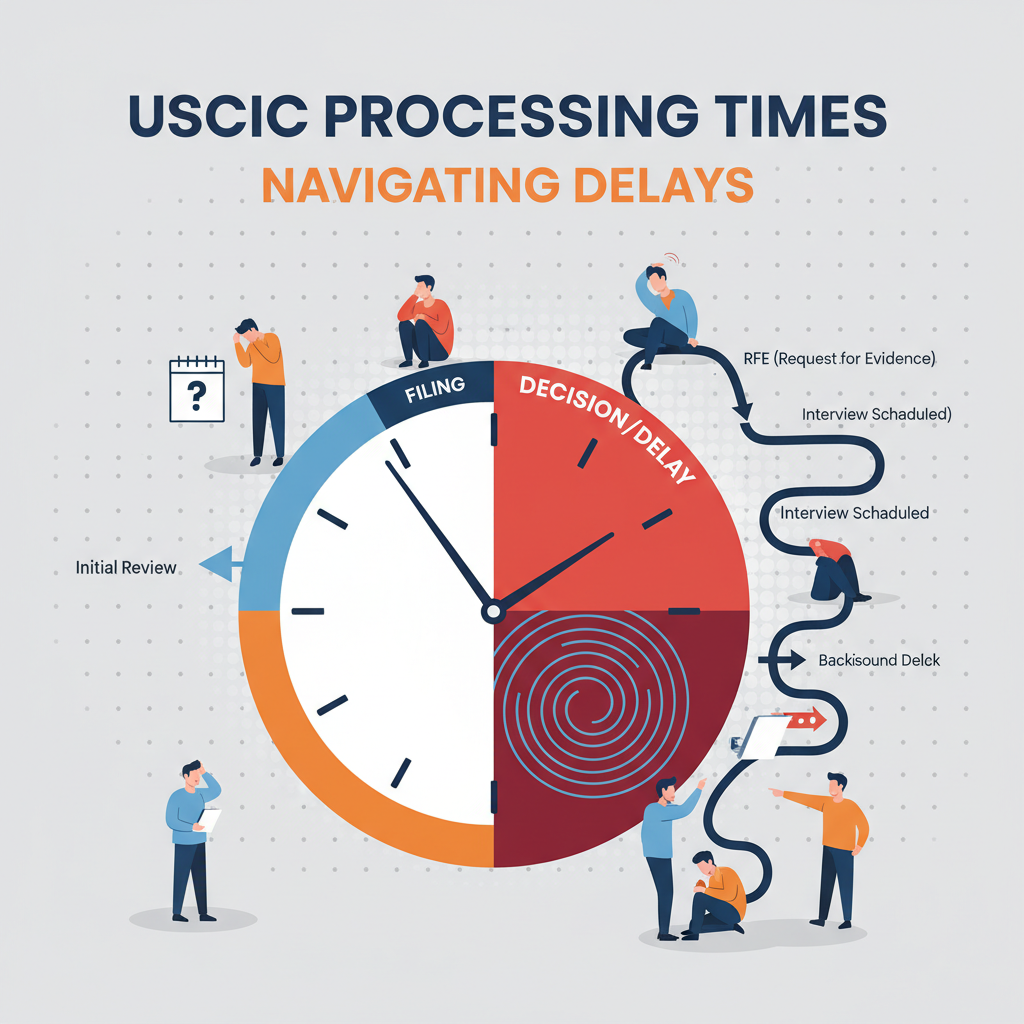
7) Consider the Impact of Biometrics and Interviews
Action: Understand that certain steps like biometrics appointments and interviews are critical milestones that can influence overall processing. Delays in these steps can ripple through the entire timeline.
Details:
- Biometrics: After filing certain forms (e.g., Form I-485, Form I-765, Form N-400), you will receive a notice for a biometrics appointment at an Application Support Center (ASC). Delays in receiving this notice or attending the appointment can stall your background checks and subsequent processing.
- Interviews: Many green card (Adjustment of Status) and naturalization (Form N-400) applications require an interview at a local USCIS field office, such as the Orlando USCIS Field Office. The scheduling of these interviews depends on the workload of the local office and the completion of background checks.
Required Information/Documents:
- Biometrics appointment notice.
- Interview notice.
Tip: If you miss a biometrics appointment, reschedule immediately. If you need to reschedule an interview, contact USCIS as soon as possible, but be aware this will likely cause further delays.
Practical Steps You Can Take Today
While you cannot directly control USCIS processing times, you can take proactive steps to ensure your case proceeds as smoothly as possible and to mitigate the impact of potential delays. For immigrants in Orlando and beyond, these practical tips can make a significant difference.
Actionable Checklist:
- Keep Copies of Everything: Before sending any document to USCIS, make a complete copy for your records. This includes every form, supporting document, receipt, and communication. This is your safety net.
- Respond Promptly to USCIS Requests: If you receive a Request for Evidence (RFE) or a Notice of Intent to Deny (NOID), respond immediately and thoroughly within the specified deadline. Delays here will halt your case.
- Update Your Address with USCIS: If you move, you must notify USCIS of your new address within 10 days. Use Form AR-11, Alien's Change of Address Card, or the online change of address tool. Failure to do so can result in missed notices, RFEs, or interview appointments, potentially leading to denial.
- Use USCIS Online Tools Regularly: Check your Case Status Online and the Processing Times page periodically. Subscribe to email updates via a USCIS online account.
- Maintain Valid Status (If Applicable): If you are in the U.S. and your application for a new status (e.g., Adjustment of Status) is pending, ensure you maintain your underlying nonimmigrant status if possible, or understand the implications if it expires.
- Consult an Immigration Attorney: Especially for complex cases, or if you encounter significant delays or issues, consulting with an experienced immigration lawyer like those at Imigrar can provide invaluable guidance and advocacy.
Document preparation guidance
Proper document preparation is paramount to avoiding delays:
- Accuracy and Completeness: Ensure all forms are filled out accurately and completely. Any missing information or errors can lead to RFEs or denials.
- Supporting Documents: Gather all required supporting documents as listed in the form instructions. Do not send originals unless specifically requested. Always send high-quality photocopies.
- Translations: Any document not in English must be accompanied by a complete English translation certified by a translator. The certification must include a statement that the translator is competent to translate from the foreign language into English and that the translation is complete and accurate.
- Organization: Organize your application packet logically. Use tabs and cover sheets to clearly label different sections and documents. This makes it easier for USCIS officers to review your submission.
- Affidavits of Support (Form I-864): For family-based petitions, ensure your sponsor meets the income requirements and provides all necessary financial documentation. This is a common area for RFEs.
Timeline expectations
Setting realistic expectations about timelines is crucial for your peace of mind and financial planning:
- Variability: Processing times can fluctuate. What was 6 months last year might be 12 months today. Always refer to the most current USCIS posted times.
- Beyond Posted Times: Understand that posted times are averages. Your case might take longer due to personal factors (e.g., criminal history, complex family situations), administrative issues (e.g., system glitches, staffing shortages), or security checks.
- Multiple Stages: Many immigration processes involve multiple stages, each with its own processing time (e.g., petition approval, then green card application, then interview). Factor in all stages.
- Visa Bulletin: If your application is subject to numerical limits (e.g., certain family preference categories), your Priority Date must become current in the Visa Bulletin before your application can be finalized, adding


