The reporting that sparked this guide: USCIS Processing Times and Updates for 2026 (USCIS)
What This News Means for Immigrants in Orlando and Across Florida
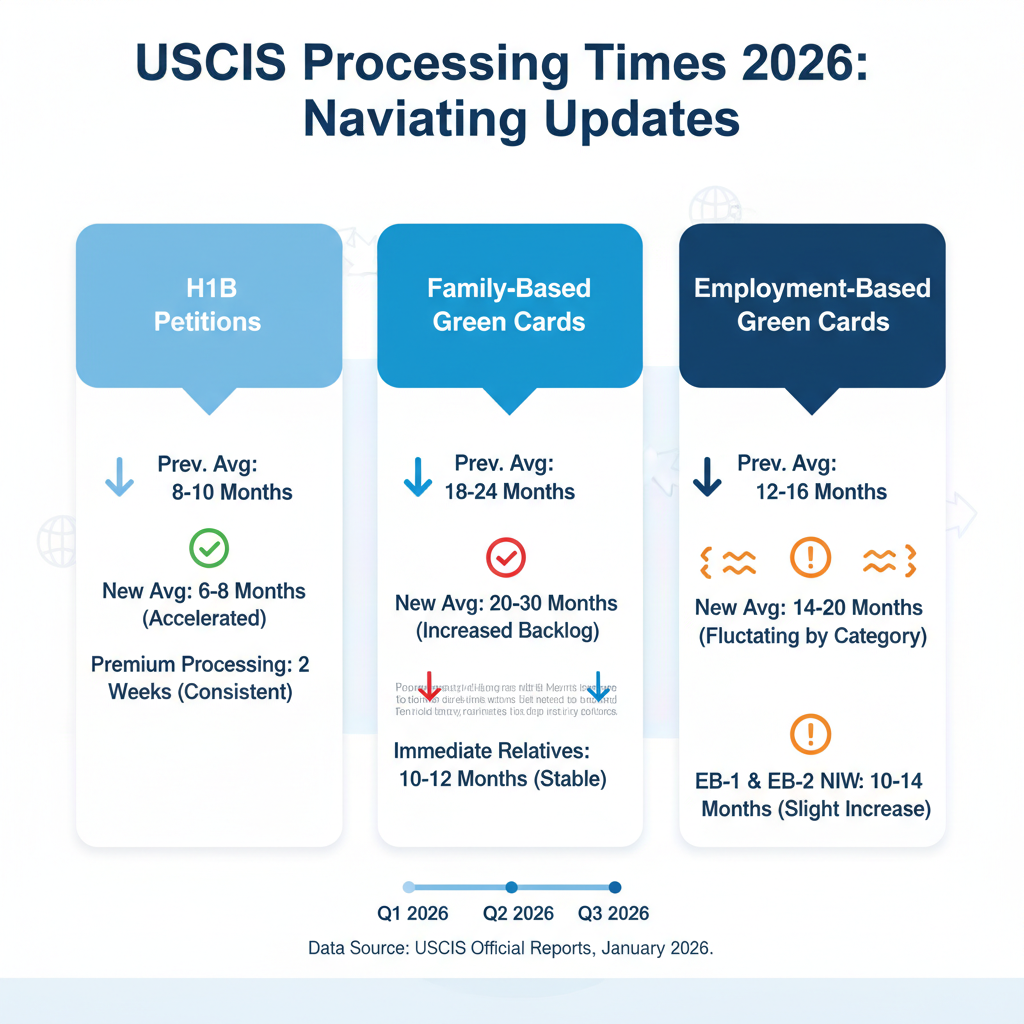
Why this news is showing up now
USCIS processing times are not static. They are dynamic estimates that fluctuate based on a multitude of factors, including the volume of applications received, the complexity of individual cases, staffing levels at various service centers and field offices, budget allocations, and evolving immigration policies. The "2026" in our topic signifies the latest official updates and ongoing trends that USCIS is observing and responding to in the current fiscal year. Historically, USCIS has faced significant backlogs, particularly exacerbated by the COVID-19 pandemic and subsequent operational challenges. In response, the agency has been making concerted efforts to improve efficiency, streamline processes, and reduce these backlogs. This often involves: * **Increased Staffing:** Hiring more adjudicators and support staff. * **Technological Modernization:** Implementing new digital tools and online filing options to speed up internal workflows. * **Policy Adjustments:** Introducing measures to prioritize certain application types or to conduct interviews more efficiently. * **Budgetary Changes:** The availability of federal funding directly impacts USCIS's capacity to process applications. These efforts lead to regular updates on their processing times page. For applicants, this means that what was true six months ago might be different today, and certainly different from what we can expect in the coming months. Staying current with these announcements is paramount to making informed decisions about your immigration journey.How it can affect Florida residents
Florida is one of the most diverse states in the nation, home to a vast and growing immigrant population. From the bustling metropolis of Orlando to the agricultural heartlands and coastal communities, immigrants contribute significantly to our state’s economy and culture. Consequently, any changes in USCIS processing times have a direct and profound impact on Florida residents: * **Family Reunification:** Many families in Orlando and across Florida rely on family-based petitions (like Form I-130) to bring loved ones together. Longer processing times mean extended periods of separation, immense emotional strain, and financial uncertainty. * **Work Authorization:** Delays in processing applications for employment authorization (Form I-765) can prevent individuals from legally working, leading to severe financial hardship for families and a loss of skilled labor for Florida businesses. This is particularly critical for those awaiting their green cards through Adjustment of Status. * **Travel and Stability:** For those with pending applications, especially those seeking Adjustment of Status with an application for advance parole (Form I-131), processing times dictate when they can safely travel internationally without jeopardizing their immigration process. Prolonged uncertainty also impacts decisions about schooling, housing, and long-term planning for families in communities like Orange County. * **Economic Impact:** Delays can hinder the ability of immigrants to fully participate in the Florida economy, affecting everything from purchasing homes to starting businesses. Conversely, faster processing can inject vitality into local economies. * **Mental Health and Stress:** The wait itself can be incredibly stressful, leading to anxiety and uncertainty about the future. Knowing what to expect, even if it's a long wait, can help manage these challenges. For Central Florida residents whose cases are handled by the Orlando USCIS Field Office, or by one of the national service centers, these updates are not abstract. They are real-world determinants of their daily lives and future prospects. Imigrar understands these challenges and is dedicated to providing the support and advocacy necessary to navigate these ever-changing landscapes.Feeling overwhelmed by USCIS processing times? Our Orlando immigration team is ready to assist. Call +1 786-791-3106 for a free consultation, or message us online. Se Habla Español.
What USCIS Processing Times Are (and Why They Matter)
USCIS processing times are a critical metric for anyone involved in the U.S. immigration system. They represent the estimated period of time it takes USCIS to process a specific type of application or petition from the date of receipt to a final decision. Understanding these times is not just about curiosity; it's about managing expectations, planning your life, and knowing when to take action if your case falls outside the normal range.A plain-English definition
Simply put, USCIS processing times are the agency's best estimate of how long it will take to review your immigration application and make a decision. Think of it like a queue: when you submit your application, it enters a line. The processing time tells you, on average, how long that line is for your specific type of application at the service center or field office handling your case. It's crucial to understand that these are *estimates*, not guarantees. Several factors can influence the actual time your individual case takes, including its complexity, the accuracy and completeness of your submission, and whether additional information (like a Request for Evidence, or RFE) is needed.Key terms you need to know
Navigating USCIS processing times requires familiarity with specific terminology. Here are some essential terms: * **Processing Time Range:** USCIS typically provides a range, such as "5 to 9 months." This range is often based on the time it took to complete 80% of similar cases in the recent past. So, if your case falls within this range, it's considered "normal." * **Receipt Date:** This is the exact date USCIS received your application or petition. You will find this date on your **Form I-797C**, Notice of Action, which USCIS sends after accepting your filing. This is the starting point for calculating your processing time. * **Priority Date:** This term is critical for applications that are subject to annual numerical limits, such as many family-preference petitions (e.g., certain categories of **Form I-130**) and employment-based petitions. The **Priority Date** is usually the date USCIS receives the petition (for family-based) or the date the Department of Labor receives the labor certification application (for employment-based). You must wait until your **Priority Date** becomes "current" according to the monthly Visa Bulletin before you can file for **Adjustment of Status** (Form I-485) or apply for an immigrant visa abroad. * **Current Date for Case Inquiry:** On the USCIS processing times page, you'll see a date listed for each application type and location. If your **Receipt Date** is *before* this "Current Date for Case Inquiry," it means your application has likely exceeded the normal processing time, and you may be eligible to submit an "outside normal processing times" inquiry. * **Service Center vs. Field Office:** * **Service Centers** (e.g., California, Nebraska, Texas, Vermont) primarily handle mailed applications and petitions that do not typically require an in-person interview. * **Field Offices** (e.g., the Orlando USCIS Field Office) handle local interviews, naturalization ceremonies, and some other in-person services. Many **Adjustment of Status** applications (Form I-485) are initially processed at a service center or the **National Benefits Center (NBC)** and then transferred to a local field office for the interview and final adjudication. * **National Benefits Center (NBC):** A significant operational hub within USCIS that handles initial processing for many applications, particularly **Form I-485** and related forms (Form I-765, Form I-131), before they are forwarded to local field offices for interviews. * **Request for Evidence (RFE):** A formal request from USCIS for additional documents or information to support your application. Receiving an RFE will pause your processing time until you submit the requested evidence, potentially adding several months to your overall timeline. * **Notice of Intent to Deny (NOID):** A notice indicating that USCIS intends to deny your application and providing you with an opportunity to submit a response to overcome the grounds for denial. This is a serious notice that requires immediate attention and often, legal counsel. Understanding these terms empowers you to track your case more effectively and communicate clearly with USCIS or your legal counsel. The journey through immigration can be long, but being well-informed makes it more manageable.Current Immigration Law: The Foundation for Processing Times
While processing times are administrative estimates, they are ultimately governed by the framework of U.S. immigration law. The **Immigration and Nationality Act (INA)** is the bedrock of this system, establishing the categories of visas, eligibility requirements, and the processes for obtaining immigration benefits. USCIS operates under the authority granted by the INA and its implementing regulations.Federal requirements
The INA, a federal statute, outlines who is eligible for various immigration benefits and the general procedures for applying. For instance: * **Family-Based Immigration:** Sections 201 and 203 of the INA define the categories of family members eligible for visas (e.g., immediate relatives of U.S. citizens, family preference categories) and establish the annual numerical limits for most of these categories. The existence of these quotas directly leads to the concept of **Priority Dates** and the U.S. Department of State's monthly Visa Bulletin, which dictates when a visa number becomes available. * **Adjustment of Status:** INA Section 245 details the eligibility requirements for individuals physically present in the U.S. to adjust their status to lawful permanent resident (green card holder) without leaving the country. This process typically involves filing **Form I-485**. * **Employment Authorization:** INA Section 274A outlines the conditions under which non-citizens may be authorized to work in the U.S., often requiring **Form I-765**. * **Agency Mandates:** The INA also implicitly and explicitly mandates that USCIS (and its predecessor, INS) process applications in an orderly and efficient manner, though it rarely sets strict deadlines for individual application processing, allowing for the variability we see in processing times. Federal regulations, found in the Code of Federal Regulations (CFR), further elaborate on these statutory provisions, providing granular details on filing procedures, required evidence, and adjudicative standards. USCIS officers are bound by these laws and regulations when reviewing petitions and applications. Any changes in immigration policy, whether through executive action or new legislation, can indirectly impact processing times by altering application volumes, requiring new review protocols, or changing resource allocation.Florida-specific considerations
It's important to clarify that immigration law is federal, meaning the core requirements for forms like **Form I-130**, **Form I-485**, **Form I-765**, and **Form I-131** are the same nationwide. There are no "Florida-specific immigration laws" that dictate eligibility for federal immigration benefits. However, several factors unique to Florida can influence how these federal requirements play out for residents: * **Orlando Field Office Caseload:** The Orlando USCIS Field Office, like other field offices across the country, has its own specific caseload and staffing levels. This means that processing times for interviews and local adjudications (especially for **Form I-485**) can vary significantly from one field office to another. For Central Florida residents, understanding the Orlando office's specific timeline is crucial. * **Demographic Trends:** Florida's diverse immigrant population means a high volume of certain types of applications. For example, a large number of family-based petitions or asylum claims in the state can contribute to higher caseloads and potentially longer processing times at local offices or for cases originating from Florida. * **State-Level Support/Enforcement:** While not directly altering federal law, state policies (e.g., on driver's licenses for undocumented individuals, or state-level enforcement cooperation with federal agencies) can indirectly impact an immigrant's overall situation and the complexity of their federal immigration case. For instance, increased state enforcement could lead to more defensive immigration court proceedings through the Executive Office for Immigration Review (EOIR), which in turn might affect USCIS's focus on other types of cases. * **Access to Legal Aid:** The availability of experienced immigration attorneys in areas like Orlando and throughout the I-4 corridor is vital. Navigating the federal immigration system, especially with fluctuating processing times, is immensely challenging without expert legal guidance. The key takeaway is that while the law is federal, its practical application and the *experience* of navigating processing times can feel very localized. Imigrar is deeply familiar with the nuances of the Orlando and Florida context, providing tailored advice to our clients. Remember to always refer to the USCIS official website for the most up-to-date information on forms, fees, and processing procedures.Navigating complex immigration laws? Don't go it alone. Imigrar's Orlando team provides expert legal guidance. Call +1 786-791-3106 for a free consultation. Se Habla Español.