


The journey through the U.S. immigration system can often feel like navigating a complex maze, with one of the most significant challenges being the unpredictable nature of processing times. For families and individuals dreaming of a life in the United States, especially here in vibrant Orlando and across Florida, understanding these timelines is paramount. As we move through 2026, the United States Citizenship and Immigration Services (USCIS) continues to update its processing metrics, and staying informed is your best defense against uncertainty.
At Imigrar, an immigration law firm rooted in Orlando, Florida, our mission is to "Keep Families Together." We understand the anxiety that comes with waiting for an immigration decision, and we are dedicated to providing clear, accurate, and actionable information to help you navigate these critical updates. This comprehensive guide will break down the latest USCIS processing times for 2026, explain what these changes mean for you, and offer practical steps to safeguard your immigration journey.
The reporting that sparked this guide:
USCIS Processing Times and Updates for 2026 (USCIS)
What This News Means for Immigrants in Orlando and Across Florida
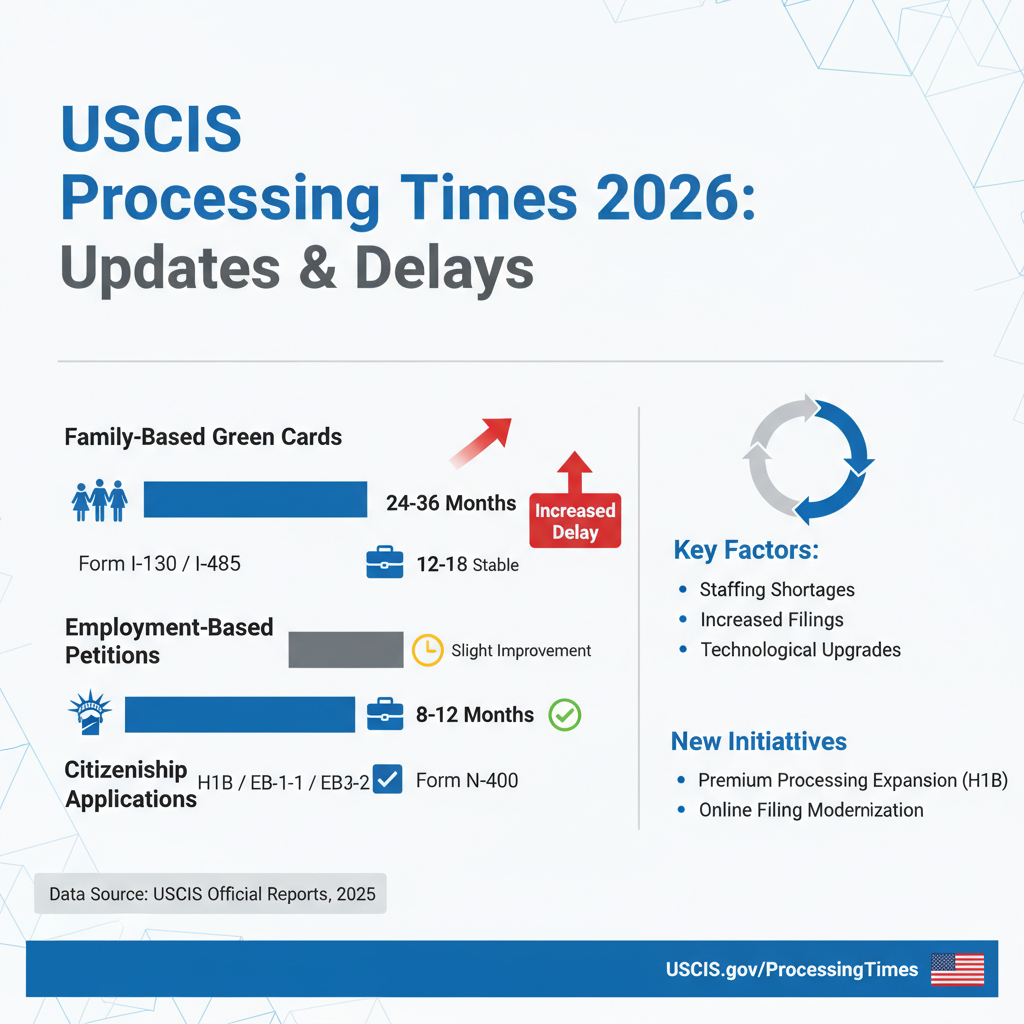
The continuous flow of updates from USCIS regarding processing times isn't just bureaucratic jargon; it directly impacts the lives and futures of countless immigrants. For those living in Orlando, across the I-4 corridor, or anywhere in Florida, these updates can dictate when you can work, travel, or finally reunite with loved ones. Understanding the rhythm of these announcements is key to planning your life.
Why this news is showing up now
USCIS processing times are dynamic, constantly fluctuating based on a multitude of factors. In 2026, we continue to see the effects of increased application volumes, staffing levels, technological infrastructure improvements (or challenges), and evolving immigration policies. USCIS is under constant pressure to process applications efficiently while maintaining the integrity of the immigration system. As such, they regularly analyze their backlogs and throughput, publishing updated estimates to manage public expectations and provide transparency.
These updates reflect ongoing efforts to address the lingering effects of past operational challenges, such as those exacerbated by the pandemic, as well as the implementation of new digital processing initiatives. They are a snapshot of USCIS's current operational capacity and a critical indicator for applicants about what to expect.
How it can affect Florida residents
Florida is home to a vast and diverse immigrant population, with major USCIS Field Offices in Orlando, Hialeah, and Tampa serving thousands of applicants annually. The impact of USCIS processing time updates on Florida residents is profound:
- Family Unity: Delays in petitions like **Form I-130** (Petition for Alien Relative) can mean longer separations for families. Conversely, faster processing might bring families together sooner, a core value at Imigrar.
- Employment Authorization: For those awaiting **Form I-765** (Application for Employment Authorization), delays can lead to periods of unemployment, causing severe financial strain for individuals and families in Orange County and beyond.
- Travel Restrictions: Delays in **Form I-131** (Application for Travel Document, including Advance Parole) can prevent individuals from traveling internationally, even for urgent family matters, without risking their **Adjustment of Status** application.
- Uncertainty and Stress: Prolonged waiting periods can take a significant toll on mental health, creating immense stress and uncertainty about the future for individuals and communities throughout Central Florida.
- Planning and Decision-Making: Businesses relying on foreign talent, and individuals planning their careers or education, depend on predictable timelines. Fluctuating processing times complicate these critical life decisions.
For example, if your case is handled by the Orlando USCIS Field Office, you might experience different wait times than someone whose case is at a different field office or service center, even for the same form. Local office backlogs, interview schedules, and resource allocation play a significant role. This is why staying informed and having expert legal guidance is invaluable.
Need Help? Our Orlando immigration team is ready to assist. Call +1 786-791-3106 for a free consultation, or message us online. Se Habla Español.
What USCIS Processing Times Are (and Why It Matters)
Understanding USCIS processing times is fundamental to managing your expectations and strategizing your immigration journey. These aren't just arbitrary numbers; they are crucial indicators that directly influence your life and future in the U.S.
A plain-English definition
In simple terms, USCIS processing times are estimates of how long it takes the agency to process a particular immigration form or application from the moment it’s received until a final decision is made. Think of it like a restaurant providing an estimated wait time for your order. It's not a guarantee, but an average based on current workload, staffing, and historical data.
These times are presented as a range (e.g., 6 to 12 months) and can vary significantly depending on several factors, including:
- Type of Form: Different forms (**Form I-130**, **Form I-485**, **Form I-765**, etc.) have different complexities and statutory requirements, leading to varied processing times.
- Application Category: Within a form type, categories matter. For instance, a **Form I-130** for an immediate relative (spouse, parent, minor child of a U.S. citizen) typically processes faster than one for a preference category (e.g., adult child or sibling).
- Service Center or Field Office: USCIS operates several service centers (e.g., Nebraska, Texas, California, Vermont) and numerous field offices (like the Orlando USCIS Field Office). Each location may have different backlogs and operational efficiencies, leading to varied times.
- Case Complexity: Cases with missing documents, those requiring a **Request for Evidence (RFE)**, or those with complex legal issues will naturally take longer.
It's vital to remember that these are averages. Your individual case might be processed faster or slower than the published estimate.
Key terms you need to know
To effectively monitor your case and understand USCIS updates, familiarity with certain terms is essential:
- Processing Time: The estimated duration from USCIS receiving your application to making a final decision.
- Receipt Date: The date USCIS officially received your application. This is typically found on your **Form I-797C**, Notice of Action. This is your starting point for calculating your wait time.
- Priority Date: For visa categories subject to annual numerical limits (e.g., most family-preference and employment-based categories), this is the date your petition (**Form I-130** or **Form I-140**) was properly filed and accepted by USCIS. It determines your place in the visa queue and is published monthly in the Visa Bulletin by the U.S. Department of State.
- Service Center: One of USCIS's five primary processing centers (California, Nebraska, Potomac, Texas, Vermont) that handle specific types of applications from across the country. Your receipt notice will indicate which service center is processing your case.
- Field Office: Local USCIS offices (like the Orlando USCIS Field Office) that handle interviews, naturalization ceremonies, and some local processing for residents within their jurisdiction.
- Case Status Online: The USCIS online tool where you can check the current status of your application using your receipt number.
- Adjustment of Status (AOS): The process of applying for lawful permanent resident (Green Card) status while physically present in the United States, typically through **Form I-485**.
- Consular Processing: The process of applying for an immigrant visa at a U.S. Embassy or Consulate abroad. This involves the U.S. Department of State after USCIS approves the initial petition.
- Biometrics Appointment: A scheduled appointment where USCIS collects fingerprints, photographs, and a signature for background checks.
- Request for Evidence (RFE): A letter from USCIS requesting additional documents or information to support your application. Responding promptly and completely to an RFE is critical to avoid delays or denial.
- Notice of Intent to Deny (NOID): A notice from USCIS indicating their intention to deny your application unless you provide specific information or evidence to overcome the grounds for denial. This is a **Warning:** and requires immediate, expert attention.
Current Immigration Law: The Foundation
While USCIS processing times are operational metrics, they exist within the rigid framework of U.S. immigration law. The foundation for all immigration applications and their processing stems from federal statutes and regulations. There are no "Florida-specific" immigration laws governing USCIS procedures; the rules are uniform across the nation, though local field office interpretations and backlogs can create regional differences in processing speed.
The primary legal authority is the Immigration and Nationality Act (INA), which codified and organized U.S. immigration law. The INA, along with subsequent amendments and regulations published in the Code of Federal Regulations (CFR), dictates eligibility requirements, application procedures, and the types of benefits available. USCIS is a component of the Department of Homeland Security (DHS) and operates under these federal mandates.
Federal requirements
All immigration applications, regardless of where they are filed in the U.S., must adhere to federal requirements. This includes:
- Proper Form Submission: Using the correct and most current version of the USCIS form, found on the USCIS official website. For example, a family-based immigration petition starts with **Form I-130**.
- Required Documentation: Submitting all necessary supporting documents, such as birth certificates, marriage certificates, passports, financial records, and medical examination results (Form I-693).
- Correct Fees: Paying the correct filing fees, which are regularly updated by USCIS. Fee waivers may be available for eligible applicants.
- Eligibility Criteria: Meeting the specific eligibility requirements for the immigration benefit sought (e.g., relationship for family petitions, educational/professional qualifications for employment visas, grounds for asylum).
- Admissibility Standards: Applicants must be admissible to the U.S., meaning they must not have any criminal history, health issues, or other grounds of inadmissibility that would prevent them from receiving an immigration benefit. Waivers may be available for certain grounds.
- Biometrics and Interviews: Most applicants will be required to attend a biometrics appointment and, for many benefits like **Adjustment of Status**, an interview at a USCIS Field Office, such as the Orlando USCIS Field Office.
Important: Failure to meet any of these federal requirements can lead to delays, Requests for Evidence (RFEs), or even denial of your application, significantly impacting your processing timeline.
Florida-specific considerations
While the core immigration laws are federal, the experience of immigrants in Florida is shaped by how these laws interact with state-level policies and local operational realities. The Orlando USCIS Field Office, for instance, processes thousands of applications annually for residents of Orange County and surrounding areas. Its specific workload, staffing levels, and interview scheduling practices can influence local processing times for interviews and final adjudications, even if the initial petition was processed at a national service center.
Furthermore, state laws, while not directly controlling USCIS processing, can affect immigrants waiting for status. For example, state laws concerning driver's licenses, professional licensing, or access to certain public benefits can become critical issues for individuals whose work authorization or permanent residency is delayed by federal processing backlogs. This interplay highlights the importance of having a local immigration law firm like Imigrar, which understands both the federal framework and the practical implications for Florida residents.
How to Navigate USCIS Processing Times: A Complete Step-by-Step Guide
Successfully managing your immigration application requires more than just filing forms; it demands strategic monitoring and proactive engagement, especially when dealing with ever-changing USCIS processing times. Here’s a detailed, step-by-step guide to help you navigate this complex landscape.
1) Understand Your Specific Application & Form
Before you even begin, you must clearly identify the exact immigration benefit you are seeking and the corresponding USCIS form. The journey for a family-based green card differs significantly from an employment-based visa or asylum application. Each form has unique requirements and, crucially, different processing timelines. For instance:
- Family-Based Petitions: Often starts with **Form I-130**, Petition for Alien Relative.
- Adjustment of Status (Green Card in U.S.): Requires **Form I-485**, Application to Register Permanent Residence or Adjust Status, often filed concurrently with **Form I-130**, **Form I-765** (Employment Authorization), and **Form I-131** (Travel Document).
- Employment Authorization: For those eligible, **Form I-765** is used.
- Naturalization: For U.S. citizenship, you'll file **Form N-400**, Application for Naturalization.
Required Documents (General for Initial Filing):
- Original birth certificates (with certified translations if not in English).
- Original marriage certificates (if applicable, with certified translations).
- Copies of passports and visas.
- Proof of lawful entry (e.g., **Form I-94**).
- Photographs meeting USCIS specifications.
- Relevant financial documents (e.g., **Form I-864**, Affidavit of Support).
- Previous immigration documents or notices.
2) Locate Your Processing Time on the USCIS Website
Once you know your form type and category, the next critical step is to check the official USCIS processing times. This is your primary source for current estimates:
- Go to the official USCIS Processing Times page.
- Select your "Form" from the dropdown menu (e.g., I-485, Application to Register Permanent Residence or Adjust Status).
- Select your "Form Category" (e.g., Family-based, Employment-based, Asylum). This is crucial as categories within the same form can have vastly different times.
- Select your "Field Office or Service Center." This information is typically found on your **Form I-797C** receipt notice. For Central Florida residents, your local interviews would be at the Orlando USCIS Field Office.
- Click "Get processing time."
The results will show a range (e.g., 8.5 months to 13 months). Pay attention to the "Case Inquiry Date" – if your receipt date is earlier than this date, your case is officially outside normal processing times.
Required Documents:
- Your **Form I-797C** (Notice of Action) to identify your Receipt Date and the Service Center/Field Office handling your case.
3) Monitor Your Case Status Online
Regularly checking your case status online is essential for staying informed about any updates, biometrics appointments, RFEs, or interview notices. This tool provides real-time (or near real-time) information on your application's progress.
- Visit the USCIS Case Status Online tool.
- Enter your 13-digit receipt number (e.g., EAC-XX-XXX-XXXXX) found on your **Form I-797C**.
- Click "Check Status."
You can also create a USCIS online account to link your cases and receive email notifications when your case status changes. This is highly recommended for all applicants.
Common Status Updates:
- "Case Was Received": Your application has been accepted.
- "Biometrics Appointment Was Scheduled": Expect a notice for your fingerprinting appointment.
- "Request for Evidence Sent": An RFE has been mailed.
- "Interview Was Scheduled": Your interview date is coming.
- "Case Was Approved": Congratulations, your application was successful!
Required Documents:
- Your 13-digit Receipt Number from your **Form I-7


