

The journey through the U.S. immigration system can often feel like a marathon, punctuated by periods of anxious waiting. For immigrants and their families in Orlando, across Florida, and nationwide, understanding current USCIS (U.S. Citizenship and Immigration Services) processing times is not just helpful—it’s absolutely critical. As we move through 2026, USCIS continues to adapt to evolving demands, policy adjustments, and ongoing efforts to reduce backlogs, leading to regular updates in how long it takes to process your vital applications.
At Imigrar, an immigration law firm based in Orlando, Florida, our mission is to "Keep Families Together." We understand the profound impact that processing delays and uncertainty can have on your life. This comprehensive guide is designed to demystify USCIS processing times for 2026, offering clarity, practical advice, and actionable steps you can take to navigate your immigration journey with confidence.
Need Help? Our Orlando immigration team is ready to assist. Call +1 786-791-3106 for a free consultation, or message us online. Se Habla Español.
The reporting that sparked this guide
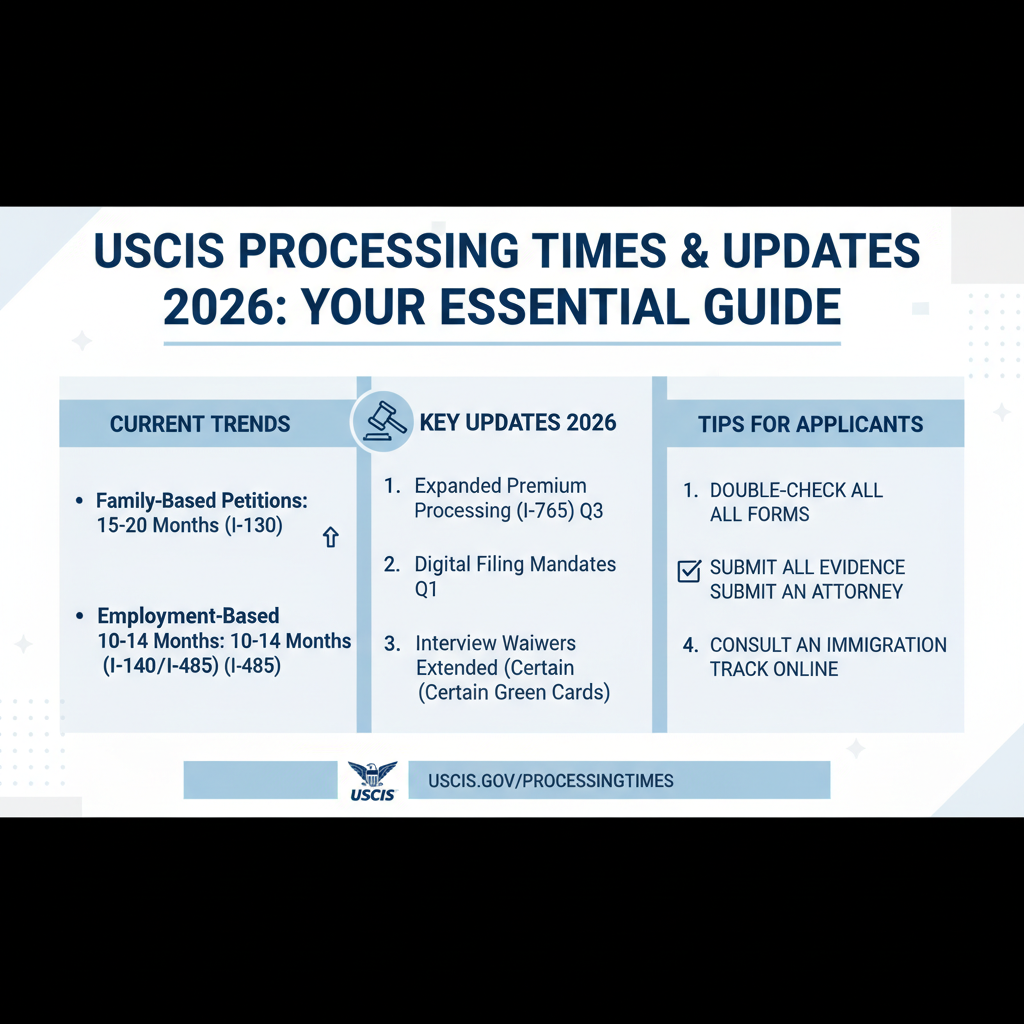
The information and guidance in this article are inspired by the ongoing discourse and official announcements regarding processing times for immigration applications, as highlighted by recent trends and reports from USCIS:
USCIS Processing Times and Updates for 2026 (USCIS)
What This News Means for Immigrants in Orlando and Across Florida
The consistent updates from USCIS regarding processing times are more than just statistics; they are a direct reflection of the agency's operational efficiency and the overall landscape of immigration in the United States. For individuals and families pursuing their American dreams, these updates dictate the pace of their lives, their ability to work, travel, and ultimately, secure their future.
Why this news is showing up now
USCIS processing times are not static. They are dynamic estimates that fluctuate based on a multitude of factors. In 2026, these factors include:
- Caseload Volume: The sheer number of applications received significantly impacts how quickly cases can be processed. A surge in filings for specific forms can lead to longer waits.
- Staffing and Resources: The agency's ability to hire and train sufficient personnel, along with its technological infrastructure, plays a crucial role. Efforts to improve efficiency and reduce backlogs often involve new hiring initiatives and system upgrades.
- Policy Changes: New immigration policies or changes to existing regulations can alter processing procedures, sometimes requiring additional scrutiny or new steps, thus affecting timelines.
- Budgetary Constraints: USCIS is largely funded by application fees. Fluctuations in fee revenue can impact its operational capacity.
- Ongoing Backlog Reduction Efforts: Following periods of significant backlogs, particularly those exacerbated by global events in recent years, USCIS has been implementing strategies to catch up. These efforts are ongoing and their success (or challenges) directly influences the reported times.
- Technology Implementation: The agency continues to modernize its systems, including expanding online filing options and digital processing, which can eventually streamline operations but may cause temporary adjustments during implementation.
These factors combine to create a constantly shifting environment, necessitating regular updates from USCIS. Staying informed about these changes is paramount for effective planning.
How it can affect Florida residents
Florida, particularly Central Florida and the Orlando metropolitan area, is home to a vibrant and diverse immigrant community. The impact of USCIS processing times on Florida residents can be particularly acute:
- Orlando Field Office Caseload: The Orlando USCIS Field Office, along with other major field offices in Florida (e.g., Miami, Tampa), handles a significant volume of interviews for applications like Adjustment of Status (Form I-485) and naturalization (Form N-400). The local caseload directly influences how quickly interviews are scheduled and adjudicated for residents of Orange County and surrounding areas along the I-4 corridor.
- Economic Impact: Delays in processing employment authorization documents (Form I-765) can prevent individuals from legally working and contributing to Florida's economy, affecting families' financial stability. Similarly, delays in green card processing can hinder career progression and long-term planning.
- Family Separation and Reunification: For family-based petitions (Form I-130), extended processing times mean longer periods of separation for families, directly conflicting with Imigrar's mission to "Keep Families Together."
- Travel Restrictions: Applicants waiting for advance parole (Form I-131) or a final decision on their green card may be unable to travel internationally, impacting family visits, business obligations, or even urgent humanitarian needs.
- Uncertainty and Stress: The emotional toll of prolonged waiting periods and uncertainty about one's immigration status can be immense. This stress affects individuals, their families, and their ability to integrate fully into their communities.
Understanding these local impacts is why Imigrar emphasizes proactive legal counsel. Our Orlando team is intimately familiar with the specific challenges faced by immigrants in Florida and can provide tailored guidance.
What USCIS Processing Times Are (and Why They Matter)
For many, the term "USCIS processing times" can seem vague and intimidating. Let's break it down into plain English and explain why it's so crucial for your immigration journey.
A plain-English definition
USCIS processing times are simply the estimated amount of time it takes for USCIS to process a specific immigration application or petition from the date they receive it until they make a decision. Think of it like a queue at a government office: the processing time tells you, on average, how long people ahead of you in line had to wait. These times are estimates, not guarantees, and are typically calculated based on how long it took to complete 80% of similar cases in the recent past.
These estimates are published online by USCIS and are broken down by the specific form you filed, the category under which you filed, and the particular USCIS service center or field office that is handling your case. For example, the time it takes to process a Form I-130 (Petition for Alien Relative) at the California Service Center will likely be different from the time it takes to process a Form I-485 (Application to Register Permanent Residence or Adjust Status) at the Orlando Field Office.
Key terms you need to know
Navigating USCIS processing requires understanding a few key terms:
- Processing Times: As defined above, the estimated duration for USCIS to process a specific form. You can check these at USCIS Processing Times.
- Receipt Date: This is the exact date USCIS received your application. It's usually found on your Form I-797C, Notice of Action (your receipt notice). This date is crucial for determining if your case is "outside normal processing times."
- Priority Date: This term is critical for visa categories that have annual numerical limits (e.g., most family-sponsored and employment-based categories). It is the date USCIS received your properly filed petition (e.g., Form I-130 or Form I-140). Your **Priority Date** must become "current" in the monthly Visa Bulletin before your application for a green card (either through Adjustment of Status or consular processing) can be finalized.
- Visa Bulletin: A monthly publication by the U.S. Department of State that indicates when immigrant visas are available for specific categories and countries. If your **Priority Date** is not "current" according to the **Visa Bulletin**, your green card application cannot be approved, even if all other aspects are processed.
- Service Center: USCIS has several service centers (e.g., California, Nebraska, Texas, Vermont, Potomac, National Benefits Center) that handle the initial processing of most forms. The specific service center depends on the type of form and where you live.
- Field Office: These are local USCIS offices (like the Orlando Field Office) that primarily handle interviews for certain applications, such as Adjustment of Status, naturalization, and asylum.
- Backlog: Refers to an accumulation of unprocessed cases, often leading to longer processing times than officially published. USCIS continually works to address these backlogs.
- Request for Evidence (RFE): A notice from USCIS asking for additional documents or information to support your application. Failing to respond adequately and on time can significantly delay your case or even lead to denial.
- Notice of Intent to Deny (NOID): A more serious notice from USCIS indicating that they intend to deny your application unless you provide compelling evidence to overcome their concerns. This requires immediate and strategic action.
- Adjustment of Status (AOS): The process of applying for a green card while physically present in the United States, typically using Form I-485.
- Consular Processing: The process of applying for an immigrant visa through a U.S. embassy or consulate abroad.
Understanding these terms empowers you to better track your application and respond appropriately to USCIS communications. For residents of Orlando and Central Florida, knowing which local field office handles your case is particularly important for interview scheduling.
Feeling overwhelmed by immigration jargon? Our team at Imigrar can clarify everything. Call +1 786-791-3106 for a free consultation. Se Habla Español.
Current Immigration Law: The Foundation of Processing
USCIS processing times are not arbitrary; they are a direct consequence of the legal framework governing immigration in the United States. The Immigration and Nationality Act (INA), along with its accompanying regulations, dictates the eligibility requirements, procedures, and statutory processing mandates (where they exist) for virtually every immigration benefit.
Federal requirements
The core of U.S. immigration law is the Immigration and Nationality Act (INA). This federal statute establishes the various categories for immigration (e.g., family-based, employment-based, refugee/asylum, diversity visa) and the specific criteria applicants must meet. USCIS, as an agency within the Department of Homeland Security (DHS), is tasked with administering these laws and regulations. Every form you submit, from Form I-130 to Form I-485, is designed to gather information that demonstrates your eligibility under these federal laws.
For instance:
- Family-Based Petitions: Form I-130, Petition for Alien Relative, is filed under INA § 204. The processing time for this form depends on the relationship (immediate relative vs. preference category) and the service center.
- Adjustment of Status: Form I-485, Application to Register Permanent Residence or Adjust Status, allows eligible individuals already in the U.S. to obtain a green card. Its processing is governed by INA § 245 and is often dependent on **Priority Date** availability (for preference categories) and local field office interview capacity.
- Employment Authorization: Form I-765, Application for Employment Authorization, is filed by various categories of non-citizens seeking work authorization under INA § 274A. Delays here directly impact an individual's ability to work.
- Travel Documents: Form I-131, Application for Travel Document (for advance parole or re-entry permits), is crucial for those needing to travel internationally while their green card application is pending. Its processing is based on INA § 212(d)(5) and other provisions.
USCIS is legally bound to review applications against these federal requirements. Any missing documentation, inconsistencies, or failure to meet eligibility criteria will trigger an RFE or NOID, inherently extending processing times.
For the most up-to-date forms and instructions, always refer to the USCIS Forms page on the USCIS official website.
Florida-specific considerations
While immigration law is federal, its implementation and the resulting processing times can have localized variations. For Florida residents, particularly those in the Orlando area, these considerations include:
- Local Field Office Caseloads: The sheer volume of immigration applications originating from Florida means that local field offices, such as the Orlando USCIS Field Office, often have substantial caseloads. This can influence the speed at which interviews are scheduled for Form I-485 and Form N-400 (Application for Naturalization).
- Regional Trends: Demographic shifts and specific migration patterns within Florida can lead to higher filing rates for certain application types, potentially impacting local processing for those forms. For example, specific visa programs or humanitarian parole initiatives might see higher uptake in Florida.
- Resources Allocation: USCIS allocates resources across its field offices based on demand. While federal, the resources available to the Orlando office can influence its operational efficiency and, consequently, its processing times for local interviews and adjudications.
It's important to remember that most initial processing for petitions like Form I-130 occurs at USCIS Service Centers (e.g., Nebraska, Texas), regardless of where the petitioner resides in Florida. However, the final stages, especially interviews for Adjustment of Status, are handled locally. This means a long wait at a service center can be followed by an additional wait at the Orlando Field Office.
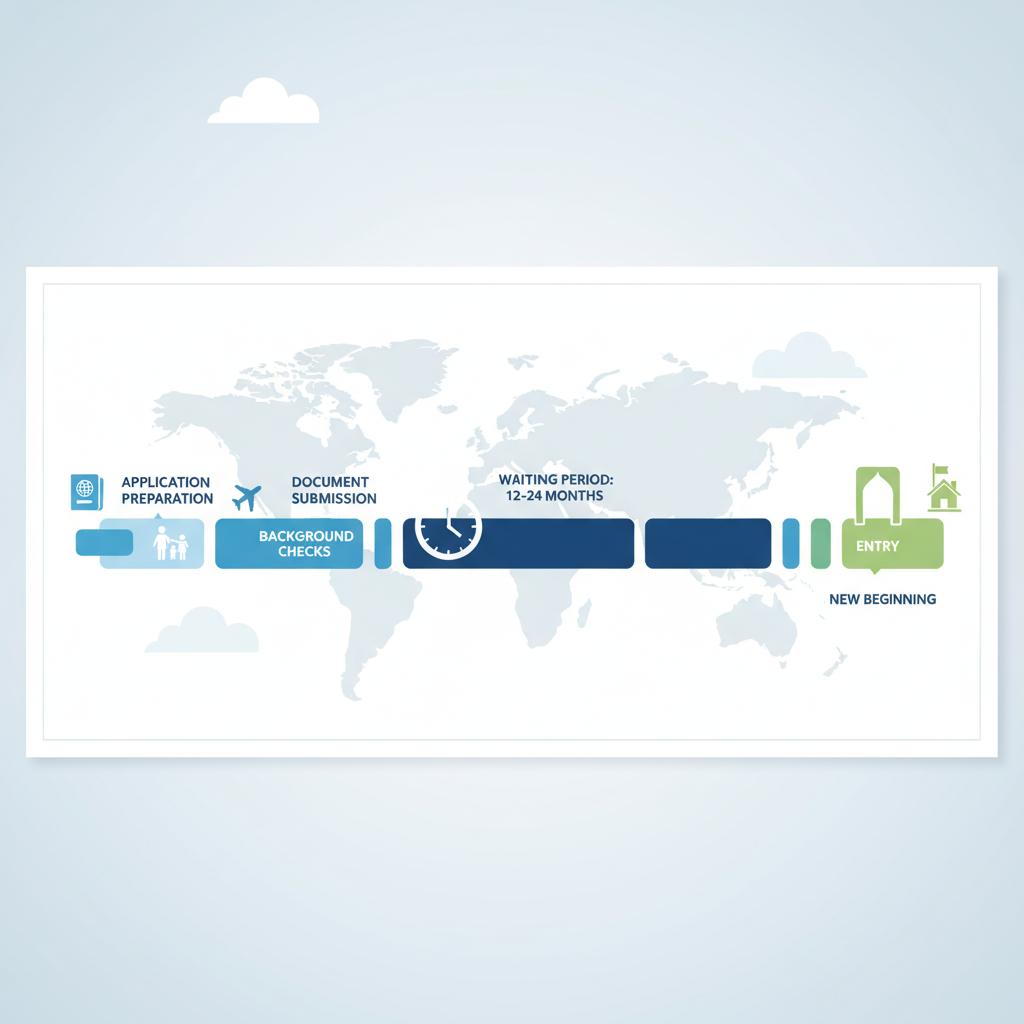
How to Monitor and Potentially Expedite Your USCIS Application: A Complete Step-by-Step Guide
Understanding USCIS processing times is the first step; actively monitoring your case and knowing when and how to intervene is the next. Here’s a detailed guide for immigrants in Orlando and beyond.
1) Understand Your Application and Its Journey
Before you can monitor anything, you need to know exactly what you’re tracking.
- Identify the specific form(s) you filed (e.g., Form I-130, Form I-485, Form I-765, Form I-131).
- Locate your Receipt Notice (Form I-797C, Notice of Action). This document is critical. It contains your 13-character **Receipt Number** (e.g., EAC, WAC, LIN, SRC, NBC, IOE followed by 10 numbers), the date USCIS received your application (**Receipt Date**), and indicates which USCIS Service Center or Field Office is processing your case.
- Understand the **Case Type** and filing category, as processing times vary significantly between them.
Required Documents/Information:
- Your original Receipt Notice (Form I-797C)
- A copy of your complete application package
2) Regularly Check USCIS Processing Times Online
This is your primary tool for understanding current expectations.
- Visit the official USCIS Processing Times page.
- Select your **Form Number** (e.g., I-485).
- Select the **Form Category** (e.g., "Family-based adjustment applicants").
- Select the **Field Office or Service Center** that is processing your case (as indicated on your **Receipt Notice**). For many, this will be the Orlando Field Office for interviews or a specific service center for initial processing.
- The website will display a range of estimated processing times (e.g., "6 to 12 months"). Your **Receipt Date** should fall within this range. If it's older than the upper end of the range, your case might be "outside normal processing times."
Reminder: These times are estimates and can change monthly. Always check the most current information.
Required Information:
- Your **Form Number**
- The **Service Center** or **Field Office** processing your case
- Your **Receipt Date**
3) Monitor the USCIS Case Status Online Tool
Beyond estimated processing times, this tool gives you real-time updates on your specific case.
- Go to the USCIS Case Status Online page.
- Enter your 13-character **Receipt Number** into the search bar.
- The system will display the most recent action taken on your case (e.g., "Case Was Received," "Fingerprint Review Was Completed," "Interview Was Scheduled," "New Card Is Being Produced").
- You can also sign up for email and SMS text alerts to receive automatic notifications whenever your case status changes. This is highly recommended.
Important: A status like "Case Was Received" doesn't mean your case hasn't moved internally; it just means there hasn't been a public update. Patience is key, but consistent monitoring is prudent.
Required Information:
- Your **Receipt Number**
4) Understand and Use the USCIS Visa Bulletin (If Applicable)
If you are applying for a green card through a family-sponsored or employment-based preference category, the **Visa Bulletin** is as important as processing times.
- Visit the U.S. Department of State Visa Bulletin page.
- Find your **Visa Category** (e.g., F1, F2A, EB1, EB2) and your **Country of Chargeability** (usually your country of birth).
- Locate the "Final Action Dates" and "Dates for Filing" charts. Your **Priority Date** must be on or before the date listed for your category and country for your green card application (**Form I-485** or immigrant visa) to be finalized.
- If your **Priority Date** is not "current," USCIS cannot approve your green card, even if they have processed all other aspects of your application. This is a common source of confusion and frustration for many, especially those in Orlando waiting on family petitions.
Required Information:
- Your **Priority Date** (from your **Form I-797C** for the underlying petition like Form I-130 or Form I-140)
- Your **Visa Category** and


