

The reporting that sparked this guide: USCIS Processing Times and Updates for 2026 (USCIS)
What This News Means for Immigrants in Orlando and Across Florida
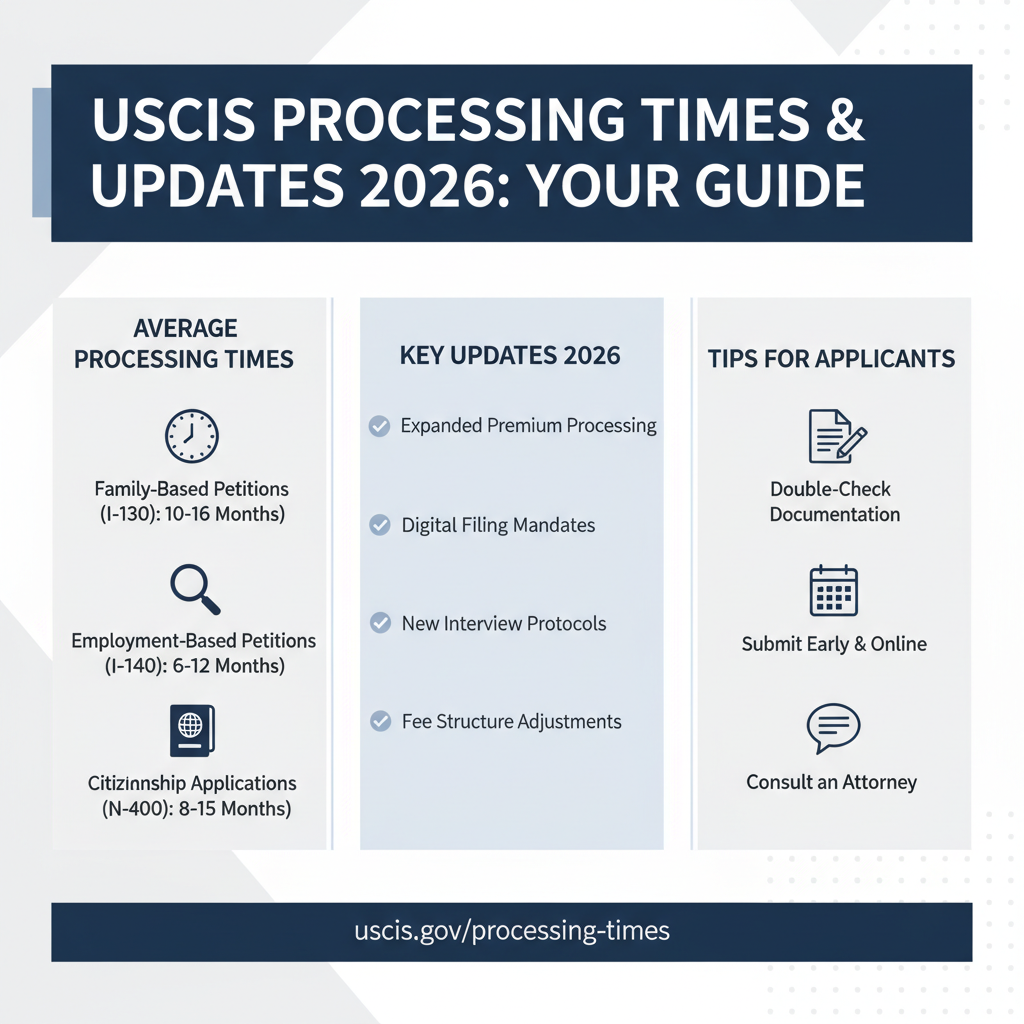
For individuals and families pursuing their American dream in Orlando and throughout Florida, the speed at which U.S. Citizenship and Immigration Services (USCIS) processes applications is often the most critical factor in their immigration journey. USCIS processing times are not merely statistics; they represent the wait, the uncertainty, and the anticipation that define an immigrant’s path. As we move further into 2026, understanding the latest updates and trends in these processing times is paramount for effective planning and peace of mind.
Why this news is showing up now
USCIS processing times are dynamic, constantly fluctuating due to a myriad of factors. Updates and news regarding these times surface regularly because they are a direct reflection of the agency's operational efficiency, policy shifts, and the sheer volume of applications received. In early 2026, several elements contribute to the ongoing discussion about processing times:
- Post-Pandemic Backlogs: While significant progress has been made, the lingering effects of the COVID-19 pandemic, which caused office closures, reduced staffing, and operational limitations, continue to impact processing speeds for many application types. USCIS has been working diligently to reduce these backlogs, but it remains an ongoing challenge.
- Policy Changes and Priorities: Administrative priorities and new policies can redirect resources, sometimes accelerating certain application categories while inadvertently slowing others. For instance, a renewed focus on family reunification or employment-based visas could shift processing speeds.
- Budget and Staffing Levels: USCIS is primarily funded by application fees. Fluctuations in fee revenue, congressional appropriations, and staffing levels directly affect the agency's capacity to process cases efficiently. Recruitment and training of new officers take time, impacting immediate processing capabilities.
- Technological Modernization: USCIS is continuously working to modernize its systems, including expanding online filing options and improving case management tools. While beneficial in the long run, the implementation phases can sometimes introduce temporary adjustments to processing workflows.
- Seasonal and Volume Increases: Certain times of the year or specific immigration programs may experience surges in application volume, naturally extending processing times for those categories.
These factors combine to create a constantly evolving landscape, making regular updates from USCIS a necessity for anyone with a pending application or considering filing one.
How it can affect Florida residents
Florida, particularly the Orlando area and the I-4 corridor, is a vibrant hub for immigrants from across the globe. The impact of USCIS processing times on Florida residents can be profound:
- Planning and Stability: Longer processing times can delay family reunification, impact employment opportunities, and create significant uncertainty for individuals trying to establish their lives in the Sunshine State. For those seeking Adjustment of Status to permanent residency, delays can prolong the wait for a green card, affecting travel plans and the ability to apply for certain benefits.
- Work Authorization Delays: Many applicants, especially those applying for green cards or asylum, rely on timely processing of their Form I-765, Application for Employment Authorization, to legally work. Delays in EAD processing can lead to job loss or inability to start new employment, causing severe financial hardship for families in Orlando, Tampa, and Miami.
- Travel Restrictions: Applicants for Advance Parole (Form I-131), which allows travel outside the U.S. while a green card application is pending, may face extended waits. This can prevent individuals from visiting family abroad or attending to urgent matters in their home countries.
- Local Field Office Impact: The Orlando USCIS Field Office and other offices across Florida handle interviews and certain local adjudications. While national processing times reflect overall trends, local office workloads can influence the final stages of many cases. High demand in a populous state like Florida can sometimes translate into longer local interview scheduling.
- Community Stress: The uncertainty associated with prolonged waits can take a significant emotional toll on families in Orange County and surrounding areas. This stress can affect mental health, family dynamics, and overall integration into the community.
For these reasons, staying informed about the latest USCIS processing updates is not just good practice—it's essential for the well-being and future planning of Florida's immigrant communities.
Need Help Navigating USCIS Processing Times? Our Orlando immigration team at Imigrar is ready to assist. Call +1 786-791-3106 for a free consultation, or message us online. Se Habla Español.
What USCIS Processing Times Are (and Why They Matter)
Understanding USCIS processing times is fundamental for anyone involved in the immigration process. These times are not guarantees but rather estimates, providing a general idea of how long it might take for USCIS to process a particular application or petition. They are a critical tool for managing expectations and planning your future.
A plain-English definition
Simply put, USCIS processing times refer to the period between the date USCIS officially receives your application or petition (your Receipt Date) and the date they take a final action on it (approval, denial, or Request for Evidence). These times are published on the USCIS website and are typically displayed as a range (e.g., 10 to 14 months) or as the time it takes to process 80% of cases. They are calculated based on historical data—the average time it took for similar cases to be completed in the recent past.
It's important to differentiate between general processing times and the specific status of your individual case. While processing times offer a broad estimate, your unique application may take more or less time depending on its specific details, the completeness of your submission, and any unforeseen complications.
Key terms you need to know
To effectively monitor and understand your application's progress, familiarize yourself with these essential terms:
- Receipt Date: This is the date USCIS physically receives your application. You will find this date on your Form I-797C, Notice of Action (receipt notice). This date is crucial because it marks the beginning of the processing timeline for your case.
- Priority Date: Primarily relevant for family-sponsored and employment-based immigrant visa petitions (like Form I-130 or Form I-140), the Priority Date is the date your petition was properly filed with USCIS. For family petitions, it's the Receipt Date. For employment petitions requiring a labor certification, it's the date the Department of Labor received the labor certification application. Your Priority Date must be "current" according to the monthly Visa Bulletin before you can file for Adjustment of Status (Form I-485) or apply for an immigrant visa abroad.
- Case Inquiry Date: This is the earliest date you can inquire with USCIS about your case if it appears to be taking longer than the published processing times. USCIS provides this date on their processing times page. If your Receipt Date is earlier than the Case Inquiry Date, your case is considered "outside normal processing times."
- Expected Time Range: This is the estimated period USCIS provides for processing a particular form at a specific service center or field office. It's usually presented as "from X months to Y months."
- Service Center vs. Field Office: Most initial petitions and applications are sent to one of USCIS's service centers (e.g., California Service Center, Nebraska Service Center). However, certain applications, especially those involving interviews (like Form I-485 or Form N-400 for naturalization), are eventually transferred to a local USCIS Field Office (e.g., the Orlando Field Office) for final processing and adjudication.
- Biometrics Appointment: Also known as an Application Support Center (ASC) appointment, this is where USCIS collects fingerprints, photographs, and signatures to conduct background checks. It's a mandatory step for many applications, including Form I-485 and Form N-400.
- Request for Evidence (RFE): If USCIS determines that your application is missing required documentation or needs further clarification, they will send you an RFE. Responding promptly and thoroughly to an RFE is crucial to avoid delays or even denial.
Understanding these terms empowers you to track your application more effectively and recognize when it might be appropriate to take action, such as submitting an inquiry or consulting with an immigration attorney.
Current Immigration Law: The Foundation of Processing Times
USCIS processing times, while seemingly arbitrary at times, are ultimately rooted in federal immigration law and the regulatory framework that governs the agency's operations. The Immigration and Nationality Act (INA), along with its accompanying regulations, dictates the procedures, requirements, and to some extent, the timelines for various immigration benefits.
Federal requirements
The processing of immigration applications is governed by the Immigration and Nationality Act (INA), which is codified in Title 8 of the U.S. Code. While the INA sets out eligibility criteria for various visas and benefits (e.g., family-based immigration under INA §201, employment-based immigration under INA §203, naturalization under INA §316), it generally does not mandate specific processing deadlines for most application types. Instead, the law grants USCIS broad discretion in managing its workload.
However, certain statutory or regulatory provisions do influence processing:
- Adjudication Standards: The INA outlines the legal standards USCIS adjudicators must apply when reviewing petitions. This includes requiring sufficient evidence, ensuring eligibility, and conducting background checks, all of which contribute to the time needed for a thorough review.
- Interview Requirements: For many applications, such as Form I-485, Application to Register Permanent Residence or Adjust Status, and Form N-400, Application for Naturalization, an interview is a mandatory step. The scheduling and completion of these interviews significantly impact overall processing times.
- Background and Security Checks: Federal law mandates rigorous background and security checks for all immigration applicants. These checks, conducted by various government agencies, can sometimes cause unpredictable delays, especially for individuals with common names or those who have resided in multiple countries.
- Visa Bulletin Quotas: For preference categories in family-sponsored and employment-based immigration, the INA establishes annual quotas. This means that even if your petition is approved, you cannot file for Adjustment of Status or receive an immigrant visa until your Priority Date becomes current under the U.S. Department of State's monthly Visa Bulletin. This legal quota system directly impacts the waiting period, irrespective of USCIS's internal processing speed for the petition itself.
For more detailed information on specific forms and their legal basis, you can always refer to the USCIS Forms page on the USCIS official website.
Florida-specific considerations
While immigration law is federal, its application and the operational realities of USCIS can have localized effects:
- Orlando USCIS Field Office: For residents of Orlando, Kissimmee, Sanford, and other Central Florida communities, the local USCIS Field Office plays a crucial role. This office conducts interviews for Adjustment of Status, naturalization, and other benefits. The workload and staffing levels at the Orlando office can directly influence the wait times for these crucial final steps. While processing times for forms like Form I-130 (Petition for Alien Relative) or Form I-765 (Application for Employment Authorization) are often determined by national service centers, the interview scheduling is local.
- High Volume of Applicants: Florida is a major destination for immigrants, leading to a high volume of applications originating from the state. This can sometimes strain local resources, potentially contributing to longer waits for interviews or local services compared to less populous regions.
- Access to Legal Services: The presence of numerous immigration law firms, like Imigrar, in Orlando and other major Florida cities means that applicants have access to experienced legal counsel who understand the nuances of local processing and can advocate on their behalf if delays occur.
It's important for Florida residents to not only monitor national USCIS processing times but also to be aware of any specific advisories or trends related to the Orlando Field Office or the broader Southeast region.
How to Monitor and Manage Your USCIS Application: A Complete Step-by-Step Guide
Navigating the complexities of USCIS processing times requires a proactive approach. This guide will walk you through the essential steps to track your application and manage expectations effectively.
1) Understand Your Application and Form Number
Before you can track anything, you need to know exactly what you're tracking.
- Identify the Form: Pinpoint the specific USCIS form you filed (e.g., Form I-130 for family petitions, Form I-485 for Adjustment of Status, Form N-400 for naturalization, Form I-765 for work authorization).
- Locate Your Receipt Notice: Upon filing, USCIS sends a Form I-797C, Notice of Action. This notice contains vital information: your 13-digit Receipt Number (starting with 3 letters like EAC, WAC, LIN, SRC, or IOE), your Receipt Date, and the USCIS service center or field office handling your case. Keep this notice in a safe, accessible place.
2) Check Official USCIS Processing Times Online
The most reliable source for processing times is the USCIS website.
- Visit the Official Page: Go to the USCIS Processing Times page.
- Select Your Form: From the dropdown menus, select the specific form you filed (e.g., Form I-485).
- Choose Your Field Office or Service Center: Select the USCIS field office (e.g., "Orlando Field Office" if your case has been transferred for interview) or the service center (e.g., "Nebraska Service Center") indicated on your receipt notice.
- Interpret the Data: USCIS displays processing times as a range (e.g., "10.5 Months to 14.5 Months") or as the time it takes to process 80% of cases. Your Receipt Date should fall within this range. The page also provides a Case Inquiry Date.
3) Find Your Receipt Date and Case Inquiry Date
Knowing these dates is crucial for determining if your case is within normal processing times.
- Your Receipt Date: As mentioned, this is on your Form I-797C.
- The Case Inquiry Date: This is found on the USCIS processing times page for your specific form and location. If your Receipt Date is *before* the published Case Inquiry Date, your application is officially outside of normal processing times, and you can submit an inquiry.
Concerned About Your Case Timeline? Imigrar understands the urgency. Get clarity on your USCIS processing times in Orlando. Contact us at +1 786-791-3106 for a free consultation. Se Habla Español.
4) Utilize USCIS Online Tools and Account
USCIS offers several online resources to track your case.
- Case Status Online: Enter your 13-digit Receipt Number on the USCIS Case Status Online tool. This provides real-time updates on your case, such as "Case Was Received," "Biometrics Appointment Was Scheduled," or "Interview Was Scheduled."
- MyUSCIS Account: If you filed your application online or linked a paper-filed case to an online account, you can access more detailed information, receive notifications, and communicate with USCIS through your MyUSCIS account. This is an increasingly valuable tool for many applicants.
5) Submit an Outside Normal Processing Times Inquiry (If Applicable)
If your case's Receipt Date is earlier than the published Case Inquiry Date, you can inquire with USCIS.
- Online Inquiry: Use the USCIS e-Request tool to submit an "Outside Normal Processing Time" inquiry. You'll need your Receipt Number, Receipt Date, and the specific form number.
- Processing: USCIS typically responds to e-requests within 15-30 days, providing an update or explaining any delays.
6) Follow Up and Prepare for Next Steps
Monitoring is an ongoing process, and you should always be prepared for the next stage.
- Respond to RFEs Promptly: If you receive a Request for Evidence (RFE), gather all requested documents and submit them well before the deadline (usually 87 days, including 3 days for mail delivery, for a total of 90 days from the date of the RFE).
- Attend Biometrics and Interviews: Ensure you attend all scheduled appointments (biometrics, interviews) on time, bringing all required documents. For those in Central Florida, biometrics appointments are typically at the Orlando Application Support Center.
- Update Your Address: If you move, especially for Florida residents relocating within Orlando or to another city, immediately update your address with USCIS using Form AR-11, Alien's Change of Address Card, and update any pending applications online. Failure to do so can result in missed notices and significant delays.
7) Seek Legal Counsel for Complexities or Delays
If your case is taking an unusually long time, if you receive a denial, or if you're unsure how to proceed, consulting an experienced immigration attorney is highly recommended.
- Attorney Inquiries: Attorneys can often make more effective inquiries on your behalf, sometimes directly with USCIS liaisons.
- Legal Strategies: An attorney can evaluate your case, identify potential issues, and advise on legal strategies, such as filing a mandamus lawsuit in federal court for excessive delays, though this is a rare and extreme measure.
- RFE Response Assistance: Legal counsel can help you prepare a comprehensive and accurate response to an RFE, significantly increasing your chances of approval.
Practical Steps You Can Take Today to Navigate Processing Times
While you can't directly control USCIS's speed, you can take proactive measures to ensure your application progresses as smoothly as possible and to manage the waiting period effectively. For immigrants in Orlando and across Florida, these steps are crucial.
Actionable Checklist:
- Keep Meticulous Records: Create a well-organized file (digital and physical) containing copies of every document you submit to USCIS, including your original application, supporting evidence, receipt notices (Form I-797C), and any correspondence. Date everything.
- Respond Promptly to RFEs: If you receive a Request for Evidence (RFE) or a Notice of Intent to Deny (NOID), gather the requested information immediately. Do not delay. An incomplete or late response can lead to denial.
- Update Your Address Immediately: If you move within Orlando, Central Florida, or anywhere else, file Form AR-11, Alien's Change of Address Card, online and update your address for all pending applications with USCIS. Missing a crucial notice because of an outdated address is a common and avoidable mistake.
- Track Your Case Online Regularly: Use the USCIS Case Status Online tool with your Receipt Number. For those with a MyUSCIS account, log in frequently for updates. Set up email or text notifications if available.
- Understand the Visa Bulletin (If Applicable): If you are waiting for a family-sponsored or employment-based green card, monitor the U.S. Department of State Visa Bulletin monthly to track your Priority Date and determine when you can realistically expect to proceed.
- Prepare for Interviews: If your application requires an interview (e.g., Form I-485, Form N-400 at the Orlando Field Office), begin preparing well in advance. Review your application, supporting documents, and prepare answers to common questions. Consider mock interviews with your attorney.
- Consult an Immigration Attorney: If you encounter significant delays, receive an RFE, or have any doubts about your case, schedule a consultation with an experienced immigration lawyer. They can provide personalized advice, intervene on your behalf, and help you strategize.
Document Preparation Guidance:
Proper document preparation is a cornerstone of efficient processing.
- Completeness and Accuracy: Ensure every question on your form is answered accurately and truthfully. Any omissions or errors can trigger RFEs or delays.
- Supporting Evidence: Provide all required supporting documents as listed in the form instructions. For example, for Form I-130, you'll need proof of relationship (marriage certificates, birth certificates); for Form I-485, you'll need financial documents, medical exam results, and proof of lawful entry.
- Organization: Submit documents in a clear, organized manner. Use tabs, cover letters, and a table of contents, especially for lengthy submissions. Make sure all foreign language documents are accompanied by certified English translations.
- Copies, Not Originals: Unless specifically requested, always send copies of documents, not originals. Keep the originals for your records and for any potential interviews.
Timeline Expectations:
Managing expectations about timelines is crucial for your well-being.
- Be Realistic: Understand that USCIS processing times are estimates and can change. While the goal is efficiency, the reality can involve significant waits.
- Factor in Variability: Processing times vary by form type, service center, and even the specific adjudicator. Your case might be faster or slower than the average.
- Don't Plan on the Minimum: It's always safer to plan for the longer end of the estimated processing time, or even slightly beyond, especially for critical life events like travel.
- No Guarantees: There is no legal guarantee that USCIS will process your application within the published times. While you can inquire about cases outside normal processing, this doesn't guarantee immediate action.

How Imigrar Helps Immigrants in Orlando Navigate USCIS Processing
At Imigrar, our mission is to "Keep Families Together." We understand that the wait associated with USCIS processing times can be one of the most stressful aspects of the immigration journey for families in Orlando, Central Florida, and nationwide. Our dedicated team of immigration attorneys is here to provide clarity, guidance, and robust legal representation to help you navigate these complex


