


At Imigrar, we understand that waiting for a decision on your immigration application can be one of the most stressful periods in your life. The uncertainty surrounding USCIS processing times is a constant source of anxiety for individuals and families across Orlando, Florida, and the entire nation. As we move further into 2026, understanding the latest updates and how they impact your case is more crucial than ever.
Feeling overwhelmed by USCIS delays? Don't navigate the complexities alone. Our experienced Orlando immigration team at Imigrar is here to help. Call +1 786-791-3106 for a free consultation, or message us online. Se Habla Español.
The reporting that sparked this guide
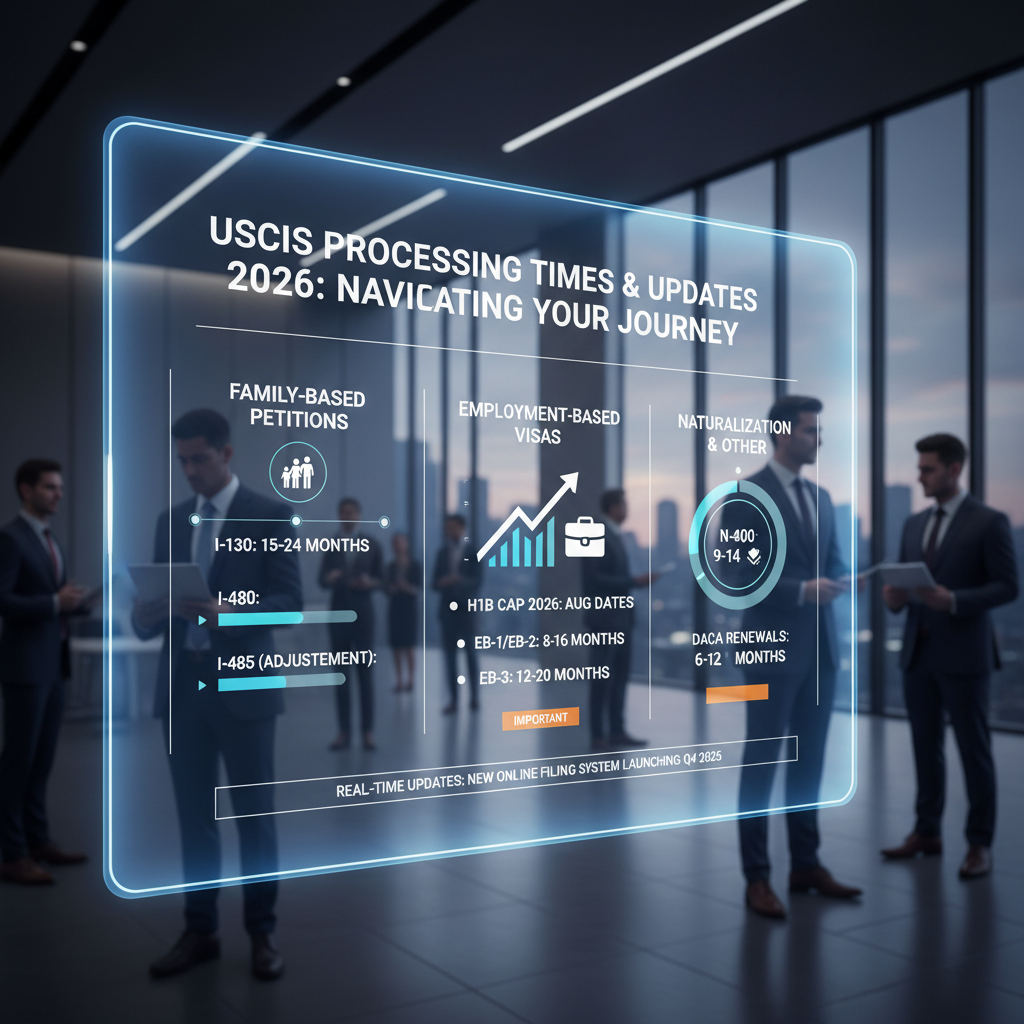
The information and guidance in this comprehensive article are inspired by the ongoing developments and discussions surrounding immigration policy and its practical implications, as reported by various reputable news sources. Keeping abreast of the latest news and official statements from U.S. Citizenship and Immigration Services (USCIS) is paramount for anyone navigating the immigration process. For a broader view of current immigration law news, you can refer to: USCIS Processing Times and Updates for 2026 (USCIS)
What This News Means for Immigrants in Orlando and Across Florida
The constant fluctuations in USCIS processing times have a direct and profound impact on the lives of immigrants and their families. For those living in Orlando, Central Florida, and throughout the Sunshine State, these updates can determine everything from employment authorization to family reunification.
Why this news is showing up now
USCIS regularly updates its processing time estimates on its website, typically on a monthly basis. These updates reflect the agency's current caseload, staffing levels, policy changes, and technological advancements (or limitations). As we are in 2026, these updates are not new phenomena but rather a continuous reflection of the agency's operational realities. The "news" around processing times is always trending because it’s a living, breathing metric that directly affects millions. Factors contributing to current processing time discussions often include:
- Post-pandemic backlogs: Lingering effects from operational slowdowns in previous years.
- Increased application filings: A surge in certain application types, such as family-based petitions or employment-based visas.
- Policy shifts: New directives or priorities from the current administration that can reallocate resources or introduce new review protocols.
- Budget and staffing: The availability of funding and trained personnel to process applications efficiently.
- Technological upgrades: While intended to improve efficiency, the implementation of new systems can sometimes cause temporary delays.
For individuals in Florida, where immigration is a significant demographic and economic factor, these updates are particularly salient, impacting diverse communities from Miami to Jacksonville, and especially here in Orlando.
How it can affect Florida residents
Florida is home to a vast and diverse immigrant population, with significant communities in major cities like Orlando, Miami, Tampa, and Jacksonville. Changes in USCIS processing times can have several critical effects on Florida residents:
- Delayed family reunification: For those sponsoring relatives, longer processing times for forms like Form I-130, Petition for Alien Relative, mean extended periods of separation from loved ones.
- Uncertainty for employment: Delays in Form I-765, Application for Employment Authorization, can mean applicants lose job offers or face gaps in employment, impacting their ability to support themselves and their families in Central Florida.
- Impact on travel plans: Those awaiting approval of Form I-131, Application for Travel Document, may have critical travel plans disrupted, preventing them from visiting family abroad or attending important events.
- Stress and financial strain: Prolonged waits often lead to increased anxiety, legal fees, and the inability to plan for the future, affecting mental health and financial stability for many families in Orange County.
- Orlando USCIS Field Office workload: The local Orlando USCIS Field Office handles many interviews and local adjustments of status cases. Increased national backlogs can trickle down, affecting local appointment availability and decision times for residents along the I-4 corridor.
Understanding these impacts is the first step toward preparing for and mitigating potential challenges. Imigrar is dedicated to helping our Florida clients navigate these complexities with informed and proactive legal strategies.
What USCIS Processing Times Is (and Why It Matters)
At its core, USCIS processing times refer to the estimated duration it takes for U.S. Citizenship and Immigration Services to process an application or petition from the date it is received until a final decision is made. These times are not guarantees but rather estimates based on historical data and current caseloads at various USCIS Service Centers and Field Offices.
A plain-English definition
Imagine sending an important letter to a very busy office. The "processing time" is essentially how long it takes that office to open your letter, review its contents, make a decision, and send you a response. For USCIS, this involves receiving your application (like Form I-485 for a Green Card), conducting background checks, potentially scheduling an interview at an office like the Orlando USCIS Field Office, and finally approving or denying your request. These times vary wildly depending on the type of application, the specific office handling it, and even global events.
Key terms you need to know
To effectively track and understand your immigration case, you need to be familiar with several key terms:
- Receipt Date: This is the exact date USCIS officially receives your application or petition. It's usually found on your Form I-797C, Notice of Action. This date is crucial for tracking your case against published processing times.
- Priority Date: Primarily relevant for family-based and employment-based preference categories, this is the date your petition (e.g., Form I-130 or Form I-140) was filed and officially received by USCIS. It determines your place in the visa queue and whether a visa is "immediately available" according to the monthly U.S. Department of State Visa Bulletin.
- Processing Time Range: USCIS provides an estimated range (e.g., 10 to 18 months) for each form type at specific Service Centers or Field Offices. Your case is generally considered "outside normal processing times" if it falls beyond the upper end of this range.
- Case Status Online: An online tool (USCIS Case Status Online) that allows you to check the current status of your application using your receipt number. Updates include "Case Was Received," "Fingerprint Review Was Completed," "Interview Was Scheduled," or "Card Was Produced."
- E-Request: An electronic inquiry you can submit to USCIS if your case is taking longer than the posted processing times. This is typically done after your inquiry date has passed.
- Inquiry Date: The earliest date you are eligible to submit an e-Request or contact USCIS about your case being outside normal processing times. This date is calculated based on the maximum end of the posted processing time range for your specific form and office.
- National Benefits Center (NBC): A USCIS facility that handles initial processing for many applications, especially those requiring interviews at local Field Offices, like Form I-485, Adjustment of Status. Cases are often transferred from NBC to local Field Offices (such as the Orlando USCIS Field Office) for final adjudication.
- Field Office: A local USCIS office that handles interviews, naturalization ceremonies, and some final adjudications for residents in its geographical jurisdiction. For Orlando residents, this is the Orlando Field Office.
- Service Center: A regional USCIS facility that processes specific types of applications and petitions that do not typically require an interview, such as some Form I-130 petitions or Form I-765 applications. Examples include the Nebraska Service Center or Texas Service Center.
Understanding these terms empowers you to better track your application and understand where you stand in the immigration process. It also helps you identify when it might be appropriate to take action or seek legal advice from an expert like Imigrar.
Current Immigration Law: The Foundation
The entire U.S. immigration system, including how applications are processed and reviewed, is built upon the framework of the Immigration and Nationality Act (INA), codified in Title 8 of the U.S. Code. This complex body of law dictates who is eligible for various immigration benefits, the procedures for applying, and the criteria for adjudication.
Federal requirements
All immigration applications, regardless of where they are filed or by whom, must adhere to federal statutes and regulations. Key aspects include:
- Eligibility Criteria: Each visa category or immigration benefit (e.g., Green Card, citizenship, work permit) has specific requirements outlined in the INA. For instance, eligibility for Adjustment of Status (Form I-485) is found in INA § 245, while family-based immigration is primarily covered under INA §§ 201-204.
- Admissibility and Inadmissibility: Applicants must be admissible to the U.S., meaning they must not fall under any grounds of inadmissibility (e.g., certain criminal offenses, health issues, prior immigration violations) as defined in INA § 212.
- Evidentiary Standards: Applicants bear the burden of proof to demonstrate their eligibility. This requires submitting all necessary documentation, including birth certificates, marriage certificates, financial records, and police clearances.
- Form Requirements: USCIS mandates the use of specific forms for each type of application. These forms are updated periodically, and using an outdated version can lead to rejection or delays. Always check USCIS Forms for the latest versions.
- Biometrics: Most applicants for Green Cards, naturalization, and certain other benefits are required to attend a biometrics appointment for fingerprinting and photographs, used for background checks.
- Interviews: Many applications, particularly Adjustment of Status (Form I-485) and Naturalization (Form N-400), require an interview at a USCIS Field Office, such as the Orlando USCIS Field Office.
Understanding these foundational federal requirements is critical, as any deviation can lead to delays, Requests for Evidence (RFEs), or even denial.
Florida-specific considerations
While immigration law is federal, its application can have local nuances. Florida does not have its own immigration laws that dictate who can immigrate or how applications are processed. However, several factors within Florida can influence the practical experience of immigrants:
- Orlando USCIS Field Office: Residents of Orange County and surrounding Central Florida areas typically have their interviews and local adjudications handled by the Orlando USCIS Field Office. The specific workload, staffing, and policies of this office can influence local processing times and interview scheduling.
- High Volume of Cases: Florida, being a popular destination for immigrants, often sees a high volume of various application types. This can contribute to localized backlogs or longer wait times for appointments compared to areas with lower immigrant populations.
- Diverse Communities: The presence of large Cuban, Haitian, Venezuelan, and other Latin American communities in Florida means that specific forms of relief (e.g., Cuban Adjustment Act, TPS) are frequently utilized, and changes affecting these programs can have a magnified impact on the state.
- Local Legal Resources: Access to knowledgeable legal counsel is crucial. Firms like Imigrar, located in Orlando, specialize in federal immigration law and understand the local USCIS procedures and expectations, providing tailored guidance to Florida residents.
Important: Always rely on official USCIS information and consult with a qualified immigration attorney. State-level policies or local enforcement actions regarding immigration are separate from the federal adjudication process but can affect immigrants' daily lives. For the most accurate and up-to-date federal information, always refer to the USCIS official website.
Worried about your immigration journey in Florida? Imigrar provides expert legal guidance to help you navigate USCIS requirements and processing times. Get your questions answered. Call +1 786-791-3106 for a free consultation. Se Habla Español.
How to Track and Understand Your USCIS Processing Time: A Complete Step-by-Step Guide
Understanding your application's status and knowing when to take action is critical. This guide will walk you through the process of tracking your USCIS application and interpreting the information available.
1) Understand Your Application Type and Form
Before you can track your case, you must know exactly what you filed. Each immigration benefit corresponds to a specific USCIS form, and processing times vary significantly between them. For example, a Form I-130, Petition for Alien Relative, will have a different timeline than a Form N-400, Application for Naturalization, or a Form I-485, Application to Register Permanent Residence or Adjust Status.
- Identify the Form: Locate your copy of the application you submitted. Note the form number (e.g., Form I-130, Form I-485, Form I-765, Form I-131, Form N-400).
- Know Your Category: Understand the specific category under which you applied (e.g., "Immediate Relative of U.S. Citizen," "F2A Family-Sponsored Preference," "EB-3 Employment-Based"). This impacts visa availability and processing.
Required Information:
- Specific USCIS Form Number (e.g., I-130, I-485, N-400)
- Filing Category (if applicable)
2) Locate Your Receipt Number
Once USCIS receives your application, they will mail you a Form I-797C, Notice of Action. This official notice confirms receipt of your application and contains your unique 13-character receipt number. This number typically starts with three letters (e.g., EAC, WAC, LIN, SRC, MSC, IOE) followed by ten numbers.
- Find the Notice: Keep all notices from USCIS in a safe, organized place. The Form I-797C is your primary proof of filing.
- Note the Receipt Number: Write down your receipt number accurately. This is your key to unlocking online case status and processing time information.
Required Information:
- Your 13-character receipt number from Form I-797C, Notice of Action.
3) Check USCIS Online Processing Times
USCIS publishes estimated processing times online. This is your go-to resource for understanding general timelines.
- Visit the Official Page: Go to the USCIS Processing Times webpage. Be cautious of unofficial sites.
- Select Your Form: Choose the specific form you filed from the dropdown menu.
- Select Your Field Office or Service Center: This is a crucial step.
- For most family-based petitions (Form I-130) and employment-based petitions (Form I-140), you'll select the Service Center (e.g., Nebraska, Texas, California, Vermont) where your application was initially sent. This is indicated by the first three letters of your receipt number (e.g., WAC for California, LIN for Nebraska).
- For Adjustment of Status (Form I-485), Naturalization (Form N-400), and certain other applications requiring an interview, you'll select the Field Office that has jurisdiction over your residence. For residents of Central Florida, this is typically the Orlando USCIS Field Office. However, initial processing for Form I-485 often begins at the National Benefits Center (NBC), so you might need to check both NBC and your local field office times.
- Interpret the Range: USCIS will display a range (e.g., "10.5 Months to 14.5 Months"). This indicates the time it takes to process 80% of cases.
Required Information:
- USCIS Form Number
- Your specific Service Center (from your receipt number) OR your local Field Office (e.g., Orlando USCIS Field Office)
4) Monitor Your Case Status Online
Beyond general processing times, you can get specific updates on your individual case using the USCIS Case Status Online tool.
- Go to Case Status Online: Navigate to USCIS Case Status Online.
- Enter Your Receipt Number: Input your 13-character receipt number accurately.
- Review Status Updates: The system will display the most recent action taken on your case (e.g., "Case Was Received," "Fingerprint Review Was Completed," "Interview Was Scheduled," "Card Was Produced"). While it doesn't give an exact timeline, it confirms progress.
Important: Sign up for email and text message notifications through your USCIS online account. This ensures you receive immediate alerts on any updates to your case status.
Required Information:
- Your 13-character receipt number
5) Understand Your "Inquiry Date" and Submit an E-Request
If your case falls outside the normal processing times, you are eligible to make an inquiry with USCIS. This is where your "inquiry date" comes into play.
- Calculate Your Inquiry Date: On the USCIS Processing Times page, after selecting your form and office, there will be a link or instruction on how to calculate your specific inquiry date. This is typically the upper end of the processing time range plus one day.
- Submit an E-Request: If your receipt date is older than your calculated inquiry date, you can submit an "e-Request" online for a case outside normal processing times. This formally notifies USCIS of the delay and prompts them to review your case.
- Wait for a Response: USCIS typically responds to e-Requests within 15-30 days. The response may simply state that your case is still under review, or it might provide more specific information or an action plan.
Warning: Do not submit an e-Request before your inquiry date, as it will likely be rejected or ignored, and it can sometimes clog the system for those who genuinely need assistance.
Required Information:
- Your 13-character receipt number
- Your receipt date
- Knowledge of your form type and Service Center/Field Office
6) Consider Congressional Inquiry or Ombudsman Assistance
For extreme or unexplained delays, especially after submitting an e-Request with no satisfactory resolution, you might consider escalating your inquiry:
- Congressional Inquiry: You can contact your U.S. Senator or Representative's office. Their constituent services staff can often make inquiries on your behalf with USCIS, sometimes prompting a faster review. For Central Florida residents, this would involve contacting the offices of your elected officials representing the Orlando area.
- USCIS Ombudsman: The DHS Office of the Citizenship and Immigration Services Ombudsman assists individuals and employers with problems they are experiencing with USCIS. They act as an independent resource to resolve issues and identify systemic problems.
These options should be considered after exhausting initial USCIS inquiry channels and are often best pursued with the guidance of an attorney.
Required Information:
- Detailed case history, including all prior USCIS communication and inquiry attempts.
7) Seek Expert Legal Counsel from Imigrar
Navigating USCIS processing times and understanding when and how to intervene can be complex and stressful. This is where Imigrar comes in. Our experienced Orlando immigration attorneys can:
- Assess Your Case: Provide an expert analysis of your specific application, filing history, and potential challenges.
- Interpret USCIS Data: Help you accurately understand processing times, your inquiry date, and the nuances of various USCIS updates.
- Handle Inquiries: Submit formal inquiries (including e-Requests and direct communication with USCIS) on your behalf, often with more specific details and legal weight.
- Address RFEs/NOIDs: Assist in responding to Requests for Evidence (RFEs) or Notices of Intent to Deny (NOIDs), which are often critical for keeping your case on track.
- Prepare for Interviews: Provide comprehensive preparation for interviews at the Orlando USCIS Field Office or other locations.
- Advocate for You: If necessary, explore advanced strategies like mandamus lawsuits in federal court for unreasonable delays, though this is a last resort.
Reminder: Proactive legal guidance can prevent common mistakes and ensure your case is handled as efficiently as possible.
Practical Steps You Can Take Today
While USCIS processing times are largely out of your control, there are many proactive steps you can take to minimize delays and ensure your application moves forward smoothly. Especially for our clients in Orlando and across Florida, being prepared is key.
Actionable checklist with 5+ items
- Keep Copies of Everything: Before submitting any document to USCIS, make a complete copy for your records. This includes application forms, supporting documents, photos, and every notice you receive from USCIS (like Form I-797C).
- Stay Organized: Create a dedicated physical and digital folder for your immigration case. Label documents clearly and chronologically. This will be invaluable if you need to reference past submissions or prepare for an interview.
- Respond Promptly to RFEs/NOIDs: If USCIS sends a Request for Evidence (RFE) or a Notice of Intent to Deny (NOID),


