


The reporting that sparked this guide
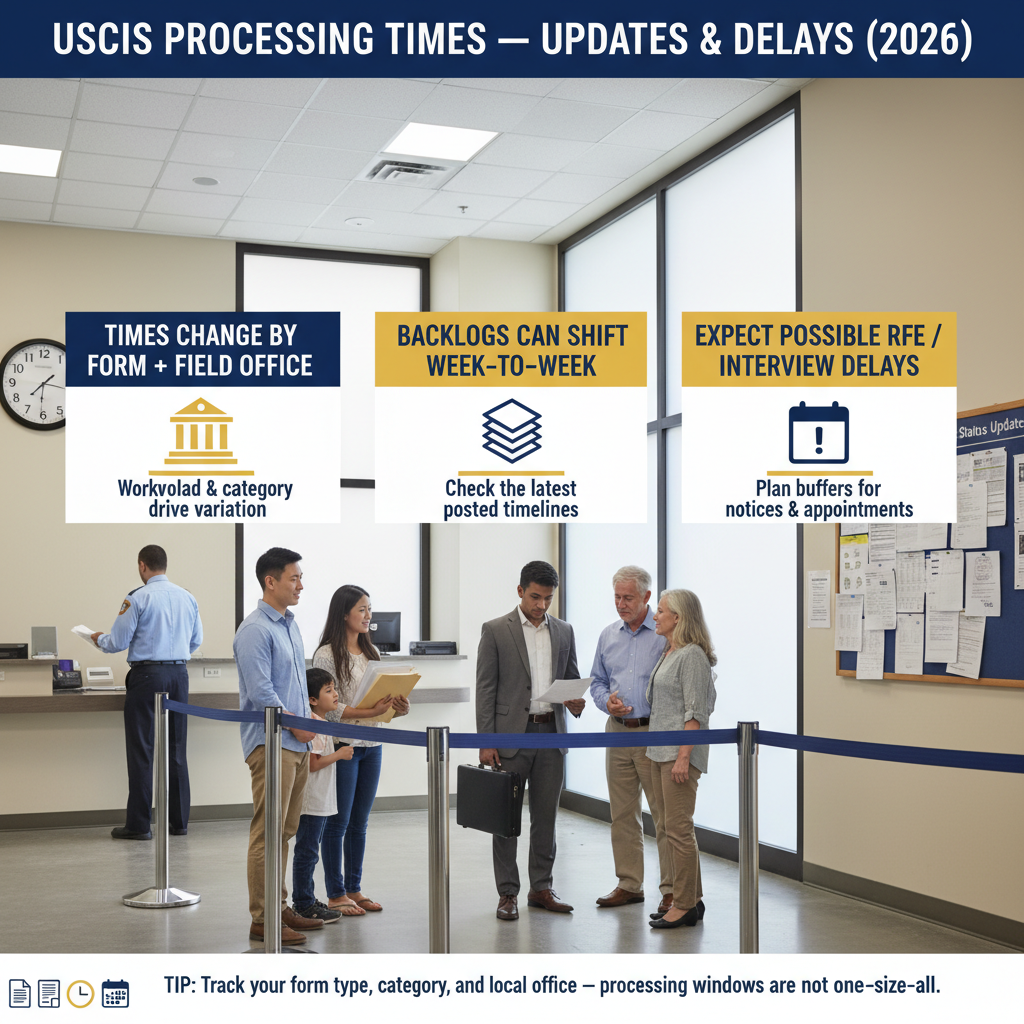
The reporting that sparked this guide is the ongoing coverage and public-facing updates on processing timelines and case backlogs, including: USCIS Processing Times and Updates for 2026 (USCIS).
Important: USCIS processing times change frequently by form type, category, and local office workload. This guide explains how to read USCIS time estimates in 2026, what drives delays, and how to plan realistically—especially if your case is in Orlando or you live anywhere along Florida’s I-4 corridor.
Need Help? Our Orlando immigration team is ready to assist. Call +1 786-791-3106 for a free consultation, or message us online. Se Habla Español.
What This News Means for Immigrants in Orlando and Across Florida
Why this news is showing up now
Processing times are “trending” in 2026 because more families and employers are making time-sensitive decisions—renewing work permits, filing Adjustment of Status packages, responding to Requests for Evidence (RFEs), and planning travel—based on USCIS time estimates. At the same time, USCIS has continued to refine how it publishes processing time ranges and case inquiry dates on its public tools.
In practical terms, people are noticing that two applicants filing the same form can receive very different timelines depending on:
- The service center or field office assigned to the case (for example, The Orlando USCIS Field Office versus another field office)
- The filing category (family-based, employment-based, humanitarian, etc.)
- Biometrics capacity and security checks
- Whether an interview is required and when interview slots open
- Document quality (missing translations, incorrect fees, incomplete forms)
Reminder: “USCIS processing time” is not a promise. It is a statistical snapshot that can move week-to-week.
How it can affect Florida residents
For Central Florida residents, even small shifts in processing times can have big ripple effects—especially for people who rely on timely Employment Authorization Documents (EADs), Advance Parole travel documents, or interview scheduling.
Here are common Florida-specific ways changing timelines affect real life:
- Work authorization gaps: Delays for Form I-765 can impact employment, benefits, and family finances.
- Driver’s license planning: Many Florida DMV transactions depend on valid immigration documents; delayed approvals can complicate renewals.
- Travel risks: Leaving the U.S. while an Adjustment of Status case is pending—without proper authorization—can cause severe consequences.
- Interview logistics: If your case is in Orlando, you may need to plan around interview backlogs and rescheduling timelines.
- Family separation concerns: When petitions like Form I-130 take longer, families wait longer to reunite or finalize green cards.
What USCIS Processing Times and Updates for 2026 Is (and Why It Matters)
A plain-English definition
“USCIS processing time” is the estimated period USCIS takes to make a decision (or take a major action) on a specific immigration form, for a specific category, at a specific office. USCIS publishes these estimates using historical completion data and updates them regularly.
These estimates matter because they help you answer practical questions like:
- When can I expect my receipt notice?
- How long until biometrics?
- When might I get my work permit?
- When can I inquire about a delayed case?
- How should I plan travel, employment changes, or school enrollment?
Key terms you need to know
- Receipt Number: The number on your I-797 receipt notice used to track your case online.
- Service Center vs. Field Office: Service centers process many benefits by mail; field offices (like the Orlando office) handle interviews and local adjudications for many cases.
- Case Inquiry Date: The date USCIS says you can request help because your case is taking longer than normal.
- RFE (Request for Evidence): A letter asking for more documents; RFEs often add months.
- NOID (Notice of Intent to Deny): A warning that USCIS plans to deny unless you respond convincingly by the deadline.
- Priority Date: For many family- and employment-based categories, your Priority Date controls when a visa number is available. This is separate from USCIS “processing time.”
- Adjustment of Status: Applying for a green card from inside the U.S. (commonly using Form I-485).
- Consular Processing: Getting an immigrant visa through a U.S. embassy/consulate abroad (typically involving the National Visa Center and the U.S. Department of State).
- Expedite Request: A request to process faster due to severe financial loss, humanitarian reasons, or other criteria. Approval is discretionary.
- 180 days and 90-day window:
Important: In many contexts, 180 days is a critical threshold (for example, certain portability rules in employment-based green cards). A 90-day window often applies to renewals or timely filings (for example, some EAD renewals or conditional residence removal timing considerations). The correct window depends on the form and category—so always confirm the rule for your specific case before acting.
Current Immigration Law: The Foundation
Processing times don’t exist in a vacuum. They sit on top of U.S. immigration statutes, regulations, and agency procedures that determine eligibility, evidence standards, and whether an interview is required.
Federal requirements
Most USCIS benefits are governed primarily by:
- The Immigration and Nationality Act (INA), codified in Title 8 of the U.S. Code
- Federal regulations in 8 C.F.R. (including eligibility, filing procedures, and interview rules)
- USCIS policy guidance and form instructions
Common forms impacted by 2026 processing time shifts include:
- Form I-130 (Petition for Alien Relative)
- Form I-485 (Application to Register Permanent Residence or Adjust Status)
- Form I-765 (Application for Employment Authorization)
- Form I-131 (Application for Travel Document)
- Form N-400 (Application for Naturalization)
- Form I-751 (Petition to Remove Conditions on Residence)
- Form I-129 (Petition for a Nonimmigrant Worker)
- Form I-140 (Immigrant Petition for Alien Worker)
For official instructions and updates, use the USCIS official website and the USCIS Forms page. To check time estimates by form and office, use USCIS Processing Times.
Florida-specific considerations
Immigration law is federal, but Florida residents still face state-level, real-world consequences when processing times shift:
- DMV/document validity: Florida driver’s license and ID renewals often require unexpired proof of lawful presence or pending status documentation.
- Local interview scheduling: If your case is in Orlando, your timeline can be influenced by the interview capacity of The Orlando USCIS Field Office.
- Moving within Florida: Changing addresses from Orange County to another county along the I-4 corridor can shift which office has jurisdiction and may trigger transfers that add time.
- Removal defense coordination: If someone is in immigration court, timelines can intersect with the Executive Office for Immigration Review docket and deadlines.
Warning: If you have any arrest history, prior removals, unlawful presence, or misrepresentation concerns, delays can increase risk. Get legal advice before filing or traveling.
Need Help? Our Orlando immigration team is ready to assist. Call +1 786-791-3106 for a free consultation, or message us online. Se Habla Español.
How to Track and Plan Around USCIS Processing Times in 2026: A Complete Step-by-Step Guide
1) Identify your exact form, category, and office (the “processing time trio”)
Processing times only make sense when you match the correct form, category, and office. For example, Form I-130 processing times can differ depending on whether the petitioner is a U.S. citizen or permanent resident, and whether the beneficiary is a spouse, parent, child, or sibling.
Documents to gather:
- Your I-797 receipt notice (for the receipt number and office)
- A copy of the filed form (e.g., Form I-485, Form I-130)
- USCIS online account access (if you created one)
- Any transfer notices (USCIS sometimes moves cases between centers)
2) Use the USCIS Processing Times tool correctly (and read the “inquiry date”)
Go to USCIS Processing Times and select your form type and office. USCIS typically shows:
- A time range (example: “X months to Y months”)
- A “case inquiry date” (the date when you can request assistance)
Important: Many applicants focus on the low end of the range and get discouraged. In 2026, planning based on the higher end is often safer—especially for life events like job changes, travel, and expiring documents.
Documents to gather:
- Screenshot/PDF of the processing time page for your form and office
- Your priority date information (if applicable) and Visa Bulletin month
- Any RFE/NOID letters and response receipts
3) Build a “timeline map” for your case (what comes next and when)
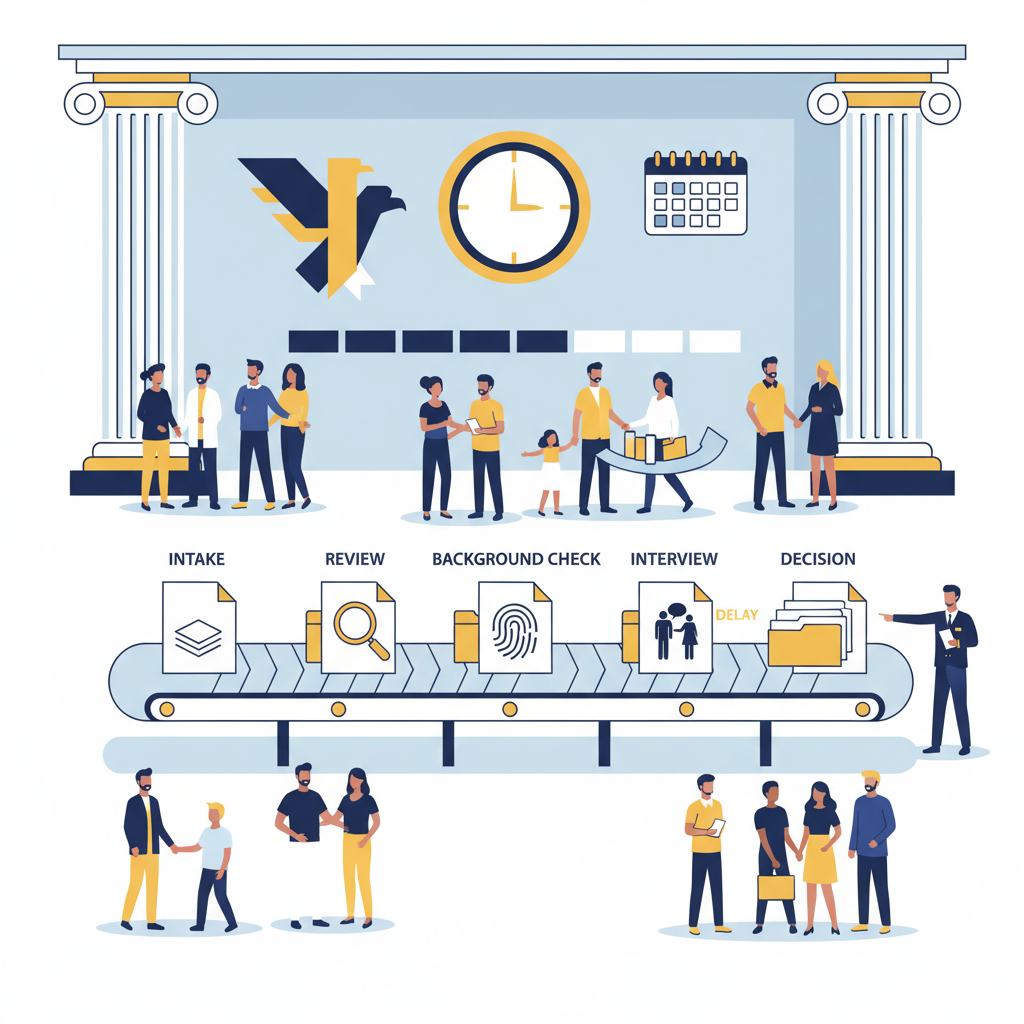
A practical 2026 planning approach is to map your case into milestones rather than obsessing over one final decision date. Common milestones include:
- Receipt notice issued
- Biometrics appointment scheduled/completed
- RFE issued/response submitted
- EAD/AP approved (if filed)
- Interview scheduled (if required)
- Decision issued
If your case is in Orlando, interview scheduling can be one of the biggest variables. The Orlando area continues to grow, and local demand can affect appointment availability.
Documents to gather:
- Calendar of expiration dates (passport, I-94, EAD, status documents)
- Employment letters (job start dates, promotions, transfers)
- Travel plans and emergency contact information
4) Prevent delays by “front-loading” evidence and avoiding common triggers
Many delays are preventable. USCIS often issues RFEs for missing civil documents, unclear translations, insufficient financial sponsorship, or incomplete relationship evidence.
For family-based filings (including Form I-130 and Form I-485), strong evidence can reduce the risk of RFEs and interview complications.
Documents to gather (examples):
- Birth certificates (long-form where available) with certified translations
- Marriage/divorce certificates, prior marriage termination documents
- Proof of lawful entry (I-94, visa page, admission stamp)
- Joint evidence (leases, bank statements, insurance, photos)
- Financial sponsorship documents (tax returns, W-2s, pay stubs)
- Medical exam planning for Form I-693 (when appropriate)
Reminder: Always use the most current edition of each USCIS form from the USCIS Forms page, and follow the form instructions exactly.
5) Know when and how to escalate: inquiries, expedite, InfoPass-style requests, and elected officials
If your case passes the posted “case inquiry date,” you may be able to submit an online service request or call USCIS. In limited circumstances, you may request expedited processing.
USCIS generally considers expedite requests for reasons such as severe financial loss, urgent humanitarian needs, nonprofit cultural/social interests, government interests, or clear USCIS error.
Documents to gather for escalation:
- Proof your case is outside normal processing time (tool screenshots)
- Evidence supporting expedite criteria (eviction notices, medical letters, employer letters)
- Copies of prior service requests and responses
- Congressional inquiry authorization (if you choose that route)
Warning: Expedite is discretionary and not a substitute for eligibility. Poorly supported expedite requests can waste time and create confusion.
6) Prepare for interview, approvals, or denials (so you’re not scrambling)
In 2026, being “decision-ready” matters. Some cases are approved without interview; others require an in-person interview at the local field office. If your case is in Orlando, plan for traffic and parking, and arrive early—especially for morning appointments along the I-4 corridor.
Documents to gather for interview/decision stage:
- Original civil documents (birth/marriage/divorce certificates)
- Updated relationship evidence (for marriage cases)
- Updated employment and address history (for Form I-485)
- Passport(s) and government-issued ID
- Any prior immigration paperwork, notices, and approvals
If denied, the next steps depend on the form and category—motion to reopen/reconsider, appeal, refiling, or (in some cases) immigration court issues. If court is involved, timelines may intersect with EOIR procedures at the Executive Office for Immigration Review.
Practical Steps You Can Take Today
The most effective way to handle shifting USCIS timelines in 2026 is to control what you can: accuracy, documentation, and proactive planning.
Actionable checklist (do these this week)
- Check your case status using your receipt number and confirm your mailing address is current.
- Save a processing time snapshot for your form/office from USCIS Processing Times (PDF or screenshot).
- Create a deadline calendar for document expirations (passport, EAD, Advance Parole, I-94), and note any 90-day window or renewal timing that applies to your category.
- Organize evidence in a single folder (digital + paper) with clear labels (ID, civil docs, immigration notices, financials).
- Prepare for RFEs by collecting missing civil documents now (especially foreign birth certificates and certified translations).
- Plan travel carefully and do not depart the U.S. while an Adjustment of Status application is pending unless you have proper authorization and legal guidance.
- Monitor visa availability (when relevant) through the U.S. Department of State resources and the monthly Visa Bulletin.
Document preparation guidance (what causes delays most often)
- Using an outdated form edition (always download fresh from USCIS Forms)
- Incorrect fee amounts or missing signatures
- Missing translations (USCIS requires complete English translations with certification)
- Weak relationship evidence for marriage-based cases
- Insufficient financial sponsorship documentation
Timeline expectations (realistic planning in 2026)
While exact months vary, a realistic plan is to expect variability and to avoid “cliff edges” where your work authorization, travel permission, or lawful status documentation expires without a backup plan.
Important: If you may rely on a rule tied to 180 days (for example, certain employment-based portability concepts), get legal advice early. Timing mistakes can be costly and sometimes irreversible.
Need Help? Our Orlando immigration team is ready to assist. Call +1 786-791-3106 for a free consultation, or message us online. Se Habla Español.
How Imigrar Helps Immigrants in Orlando
At Imigrar, we help individuals, families, and employers navigate USCIS processing realities with a plan tailored to your goal—whether that’s a green card through Adjustment of Status, a family petition, naturalization, or a work-based case. We are based in Orlando and serve clients nationwide.
Our approach is practical and documentation-driven:
- We identify the correct filing strategy and category early (to avoid misfilings that cause major delays).
- We prepare organized, “adjudicator-friendly” packets to reduce RFEs.
- We track timelines, interview readiness, and renewal windows.
- When appropriate, we assist with inquiries and expedite requests supported by evidence.
Se Habla Español. If your case is in Orlando or you live in Orange County or anywhere along the I-4 corridor, we can help you plan around local scheduling realities and prepare for interviews at The Orlando USCIS Field Office.
We offer a free consultation. Call +1 786-791-3106 or message us online to get clear, case-specific guidance.
Frequently Asked Questions
Q: Am I eligible to file Form I-485 if USCIS processing times are long?
A: Eligibility for Form I-485 depends on the immigration category (family, employment, special programs), lawful entry, admissibility, and whether a visa number is available (often tied to your Priority Date). Processing times don’t change eligibility, but they do change planning. Before filing, confirm (1) you qualify for Adjustment of Status, (2) you can file now under the current Visa Bulletin rules, and (3) you can maintain documentation for the entire pending period.
Q: Will checking my USCIS processing time slow down my case?
A: No. Checking the public tool at USCIS Processing Times does not affect your case. What can slow cases is submitting duplicate filings, sending unsolicited evidence without strategy, or missing deadlines after an RFE or Warning: a NOID.
Q: How long will it take in 2026 to get a work permit after filing Adjustment of Status?
A: It depends on the category and USCIS workload. Many applicants file Form I-765 together with Form I-485. In 2026, EAD timing can vary significantly; plan financially and employment-wise for delays. If you face severe financial loss or urgent humanitarian issues, you may explore an expedite request with strong documentation.
Q: What documents most commonly cause RFEs and delays for Form I-130 or Form I-485?
A: The most common issues are missing civil documents (birth/marriage/divorce certificates), incomplete translations, insufficient proof of a bona fide marriage, unclear proof of lawful entry, and financial sponsorship gaps. A well-organized filing with tabbed exhibits and a clear cover letter often reduces RFE risk.
Q: How much does it cost to file, and do processing delays increase the cost?
A: Costs include USCIS filing fees (which vary by form and category), medical exam fees for Form I-693, translation costs, and optional legal fees. Delays can increase “life costs” (missed work, renewals, travel changes) and sometimes lead to additional filings (like EAD renewals). Always verify current fees and editions on the USCIS Forms page and the instructions for each Form I-XXX.
Q: What happens if my case is denied after waiting months?
A: The consequences depend on what was filed and your underlying status. Some denials allow a motion to reopen/reconsider, an appeal, or a refiling with corrected evidence. Others may trigger referral to immigration court or status problems. Important: Do not assume you can “just refile” without risk—especially if unlawful presence, prior removal, or misrepresentation may apply. If court is involved, procedures may connect to the Executive Office for Immigration Review.
Q: If my case is in Orlando, can I switch to a different office to get faster processing?
A: Generally, no. Jurisdiction is based on where you live. Moving solely to obtain a different office can create new delays (address changes, file transfers) and may raise questions. For Central Florida residents, it’s usually better to focus on a strong filing, timely responses, and careful planning for Orlando interview scheduling.
Common Mistakes (and How to Avoid Them)
Mistake #1: Treating processing times like a guarantee
USCIS time ranges are estimates. If you plan a wedding, international travel, job resignation, or lease termination based on the shortest posted time, you may get stuck.
How to avoid it: Plan using the upper end of the range, track the “case inquiry date,” and keep your documents valid throughout the pending period.
Mistake #2: Filing incomplete packets that trigger RFEs
In 2026, many delays are “self-inflicted” through missing signatures, wrong fees, outdated form editions, or weak evidence.
How to avoid it: Use current forms from USCIS Forms, double-check every signature line, and include clean copies and certified translations.
Mistake #3: Traveling or changing plans without understanding status consequences
Travel while an Adjustment of Status case is pending can be risky without proper authorization. Also, some changes (employment changes, address moves) can affect scheduling and evidence.
How to avoid it: Speak with an immigration attorney before travel, keep proof of status/filings accessible, and update USCIS addresses promptly when required.
Need Help? Our Orlando immigration team is ready to assist. Call +1 786-791-3106 for a free consultation, or message us online. Se Habla Español.
Putting It All Together: A 2026 Planning Framework for USCIS Timelines
Here is a simple framework we recommend for most families and applicants navigating USCIS timelines in 2026:
- Confirm eligibility first (don’t file the wrong benefit and lose months).
- File “decision-ready” with complete evidence to reduce RFEs.
- Track both timelines: USCIS processing times and (if applicable) visa availability tied to your Priority Date.
- Protect work and travel with renewals and careful planning in any 90-day window that applies.
- Escalate appropriately only when your case is outside normal time or you meet expedite criteria.
For Central Florida residents, local logistics matter too. If your case is in Orlando, plan ahead for interview notices, document updates, and commuting along the I-4 corridor.
For official information, start here:
- USCIS official website
- USCIS Processing Times
- USCIS Forms
- U.S. Department of State
- Executive Office for Immigration Review
Reminder: If you receive an RFE or NOID, the response deadline is strict. Missing it can result in denial even if you are otherwise eligible.
Closing: Get a Case Strategy That Matches 2026 USCIS Processing Realities
USCIS processing times in 2026 can be frustrating—but with the right strategy, you can reduce delays, protect your work and travel plans, and avoid preventable denials. Whether you’re filing Form I-130 for a family member, pursuing Adjustment of Status with Form I-485, or preparing for an interview at The Orlando USCIS Field Office, planning matters as much as paperwork.
If your case is in Orlando, or you live in Orange County or anywhere along the I-4 corridor, our team can help you build a timeline, prepare strong evidence, and respond strategically to USCIS requests.
Need Help? Our Orlando immigration team is ready to assist. Call +1 786-791-3106 for a free consultation, or message us online. Se Habla Español.


