


For immigrants and their families, few things are more critical and often more anxiety-inducing than the processing times for their applications with U.S. Citizenship and Immigration Services (USCIS). As we move through 2026, USCIS continues to implement new strategies and face evolving challenges, leading to ongoing updates in how long it takes to process vital immigration petitions and applications.
At Imigrar, your trusted immigration law firm in Orlando, Florida, we understand the profound impact these timelines have on your life, your family, and your future. Our mission is to "Keep Families Together," and that means providing you with the most accurate, up-to-date information and expert legal guidance to navigate this complex landscape.
This comprehensive guide will break down the latest USCIS processing time updates for 2026, explain what they mean for you, and offer actionable steps to help you manage your expectations and prepare your case effectively.
Need Help? Our Orlando immigration team is ready to assist. Call +1 786-791-3106 for a free consultation, or message us online. Se Habla Español.
The reporting that sparked this guide
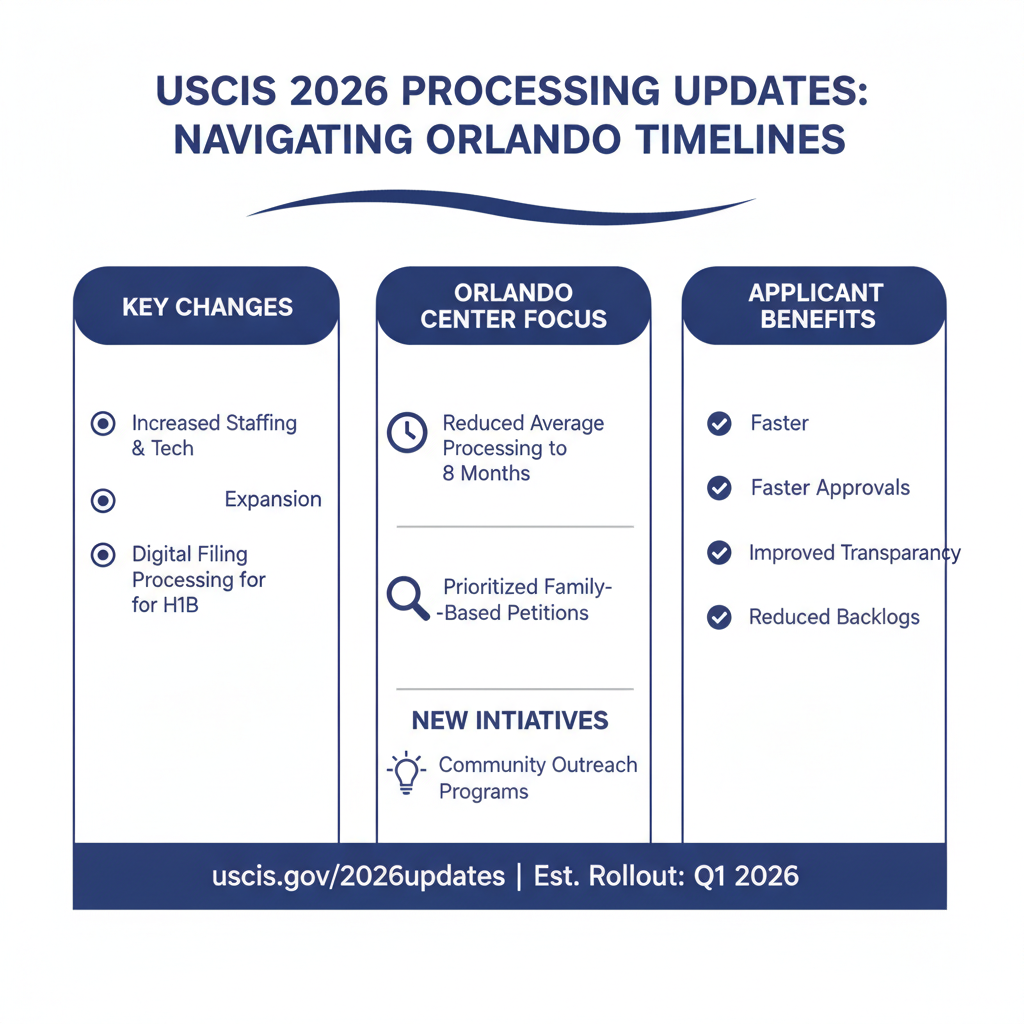
The information and insights presented in this article are inspired by the ongoing discourse and official announcements regarding processing times from U.S. Citizenship and Immigration Services (USCIS), as regularly highlighted in immigration news and updates. For the latest official information, always refer to the source:
USCIS Processing Times and Updates for 2026 (USCIS)
What This News Means for Immigrants in Orlando and Across Florida
The consistent flow of updates from USCIS regarding processing times is a constant reminder of the dynamic nature of the U.S. immigration system. For individuals and families residing in Orlando, Central Florida, and throughout the Sunshine State, understanding these changes is not just important—it's essential for planning your life and making informed decisions.
Why this news is showing up now
USCIS processing times are not static; they fluctuate based on a multitude of factors, including:
- Caseload Volume: The sheer number of applications received directly impacts how quickly each case can be reviewed. Increased filings for specific visa categories can create temporary backlogs.
- Staffing Levels and Resources: USCIS's ability to process applications efficiently is tied to its budget, staffing, and technological infrastructure. Congressional appropriations and fee revenues play a significant role.
- Policy Changes: New immigration policies, executive orders, or regulatory changes can alter processing priorities, introduce new requirements, or even pause certain types of adjudications, all affecting timelines.
- Technological Modernization: USCIS is continually working to transition to a fully digital processing environment. While intended to improve efficiency long-term, these transitions can sometimes cause short-term adjustments in processing capabilities.
- External Events: Global events, public health crises, and natural disasters can disrupt operations at service centers and field offices, leading to delays.
In 2026, USCIS continues its efforts to address the backlogs that accumulated over previous years, a goal that requires ongoing adjustments to processing estimates. These updates reflect their current operational capacity and projected workload, making them a regular feature in immigration news cycles.
How it can affect Florida residents
Florida is home to one of the largest and most diverse immigrant populations in the United States. For Central Florida residents, particularly those in Orlando and surrounding Orange County, USCIS processing times have a direct and tangible impact:
- Family Unity: Delays in processing Form I-130 (Petition for Alien Relative) or Form I-485 (Application to Register Permanent Residence or Adjust Status) can mean years of separation for families, or prolonged uncertainty for those seeking to adjust their status.
- Employment Opportunities: For those awaiting approval of Form I-765 (Application for Employment Authorization), extended processing times can lead to gaps in employment eligibility, impacting livelihoods along the vital I-4 corridor and beyond.
- Travel Restrictions: Applicants for Form I-131 (Application for Travel Document) may face delays in receiving advance parole, preventing them from visiting family abroad or attending to urgent matters without risking their immigration process.
- Local Economy: The timely processing of applications allows immigrants to fully participate in Florida's economy, contributing to various sectors, from hospitality to healthcare. Delays can hinder this economic integration.
- Mental and Emotional Well-being: The stress and uncertainty associated with long and unpredictable processing times can take a significant toll on individuals and families. Knowing what to expect, even if it's a long wait, can help manage anxiety.
The Orlando USCIS Field Office, like others across the nation, plays a crucial role in the final stages of many immigration processes, particularly for interviews related to adjustment of status and naturalization. Understanding the specific processing trends for this office, alongside the national service centers, is vital for those living here.
What USCIS Processing Times Are (and Why It Matters)
When you submit an immigration application, one of the first questions you likely have is, "How long will this take?" The answer lies in USCIS processing times, which are dynamic estimates that indicate how long it is currently taking USCIS to process certain forms at specific service centers or field offices.
A plain-English definition
USCIS Processing Times are essentially the estimated wait times for USCIS to make a decision on a particular immigration form. These times are not guarantees but rather a historical average of how long similar cases have taken to process. They are reported as a range (e.g., 10 to 18 months) or as a "case completion date" which tells you if USCIS is currently working on cases received before a certain date.
Why do they matter? Because these times dictate when you might expect to receive your green card, work permit, travel document, or other immigration benefit. They influence your ability to work, travel, and live freely in the U.S., and directly impact your family's future.
Key terms you need to know
Navigating USCIS processing times requires understanding a few key terms:
- Receipt Date: This is the date USCIS officially received your application. It's crucial because processing times are often measured from this date. You'll find it on your Form I-797C, Notice of Action.
- Notice of Action (Form I-797): This is the official communication from USCIS. There are several types, including the receipt notice (I-797C), approval notice (I-797A), and transfer notice (I-797B). Always keep copies of these documents.
- Service Center: USCIS operates several service centers (e.g., California, Nebraska, Texas, Vermont) that process mail-in applications for various forms. The specific service center handling your case can affect processing times.
- Field Office: These are local USCIS offices (like the Orlando USCIS Field Office) that handle interviews, biometric appointments, and some local adjudications, particularly for adjustment of status and naturalization applications.
- Priority Date: For certain visa categories (especially family-sponsored and employment-based categories with annual limits), the Priority Date is the date your petition (e.g., Form I-130 or Form I-140) was properly filed with USCIS. This date determines your place in the visa queue, as visas are issued based on availability and your priority date becoming "current" according to the U.S. Department of State Visa Bulletin.
- Current Date: This refers to when your Priority Date becomes available for final processing of your green card application (Form I-485 or consular processing). You must consult the Visa Bulletin monthly.
- Adjustment of Status (AOS): This is the process of applying for a green card from within the United States. Often involves filing Form I-485 concurrently with or after an underlying petition (e.g., Form I-130).
- Consular Processing: This is the process of applying for an immigrant visa at a U.S. embassy or consulate abroad.
- Request for Evidence (RFE): A notice from USCIS requesting additional documents or information to support your application. Responding promptly and accurately is critical.
- Notice of Intent to Deny (NOID): A notice indicating USCIS intends to deny your application unless you provide specific information or evidence to overcome the grounds for denial. This is a serious notice requiring immediate attention.
Understanding these terms empowers you to better interpret the information provided by USCIS and to track your own application's progress effectively.
Need Help? Our Orlando immigration team is ready to assist. Call +1 786-791-3106 for a free consultation, or message us online. Se Habla Español.
Current Immigration Law: The Foundation
All USCIS processing, including the timelines we're discussing, is rooted in federal immigration law, primarily the Immigration and Nationality Act (INA). This complex body of law dictates who is eligible for various immigration benefits, the procedures for applying, and the adjudication standards USCIS must follow.
Federal requirements
The INA establishes the legal framework for all immigration benefits, including:
- Visa Categories: Sections of the INA, such as INA § 201-204, define the various family-sponsored and employment-based visa categories, setting annual limits for some and establishing preference systems based on relationships or skills.
- Eligibility Criteria: Each immigration benefit (e.g., green card, work permit, citizenship) has specific eligibility criteria outlined in the INA and its accompanying regulations. USCIS adjudicators must ensure that applicants meet these criteria.
- Application Procedures: The INA and regulations specify which forms must be filed (e.g., Form I-130 for family petitions, Form I-485 for adjustment of status), the supporting documentation required, and the filing processes.
- Adjudication Standards: USCIS officers are bound by federal law and established policy manuals when reviewing applications. They must weigh the evidence provided against the legal requirements.
- Processing Deadlines (and lack thereof): While some specific processes have statutory deadlines (e.g., naturalization interviews after filing Form N-400), most general immigration applications do not have legally mandated processing times. This is why USCIS provides "estimated" times rather than guaranteed ones.
Understanding that USCIS is operating under these federal mandates helps explain the rigidity and often lengthy nature of the process. Every step, from initial filing to final adjudication, must adhere to these legal requirements.
Florida-specific considerations
While immigration law is federal, applying uniformly across the United States, there are practical considerations for Florida residents:
- Orlando USCIS Field Office: This office handles interviews for adjustment of status (Form I-485), naturalization (Form N-400), and certain other applications for residents of Central Florida. The workload and staffing at this specific office can influence local processing times for these final stages.
- Jurisdiction: Depending on your residence within Florida, your case might fall under the jurisdiction of the Orlando, Miami, or Tampa field offices for interviews. This can sometimes lead to slight variations in interview scheduling times.
- Local Resources: Florida has a robust network of immigration legal services and community organizations. For immigrants in Orange County and surrounding areas, access to local, knowledgeable legal counsel like Imigrar is invaluable for navigating the federal system effectively.
- State Legislation: While state laws cannot override federal immigration law, they can sometimes create a more challenging environment for immigrants (e.g., specific driver's license requirements, local law enforcement interactions) which can add another layer of complexity to daily life while awaiting USCIS decisions.
It's crucial for Florida residents to not only understand federal immigration law but also how its application might be influenced by local operational realities and resources. Always refer to official government sources for forms and instructions:
How to Navigate USCIS Processing Times: A Complete Step-by-Step Guide
Successfully managing your immigration application journey, especially in light of fluctuating USCIS processing times, requires careful preparation, diligent monitoring, and proactive engagement. Here’s a detailed step-by-step guide to help you through the process.
1) Understand Your Application Type and Its Requirements
Before you even check processing times, you must know exactly what you're filing. Different forms have different requirements, legal bases, and processing pathways. Common forms include:
- Form I-130, Petition for Alien Relative: Filed by a U.S. citizen or green card holder for a family member.
- Form I-485, Application to Register Permanent Residence or Adjust Status: Filed by individuals already in the U.S. to obtain a green card.
- Form I-765, Application for Employment Authorization: For work permits.
- Form I-131, Application for Travel Document: For advance parole or re-entry permits.
- Form N-400, Application for Naturalization: For U.S. citizenship.
Required Documents (General Examples):
- Proof of U.S. citizenship or lawful permanent residency (for petitioner).
- Proof of identity and nationality (for beneficiary).
- Birth certificates, marriage certificates, divorce decrees.
- Photos meeting USCIS specifications.
- Medical examination results (for Form I-485).
- Affidavit of Support (Form I-864) and financial documents.
- Police clearance certificates (for consular processing).
Action: Identify your specific form(s) and gather ALL required documents meticulously. Refer to the official USCIS website for the most current instructions for each form. Important: Incomplete applications are a primary cause of delays.
2) Check Current USCIS Processing Times
Once you know your form, you can check the estimated processing times. This is a crucial step for managing expectations.
How to Check:
- Go to the USCIS Processing Times webpage.
- Select your form (e.g., I-485, Application to Register Permanent Residence or Adjust Status).
- Select the form category (e.g., "Family-based adjustment applications").
- Select the Service Center or Field Office that has jurisdiction over your case. For many initial applications, this will be a service center. For interviews (like for Form I-485 or Form N-400), it will be your local field office (e.g., Orlando Field Office).
- Click "Get processing time."
Understanding the Results: USCIS provides times as a range (e.g., 10 to 18 months) or a "case inquiry date." If your Receipt Date is older than the "case inquiry date," you may be able to submit an inquiry.
Action: Note down the estimated range for your specific form and filing location. Understand that these are estimates, not guarantees.
3) Prepare and Organize Your Application Thoroughly
This is where precision pays off. A well-prepared application can prevent RFEs and delays.
Detailed Checklist:
- Complete All Sections: Ensure every question on the form is answered truthfully and completely. If a question doesn't apply, write "N/A" (Not Applicable).
- Signatures: Double-check that all required signatures are present and in the correct places. Missing signatures are a common reason for rejection.
- Fees: Include the correct filing fee. Check the USCIS website for current fees, as they can change. Submit a money order, cashier's check, or personal check payable to "U.S. Department of Homeland Security."
- Supporting Documents:
- Copies: Always send copies of supporting documents, not originals, unless specifically requested. Keep your originals safe.
- Translations: Any document not in English must be accompanied by a complete English translation certified by the translator.
- Affidavits: For documents that are unavailable, include sworn affidavits from knowledgeable individuals.
- Organize: Use tabs, dividers, and cover letters to make your application easy for USCIS officers to review.
Action: Review your entire application package multiple times. Consider having an experienced immigration lawyer like Imigrar review it for accuracy and completeness. Reminder: For Central Florida residents, errors can lead to delays that impact your ability to work or travel.
4) File Your Application Correctly
The method of filing and where you send your application depends on the specific form and your location.
Submission Methods:
- Mail: Most applications are filed by mail to a specific USCIS Lockbox Facility or Service Center. The instructions for each form specify the correct mailing address. Use certified mail with return receipt requested to prove delivery.
- Online Filing: Some forms can be filed online through the USCIS website. This often provides immediate confirmation of receipt.
What Happens Next:
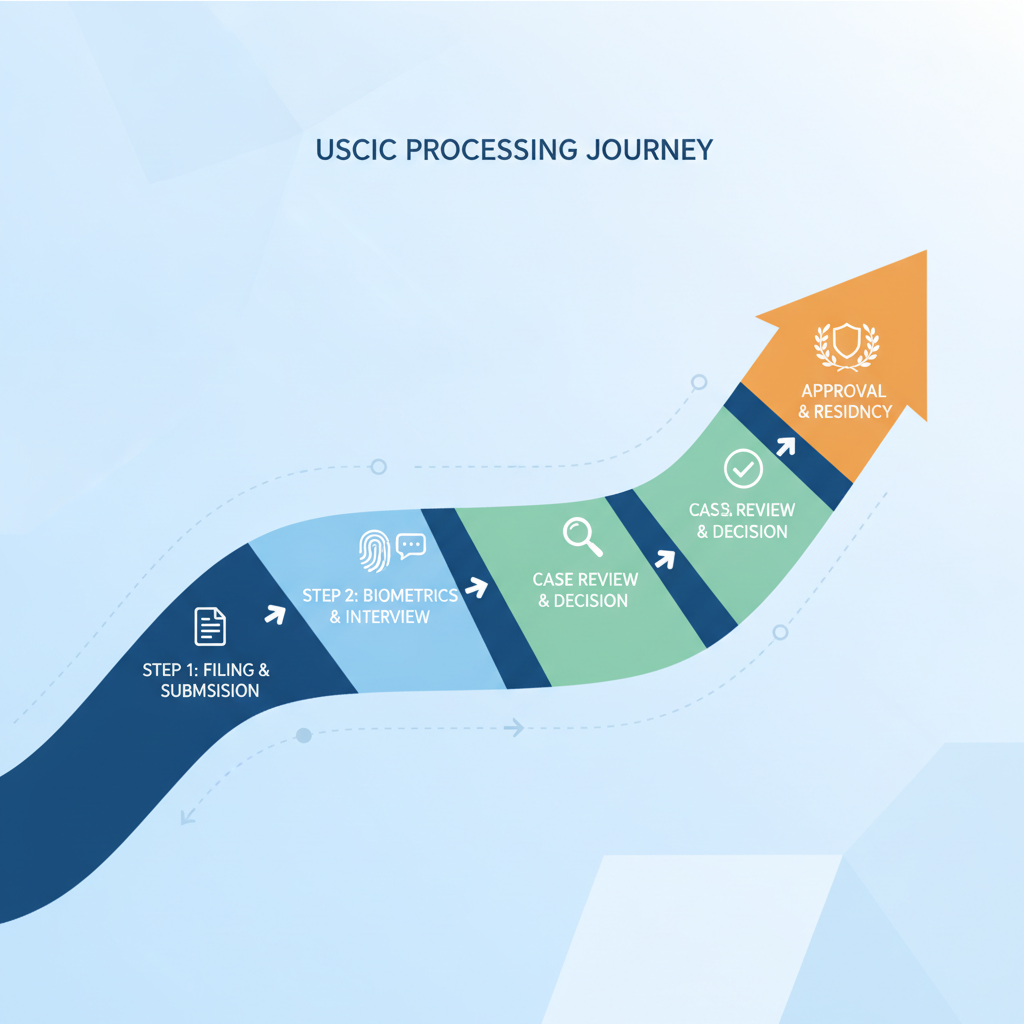
- Receipt Notice (Form I-797C): Within a few weeks of filing, you should receive a Form I-797C, which confirms USCIS received your application and provides a Receipt Number (e.g., EAC, WAC, LIN, SRC, NBC followed by numbers).
- Biometrics Appointment: Many applications require a biometrics appointment (fingerprints, photo, signature) at an Application Support Center (ASC). You will receive a notice with the date, time, and location (e.g., the ASC serving Orlando).
Action: Send your application to the correct address as specified in the form instructions. Keep a complete copy of everything you send. Track your mail. Once you receive your Receipt Notice, keep it safe and note your Receipt Number.
5) Monitor Your Case Status Online
After filing, regularly checking your case status is crucial for staying informed.
How to Check:
- Go to the USCIS Case Status Online tool.
- Enter your 13-character Receipt Number (e.g., EAC1234567890).
- Click "Check Status."
Understanding Status Updates:
- "Case Was Received"
- "Biometrics Appointment Was Scheduled"
- "Request for Evidence Was Sent"
- "Interview Was Scheduled"
- "Case Was Approved"
Important: While the online tool is helpful, it may not always show the most detailed information. Sometimes, an update will appear in the mail before it's updated online.
Action: Check your case status regularly (e.g., weekly or bi-weekly). Be patient, as updates can be infrequent. Sign up for email and text alerts on the USCIS website.
6) Respond Promptly and Thoroughly to RFEs or NOIDs
If USCIS needs more information or intends to deny your case, they will send an RFE or NOID. These are critical notices that require immediate and careful attention.
- RFE (Request for Evidence): USCIS believes you haven't provided enough evidence to prove eligibility. The RFE will specify exactly what documents or information they need. You typically have a specific deadline (e.g., 87 days or 12 weeks) to respond.
- NOID (Notice of Intent to Deny): This is more serious. USCIS believes there are grounds to deny your application based on the evidence provided or other factors. The NOID will explain the reasons for the proposed denial, and you will have a specific deadline to submit a rebuttal.
Action: Read the RFE or NOID carefully. Gather ALL requested documents. If you're unsure, consult an immigration attorney immediately. Respond by the deadline, ensuring your response is complete and well-organized. Send your response via certified mail with a return receipt.
7) What to Do If Your Case Exceeds Normal Processing Times
If your application has been pending longer than the estimated range posted on the USCIS website for your specific form and office, you may be able to take action.
Steps to Take:
- Submit an E-Request: You can submit an online "Outside Normal Processing Times" service request through the USCIS website. You will need your Receipt Number and details about your application.
- Contact USCIS by Phone: Call the USCIS Contact Center (1-800-375-5283) to inquire about your case status. Be prepared for potentially long wait times.
- Request a Congressional Inquiry: If you've tried the above without success, your U.S. Senator or Representative can submit an inquiry on your behalf. This is often done as a last resort.
- Seek Legal Counsel: An experienced immigration attorney can assess your situation, make inquiries on your behalf, and potentially file a Writ of Mandamus if your case is excessively delayed and no other options are working.
Action: Be proactive if your case falls outside the normal processing window. Keep records of all inquiries made and responses received. For those in Orlando, Imigrar can help you navigate these advanced steps.
Practical Steps You Can Take Today
While USCIS processing times are largely outside your direct control, there are many proactive steps you can take to ensure your application progresses as smoothly as possible and to manage the waiting period effectively.
Actionable Checklist:
- Keep a Master File: Create a dedicated physical and digital folder for all immigration-related documents. This includes copies of all forms submitted, every notice received from USCIS, receipts, correspondence, and original supporting documents.
- Use Certified Mail with Return Receipt: Whenever you mail documents to USCIS, use a service that provides a tracking number and proof of delivery. This is your undeniable evidence that USCIS received your submission.
- Update Your Address Promptly: If you move, you must notify USCIS within 10 days of your new address by filing Form AR-11, Alien's Change of Address Card, and also update the address on any pending applications. Failure to do so can result in missed notices, RFEs, or even denial.
- Know Your Receipt Number: This 13-character number is your key to checking your case status online and making inquiries. Memorize it or keep it in a readily accessible, secure place.
- Stay Informed: Regularly check the USCIS website for policy updates, processing time changes, and news alerts. Subscribe to USCIS email updates.
- Consult an Attorney: Even if you plan to file some forms yourself, a consultation with an immigration lawyer can provide invaluable insights, prevent common mistakes, and help you understand potential challenges specific to your case. For complex cases or long delays, legal representation becomes even more critical.
Document Preparation Guidance
- Accuracy is Paramount: Double-check all dates, names, and numbers. Inconsistencies or errors can trigger RFEs or denials.
- Legibility: Ensure all documents are clear and readable. If scanning, use high resolution.
- Organize, Organize, Organize: Use cover sheets, tabs, and binders for large applications. Present your documents logically according to the form instructions.
- Translations: As mentioned, any document not in English must be translated by a competent translator and accompanied by a certificate of translation.
- Photographs: Adhere strictly to USCIS photo specifications

