


White House Expands Travel Ban: Impacts on Visas and Green Cards
On December 16, 2025, the White House issued a presidential proclamation significantly expanding U.S. entry restrictions, adding five new countries—Burkina Faso, Mali, Niger, South Sudan, and Syria—to full bans, building on the existing 19 "travel ban" nations from Proclamation 10949.[2][5] This move, coupled with USCIS's December 2 internal guidance pausing all final adjudications for nationals of these 19 countries, halts approvals, denials, adjustment of status interviews, and even naturalization oath ceremonies amid heightened national security vetting.[1][3]
Background: From Proclamation 10949 to Expanded Restrictions
The original Proclamation 10949, issued June 4, 2025, targeted 19 countries due to concerns over deficient civil documentation, unreliable law enforcement cooperation, high visa overstay rates, and security risks: Afghanistan, Myanmar (Burma), Chad, Republic of the Congo, Equatorial Guinea, Eritrea, Haiti, Iran, Libya, Somalia, Sudan, Yemen, Burundi, Cuba, Laos, Sierra Leone, Togo, Turkmenistan, and Venezuela.[1][2] The December 16 expansion incorporates updated assessments, subjecting nationals from the five new countries to identical full entry restrictions.[2]
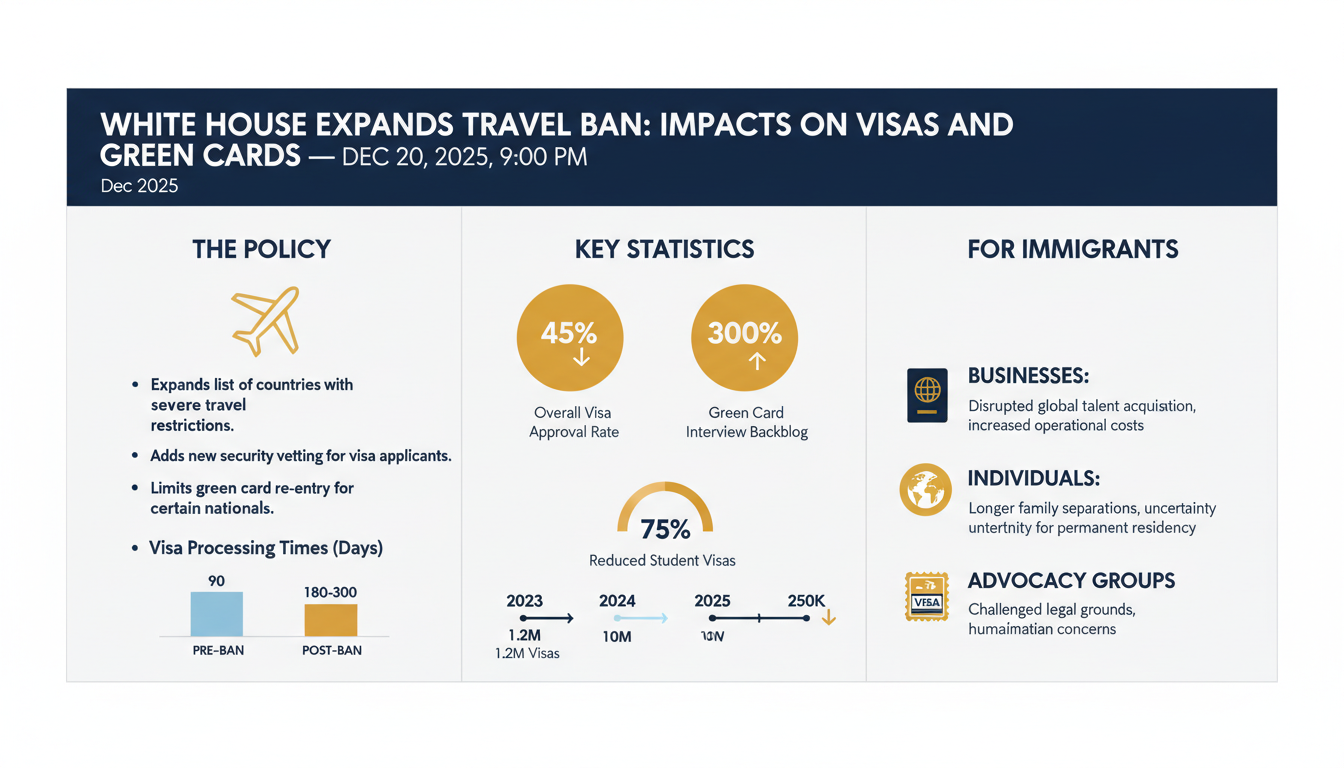
This escalation follows the November 26, 2025, shooting of National Guard members in Washington, DC, prompting USCIS to update its Policy Manual. Officers can now consider "relevant country-specific factors" for applicants from these nations, leading to Policy Memorandum PM-602-0192 on December 2. This memo imposes holds and enhanced reviews on all Form I-589 asylum applications and a broad range of pending benefits for these nationals.[1][3]
Immigration attorneys report real-world disruptions: sudden cancellations of naturalization ceremonies for Venezuelans, Iranians, and Afghans; halted adjustment of status (green card) interviews; and stalled final decisions on various forms.[1] The pause remains indefinite until USCIS provides further vetting guidance, affecting all form types.[1]
Legal Implications: Who Is Affected and How
Visa Applications: The proclamation bars entry for nationals of the 24 countries (19 original + 5 new) seeking immigrant or nonimmigrant visas, unless exceptions apply. It prioritizes national security, suspending processing where vetting is deemed inadequate.[2][5] Existing valid visas issued before effective dates remain honored, but renewals or new issuances face blocks.[2]
Green Cards and Adjustment of Status: USCIS's pause halts final adjudications on Form I-485 applications for these nationals, even if already filed. This includes family-based, employment-based, and diversity visa adjustments. Interviews may proceed but approvals/denials are frozen, creating backlog risks.[1]
Citizenship and Naturalization: Naturalization oath ceremonies are canceled for affected individuals, delaying U.S. citizenship. Pending Form N-400 applications face enhanced scrutiny under the updated Policy Manual.[1]
Asylum and TPS: Holds apply to Form I-589 asylum claims. Separately, DHS issued notices terminating Temporary Protected Status (TPS) for Haiti and Burma (Myanmar), though a federal district judge blocked Syria's termination—highlighting ongoing litigation risks.[1]
Deportation Defense: While not directly targeting removals, enhanced vetting could complicate relief applications (e.g., asylum, cancellation of removal) for those in proceedings from these countries, as officers weigh country-specific security factors.[3]
Exceptions include lawful permanent residents (LPRs), diplomats, athletes, and cases deemed in the U.S. national interest. Waivers are available case-by-case for extraordinary circumstances, but family-based immigrant exceptions are narrowed to curb fraud.[2]
Actionable Guidance: Steps for Affected Individuals
If you or your client hail from one of the 24 restricted countries, act swiftly to mitigate delays. Here's targeted advice:
- Check Your Status Immediately: Use USCIS online tools or consult an attorney to confirm if your case (e.g., I-485, N-400, I-589) is paused. Attorneys report selective cancellations—verify via case status or scheduled notices.[1]
- Explore Exceptions and Waivers: LPRs and valid visa holders are generally exempt. For others, gather evidence for national interest waivers (e.g., employment offers, family ties). File Form I-601 or DS-5535 promptly if eligible.[2]
- Pending Applicants: Continue submitting evidence and attend interviews if scheduled, but expect delays. Request expedites only for humanitarian reasons via USCIS e-Request—success varies.[1]
- Visa Seekers Abroad: Avoid travel plans; monitor State Department updates. ESTA travelers from Visa Waiver Program countries face no direct impact, but heightened vetting (e.g., social media mining, selfies) applies broadly.[3]
- Naturalization Delays: Reschedule oaths via USCIS; document impacts for potential mandamus litigation if delays exceed reasonable bounds (e.g., post-6 months).[1]
- TPS Holders: For Haiti/Myanmar, prepare alternatives like asylum. Syria beneficiaries gain temporary reprieve via court order.[1]
- Deportation Defense: Strengthen applications with country condition reports countering security concerns. Seek stays of removal during vetting holds.[3]
- Document Everything: Track communications, delays, and hardships for future claims or lawsuits challenging the policy.
Public Charge Rule Change: Additional Layer of Caution
Compounding these restrictions, USCIS's November 19, 2025, NPRM proposes rescinding 2022 public charge rules, granting officers broader discretion to deem applicants inadmissible if likely to use public benefits. Comments are due 30 days post-publication—submit via regulations.gov to influence outcomes. Green card seekers from restricted countries must now meticulously document financial self-sufficiency.[1]
Broader Context and Future Outlook
These policies integrate national security into immigration adjudication, echoing prior travel bans but with data-driven expansions.[2][3] Visa Bulletin for December 2025 shows standard availability, unaffected directly, but processing holds override this for restricted nationals.[6] Daily news clips from December 18 highlight ongoing discussions.[7]
Expect litigation: Past bans faced court challenges; monitor federal dockets for injunctions. USCIS promises updates on vetting—subscribe to alerts.
Why Imigrar Law Firm? Expert Guidance in Orlando
At Imigrar, our Orlando-based immigration attorneys specialize in navigating complex restrictions like these. We've assisted clients from travel ban countries with waivers, mandamus actions, and deportation defenses. Contact us for a consultation to protect your status amid these changes. With deep knowledge of USCIS memos like PM-602-0192 and proclamations, we deliver tailored strategies.[1][2]
Stay informed—immigration law evolves rapidly. This analysis draws from verified sources including USCIS guidance, White House proclamations, and legal analyses as of December 2025.[1][2][3][5]
(Word count: 1,728)


