


At Imigrar, our core mission is to "Keep Families Together." We understand that for many, the journey to reunite with loved ones in the United States is paramount. It's a path filled with hope, but also complex legal requirements and procedures. This guide is designed to demystify the family-based immigration petition process, providing clarity and actionable steps for you and your family.
Considering a family-based petition? Don't navigate the complexities alone. Our experienced Orlando immigration team at Imigrar is here to help. Call +1 786-791-3106 for a free consultation, or message us online. Se Habla Español.
The reporting that sparked this guide
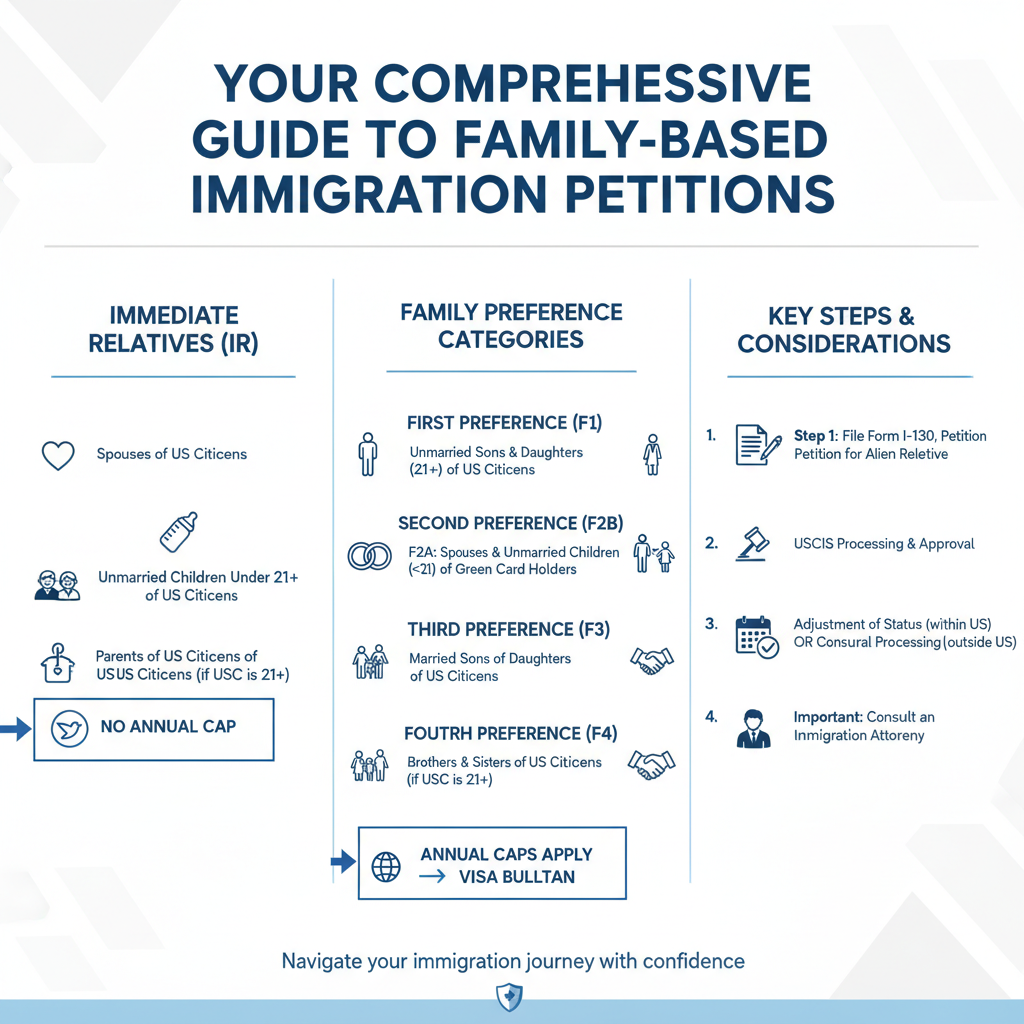
The continuous flow of news and information surrounding immigration law underscores its dynamic nature and profound impact on individuals and families worldwide. The ongoing discourse often highlights the intricacies of family reunification processes, prompting a consistent demand for clear, reliable guidance. Our detailed guide is inspired by the constant need for accessible information on this vital topic, reflecting the persistent queries and developments reported across various platforms.
Source: Family-Based Immigration Petition Guide (Immigration)
What This News Means for Immigrants in Orlando and Across Florida
The topic of family-based immigration is not just a trending news item; it's a constant, central pillar of U.S. immigration policy and impacts countless lives daily. For individuals and families in Orlando, throughout Central Florida, and across the entire state, understanding this pathway is critical to achieving their American dream.
Why this news is showing up now
Family-based immigration is perennially relevant because it forms the bedrock of how many individuals gain legal permanent residency in the United States. While specific policies or processing times may shift, the fundamental framework for sponsoring relatives remains a primary avenue for legal immigration. News outlets frequently cover updates from U.S. Citizenship and Immigration Services (USCIS) and the U.S. Department of State, changes in visa bulletin cut-off dates, and legal challenges that impact family petitions. This constant stream of information means that guidance on family petitions is always in demand, reflecting the ongoing hopes and challenges faced by immigrant families.
Moreover, as the world becomes more interconnected, families are often separated across borders. The desire to reunite parents with children, spouses with partners, and siblings with each other is a universal human experience. Consequently, the mechanisms for family reunification are always under scrutiny, making "family-based immigration petitions" a topic that consistently generates interest and discussion.
How it can affect Florida residents
Florida is home to a vibrant and diverse immigrant population, with Orlando serving as a major hub for new arrivals and established communities. This means that a significant portion of Florida residents either have family members seeking to immigrate or are themselves being sponsored. The implications are far-reaching:
- Direct Impact on Families: For families living in Orange County, Seminole County, or along the I-4 corridor, understanding the family petition process is crucial for bringing loved ones from abroad or adjusting the status of family members already in the U.S.
- Economic and Social Integration: Successful family reunification contributes to Florida's economic growth and social fabric. When families are together, they can better integrate into communities, contribute to the workforce, and build stable lives.
- Local Resources and Processing: Florida residents often interact with the Orlando USCIS Field Office for interviews related to adjustment of status or naturalization. Timelines and local office procedures can directly affect their journey.
- Community Support: The large immigrant communities in cities like Orlando, Miami, Tampa, and Jacksonville create robust support networks, but also a greater need for accurate legal guidance on family petitions.
- Policy Changes: Any federal policy changes, such as those affecting public charge rules or visa availability, directly impact Florida residents navigating the family immigration system. Staying informed is not just beneficial; it's essential.
At Imigrar, we are uniquely positioned in Orlando to serve the needs of Florida's immigrant communities, providing tailored advice that considers both federal requirements and local nuances. We are committed to helping you understand how these critical immigration pathways affect you and your family.
What Family-Based Immigration Petitions Are (and Why They Matter)
Family-based immigration is the cornerstone of the U.S. legal immigration system, allowing U.S. citizens and lawful permanent residents (LPRs), also known as Green Card holders, to sponsor certain eligible family members for immigration to the United States. It's the primary way many individuals gain legal permanent residency and eventually, U.S. citizenship.
A plain-English definition
Simply put, a Family-Based Immigration Petition is a formal request made by a U.S. citizen or Green Card holder (the "petitioner") to the U.S. government, asking permission for a qualifying foreign national family member (the "beneficiary") to come to or remain in the United States permanently. This process leads to the beneficiary receiving a Green Card, granting them lawful permanent resident status.
The importance of this process cannot be overstated. It is the legal mechanism that allows millions of families to reunite, build lives together, and contribute to American society. Without it, the dream of living legally in the U.S. with loved ones would be unattainable for countless individuals.
Key terms you need to know
Navigating immigration law requires understanding specific terminology. Here are some essential terms related to family-based petitions:
- Petitioner: The U.S. citizen or lawful permanent resident who files the immigration petition on behalf of a family member.
- Beneficiary: The foreign national family member for whom the petition is filed, seeking to immigrate to the U.S.
- Immediate Relative: A specific category of family members of U.S. citizens who are not subject to annual visa quotas, meaning visas are always available for them. This includes:
- Spouses of U.S. citizens.
- Unmarried children under 21 years of age of U.S. citizens.
- Parents of U.S. citizens (if the U.S. citizen is at least 21 years old).
- Family Preference Categories: Other family members of U.S. citizens and certain family members of lawful permanent residents are subject to annual visa quotas, which often results in long waiting times. These categories include:
- First Preference (F1): Unmarried sons and daughters (21 years or older) of U.S. citizens.
- Second Preference (F2A): Spouses and unmarried children (under 21) of lawful permanent residents.
- Second Preference (F2B): Unmarried sons and daughters (21 years or older) of lawful permanent residents.
- Third Preference (F3): Married sons and daughters of U.S. citizens.
- Fourth Preference (F4): Brothers and sisters of U.S. citizens (if the U.S. citizen is at least 21 years old).
- Form I-130, Petition for Alien Relative: The initial form filed by the U.S. citizen or LPR petitioner with USCIS to establish the family relationship. This is the foundation of almost all family-based immigration cases.
- Priority Date: The date USCIS receives your Form I-130 petition. For preference categories, this date determines your place in the visa queue. Once your Priority Date becomes "current" according to the Visa Bulletin, your beneficiary can move forward with their Green Card application.
- Visa Bulletin: A monthly publication from the U.S. Department of State that lists the cut-off dates for visa availability in the family preference categories. It's crucial for tracking your petition's progress. You can find it on the U.S. Department of State website.
- Adjustment of Status (AOS): The process of applying for a Green Card while physically present in the United States. This is typically available if the beneficiary entered the U.S. legally and meets other eligibility criteria. The primary form for this is Form I-485, Application to Register Permanent Residence or Adjust Status.
- Consular Processing: The process of applying for an immigrant visa at a U.S. embassy or consulate abroad. This is used when the beneficiary is living outside the United States or is ineligible for Adjustment of Status.
- Affidavit of Support (Form I-864): A legally binding document signed by the petitioner (and sometimes a joint sponsor) to demonstrate that the beneficiary will have adequate financial support and will not become a "public charge" in the United States.
Confused by immigration jargon? Let Imigrar simplify the process for you. Our Orlando-based lawyers provide clear, compassionate guidance. Call +1 786-791-3106 today for your free consultation. Se Habla Español.
Current Immigration Law: The Foundation of Family Petitions
The legal framework for family-based immigration is primarily established under the Immigration and Nationality Act (INA), specifically sections 201, 203, and 204. These sections define who can be sponsored, the different visa categories, and the petitioning process. U.S. Citizenship and Immigration Services (USCIS) is the government agency responsible for adjudicating these petitions within the United States, while the U.S. Department of State handles immigrant visa processing at consulates abroad.
Federal requirements
At the federal level, the requirements for family-based petitions are stringent and apply nationwide. Key elements include:
- Valid Relationship: The petitioner must prove a legitimate qualifying family relationship with the beneficiary. This is the absolute first step.
- Petitioner Status: The petitioner must be a U.S. citizen or a lawful permanent resident (Green Card holder).
- Age Requirements: For certain relationships (e.g., sponsoring parents or siblings), the U.S. citizen petitioner must be at least 21 years old.
- Financial Sponsorship: The petitioner (and sometimes a joint sponsor) must demonstrate sufficient income or assets to support the beneficiary at 125% of the federal poverty guidelines, preventing them from becoming a "public charge." This is documented via Form I-864, Affidavit of Support.
- Admissibility: The beneficiary must be admissible to the United States. Certain factors, such as criminal history, prior immigration violations, or specific health conditions, can make a beneficiary inadmissible. Waivers may be available in some cases.
- Proper Forms and Documentation: All required forms, such as Form I-130, Form I-485, Form I-864, and supporting evidence, must be correctly completed and submitted to the appropriate agency (USCIS or Department of State). You can find all official forms and instructions on the USCIS Forms page.
Understanding these federal requirements is paramount, as any deviation can lead to delays or denials. We highly recommend reviewing the USCIS official website for the most current information and guidelines.
Florida-specific considerations
While immigration law is federal, practical considerations in Florida can influence your experience:
- Orlando USCIS Field Office: If you are applying for Adjustment of Status in Central Florida, your interview will likely be scheduled at the Orlando USCIS Field Office. Familiarity with local procedures and typical interview questions for this office can be beneficial. The address is 6650 Tussing Rd, Orlando, FL 32807.
- Local Resources: Orlando and the surrounding areas, including Orange County, have numerous community organizations that provide support services to immigrants. While these organizations cannot provide legal advice, they can be helpful for things like English language classes or social integration.
- Accessibility: For residents along the I-4 corridor or in other parts of Florida, accessing legal assistance and government offices requires planning. Imigrar serves clients nationwide, ensuring that distance is not a barrier to expert legal representation.
- Notary Public Services: Many required documents, such as affidavits, must be notarized. Florida notaries are widely available, but ensure you understand what needs notarization and what simply needs to be copied.
Navigating the federal legal landscape while considering local logistical factors is where experienced legal counsel becomes invaluable. Imigrar is deeply familiar with both the overarching federal laws and the practicalities of filing and processing cases for clients in Orlando and across Florida.
How to File a Family-Based Immigration Petition: A Complete Step-by-Step Guide
The family-based immigration process can be complex, involving multiple forms, agencies, and waiting periods. This guide breaks it down into manageable steps. Important: This guide provides general information; individual cases may vary. Always consult with an immigration attorney.
1) Determine Eligibility and Identify the Correct Visa Category
Before filing any forms, the petitioner must confirm they are eligible to sponsor a family member and identify the correct visa category for the beneficiary. This is the most crucial first step, as it dictates the entire process and potential waiting times.
- Petitioner Status: Are you a U.S. Citizen or a Lawful Permanent Resident (Green Card holder)? Your status determines who you can sponsor.
- Relationship: What is your relationship to the beneficiary? (e.g., spouse, parent, child, sibling).
- Beneficiary's Marital Status and Age: For children and sons/daughters, their marital status and age (under 21 or 21 and older) are critical in determining the correct category (Immediate Relative vs. Preference Category).
Required Documents for this Step (primarily for attorney consultation):
- Petitioner's Proof of U.S. Citizenship (e.g., Birth Certificate, U.S. Passport, Naturalization Certificate) or Lawful Permanent Resident Status (e.g., Green Card).
- Proof of Relationship (e.g., Marriage Certificate, Birth Certificates linking petitioner and beneficiary).
- Beneficiary's Identification (e.g., Passport, Birth Certificate).
2) File Form I-130, Petition for Alien Relative
This is the foundational step. The U.S. citizen or LPR petitioner files Form I-130 with USCIS to establish the qualifying family relationship with the beneficiary.
- Complete Form I-130: Fill out the form accurately and completely. Any errors or omissions can lead to Request for Evidence (RFE) or denial.
- Gather Supporting Documentation:
- Proof of Petitioner's Status: Copy of U.S. passport, birth certificate, naturalization certificate, or Green Card (front and back).
- Proof of Relationship:
- Spouses: Marriage certificate, joint bank statements, joint leases/mortgages, photos together, affidavits from friends/family, birth certificates of common children.
- Parents/Children: Birth certificates showing parent-child relationship. If adopted, adoption decree. If stepparent/stepchild, marriage certificate of biological parent to stepparent.
- Siblings: Birth certificates of both petitioner and beneficiary showing common parent(s).
- Proof of Name Changes: If applicable (e.g., marriage certificates, court orders).
- Passport-style Photos: For both petitioner and beneficiary (specific requirements apply).
- Fees: Include the correct filing fee. Check the USCIS website for current fees.
- Mail the Petition: Send the completed Form I-130 and all supporting documents to the correct USCIS filing address. This varies based on the form and petitioner's residence.
Reminder: USCIS will send a receipt notice (Form I-797C, Notice of Action) confirming they received your petition. Keep this safe, as it contains your Receipt Number, which you'll use to track your case status online.
3) Wait for I-130 Approval and Visa Availability
After filing, USCIS will process the Form I-130. This can take several months or even years, depending on the service center workload. Once approved, the petition moves to the National Visa Center (NVC) for further processing, but the beneficiary must wait for a visa to become available if they are in a preference category.
- I-130 Approval: USCIS sends an approval notice (Form I-797, Notice of Action) if the relationship is established.
- Priority Date Becomes Current (for Preference Categories):
- Monitor the Visa Bulletin monthly. Your Priority Date must be earlier than the "cut-off date" listed for your category and country of chargeability.
- Immediate Relatives (spouses, unmarried children under 21, and parents of U.S. citizens) do not need to wait for a visa to become available, as visas are always immediately available to them.
- NVC Processing: Once the Priority Date is current (or immediately for Immediate Relatives), the case is sent to the National Visa Center (NVC). The NVC collects additional documents and fees before forwarding the case to a U.S. embassy or consulate abroad (for consular processing) or allowing Adjustment of Status (if eligible).
Documents required by NVC (for Consular Processing):
- Immigrant Visa Application (Form DS-260).
- Affidavit of Support (Form I-864) and supporting financial documents (tax returns, employment letters, bank statements).
- Civil documents (birth certificates, marriage certificates, police certificates, court records).
- Passport-style photos.
4) Apply for a Green Card: Adjustment of Status or Consular Processing
Depending on whether the beneficiary is in the U.S. or abroad, and their eligibility, they will either apply for Adjustment of Status or go through Consular Processing.
Option A: Adjustment of Status (Beneficiary in U.S.)
If the beneficiary is in the U.S., entered legally, and a visa is immediately available (either as an Immediate Relative or if their Priority Date is current for a preference category), they can apply to adjust their status to lawful permanent resident. This is done by filing Form I-485.
- File Form I-485: This application is often filed concurrently with Form I-130 for Immediate Relatives, or after I-130 approval and visa availability for preference categories.
- Gather Supporting Documents for I-485:
- Copy of Form I-130 approval notice (if filed separately).
- Beneficiary's birth certificate.
- Copy of passport, visa, and I-94 arrival/departure record.
- Two passport-style photos.
- Medical Examination Report (Form I-693) from a USCIS-approved civil surgeon.
- Form I-864, Affidavit of Support, with petitioner's financial documents.
- Form I-765, Application for Employment Authorization (optional, allows work authorization while I-485 is pending).
- Form I-131, Application for Travel Document (optional, allows travel outside U.S. while I-485 is pending – this is called Advance Parole).
- Criminal history records (if applicable).
- Filing fees.
- Biometrics Appointment: USCIS will schedule a biometrics appointment to collect fingerprints, photos, and a signature for background checks.
Option B: Consular Processing (Beneficiary Abroad)
If the beneficiary is outside the U.S. or ineligible for Adjustment of Status, they will go through Consular Processing. After NVC processing, the case is forwarded to the U.S. embassy or consulate in the beneficiary's home country.
- NVC Completes Processing: Once all NVC fees are paid and documents submitted, the NVC schedules an interview at the appropriate U.S. Embassy or Consulate.
- Medical Examination: The beneficiary must undergo a medical examination with an authorized panel physician in their country of residence.
- Interview Preparation: Gather all original documents and prepare for the interview.
5) Attend the Interview and Receive a Decision
This is a critical stage where the immigration officer (USCIS for AOS, Consular Officer for Consular Processing) evaluates the application and makes a decision.
- Interview Notification: For Adjustment of Status, USCIS will send an interview notice (Form I-797C) with the date, time, and location (e.g., Orlando USCIS Field Office). For Consular Processing, the NVC will notify the beneficiary of their interview date.
- Prepare for Interview: Both petitioner and beneficiary (if applicable) should attend with all original documents, including those submitted with the petition, and any additional evidence of the relationship or financial support. Be prepared to answer questions about your relationship, immigration history, and eligibility.
- Decision:
- Approval: If approved, the officer will stamp the beneficiary's passport (for consular processing) or issue a temporary stamp (for AOS) as proof of Green Card status. The physical Green Card will be mailed later.
- Request for Evidence (RFE): If more information is needed, an RFE will be issued. Timely and complete response is crucial.
- Denial: If denied, the officer will provide reasons. It's vital to consult with an attorney to understand options, which may include appeal or refiling.
6) Receive Your Green Card
After approval, the final step is receiving the physical Green Card.
- Welcome Notice: USCIS will mail a Welcome Notice.
- Green Card Delivery: The Green Card is typically mailed within a few weeks of approval. Ensure your address on file with USCIS is current.
- Conditional Green Card: If the marriage was less than two years old at the time of Green Card approval, the beneficiary will receive a 2-year conditional Green Card. They will need to file Form I-751, Petition to Remove Conditions on Residence, within the 90-day window before the conditional Green Card expires to obtain a 10-year permanent Green Card.
This entire process, from filing Form I-130 to receiving the Green Card, can take anywhere from several months for Immediate Relatives to many years for some preference categories due to visa backlogs. Patience, meticulous documentation, and legal guidance are key.
Practical Steps You Can Take Today for Your Family Petition
Starting the family-based immigration journey can feel overwhelming. Here are practical steps you can take right now to prepare and increase your chances of success:
Actionable Checklist:
- Consult an Immigration Attorney: This is the most crucial first step. An attorney can assess your unique situation, confirm eligibility, identify the correct visa category, and advise on potential challenges. Imigrar offers free consultations to help you get started.
- Gather Essential Documents: Start collecting all birth certificates, marriage certificates, divorce decrees, passports, and any other identity or relationship documents. Ensure they are originals or certified copies and have certified English translations if necessary.
- Review Financial Preparedness: Understand the financial sponsorship requirements. Begin compiling your tax returns, W-2s, employment letters, and bank statements to demonstrate you meet the income thresholds for Form I-864.
- Organize Your Evidence of Relationship: For spousal petitions, start collecting photos, joint financial documents, lease agreements, utility bills in both names, and any other proof that your relationship is genuine and ongoing.
- Understand Timelines and Expectations: Research current USCIS processing times for Form I-130 and Form I-485, and check the Visa Bulletin if you are in a preference category. This will help manage expectations.
- Update Your Contact Information: Ensure USCIS and the NVC have your current mailing address and phone number. If you move, file a change of address immediately with USCIS using Form AR-11.
Document preparation guidance
- Originals vs. Copies: Generally, USCIS prefers copies of documents but may request originals at an interview. Never send original irreplaceable documents unless specifically requested. Keep your originals safe.
- Translations: Any document not in English must be accompanied by a complete English translation certified by a translator. The translator must attest that they are competent to translate and that the translation is accurate


