


The reporting that sparked this guide: Green Card Interview Preparation Tips (Immigration Law)
Securing a Green Card is a monumental step in the immigration journey, offering a pathway to permanent residency in the United States. For many, this journey culminates in a crucial interview with U.S. Citizenship and Immigration Services (USCIS) or at a U.S. embassy or consulate abroad. The prospect of this interview can be daunting, filled with uncertainty about what to expect, what to bring, and how to answer questions.
At Imigrar, our mission is to "Keep Families Together," and a successful Green Card interview is often a vital part of achieving that goal. Based in Orlando, Florida, and serving clients nationwide, we understand the anxieties and hopes that accompany this process. This comprehensive guide is designed to empower you with the knowledge, resources, and practical advice needed to approach your Green Card interview with confidence and clarity. We'll break down the legal requirements, offer a step-by-step preparation plan, and address common concerns, all to help you navigate this critical stage of your immigration journey.
What This News Means for Immigrants in Orlando and Across Florida
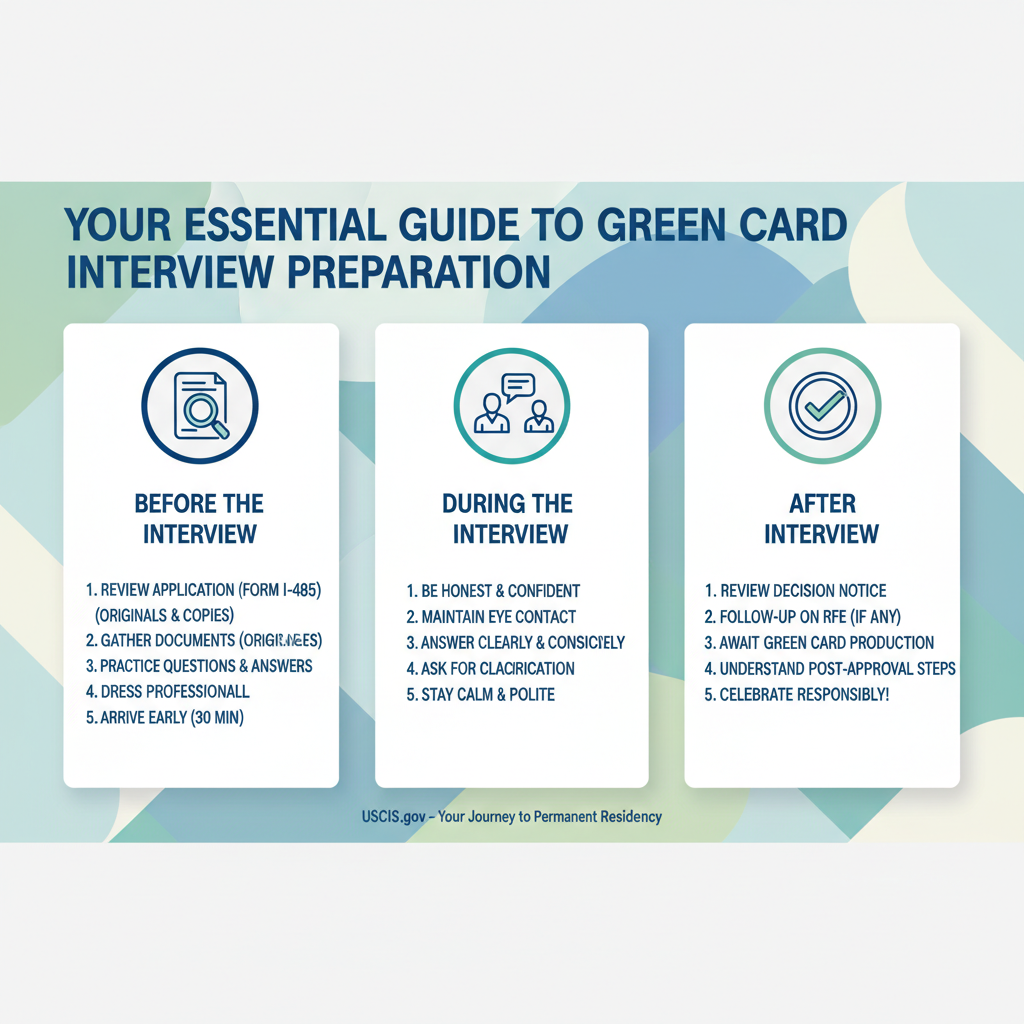
The topic of Green Card interview preparation is consistently a trending and critical area within immigration law. It's not just a passing headline; it's a fundamental step for hundreds of thousands of individuals each year seeking permanent residency in the United States. Understanding the importance of this interview, and how to effectively prepare for it, is paramount for anyone on this path.
Why this news is showing up now
The Green Card interview is a long-standing requirement for most applicants seeking lawful permanent resident status. While the core process remains consistent, news and discussions around interview preparation frequently surface due to several factors:
- Continuous Influx of New Applicants: Every day, new individuals and families embark on their immigration journey, making the Green Card interview a perpetual concern for first-time applicants.
- Policy Changes and Updates: While the interview itself is standard, USCIS policies, processing times, and focus areas can shift, leading to renewed interest in preparation strategies. For instance, changes in interview waivers or specific document requirements can impact how applicants prepare.
- Increased Scrutiny and Complexity: In recent years, there has been an increased focus on immigration enforcement and the integrity of the immigration system. This can lead to more thorough interviews, especially for complex cases or those involving marriage-based petitions, where the genuineness of the relationship is under scrutiny.
- Demand for Practical Guidance: Immigrants and their families are constantly seeking reliable, actionable advice to reduce stress and maximize their chances of success. Legal blogs, news outlets, and community forums frequently address this need by sharing preparation tips and updates.
- Personal Stories and Experiences: The personal experiences of applicants, both positive and negative, often drive discussions and searches for interview preparation tips, as individuals look to learn from others.
Ultimately, the Green Card interview is the applicant's opportunity to personally present their case to an immigration officer, verify the information in their application, and demonstrate their eligibility for permanent residency. Its importance ensures it remains a constant point of focus in immigration news and legal guidance.
How it can affect Florida residents
For individuals residing in Florida, particularly those in the Orlando area, the Green Card interview process holds specific relevance:
- Orlando USCIS Field Office: If you are applying for Adjustment of Status (AOS) while physically present in the U.S., your interview will likely take place at a local USCIS Field Office. For Central Florida residents, this is often the Orlando USCIS Field Office, located at 5449 South Semoran Blvd, Orlando, FL 32822. Understanding the local office's procedures, typical wait times, and even the general demeanor of officers can be beneficial.
- Diverse Immigrant Population: Florida, and Orlando specifically, is home to a vast and diverse immigrant population. This means many residents are actively going through the Green Card process, making shared experiences and local resources particularly valuable. Family-based petitions, especially marriage-based ones, are very common in this region.
- Access to Legal Expertise: Being in a major metropolitan area like Orlando, residents have access to experienced immigration law firms like Imigrar. This local presence means personalized assistance tailored to the specifics of the Florida legal landscape and USCIS field office procedures.
- Language Access: With a significant Spanish-speaking population, services like those offered by Imigrar (Se Habla Español) are crucial for ensuring clear communication and accurate representation during the preparation and interview process.
- Travel and Logistics: For those living in surrounding areas within Orange County or along the I-4 corridor, planning travel to the Orlando Field Office for an interview requires consideration of traffic and timing, especially for early morning appointments.
The preparation tips discussed in this guide are universally applicable, but understanding the local context, resources, and specific USCIS office dynamics can provide an added layer of readiness for Florida residents.
What Green Card Interview Preparation Is (and Why It Matters)
The Green Card interview is a cornerstone of the immigration process for most individuals seeking permanent residency in the United States. It's the moment when an immigration officer evaluates your eligibility and the veracity of your application in person. Effective preparation is not just advisable; it is critical for a successful outcome.
A plain-English definition
A Green Card interview is a formal meeting between you (the Green Card applicant), and sometimes your petitioner (e.g., your spouse, parent, or employer), and an immigration officer from USCIS or a U.S. consular officer abroad. The primary purpose of this interview is for the officer to:
- Verify the information provided in your application forms and supporting documents.
- Assess your eligibility for a Green Card under U.S. immigration law.
- Confirm the authenticity of your relationship (for family-based petitions) or the validity of your job offer (for employment-based petitions).
- Determine your admissibility to the United States, ensuring you do not have any grounds of inadmissibility (e.g., certain criminal convictions, health issues, or past immigration violations).
Think of it as the final review before a major decision. It's your opportunity to clearly and truthfully present your case, clarify any ambiguities, and demonstrate that you meet all legal requirements for permanent residency.
Key terms you need to know
Navigating the Green Card process involves understanding specific terminology. Here are some key terms vital for interview preparation:
- Green Card: The common term for a Lawful Permanent Resident Card, which grants non-citizens permission to live and work permanently in the United States.
- USCIS: U.S. Citizenship and Immigration Services, the federal agency responsible for administering the country's lawful immigration system, including Green Card applications and interviews conducted within the U.S.
- Consular Processing: The process of applying for an immigrant visa at a U.S. embassy or consulate in your home country (or another country where you have residency) if you are living outside the U.S. when you apply for your Green Card.
- Adjustment of Status (AOS): The process of applying for a Green Card while physically present in the U.S. without having to return to your home country. These interviews are conducted at USCIS Field Offices, such as the one in Orlando.
- Petitioner: The U.S. citizen or lawful permanent resident who files an immigrant petition (e.g., Form I-130, Petition for Alien Relative) on behalf of an eligible relative.
- Beneficiary: The immigrant who is seeking a Green Card based on the petition filed on their behalf.
- Affidavit of Support (Form I-864): A legally binding document signed by a petitioner (sponsor) who agrees to financially support the immigrant and ensure they do not become a public charge. This form is crucial for most family-based Green Card applications.
- Priority Date: The date USCIS receives your immigrant petition (e.g., Form I-130). This date determines your place in the visa queue for certain visa categories, especially those with annual limits.
- Notice of Interview: The official document from USCIS or the National Visa Center (NVC) informing you of your interview date, time, and location, and listing required documents.
- Request for Evidence (RFE): A letter from USCIS asking for additional documents or information to support your application.
- Grounds of Inadmissibility: Specific reasons under U.S. immigration law why an individual may be denied entry to the U.S. or a Green Card, such as certain health conditions, criminal history, or misrepresentation.
- Bona Fide Marriage: A marriage entered into in good faith, not solely for immigration purposes. This is a central focus of marriage-based Green Card interviews.
Need Help? Our Orlando immigration team is ready to assist. Call +1 786-791-3106 for a free consultation, or message us online. Se Habla Español.
Current Immigration Law: The Foundation for Your Green Card Interview
The Green Card interview is not an arbitrary process; it is firmly rooted in U.S. immigration law. The Immigration and Nationality Act (INA) is the primary body of law governing immigration to the United States. Understanding the legal framework helps applicants grasp why certain questions are asked and why specific documents are required.
Federal requirements
The core legal requirements for obtaining a Green Card are established at the federal level, primarily through the INA. Key sections of the INA dictate:
- Eligibility Categories: Sections 201-204 of the INA define who is eligible for an immigrant visa (Green Card) and under what categories (e.g., family-sponsored, employment-based, diversity lottery, special immigrants). For most family-based petitions, the relationship between the petitioner and beneficiary must fall into one of these categories (e.g., immediate relatives of U.S. citizens, family preference categories).
- Grounds of Admissibility: INA Section 212 lays out numerous "grounds of inadmissibility." During your interview, the officer must ensure you are not inadmissible to the U.S. These grounds include health-related issues, criminal history, security concerns, public charge concerns (reliance on government benefits), misrepresentation, and prior immigration violations. If you are found to be inadmissible, you may need to apply for a waiver (e.g., Form I-601, Application for Waiver of Grounds of Inadmissibility) to overcome the inadmissibility.
- Burden of Proof: In immigration proceedings, the burden of proof generally rests with the applicant. This means you must affirmatively demonstrate, through your testimony and documents, that you meet all eligibility requirements and are not inadmissible.
- Bona Fide Relationship (for Family-Based Petitions): For marriage-based Green Cards (INA Section 204(c)), the law requires that the marriage be "bona fide," meaning it was entered into in good faith and not solely for immigration purposes. The interview is a primary tool for USCIS to assess the genuineness of the marital relationship.
- Financial Support: INA Section 213A requires most family-based immigrants and some employment-based immigrants to have a financial sponsor (the petitioner) who signs an Affidavit of Support (Form I-864). This ensures the immigrant will not become a "public charge," meaning they won't primarily rely on government assistance. The sponsor must meet specific income thresholds.
The entire Green Card application process, from filing the initial petition to the final interview, is designed to ensure compliance with these federal laws and regulations. You can find detailed information on these laws and requirements on the USCIS official website.
Florida-specific considerations
It's important to understand that immigration law is federal law. There are no "Florida-specific immigration laws" that dictate eligibility for a Green Card or the interview process itself. However, Florida residents, particularly those in Central Florida, face unique practical considerations:
- Local USCIS Field Office Procedures: While the core federal law is uniform, the day-to-day operations and interview styles can vary slightly between different USCIS Field Offices. The Orlando USCIS Field Office handles interviews for applicants adjusting status within this region. An experienced Orlando immigration attorney will be familiar with the nuances of this specific office.
- Community Resources: Florida's large immigrant population means there are numerous community organizations and legal aid services that can offer support, particularly for low-income individuals. However, for complex cases, professional legal representation is highly recommended.
- Language Services: Given Florida's significant Spanish-speaking population, the availability of attorneys and support staff who are fluent in Spanish (like Imigrar's team, Se Habla Español) is a critical resource for ensuring clear communication throughout the legal process.
- State ID and Driver's Licenses: While not directly related to the Green Card interview, Florida state laws regarding identification and driver's licenses for non-citizens can be a practical consideration for immigrants establishing their lives here.
In essence, while the laws are federal, the practical application and navigation of the system occur at the local level. Having local legal counsel, such as Imigrar in Orlando, can provide invaluable guidance tailored to your specific situation and geographical context.
You can find all necessary forms, including Form I-130, Form I-485, and Form I-864, along with detailed instructions, on the USCIS Forms page.
How to Prepare for Your Green Card Interview: A Complete Step-by-Step Guide
The Green Card interview is a critical juncture in your immigration journey. Proper preparation can significantly reduce stress and increase your chances of a positive outcome. Follow this detailed step-by-step guide to ensure you are fully ready.
1) Understand Your Interview Type and Purpose
Before you even begin gathering documents, understand the specifics of your interview. Are you undergoing Adjustment of Status (AOS) within the U.S. (e.g., at the Orlando USCIS Field Office) or Consular Processing abroad? The types of questions and the specific procedures can vary.
- For Adjustment of Status (AOS): If you filed Form I-485, Application to Register Permanent Residence or Adjust Status, your interview will be at a USCIS Field Office. Both the applicant and the petitioner (for family-based cases) typically attend.
- For Consular Processing: If you filed Form DS-260, Immigrant Visa Application, your interview will be at a U.S. Embassy or Consulate overseas. Only the applicant attends, though the petitioner's presence may sometimes be requested depending on the consulate.
- Purpose: The interview serves to verify all information on your application (Form I-130, Form I-485, Form I-864, etc.), assess your eligibility, and confirm the legitimacy of your relationship or employment offer.
Reminder: For marriage-based cases, the interview's primary goal is to determine if your marriage is bona fide and not entered into solely for immigration purposes. Be ready to discuss your relationship in detail.
2) Gather and Organize ALL Required Documents
This is arguably the most crucial step. A well-organized and complete set of documents demonstrates preparedness and can expedite the interview process. Always bring originals and high-quality copies of everything.
- The Interview Notice: The official letter from USCIS or NVC. This lists specific documents you MUST bring.
- Identity and Travel Documents:
- Valid passport and any expired passports.
- Original birth certificate (for both applicant and petitioner/spouse).
- Any previous U.S. visas or entry stamps.
- Form I-94 Arrival/Departure Record.
- State-issued ID (e.g., Florida Driver's License or ID card).
- Relationship Evidence (for Family-Based Petitions, especially Marriage):
- Original marriage certificate.
- Birth certificates of any children you have together.
- Joint bank accounts statements, joint credit cards.
- Joint leases, mortgages, or property deeds.
- Utility bills in both names at the same address.
- Insurance policies (life, health, auto) listing each other as beneficiaries.
- Photos together (dating, engagement, wedding, family events, vacations) with dates and locations.
- Correspondence (letters, emails, texts) showing ongoing communication.
- Affidavits from friends/family attesting to the bona fides of the relationship.
- Financial Documents:
- Form I-864, Affidavit of Support (original signed by the petitioner).
- Petitioner's federal income tax returns (IRS transcripts preferred) for the last 3 years.
- Petitioner's W-2s, 1099s, or other income statements.
- Letters from employers verifying employment and salary.
- Bank statements, property deeds, or other asset evidence if income is insufficient.
- Medical Examination:
- Form I-693, Report of Medical Examination and Vaccination Record, in a sealed envelope (if not already submitted).
- Criminal and Court Records:
- Certified copies of any arrest records, court dispositions, or police reports, even if charges were dropped or expunged.
- Important: Transparency is key. Never hide past issues.
- Translations: Any documents not in English must be accompanied by a certified English translation.
- Copies: Bring a complete set of photocopies of every document, even if you submitted them previously. Officers may keep copies.
Pro Tip: Organize your documents in a binder with tabs for easy access. This shows professionalism and preparedness. For Central Florida residents attending the Orlando Field Office, having everything easily accessible can make the process smoother.
3) Review Your Application Forms Thoroughly
You must be intimately familiar with every detail of your submitted applications, including Form I-130, Form I-485, and Form I-864. The officer will refer to these forms and ask questions based on the information provided.
- Read every question and your answer: Ensure you remember what you wrote.
- Consistency is key: Your oral testimony must match the written information. Discrepancies, even minor ones, can raise red flags.
- Understand the "Why": Be prepared to explain any "yes" answers to questions about criminal history, prior immigration violations, or health issues.
- Petitioner's Role: If your petitioner is attending, they should also review the forms, especially Form I-130 and Form I-864.
Warning: Providing false information or misrepresenting facts can lead to a denial of your Green Card and potential future immigration bars. Honesty is always the best policy.
4) Practice Answering Potential Questions
While you can't predict every question, you can anticipate common lines of inquiry. Practice answering these questions truthfully, clearly, and concisely.
- General Background Questions:
- What is your full name, date of birth, place of birth?
- What is your current address?
- What is your immigration history (how did you enter the U.S., previous visas)?
- Have you ever been arrested or convicted of a crime? (Be ready to explain details if applicable).
- Have you ever misrepresented yourself to gain immigration benefits?
- Relationship-Specific Questions (for marriage-based petitions, asked of both spouses):
- How did you meet? When was your first date?
- When and where did you get married?
- Do you live together? How long? Describe your home.
- What are your spouse's parents' names? Siblings?
- What did you do last weekend? What are your hobbies?
- Who pays the bills? Who cooks?
- Describe your wedding day.
- Do you have joint accounts, insurance, etc.?
- Petitioner-Specific Questions (for the sponsor):
- What is your income? Where do you work?
- Do you understand your financial obligations under Form I-864?
Tip: Practice with a trusted friend or family member, or even better, with an immigration attorney. They can provide mock interviews and constructive feedback.
5) Prepare for the Interview Day Logistics
The day of the interview requires careful planning to ensure you arrive prepared and on time.
- Dress Code: Dress in neat, professional attire. This shows respect for the process and the officer.
- Arrival Time: Plan to arrive at least 30-45 minutes before your scheduled appointment, especially at busy locations like the Orlando USCIS Field Office. This accounts for security checks, parking, and finding the correct waiting area. Being late can lead to rescheduling or even denial.
- Interpreter: If you are not fluent in English, you MUST bring your own certified interpreter, unless USCIS provides one (which is rare). Your attorney can also act as an interpreter if they are fluent. Do NOT rely on family members or friends unless they are certified.
- Legal Counsel: Consider bringing an experienced immigration attorney. An attorney can represent you, clarify questions, address legal issues, and provide peace of mind. For Central Florida residents, Imigrar attorneys are well-versed in navigating the Orlando Field Office.
- Children: Unless specifically instructed, avoid bringing children to the interview, as they can be a distraction. If they must come, ensure you have childcare arrangements during the interview itself.
6) Understand What Happens After the Interview
The interview is usually not the very last step. Knowing the possible outcomes helps manage expectations.
- Approval: If everything goes well and the officer has all necessary information, they may approve your case on the spot, or you may receive an approval notice (Form I-797) in the mail within a few weeks. Your Green Card will typically arrive within a few weeks after approval.
- Request for Evidence (RFE): If the officer needs more documents or clarification, they will issue an RFE, usually giving you a deadline (e.g., 87 days). Respond promptly and thoroughly.
- Decision Held in Abeyance: Sometimes, the officer needs to review your file further or consult with a supervisor. This means a decision will be mailed later.
- Denial: In some cases, an application may be denied. This can happen due to inadmissibility, failure to prove eligibility, or inconsistencies. If denied, you will receive a written explanation and may have options to appeal or reapply.
7) Seek Professional Legal Guidance
While this guide provides extensive information, every case is unique. An experienced immigration attorney can:
- Review your entire application package for accuracy and completeness.
- Identify potential issues or grounds of inadmissibility and strategize solutions (e.g., waivers).
- Conduct mock interviews tailored to your specific case.
- Accompany you to the interview, providing legal representation and advocacy.
- Help you understand complex legal questions and ensure your rights are protected.
- Assist with responding to RFEs or appealing denials.
Don't underestimate the value of professional legal support, especially for complex or challenging cases. For immigrants in Orlando, Imigrar offers expert guidance throughout this process.
Need Help? Our Orlando immigration team is ready to assist. Call +1 786-791-3106 for a free consultation, or message us online. Se Habla Español.

Practical Steps You Can Take Today for Interview Success
Preparing for your Green Card interview can feel overwhelming, but breaking it down into manageable steps makes the process less daunting. Here are practical actions you can take starting today to ensure you're fully prepared.
Actionable Checklist
Use this checklist to track your progress and ensure nothing is overlooked:
Locate Your Interview Notice: Confirm the date, time, and location (e.g., Orlando USCIS Field Office) and check the list of documents specifically requested on the notice.
Gather All Original Documents: Start collecting all original birth certificates, marriage certificates, passports, visas, financial records, and any other relevant documents. Make sure they are current and valid.
Make High-Quality Copies: Create at least two complete sets of photocopies for every original document. Organize them neatly, perhaps in a binder with tabs.
Review Your Entire Application: Sit down with copies of your submitted Form I-130, Form I-485, Form I-864, and any other forms. Read every question and your answer. Ensure you remember the details and can articulate them consistently.
Compile Relationship Evidence (if applicable): For marriage-based cases, gather ALL evidence of a bona fide marriage that you have, even if you submitted some before. Think beyond the basics: photos, joint accounts, shared bills, leases, insurance, travel itineraries, etc.
Prepare Financial Documents: Ensure you have the petitioner's Form I-864, tax returns for the past three years (IRS tax transcripts are preferred), W-2s, and employer letters.
Obtain Medical Exam (if not already done): If you haven't yet submitted your Form I-693 in a sealed envelope, schedule your medical exam with an authorized civil surgeon immediately. Check the USCIS Civil Surgeon Locator.
Practice Common Interview Questions: Rehearse answers to general background questions, specific questions about your relationship (if applicable), and questions related to your immigration history or any "yes" answers on your forms.
Plan Interview Day Logistics: Confirm how you will get to the Orlando USCIS Field Office, parking, and arrival time. Lay out your professional attire. Confirm interpreter arrangements if


