


The reporting that sparked this guide: Green Card Interview Preparation Tips (Immigration Law)
What This News Means for Immigrants in Orlando and Across Florida
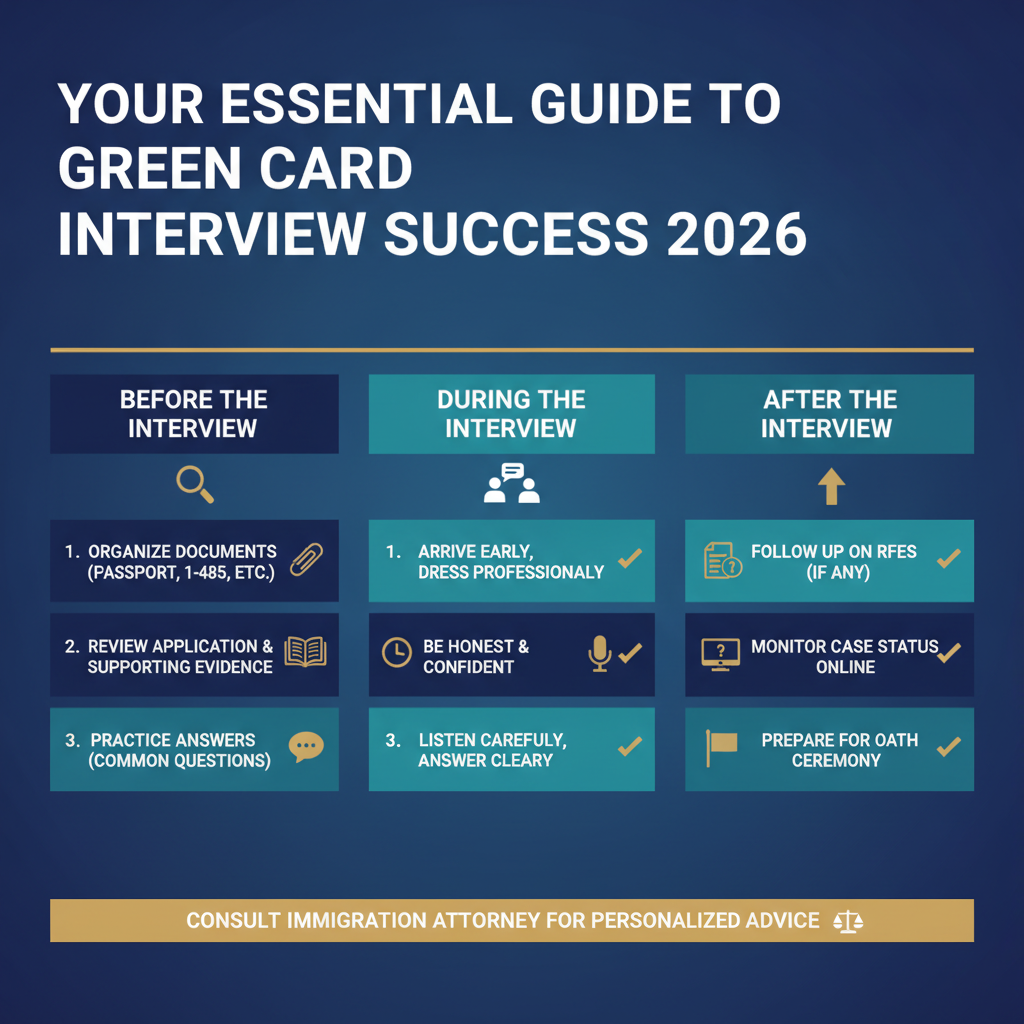
Navigating the U.S. immigration system can feel like a complex journey, especially when you reach a pivotal moment like the Green Card interview. Recent discussions and updates within immigration law circles, as highlighted by the ongoing focus on immigration processes, underscore the critical importance of being thoroughly prepared for this interview. For many, this interview is the final hurdle before achieving permanent residency in the United States, allowing them to truly keep their families together.
Why this news is showing up now
The emphasis on Green Card interview preparation is a constant in immigration law, but it gains renewed prominence periodically due to several factors. As of late 2026, we’ve seen continued efforts by U.S. Citizenship and Immigration Services (USCIS) to streamline certain processes while simultaneously increasing scrutiny in others, particularly concerning fraud detection and national security. This means that while some applicants may experience faster processing, the interview itself remains a deeply significant and often more intense part of the journey. Furthermore, changes in policy or administrative priorities can subtly shift the focus of interview questions, making up-to-date preparation absolutely essential. The digital age also means that news and best practices regarding immigration spread rapidly, bringing the topic of interview readiness to the forefront of discussions among immigrant communities and legal professionals.
How it can affect Florida residents
Florida, and particularly the Orlando area, is a vibrant hub for immigrants from all over the world. Our state's diverse population means that thousands of individuals and families annually undergo the Green Card interview process, often at the Orlando USCIS Field Office. For Central Florida residents, understanding the nuances of interview preparation isn't just theoretical; it's a practical necessity that directly impacts their future. Specific local considerations can include appointment scheduling at the Orlando office, familiarity with local procedures, and the availability of legal resources. Moreover, Florida's large immigrant communities often mean a high volume of applications, which can affect processing times and the availability of interview slots. Being well-prepared not only increases your chances of a successful outcome but can also alleviate stress and potential delays that might arise from unpreparedness.
Need Help? Our Orlando immigration team is ready to assist. Call +1 786-791-3106 for a free consultation, or message us online. Se Habla Español.
What Green Card Interview Is (and Why It Matters)
The Green Card interview is a critical step in the process of becoming a lawful permanent resident (LPR) of the United States. It is a face-to-face meeting with a USCIS officer (or a Consular Officer if applying from outside the U.S.) designed to verify the information provided in your application, confirm your eligibility for a Green Card, and ensure that you meet all legal requirements for permanent residency. This interview is your opportunity to present your case clearly and truthfully, and for the interviewing officer to ask questions and assess your credibility.
A plain-English definition
Imagine the Green Card interview as the final exam before you get your diploma for living permanently in the U.S. It’s a conversation where an immigration officer reviews everything you’ve submitted in your application – your forms, documents, and supporting evidence – and asks you questions about your life, your background, your family, and why you want to live in the U.S. permanently. For family-based Green Cards, especially marriage-based ones, the interview often focuses on confirming the legitimacy of your relationship. It’s a chance for the government to make sure you qualify and that all your paperwork is accurate and honest. It’s a serious meeting, but with proper preparation, it’s a hurdle you can clear successfully.
Key terms you need to know
- Green Card (Form I-551): The official identification card proving your status as a Lawful Permanent Resident (LPR) of the United States.
- Adjustment of Status (AOS): The process of applying for a Green Card while physically present in the United States. This typically involves filing Form I-485, Application to Register Permanent Residence or Adjust Status.
- Consular Processing: The process of applying for a Green Card from outside the United States through a U.S. embassy or consulate in your home country.
- USCIS (U.S. Citizenship and Immigration Services): The government agency responsible for overseeing lawful immigration to the United States. They conduct Green Card interviews for Adjustment of Status cases.
- Petitioner: The U.S. citizen or lawful permanent resident who files an immigration petition on behalf of a foreign national (e.g., Form I-130, Petition for Alien Relative).
- Beneficiary/Applicant: The foreign national seeking a Green Card.
- Affidavit of Support (Form I-864): A legally binding document signed by a petitioner (or joint sponsor) to accept financial responsibility for the immigrant.
- Priority Date: The date your immigration petition (e.g., Form I-130) was properly filed with USCIS. This date determines your place in the visa queue for certain categories.
- Field Office: Local USCIS offices where interviews are conducted, such as the Orlando USCIS Field Office.
- Request for Evidence (RFE): A letter from USCIS requesting additional documents or information to support your application.
- Notice of Intent to Deny (NOID): A letter from USCIS indicating their intention to deny your application and providing you an opportunity to respond before a final decision is made.
Current Immigration Law: The Foundation
The Green Card interview process is governed by a robust framework of U.S. immigration laws, primarily found in the Immigration and Nationality Act (INA). Understanding these foundational laws is crucial for appreciating the purpose and scope of your interview. The INA sets forth the criteria for various immigration categories, grounds of inadmissibility, and the procedures for obtaining permanent residency.
Federal requirements
At the federal level, USCIS officers conducting Green Card interviews are tasked with ensuring compliance with the INA and its implementing regulations. Key aspects they assess include:
- Eligibility for the specific Green Card category: For instance, for a family-based Green Card, they verify the relationship between the petitioner and beneficiary (e.g., marriage, parent-child). For employment-based Green Cards, they confirm the job offer and qualifications.
- Admissibility to the United States: This involves checking for any grounds of inadmissibility, which could include criminal history, certain health conditions, prior immigration violations, or security concerns. Sections 212(a) and 237(a) of the INA outline these grounds.
- Financial Sponsorship: For most family-based and some employment-based Green Cards, the applicant must demonstrate they will not become a "public charge." This is primarily established through Form I-864, Affidavit of Support, where a U.S. citizen or LPR sponsor pledges financial support. The sponsor must meet specific income requirements, typically 125% of the federal poverty guidelines.
- Truthfulness and Consistency: The interview is designed to verify the information provided in all submitted forms, including Form I-130 (Petition for Alien Relative), Form I-485 (Application to Register Permanent Residence or Adjust Status), Form I-765 (Application for Employment Authorization), and Form I-131 (Application for Travel Document). Inconsistencies or misrepresentations can lead to serious consequences, including denial and findings of immigration fraud.
All official forms and detailed instructions can be found on the USCIS official website.
Florida-specific considerations
While immigration law is federal, its application often has local nuances. For those residing in Florida, your Green Card interview will likely take place at the Orlando USCIS Field Office, located at 6680 Corporate Centre Blvd, Orlando, FL 32822. Understanding the local office's procedures, typical wait times, and the general atmosphere can be beneficial. For instance, the Orlando office serves a vast region, from Orange County up and down the I-4 corridor, meaning it handles a high volume of diverse cases. This can sometimes lead to longer processing times or specific scheduling patterns. While the legal requirements remain the same nationwide, familiarity with the local operational flow can help manage expectations and prepare more effectively for your specific appointment.
Need Help? Our Orlando immigration team is ready to assist. Call +1 786-791-3106 for a free consultation, or message us online. Se Habla Español.
How to Prepare for Your Green Card Interview: A Complete Step-by-Step Guide
The Green Card interview is arguably the most crucial step in your journey to permanent residency. Proper preparation can make all the difference between a smooth approval and significant delays or even denial. This comprehensive guide will walk you through the essential steps to ensure you’re ready for success.
1) Understand Your Application and Review All Submitted Documents
Before anything else, you must have a complete understanding of every piece of information you’ve submitted to USCIS. The interviewing officer will primarily use your application forms and supporting documents as the basis for their questions. It’s not enough to just glance over them; you need to know them inside and out.
- Review Every Form: Go through your entire application package, including Form I-130, Form I-485, Form I-864, and any other forms (like Form I-765 or Form I-131) you filed. Pay close attention to dates, addresses, employment history, travel history, and any "yes/no" questions you answered.
- Identify Potential Discrepancies: If you find any minor errors or inconsistencies, make a note of them. Be prepared to explain them clearly and honestly during the interview.
- Know Your Story: Be able to articulate your immigration journey, your relationship (if family-based), and your reasons for seeking permanent residency without hesitation.
Required Documents for this step (for review, not submission):
- Copies of all immigration forms submitted (e.g., Form I-130, Form I-485, Form I-864).
- Copies of all supporting documents previously submitted (e.g., birth certificates, marriage certificates, previous visas, employment letters).
- Your original interview notice (Form I-797C, Notice of Action).
2) Gather and Organize All Original Documents and New Evidence
You must bring all original documents that you previously submitted copies of, plus any new evidence that has accumulated since you filed your application. This is particularly crucial for marriage-based Green Cards, where ongoing evidence of a bona fide marriage is vital.
- Originals of Previously Submitted Documents: Bring the originals of all birth certificates, marriage certificates, divorce decrees, passports, visas, employment letters, school records, and any other official documents you sent copies of to USCIS.
- New Evidence (Especially for Marriage-Based Cases):
- Financial Co-mingling: Recent joint bank statements, joint credit card statements, joint tax returns (if filed jointly since application).
- Joint Property/Leases: Recent lease agreements, mortgage statements, property deeds showing both names.
- Insurance: Joint health, car, life insurance policies.
- Photos: A selection of recent photos together with family and friends, showing your relationship's progression since filing. Date and briefly describe them.
- Communication: Call logs, text messages, emails (a small representative sample, if relevant).
- Affidavits: Letters from friends, family, or employers attesting to the legitimacy of your relationship.
- Children: Birth certificates of any children born to the marriage.
- Medical Exam Results: If your medical exam (Form I-693) was sealed and you haven't submitted it yet, bring it in its original sealed envelope. If it's expired, you may need a new one. Check the validity period on the USCIS official website.
- Updated Affidavit of Support Documents: If your sponsor’s financial situation has changed significantly, or if new tax returns are available, bring updated Form I-864 documents and supporting financial evidence.
Important: Organize your documents in a clear, logical manner. Use folders, dividers, or binders. This shows professionalism and makes it easy for the officer to review. Create a checklist and tick off each item as you pack it.
3) Prepare for Common Interview Questions and Practice Your Answers
While every interview is unique, many questions are standard. Preparing for these can significantly boost your confidence.
- Review Your Personal History: Be ready to answer questions about your birth date, place of birth, parents' names, educational background, employment history, and addresses.
- Understand Your Immigration History: Know your entry dates, visa types, and any previous immigration applications or issues.
- For Marriage-Based Interviews: This is where the most detailed preparation is needed. Questions will delve into the legitimacy of your marriage.
- How and when did you meet?
- Where was your first date?
- When and where did you get married?
- Describe your wedding day.
- What are your spouse’s daily routines?
- What are your spouse’s favorite foods/hobbies?
- Where do you live? Describe your home.
- Do you have joint finances?
- Have you traveled together?
- Who does what chores?
- What are your plans for the future?
- Practice with a Partner: Have your spouse, a trusted friend, or your attorney conduct mock interviews. Practice answering questions clearly, concisely, and truthfully.
- Be Honest: Always tell the truth. If you don't know an answer, say so. Guessing or fabricating information can lead to severe consequences.
Reminder: The goal is to demonstrate that your relationship is genuine, not just for immigration purposes.
4) Dress Professionally and Plan Your Logistics
Your appearance and punctuality make an impression. Treat this meeting like a job interview.
- Dress Code: Wear clean, neat, and conservative clothing. Business casual is generally appropriate. Avoid overly casual attire.
- Punctuality: Plan to arrive at the Orlando USCIS Field Office at least 30 minutes before your scheduled interview time. This allows for parking, security checks, and finding your waiting area. Traffic in the I-4 corridor can be unpredictable, so factor that into your travel time.
- Transportation: Know how you will get to the office and have a backup plan.
- Childcare: If possible, arrange for childcare. While children are allowed, having them present can be distracting for both you and the officer, especially during sensitive questions.
- Bring Interpreters (if needed): If you or your spouse are not fluent in English, and an interpreter was not requested or provided by USCIS, you must bring your own independent interpreter. This interpreter must be fluent in both English and your native language. Your attorney cannot act as your interpreter.
Documents for this step:
- Your interview notice (Form I-797C).
- Government-issued photo ID (passport, driver's license).
5) What to Expect on Interview Day
Knowing the typical flow of an interview can help manage anxiety.
- Security Check: You will go through a security checkpoint similar to an airport. Leave prohibited items at home.
- Waiting Area: You'll wait in a designated area until your name is called.
- Oath: The officer will call your name and ask you to raise your right hand and swear to tell the truth.
- Review of Application: The officer will typically start by reviewing your application forms, confirming basic biographical information.
- Questions: The officer will ask questions about your history, your relationship (if applicable), and your eligibility. They may also ask about the documents you brought.
- Signature and Fingerprints: You may be asked to sign certain forms or provide updated fingerprints electronically.
- Decision: Sometimes a decision is made on the spot, but often the officer will say they need more time to review the case. They may issue a Request for Evidence (RFE) if they need more information.
Warning: Remain calm, polite, and respectful throughout the interview, even if you feel the questions are intrusive or repetitive. The officer is doing their job.
6) The Role of Your Attorney
Having an experienced immigration attorney from Imigrar by your side can be invaluable.
- Pre-Interview Preparation: Your attorney will review your case thoroughly, help you organize documents, and conduct mock interviews.
- Legal Guidance: They can explain complex legal terms, potential issues, and strategize responses to challenging questions.
- Advocacy During Interview: While your attorney cannot answer questions for you, they can clarify questions, object to inappropriate lines of questioning, and ensure your rights are protected. They can also help present additional evidence and make legal arguments on your behalf.
- Post-Interview Follow-Up: If an RFE is issued or a decision is delayed, your attorney can help you respond appropriately and follow up with USCIS.
For Central Florida residents attending interviews at the Orlando USCIS Field Office, having local counsel familiar with the office's procedures can be a distinct advantage.
7) After the Interview: Next Steps
The interview is not always the final step. Be prepared for potential follow-up.
- Approval: If approved, you will typically receive a stamp in your passport and your Green Card will be mailed within a few weeks.
- Request for Evidence (RFE): If the officer needs more information, they will send an RFE. You will have a specific deadline (usually 30 to 90 days) to respond.
- Notice of Intent to Deny (NOID): If USCIS intends to deny your case, they will send a NOID, giving you a chance to rebut their findings. This is a serious situation and requires immediate legal consultation.
- Denial: If your application is denied, you may have options to appeal or refile, depending on the reason for denial. This is where expert legal advice is critical.
Timeline Expectation: While some cases are approved on the spot, many take additional weeks or even months for a final decision, especially if an RFE is issued. You can check your case status online using the receipt number on your interview notice via the USCIS Processing Times tool.
Practical Steps You Can Take Today
Don't wait until the last minute to prepare for your Green Card interview. Here are actionable steps you can start taking now:
Actionable Checklist:
- Gather All Past Applications: Locate and organize copies of every immigration form you've ever filed with USCIS.
- Create a Document Checklist: Based on your specific Green Card category, make a detailed list of all original documents and new evidence you will need to bring.
- Start a "Joint Documents" Folder: For marriage-based cases, continuously add new joint bills, photos, leases, and financial statements to a dedicated folder.
- Begin Mock Interview Practice: Practice answering common questions with a spouse or friend, focusing on clear, concise, and truthful responses.
- Consult with an Attorney: Schedule a free consultation with an immigration lawyer at Imigrar to review your case and get personalized advice.
- Check Medical Exam Validity: If you’ve already had your medical exam, verify its expiration date. If it’s nearing expiration or has expired, plan for a new one.
- Confirm Sponsor's Financials: Ensure your sponsor's financial documents (Form I-864, tax returns, pay stubs) are up-to-date and meet requirements.
- Plan Logistics: Know the exact location of the Orlando USCIS Field Office, parking options, and travel time.
Document preparation guidance
Organization is key. Use a binder with dividers for different categories (e.g., "Personal Documents - Applicant," "Personal Documents - Petitioner," "Joint Financial Evidence," "Joint Relationship Evidence," "Medical Exam," "Attorney Correspondence"). Label each tab clearly. Place original documents in clear sleeves. Have a separate, identical binder with copies for your attorney or for your own reference during the interview, so you don't have to pull out originals unless requested.
Timeline expectations
The time between filing your Form I-485 and receiving an interview notice can vary significantly. As of 2026, processing times can range from several months to over a year, depending on the USCIS field office (e.g., Orlando USCIS Field Office) and the specific Green Card category. Once you receive your interview notice (Form I-797C), you typically have 30-60 days to prepare. This is why proactive preparation is essential. After the interview, a decision can be immediate, or it could take several weeks or months. Always monitor your case status online at USCIS Processing Times.
Need Help? Our Orlando immigration team is ready to assist. Call +1 786-791-3106 for a free consultation, or message us online. Se Habla Español.
How Imigrar Helps Immigrants in Orlando
At Imigrar, we understand that the Green Card interview is a monumental moment for you and your family. Our firm, based right here in Orlando, Florida, is dedicated to helping immigrants navigate this critical stage with confidence and peace of mind. Our tagline, "Keep Families Together," isn't just a slogan; it's the core of our mission.
Our experienced immigration attorneys provide comprehensive legal support tailored to your unique situation. We don't just fill out forms; we provide strategic guidance from the moment you consider applying through to the successful completion of your interview.
- Personalized Case Assessment: We conduct a thorough review of your entire application, identifying potential issues and strengthening your case.
- Document Preparation & Organization: Our team assists in gathering, organizing, and preparing all necessary original and supplemental documents, ensuring nothing is overlooked.
- Intensive Interview Preparation: We provide in-depth coaching and mock interviews, preparing you for the types of questions you might face at the Orlando USCIS Field Office and helping you articulate your answers clearly and truthfully.
- Legal Representation at the Interview: An Imigrar attorney can accompany you to your interview, offering legal support, clarifying questions, and protecting your rights throughout the process.
- Post-Interview Follow-Up: If an RFE is issued or further action is required, we continue to advocate on your behalf, preparing strong responses and communicating with USCIS.
We serve clients not only in Orlando and Central Florida (including Orange County and along the I-4 corridor) but also nationwide. Our firm is proud to offer services in both English and Spanish – Se Habla Español – ensuring that language is never a barrier to quality legal representation. We believe everyone deserves access to expert legal advice, which is why we offer a free initial consultation to discuss your Green Card interview preparation needs.
Frequently Asked Questions
Q: How long does it typically take to get a Green Card interview scheduled after filing Form I-485?
A: The timeline for receiving a Green Card interview notice can vary significantly depending on the USCIS field office (e.g., the Orlando USCIS Field Office) and the specific category of your application. Generally, after filing Form I-485, it can take anywhere from 6 months to over 2 years to get an interview scheduled. You can monitor approximate processing times for your specific field office and application type on the USCIS Processing Times website. It's crucial to prepare diligently from the moment you file, as the notice can arrive sooner than expected.
Q: What if I don't speak English fluently? Can I bring an interpreter?
A: Yes, if you or your spouse (if applicable) are not fluent in English, you have the right to bring an independent interpreter to your Green Card interview. The interpreter must be fluent in both English and your native language. Important: Your attorney cannot serve as your interpreter, nor can your petitioner (if they are also the beneficiary's spouse). USCIS may occasionally provide an interpreter, but it's not guaranteed, so it's best to arrange for your own. Inform USCIS in advance if you plan to bring an interpreter.
Q: What kind of documents should I bring to prove a bona fide marriage for a marriage-based Green Card?
A: For marriage-based Green Cards, proving your marriage is genuine is paramount. You should bring a wide range of joint documents, including:
- Joint bank account statements, credit card statements.
- Joint tax returns.
- Joint lease agreements or mortgage statements.
- Utility bills in both names.
- Joint health, life, or auto insurance policies.
- Birth certificates of any children born to the marriage.
- Photos together from different times, with family and friends.
- Affidavits from friends and family attesting to your relationship.
- Travel itineraries and tickets from trips taken together.
Q: What happens if I forget a required document on the day of the interview?
A: If you forget a non-critical document, the officer might allow you to mail it in later or issue a Request for Evidence (RFE). However, forgetting crucial documents like your original passport, marriage certificate, or an unexpired medical exam (Form I-693) can cause significant delays or even lead to a Notice of Intent to Deny (NOID). It’s always best to bring every requested document and more. If you realize you've forgotten something vital, inform the officer immediately and explain the situation. Having an attorney present can help manage this situation effectively.
Q: Are there any fees associated with the Green Card interview itself?
A: No, there is no separate fee specifically for the Green Card interview. The interview is part of the overall Adjustment of Status process, and the fees for filing Form I-485 (Application to Register Permanent Residence or Adjust Status) and associated biometric services cover the cost of the interview. However, you may incur costs for updated medical exams (Form I-693) if your previous one expires, or for obtaining new supporting documents like birth certificates or professional translation services.
Q: What should I do if my Green Card application is denied after the interview?
A: A denial after a Green Card interview is a serious setback, but it's not necessarily the end of your immigration journey. Your options depend on the reason for the denial. USCIS will issue a written decision explaining why your application was denied. You may have the option to:
- File a motion to reopen or reconsider: If there was a factual or legal error in the decision.
- Appeal the decision: Depending on the type of denial, you might be able to appeal to the Administrative Appeals Office (AAO).
- Refile a new application: If the grounds for denial can be remedied.
- Seek relief in immigration court: If you


