


Overview — What happened and who is affected
On December 2, 2025, the U.S. Department of Homeland Security (DHS) issued a Policy Memorandum directing U.S. Citizenship and Immigration Services (USCIS) to pause and comprehensively review certain immigration benefit adjudications and asylum applications for nationals of 19 countries identified in Presidential Proclamation 10949, and to suspend final adjudications of all Forms I-589 (applications for asylum and withholding) regardless of nationality while DHS conducts a review of asylum cases[6][1].
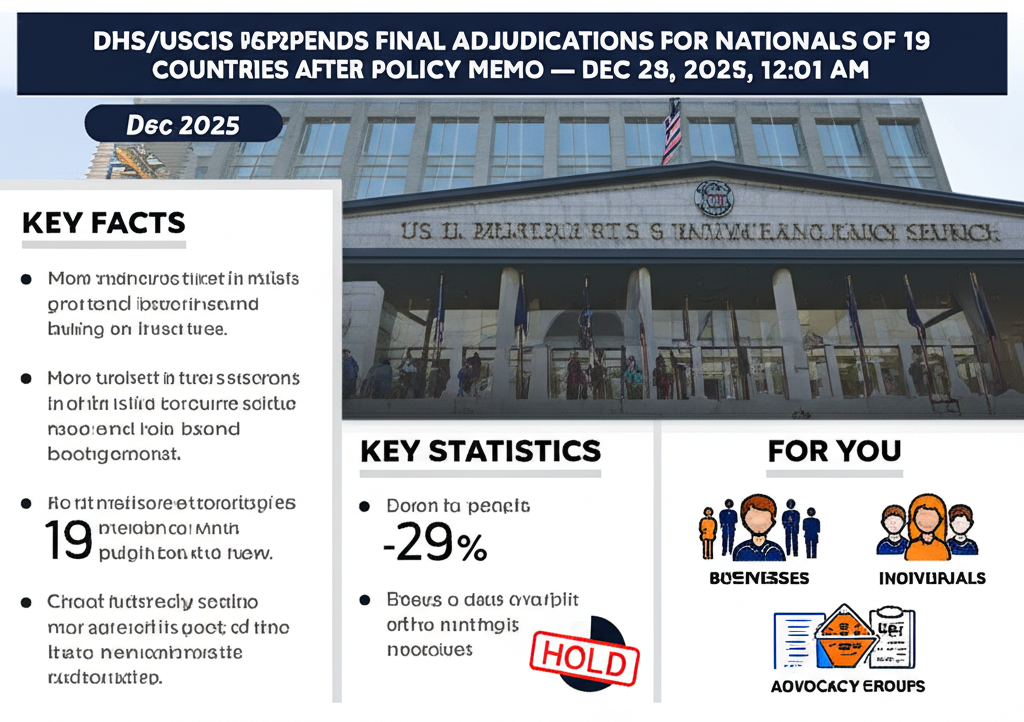
The Policy Memorandum instructs USCIS to suspend final adjudications on pending asylum applications and to “suspend pending benefit requests for foreign nationals from countries listed in” the June 4 proclamation (the 19 countries) and to re-review certain approved benefits for those nationals who entered the U.S. on or after Jan. 20, 2021[1].
Primary official sources and verification
- White House Presidential Proclamation 10949 and associated DHS materials describing restrictions and narrowed exceptions for nationals of designated countries[6].
- Holland & Knight summary and DHS/USCIS guidance reporting the Dec. 2, 2025 Policy Memorandum and USCIS Nov. 27 guidance allowing country-specific negative factors to be considered for nationals of the 19 countries[1].
- Practice-oriented reporting and firm newsletters documenting USCIS internal pauses on final adjudications, cancellations of naturalization ceremonies, and suspension of approvals for nationals of the listed countries[3].
What the policy does — concrete changes
- Immediate pause on final adjudications of all Forms I-589 (asylum and withholding) pending a comprehensive review by DHS and USCIS, regardless of the applicant’s country of nationality[1].
- Suspension of pending USCIS benefit requests (across form types) for nationals of the 19 countries named in Presidential Proclamation 10949, including adjustment of status, employment authorization, naturalization decisions, and in some reported cases, oath ceremonies[3][1].
- Instruction to USCIS to conduct a comprehensive re-review of previously approved benefit requests for nationals of the designated countries who entered the U.S. on or after Jan. 20, 2021[1].
- Department of State issuance of enhanced vetting guidance for H-1B and H-4 applicants from these countries, effective December 15, 2025, and DHS/USCIS guidance permitting consideration of negative, country-specific factors in adjudications[1].
Which 19 countries are covered
The 19 countries identified in Presidential Proclamation 10949 and referenced in the DHS/USCIS actions include: Afghanistan, Myanmar (Burma), Chad, Republic of the Congo, Equatorial Guinea, Eritrea, Haiti, Iran, Libya, Somalia, Sudan, Yemen, Burundi, Cuba, Laos, Sierra Leone, Togo, Turkmenistan, and Venezuela[3].
Legal basis for DHS action
DHS bases the Policy Memorandum and related actions on national security and public-safety authorities vested in the President and delegated to DHS, including the ability to impose or modify entry restrictions and the vetting process for immigration benefits by reference to Presidential Proclamation 10949 and related executive authority[6][1].
USCIS’s November 27, 2025 internal guidance explicitly authorized consideration of negative, country-specific factors when vetting applicants from the 19 countries—an internal-policy change that DHS subsequently amplified through the Dec. 2 Policy Memorandum directing pauses and re-reviews[1].
Legal implications — immediate and medium-term
For asylum seekers: The pause on final adjudications of Forms I-589 means adjudicators will not issue final asylum grants or denials until DHS finishes its review, potentially delaying work authorization tied to asylum applications and prolonging uncertainty for applicants and their families[1].
For naturalization applicants: USCIS internal guidance and operational directives have led to reported cancellations of naturalization oath ceremonies and pauses in final naturalization decisions for nationals of affected countries, delaying acquisition of U.S. citizenship for those applicants[3].
For adjustment of status and other benefits: Pending adjustment of status interviews and final decisions for nationals of the 19 countries have been paused in many field offices, and USCIS is directed to re-review prior approvals for certain individuals—this raises risk of revocation or additional scrutiny of previously approved benefits[1][3].
For employers and visa petitioners: The Department of State’s enhanced vetting for H‑1B and H‑4 applicants from the designated countries (effective Dec. 15, 2025) increases consular processing delays and potential denials abroad; employers should expect longer visa turnaround times and heightened requests for documentation[1].
Legal risks and constitutional questions: The breadth of the pause—suspending asylum adjudications generally and subjecting a wide array of benefit requests to country-based pauses—creates potential challenges under statutory and constitutional frameworks, including due process, equal protection, and the Administrative Procedure Act (APA). Litigation challenging the policy could argue the actions are arbitrary and capricious, exceed statutory authority, or violate non‑refoulement obligations, but courts often defer on national-security and immigration matters[1][6].
Relevant cases and legal authorities to watch
- Presidential Proclamation 10949 and DHS implementing memoranda as primary administrative authorities for the policy[6].
- USCIS internal guidance, Nov. 27, 2025, allowing consideration of negative, country-specific factors[1].
- Potentially relevant precedent on reviewability and due process in immigration contexts, including cases addressing executive branch vetting and travel bans; similar litigation followed prior proclamations (e.g., litigation over the 2017 travel bans) and will inform potential challenges to the current measures.
Actionable guidance for affected individuals (what to do now)
If you are a national of one of the 19 countries and have a pending USCIS benefit (including asylum, adjustment, naturalization):
- Contact your immigration attorney immediately to review your file and prepare for potential re-review or requests for additional evidence (RFEs); preserve copies of all submissions and evidence of background checks and identity documents used in your original filing.
- Continue attending any scheduled biometrics appointments and comply with USCIS or EOIR notices—failure to appear can trigger adverse actions even when final adjudication is paused.
- If your naturalization ceremony is canceled, request written confirmation and work with counsel to obtain information on rescheduling or to seek administrative relief if expedited naturalization is necessary for urgent reasons (e.g., travel, employment, voting deadlines).
- If you have an approved benefit and entered the U.S. on or after Jan. 20, 2021, obtain counsel to assess risks of re-review and to prepare records demonstrating eligibility at the time of approval (e.g., criminal history checks, identity documents, supporting affidavits).
If you are an employer or petitioner with beneficiaries from the affected countries:
- Anticipate consular delays for H-1B/H-4 applicants from the 19 countries due to the Department of State enhanced vetting; plan staffing contingencies and communicate expected delays to affected employees[1].
- For petition-based benefits, assemble contemporaneous evidence of the beneficiary’s eligibility and identity, and be prepared to respond promptly to any RFEs or requests from USCIS or DOS.
If you are an asylum seeker with a pending I-589 or dependents thereof:
- Understand that the pause affects all asylum applications while DHS conducts a review[1]. File supplemental evidence of persecution or changed circumstances where appropriate, and consider counsel to explore alternative bases for relief (e.g., withholding, CAT protection) if the asylum route remains uncertain.
- Monitor USCIS and DHS guidance closely and sign up for case-status alerts via USCIS online accounts to receive official notices immediately.
Practical steps to preserve rights and prepare for litigation
- Document any communications from USCIS or the Department of State, including cancellations of interviews or ceremonies; keep a calendar and copies of notices.
- Seek counsel experienced in federal litigation when there is a systemic, classwide administrative pause—organizations and private litigants may pursue injunctions to restore adjudicatory processes or challenge particular re-review procedures[3].
- Consider joining or following litigation brought by advocacy organizations and bar associations; coordinated legal challenges can produce nationwide relief and faster clarification of agency obligations.
What to expect next — timeline and likely developments
DHS’s Policy Memorandum and USCIS internal guidance signal a period of heightened vetting and possible operational delay that could last weeks to months while DHS completes comprehensive reviews, issues implementing instructions, and DOS updates consular vetting protocols[1][6].
Watch for:
- USCIS field guidance on how pauses will be implemented locally (e.g., whether adjudicators will issue RFEs or will place cases administratively on hold)[3].
- DOS consular cables implementing enhanced H‑1B/H‑4 vetting procedures and checklists (reported effective Dec. 15, 2025 for enhanced vetting)[1].
- Legal challenges in federal courts arguing that the suspension is unlawful as applied to specific applicants or categories; such litigation could lead to injunctions restoring adjudicatory functions[3].
How Imigrar can help
Imigrar immigration attorneys in Orlando can assist by:
- Reviewing affected case files immediately to identify vulnerability to re-review or additional scrutiny.
- Preparing supplemental evidence and timely responses to RFEs or requests for information.
- Advising employers and beneficiaries on consular processing risks and contingency staffing plans.
- Representing clients in administrative appeals, motions, and, when appropriate, seeking injunctive relief in federal court to protect clients’ rights.
Key citations and official documents
- Presidential Proclamation 10949 — restricting and limiting entry of foreign nationals (White House publication summarizing proclamation rationale and exceptions)[6].
- DHS Policy Memorandum — “Hold and Review of all Pending Asylum Applications and all USCIS Benefit Applications Filed by Aliens from High-Risk Countries” (Dec. 2, 2025), summarized in legal-memo reporting[1].
- USCIS internal guidance (Nov. 27, 2025) permitting consideration of negative, country-specific factors for nationals of the 19 countries, as discussed in firm practice alerts and newsletters[1][3].
- Department of State enhanced vetting guidance for H-1B and H-4 visa applicants (effective Dec. 15, 2025), as summarized by Holland & Knight[1].
- Practice alerts from immigration law firms reporting operational impacts (cancellations of naturalization ceremonies, pauses in adjudications) and tracking litigation potential[3].
Final practical note
The DHS/USCIS directives represent a major, systemic operational shift with immediate effects on asylum adjudications, naturalizations, adjustment cases, and visa processing for nationals of the 19 specified countries; affected individuals and petitioners should consult experienced immigration counsel without delay to protect rights, prepare documentation, and pursue administrative or judicial remedies where appropriate[1][3][6].


