


Immigration Court Changes in 2026: What Families Need to Know Now
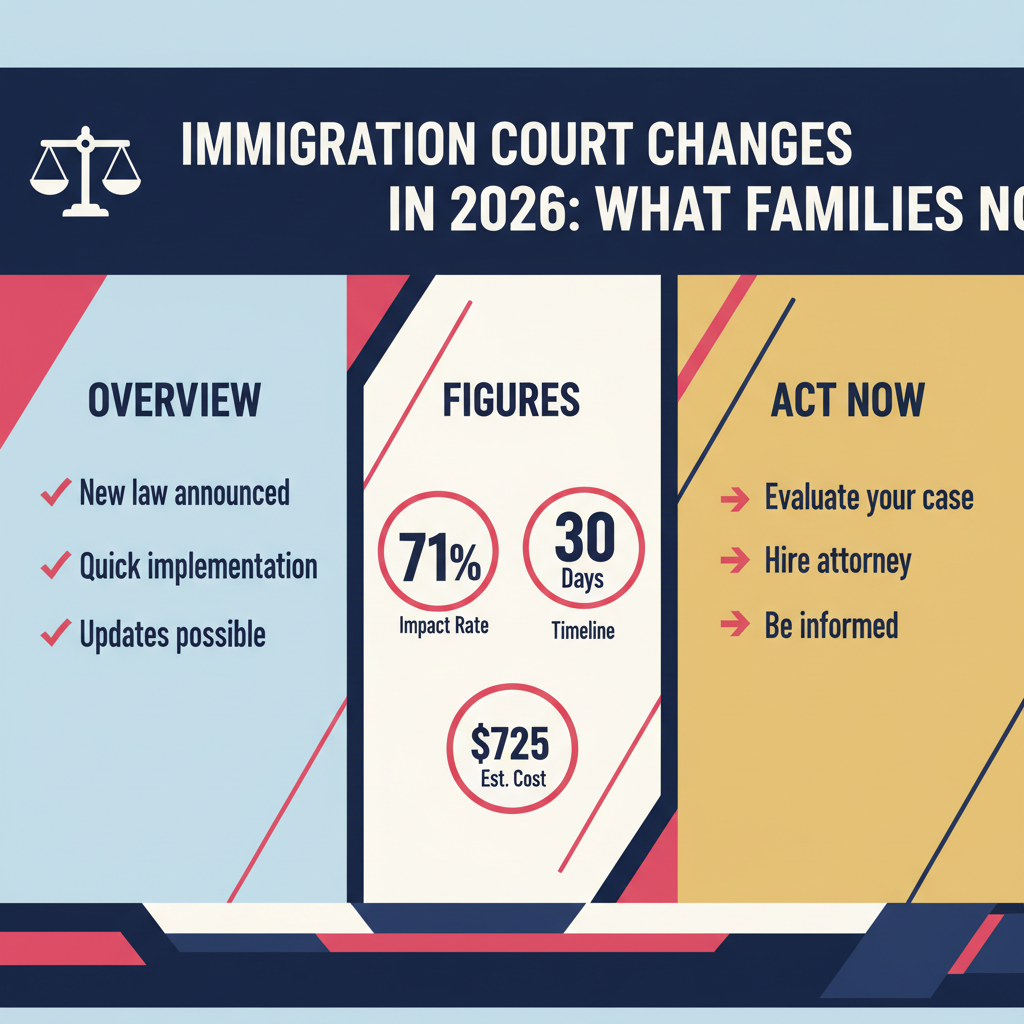
The immigration court system is undergoing significant changes in 2026 that could directly affect your case timeline, hearing schedule, and legal options. If you have a pending removal case, a family petition, or any immigration matter before the courts, understanding these changes now—and taking action immediately—could make the difference between maintaining your family unity and facing deportation.
This guide breaks down what's happening in immigration courts, why it matters to you, and the specific steps you should take right now to protect your case.
What's Changing in Immigration Courts
More Judges, Faster Case Movement
The Department of Justice has made immigration adjudication a top hiring priority for 2026, with significant focus on recruiting and training deportation judges[2]. This means immigration courts will have greater capacity to hear cases—but also that continuances (delays) may become harder to obtain[2].
The practical impact: Cases that might have been postponed for months could now be scheduled sooner. If you're relying on extra time to gather documents, obtain legal representation, or prepare your defense, that timeline is compressing[2].
Staffing Shifts and Military Lawyers
The Trump administration fired nearly 100 immigration judges in 2025, and the DOJ is now recruiting new judges, including military lawyers serving as temporary immigration judges[4]. While this increases court capacity, it also signals a shift in how cases are being approached and decided[4].
The language itself matters: These positions are now officially called "deportation judges" rather than "immigration judges," which immigrant advocates say reflects a change in institutional focus toward removal rather than balanced case adjudication[4].
Broader Detention and Deportation Powers
Last year, the Trump administration expanded who can be detained and deported quickly. Immigration lawyers report that clients who previously would have been protected from detention while their cases were pending now face this risk[4]. This means you could be detained while awaiting your hearing, making immediate legal action even more critical.
How These Changes Affect Your Case
Who Faces the Greatest Impact
These court changes affect several groups most directly:
- People with pending immigration court hearings who have been relying on continuances to complete filings or gather evidence
- Families waiting on court decisions to avoid separation
- Workers and students whose status depends on timing, travel, or maintaining a clean record
- Immigrants with prior arrests where criminal records and immigration consequences overlap[2]
The Continuance Problem
In the past, immigration courts frequently granted continuances—postponements that gave immigrants time to gather documents, secure legal representation, or prepare their cases. With more judges and a stated emphasis on moving cases faster, continuances are becoming less automatic[2].
This means you can no longer assume you'll have extra months to prepare. You need to be ready to present your case on your scheduled hearing date.
Criminal Records and Immigration Consequences
The faster court pace makes criminal history even more consequential. If you have any prior arrests—even misdemeanors or charges that were dismissed—you need certified documentation of the final disposition[2]. Immigration judges will rely on exact charge language and final outcomes, not on what you remember or believe happened[2].
Actionable Steps to Take Right Now
Step 1: Verify Your Court Date and Update Your Address (This Week)
Your first action should be to confirm your next immigration court hearing date. Contact your immigration attorney, your local immigration court, or check your Notice to Appear (Form I-862) if you have one.
Equally important: Verify that your address on file with the immigration court is current and correct. Courts send notices to the address in their system. If mail goes to an old address, you could miss a hearing and face deportation in absentia[2].
Action items:
- Call your immigration court directly to confirm your hearing date
- Update your address with the court in writing if anything has changed
- Keep copies of all court documents in a safe place
- Set phone reminders for 2 weeks before your hearing
Step 2: Gather Certified Criminal Dispositions (Immediately)
If you have ever been charged with any crime—even a misdemeanor, even if charges were dropped—obtain a certified final disposition from the court where the case was handled[2]. This is not optional and cannot be delayed.
Immigration judges make decisions based on exact legal language and final outcomes. A certified disposition is the official court document proving what happened to your case. Without it, you're at a disadvantage[2].
How to obtain certified dispositions:
- Contact the criminal court clerk's office in the county where you were charged
- Request a "certified final disposition" or "certified judgment and sentence"
- Pay the required fee (typically $10-50 per document)
- Request expedited processing if your hearing is soon
- Ask for multiple certified copies (you'll need originals for court)
Step 3: Secure Legal Representation or Evaluate Your Current Attorney (Now)
With faster case timelines, having experienced legal representation is no longer a luxury—it's essential. If you don't have an attorney, prioritize finding one immediately. If you have an attorney, verify they understand the 2026 court changes and have a clear strategy for your case[2].
Questions to ask your attorney:
- What relief options am I eligible for (asylum, cancellation of removal, VAWA, U visa, T visa, etc.)?
- What documents do we need to file before my hearing?
- What is your timeline for filing these documents?
- How will we handle my criminal history, if applicable?
- What is your backup plan if my primary relief option doesn't succeed?
If you cannot afford an attorney, contact your local immigration legal services organization or law school clinic. Many provide free or low-cost representation.
Step 4: Compile Supporting Documents Before Your Hearing (Weeks 1-4)
Don't wait until your hearing is weeks away to gather documents. Start now. The types of documents you need depend on your specific case, but commonly include:
- Birth certificates and marriage certificates (certified originals)
- Employment letters and tax returns (if claiming work authorization)
- Medical records (if claiming health-based relief)
- Letters of support from family, employers, or community members
- Evidence of ties to the community (lease agreements, utility bills, school enrollment)
- Police clearance letters or lack of conviction documentation
- Evidence of U.S. citizen or permanent resident family members
Your attorney can provide a specific document checklist for your case. Organize everything in folders and keep originals in a secure location.
Step 5: Prepare for Your Hearing (Weeks 4-8)
Work with your attorney to prepare testimony. You may be asked to testify about your background, your family relationships, your work history, why you came to the United States, and why you deserve to remain here. Practice your answers with your attorney beforehand.
Understand the rules:
- Arrive early (typically 30 minutes before your scheduled time)
- Bring all original documents and copies
- Dress professionally and conservatively
- Bring an interpreter if English is not your primary language
- Do not bring children unless they are witnesses or directly involved in the case
Understanding Your Relief Options
Depending on your circumstances, you may qualify for several forms of relief from deportation. The faster court timeline makes it even more important to understand what you might be eligible for:
- Asylum: Available if you've been persecuted or fear persecution based on race, religion, nationality, political opinion, or membership in a particular social group
- Cancellation of Removal: Available if you've lived in the U.S. for at least 10 years, have good moral character, and removal would cause exceptional hardship to a U.S. citizen or permanent resident family member
- VAWA (Violence Against Women Act): Available if you're a victim of abuse by a U.S. citizen or permanent resident spouse, parent, or adult child
- U Visa: Available if you're a victim of certain crimes and have suffered substantial abuse
- T Visa: Available if you're a victim of human trafficking
- Withholding of Removal: Available if you face torture or persecution in your home country
Discuss each option with your attorney to determine which might apply to your situation.
What NOT to Do
As you prepare for immigration court in this changing environment, avoid these critical mistakes:
- Don't miss your court date. Missing even one hearing can result in deportation in absentia, even if you have a strong case
- Don't rely on memory for criminal history. Use certified documents, not what you remember
- Don't assume you'll get a continuance. Plan as if your hearing will happen on the scheduled date
- Don't represent yourself if you have any criminal history or complex case. Immigration law is specialized; mistakes can be permanent
- Don't ignore mail from the immigration court. Every notice matters
- Don't share detailed immigration information on social media or with anyone outside your immediate family. This information can be used against you
Finding Help in Your Community
You don't have to navigate these changes alone. Resources available in Florida and nationwide include:
- Immigration Legal Services: Law school clinics, nonprofit organizations, and bar associations offer free or reduced-cost legal consultations
- Court Self-Help Centers: Many immigration courts have self-help centers with staff who can answer procedural questions
- Community Organizations: Immigrant advocacy groups can connect you with legal resources and support services
- Your State Bar Association: Can refer you to immigration attorneys in your area
Moving Forward with Confidence
The immigration court changes in 2026 are significant, but they're not insurmountable. The key is taking action now rather than waiting until your hearing is imminent. By verifying your court date, gathering documents, securing legal representation, and understanding your options, you position yourself to present the strongest possible case[2].
Immigration court is designed to determine whether you have legal relief available. Many people do. Your job is to ensure the judge has every piece of evidence and every argument needed to see that you deserve to remain in the United States with your family.
Start today. Your future depends on the steps you take in the next few weeks.


