


Immigration Court 2026: What's Changing and How to Protect Your Case
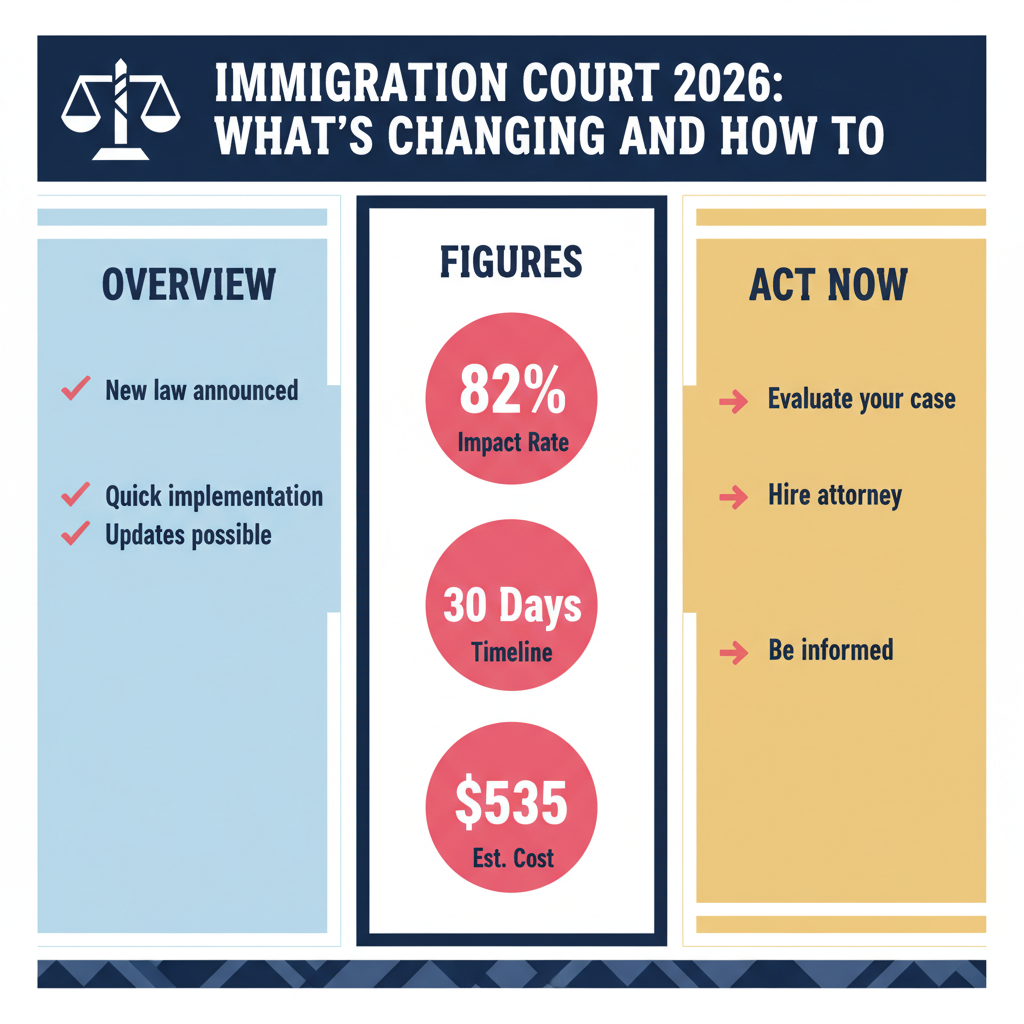
The immigration court system is undergoing significant changes in 2026 that directly affect how cases are processed, who has access to legal representation, and how quickly you may face court hearings. If you or a family member has a pending immigration matter, removal case, or are considering applying for relief, understanding these changes is essential to protecting your rights and building a strong defense.
This guide covers the major policy shifts taking effect in 2026, explains what they mean for your case, and provides concrete steps you can take right now to prepare.
Major Policy Changes in Immigration Courts for 2026
Accelerated Case Processing and Increased Judge Capacity
The Department of Justice has prioritized hiring additional immigration judges and deportation judges as part of its 2026 staffing plan.[2] While more judges might seem positive, the reality is more complex: expanded judicial capacity is being paired with a strategy to move cases through the system faster and with less flexibility.
What this means: Courts are reducing continuances (delays in your case), resetting hearings on shorter timelines, and pushing cases toward resolution more quickly.[2] If you've been relying on extra time to gather documents or prepare your defense, that window is narrowing.
Elimination of Free Legal Representation for Unaccompanied Minors
One of the most significant changes involves legal counsel access. The government has moved to wipe out free legal representation for an estimated 26,000 unaccompanied minors in immigration proceedings.[1] This means young people—some as young as teenagers—are now navigating complex removal cases without guaranteed access to attorneys.
However, California has stepped in with protective measures. Beginning in 2026, California law (AB 1261) requires the state to provide legal counsel to immigrant youth in federal and related state immigration proceedings, defining immigrant youth as unaccompanied undocumented minors.[3] If you have a minor family member in California, this protection may apply.
Streamlined Asylum Decisions Without Hearings
Immigration court judges now have the authority to decide whether immigrants are eligible for asylum without holding a full hearing.[1] This change fundamentally alters the process: instead of presenting your case in person and responding to questions, judges can make determinations based on written submissions alone.
This is a critical shift because asylum eligibility requires demonstrating persecution or a well-founded fear of persecution based on protected grounds. Without a hearing, you lose the opportunity to explain your circumstances directly to the judge.
Removal of Oversight Mechanisms
Three ombudsman offices that monitor immigration courts, detention facilities, and law enforcement's treatment of immigrants have been closed.[1] These offices previously served as independent watchdogs, investigating complaints and tracking violations. Their closure reduces external accountability and makes it harder for detainees to report abuse or poor conditions.
Stricter "Good Moral Character" Standard for Naturalization
If you're pursuing citizenship, USCIS has implemented a new, more restrictive standard for evaluating "good moral character" (GMC)—a requirement for naturalization.[4] Rather than checking only for specific crimes, USCIS now conducts a holistic review of your entire life, including tax compliance, community involvement, and behavior deemed "anti-American" or outside community norms.[4]
This expanded definition means that issues you might not have considered relevant—such as tax filing history, prior traffic violations, or social media activity—could now factor into citizenship decisions.
Increased Likelihood of Removal Without Court Hearing
USCIS has issued new guidance making it more likely that a Notice to Appear (NTA) will be issued if your case is denied and you no longer have valid immigration status.[4] For people who entered without inspection or overstayed visas, this means some individuals may be removed without a full immigration court hearing unless they request asylum and pass a credible fear screening.[4]
What These Changes Mean for Your Case
Faster Timelines Require Faster Preparation
With more judges and reduced continuances, you cannot afford delays. Cases that previously might have been reset multiple times are now moving to hearing dates more quickly.[2] This means:
- Your next court date may be sooner than you expect
- Continuances (requests to delay your hearing) are harder to obtain
- You must have all supporting documents and evidence ready before your hearing
- Last-minute filings for asylum, cancellation of removal, or adjustment of status are riskier without complete evidence prepared in advance[2]
Limited Access to Legal Representation
While minors in some states now have protections, adult immigrants face a system with fewer free legal resources. Immigration law is complex, and small procedural mistakes can result in case denial or deportation. If you cannot afford a private attorney, seek help from nonprofit legal organizations, law school clinics, or accredited representatives.
Heightened Scrutiny on Applications
Whether you're applying for asylum, adjustment of status, naturalization, or work authorization, expect more thorough review and stricter interpretation of eligibility requirements. Incomplete applications or missing evidence are more likely to result in denials and NTA issuance.[4]
Actionable Steps to Protect Your Case in 2026
Step 1: Verify Your Court Date Immediately
Do not assume you know when your next hearing is. Many immigrants miss court dates because they:
- Never received proper notice from the court
- Moved and didn't update their address with USCIS or the immigration court
- Received notice but failed to recognize it as a court date
Action: Contact your local immigration court directly and confirm your next scheduled hearing date. Update your address with USCIS (Form AR-11) and the immigration court immediately if you've moved.
Step 2: Gather All Supporting Documents Now
Do not wait until your hearing is scheduled. Begin collecting evidence immediately:
- Birth certificates and marriage certificates (originals or certified copies)
- Police records and court documents (even minor violations)
- Tax returns and proof of employment (last 3 years)
- Medical records or psychological evaluations (if relevant to your case)
- Letters from employers, community members, family, or religious leaders attesting to your character
- Evidence of ties to your home country or the United States, depending on your case
- Documentation of any persecution, harm, or threats you've experienced
Action: Create a file for your case and begin organizing documents by category. If documents are in another language, arrange for certified translations now.
Step 3: Understand Your Relief Options
Different forms of relief have different eligibility requirements and procedures. Common options include:
- Asylum: Available if you've experienced persecution or have a well-founded fear of persecution based on race, religion, nationality, political opinion, or membership in a particular social group
- Cancellation of Removal: Available to certain long-term residents who can demonstrate hardship to U.S. citizen or lawful permanent resident family members
- Adjustment of Status: Available if you have a qualifying family member or employer sponsorship
- Voluntary Departure: Allows you to leave the U.S. on your own terms rather than being deported
- Waivers: Available for certain grounds of deportability or inadmissibility
Action: Consult with an immigration attorney or accredited representative to identify which forms of relief you may qualify for. Do not rely on online information alone—immigration law is highly fact-specific.
Step 4: Seek Legal Representation
Immigration law is complex, and the consequences of mistakes are severe. If you cannot afford a private attorney:
- Contact local nonprofit immigration legal services organizations
- Reach out to law school immigration clinics in your area
- Ask the immigration court about accredited representatives (often less expensive than attorneys)
- Call the Executive Office for Immigration Review (EOIR) hotline for referrals
Action: Begin your search for legal help immediately. Do not wait until your court date is imminent.
Step 5: Prepare for Your Hearing
With reduced continuances and faster case processing, preparation must begin now:
- Work with your attorney to develop your case strategy
- Practice answering questions about your background, persecution, or family ties
- Prepare written statements or declarations supporting your case
- Identify and prepare witnesses who can testify on your behalf
- Ensure you understand the specific requirements for your form of relief
Step 6: Address Any Status or Application Issues
If your immigration status has expired or you have a pending application:
- Ensure you're maintaining valid status (if applicable)
- File applications on time and completely—late or incomplete filings increase the likelihood of NTA issuance[4]
- Respond promptly to any Requests for Evidence (RFEs) or Notices of Intent to Deny (NOIDs) from USCIS
- Keep copies of all filed applications and correspondence
Special Considerations for Specific Groups
Unaccompanied Minors
If you have a minor family member in immigration proceedings, prioritize finding legal representation. While California provides legal counsel to unaccompanied minors, protections vary by state.[3] Young people facing removal without legal help are at significant disadvantage.
Naturalization Applicants
If you're applying for citizenship, prepare for heightened scrutiny under the new "good moral character" standard. Gather documentation of tax compliance, community involvement, and positive character references.[4]
Asylum Seekers
With judges now able to decide asylum eligibility without hearings, written documentation of your persecution is critical. Work with your attorney to develop a detailed, well-documented asylum application before your hearing date.
Looking Ahead: What to Expect in 2026
The immigration court system in 2026 is moving faster, with less flexibility and stricter standards. However, this does not mean your case is hopeless. Many people successfully obtain relief, win asylum, and achieve their immigration goals—but success requires preparation, legal guidance, and action.
The time to prepare is now, not when your court date arrives. By taking these steps today, you maximize your chances of a favorable outcome and protect your rights throughout the process.
Contact an Immigration Attorney Today
If you have questions about your specific situation or need guidance on immigration court procedures, contact an immigration law firm in your area. Many offer free initial consultations and can help you understand your options and develop a strategy tailored to your case.
Your immigration future depends on the decisions you make today. Do not delay.


